Week 1- Mixing Tee
OBJECTIVE : Perform steady-state simulations to compare the mixing effectiveness of mixing tee when hot inlet temperature is 360C & the Cold inlet is at 190C for given cases
- Case 1
- Short mixing tee with a hot inlet velocity of 3m/s.
- Momentum ratio of 2, 4.
- Case 2
- Long mixing tee with a hot inlet velocity of 3m/s.
- Momentum ratio of 2, 4.
BACKGROUNG : Mixing is common process performed in industries in which two streams of same or different fluids are mixed so that heat and mass transfer occurs. Most coomon application of mixing tee is in HVAC industry where cold and hot fluid streams are mixed to reduce heat load and to get desired temperature output.
GEOMETRY : 3D cad models are imported in spaceclaim for cleaning perpose where fluid domain is extracted out of solid for meshing and performing simulation.
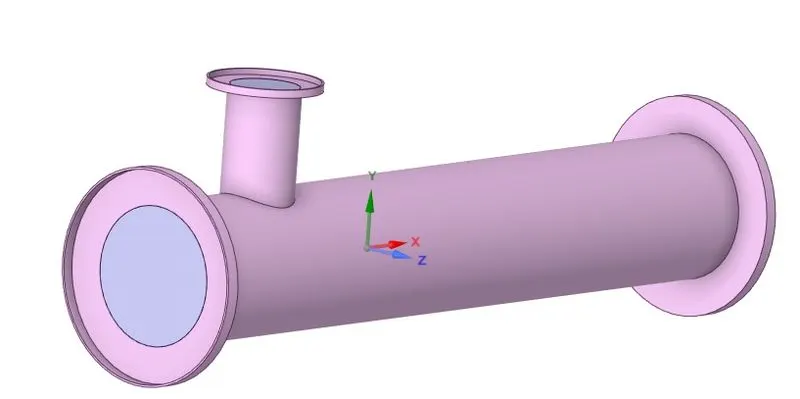
Fig. Geometry with solid and fluid domain
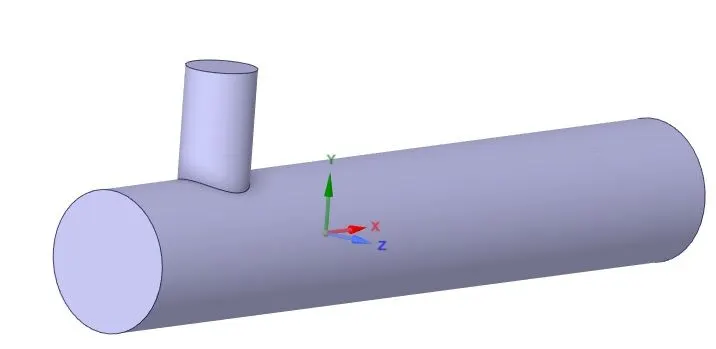
Fig. Extracted fluid volume
MESH : Meshing is process of dividing main domain into large number of subdomains. In meshing module name selection is provided to boundaries so that boundary conditions can be applied later in fluent module.
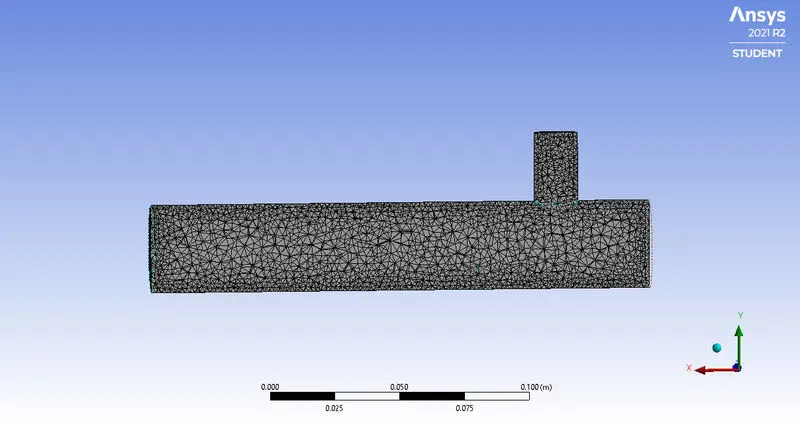
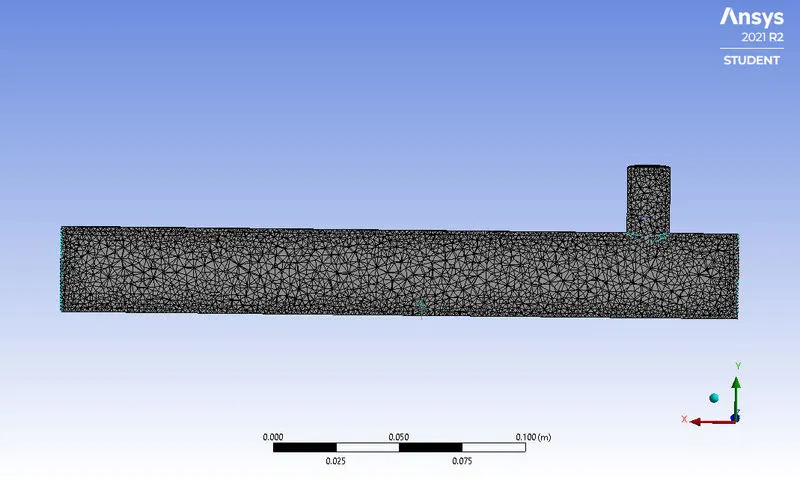
Fig. Section view of mesh for short(left) and long(right) mixing tee


Fig. Mesh quality for short(left) and long(right) mixing tee with element size of 0.002m
In both the above images mesh quality is good as it is more than 0.4 which is 40%.
SETUP : After creating mesh mesh is transfered to fluent module so that proper physics is applied to get desired results.Here boundary conditions are applied like at inlet velocity inlet and at outlet pressure outlet condition. After that for turbulence modeling requred turbulent model is selected and calculations aare performed till convegence criteria is reached.
RESULTS :
First for short tee, simulation is performed using two different turbulent model that is k-epsilon and k-omega sst.
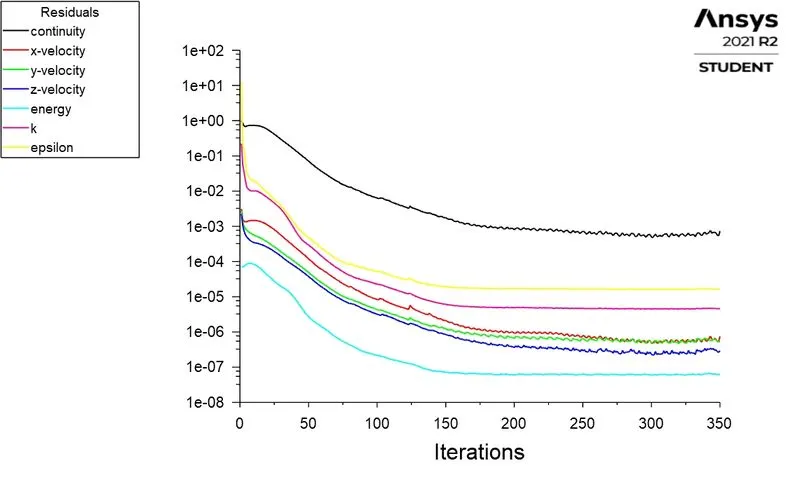
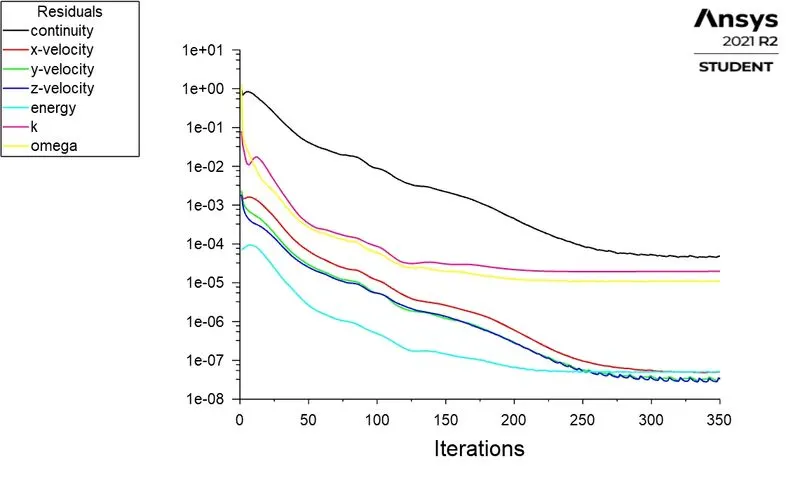
Fig. Convergence graph for k-epsilon (left) and k-omega (right) turbulence model.
Above figure shows residuals starts to become nearly constant after 200 itteration for k-epsilon model and 250 itteration for k-omega model.
It is found thar for nearly same results k-epsilon model converges fast so for further studies k-epsilon turbulent model is used.
RESIDUAL PLOTS :
Short Tee Long Tee
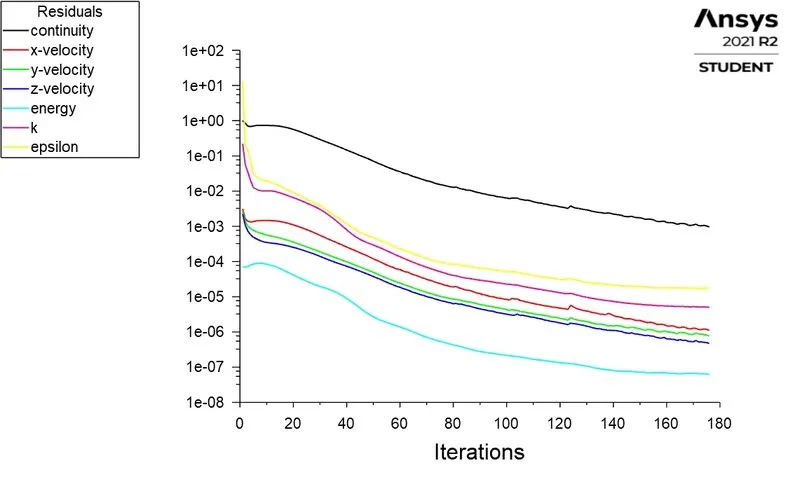
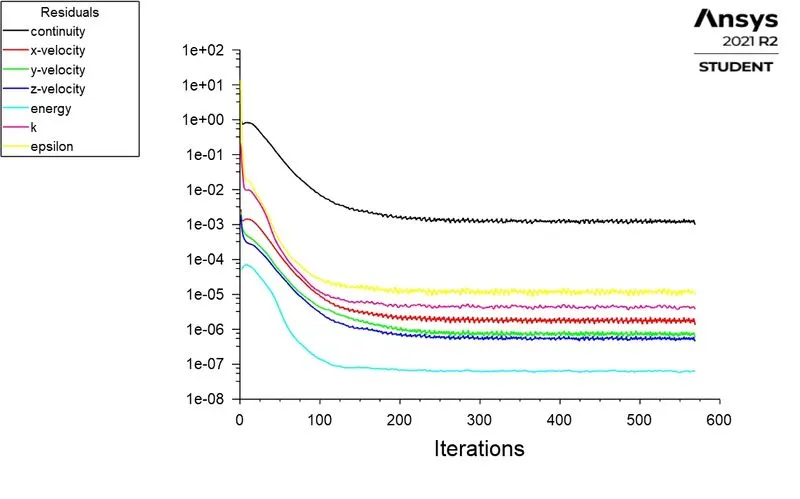
For momentum ratio 2 For momentum ratio 2
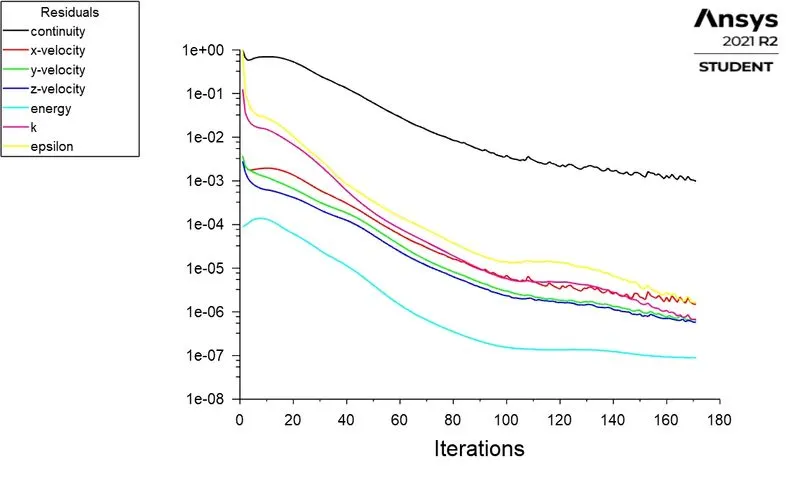
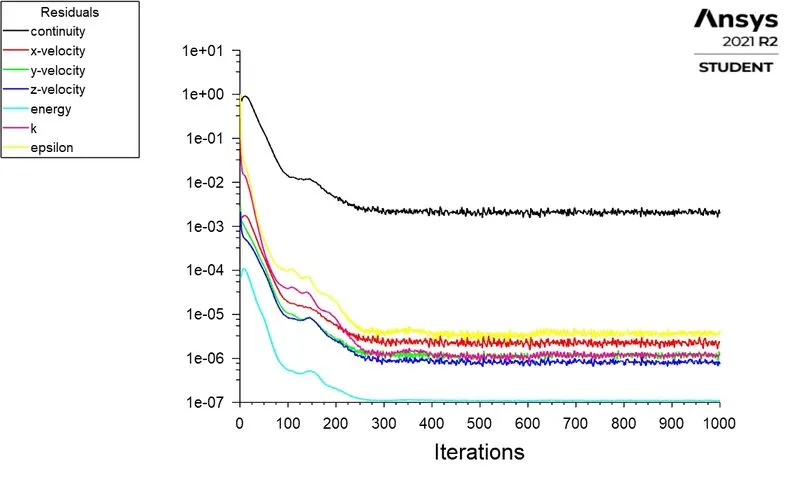
For momentum ratio 4 For momentum ratio 4
PLOT FOR AREA WEIGHTED AVERAGE TEMPERATURE AT OUTLET :
Short Tee Long Tee
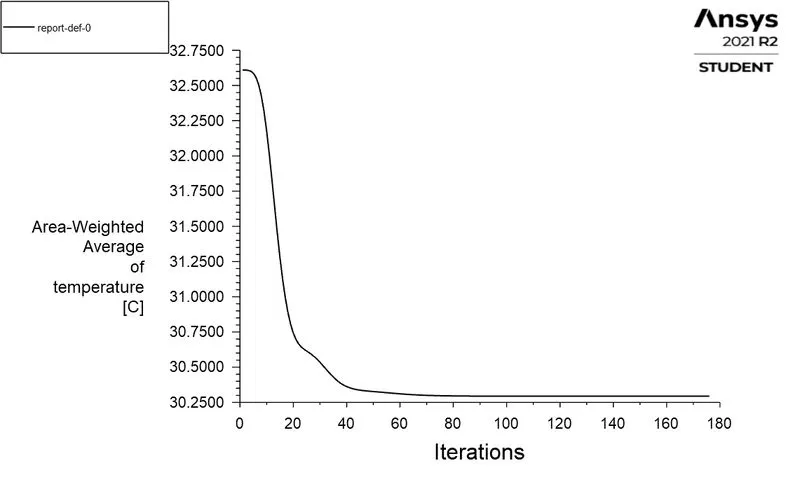
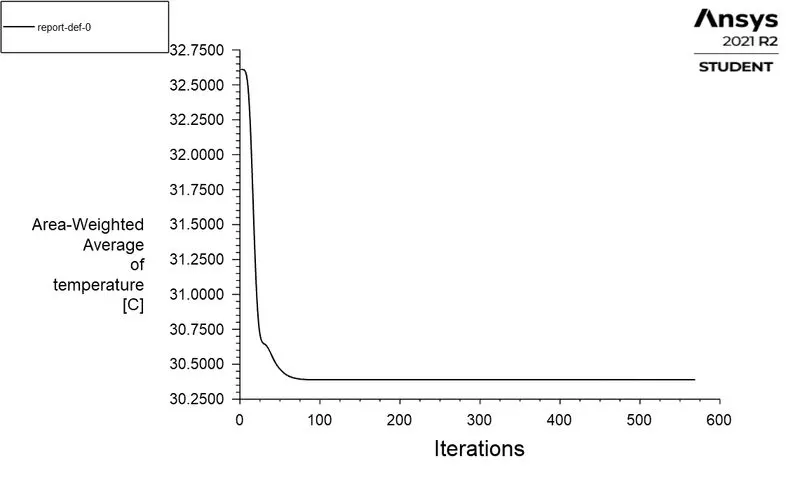
For momentum ratio 2 For momentum ratio 2
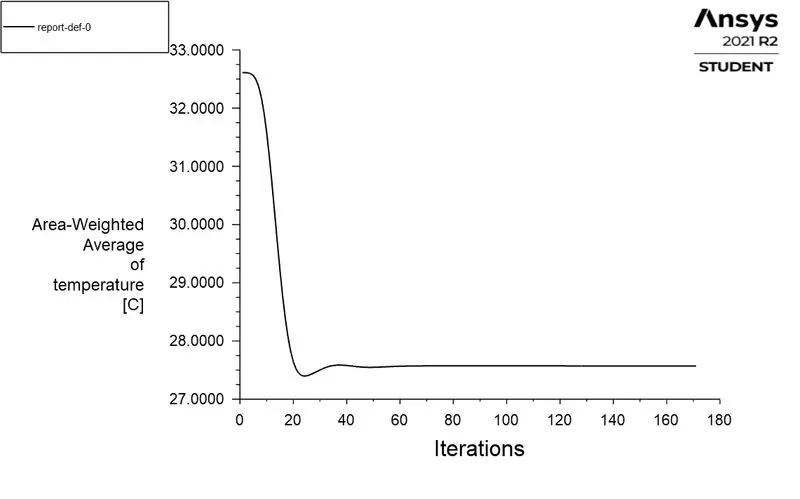
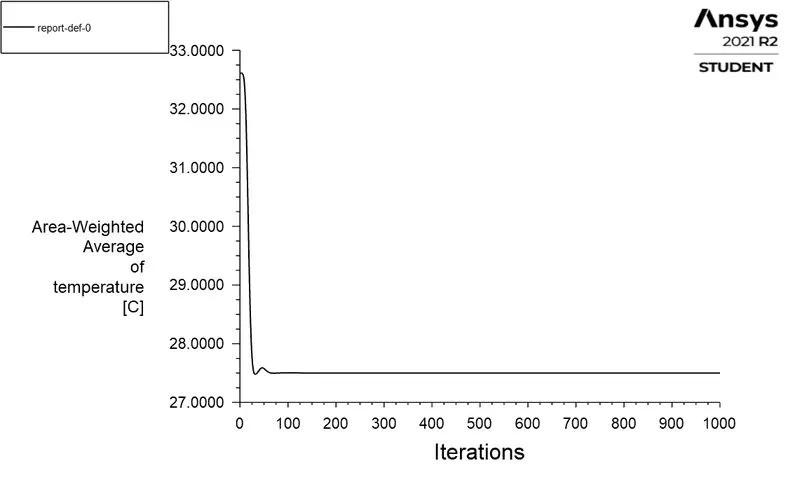
For momentum ratio 4 For momentum ratio 4
PLOT FOR STANDARD DEVIATION OF TEMPERATURE AT OUTLET :
Short Tee Long Tee
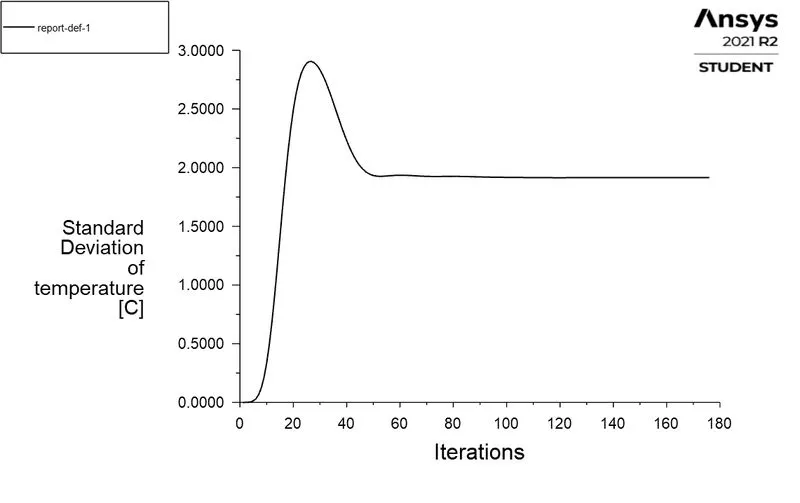
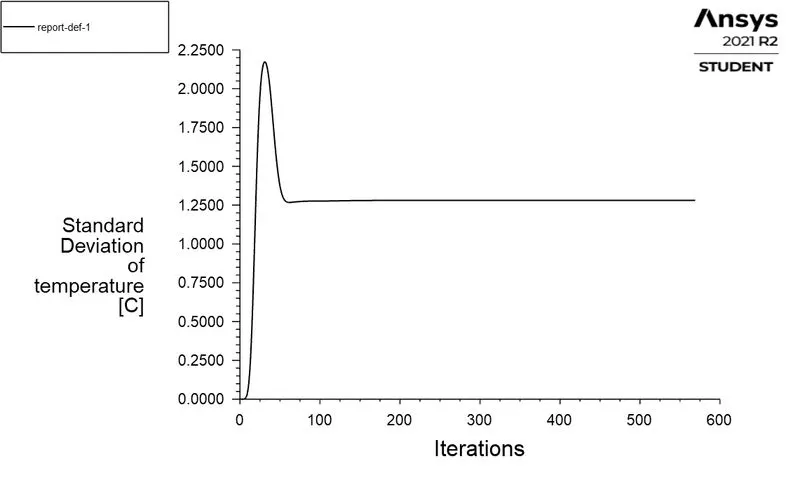
For momentum ratio 2 For momentum ratio 2
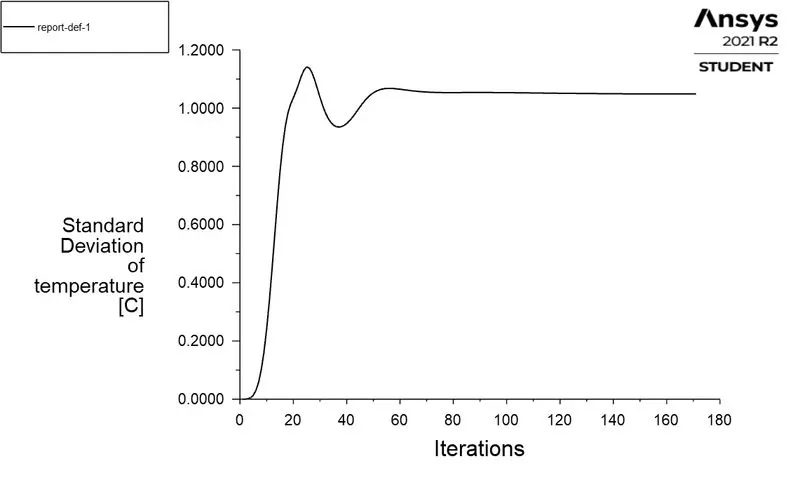
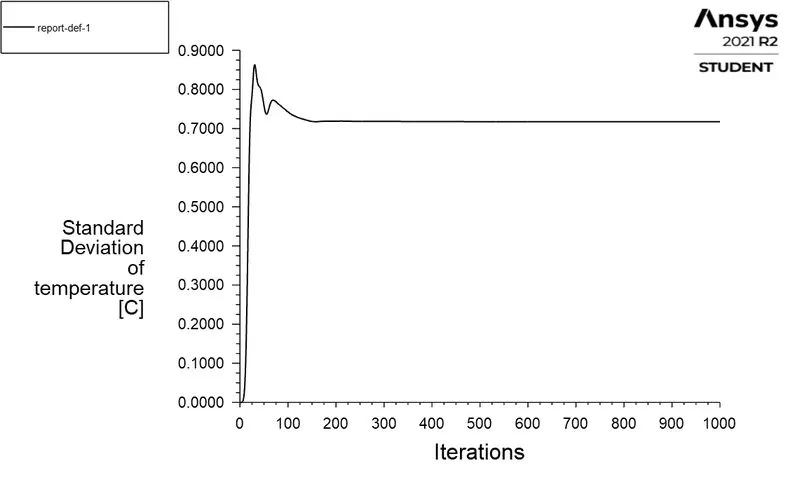
For momentum ratio 4 For momentum ratio 4
VELOCITY CONTOUR :
Short Tee Long Tee
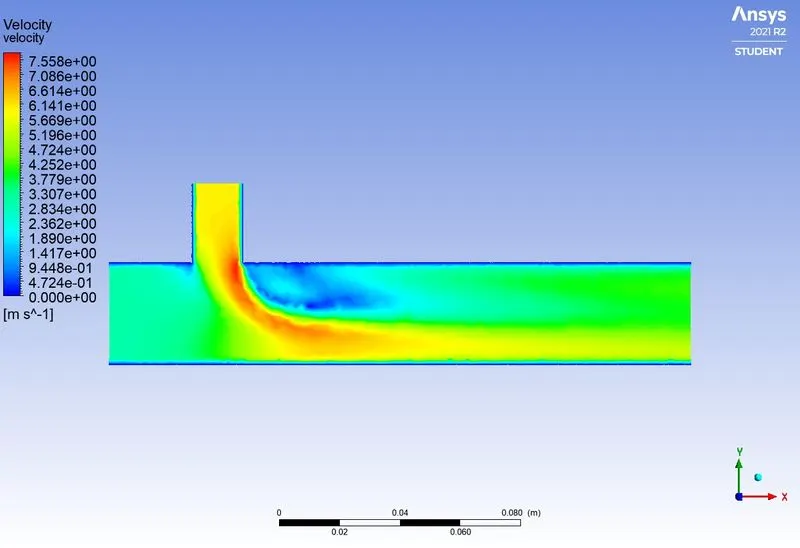
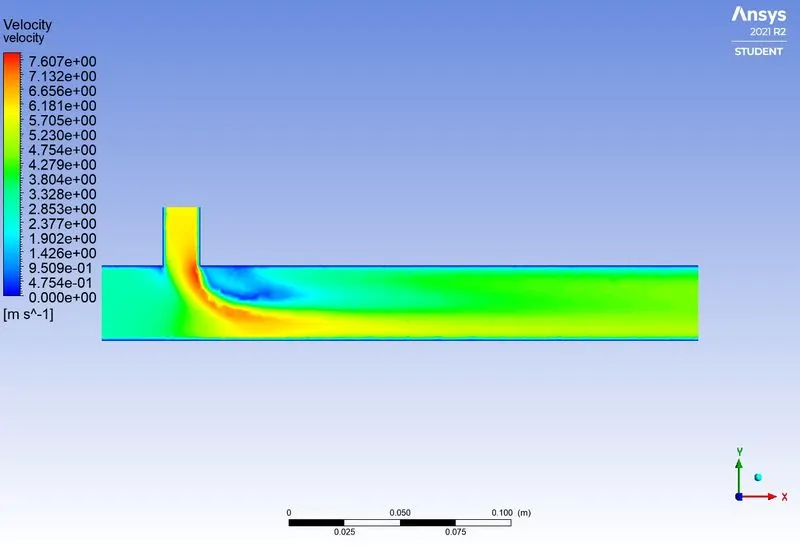
For momentum ratio 2 For momentum ratio 2
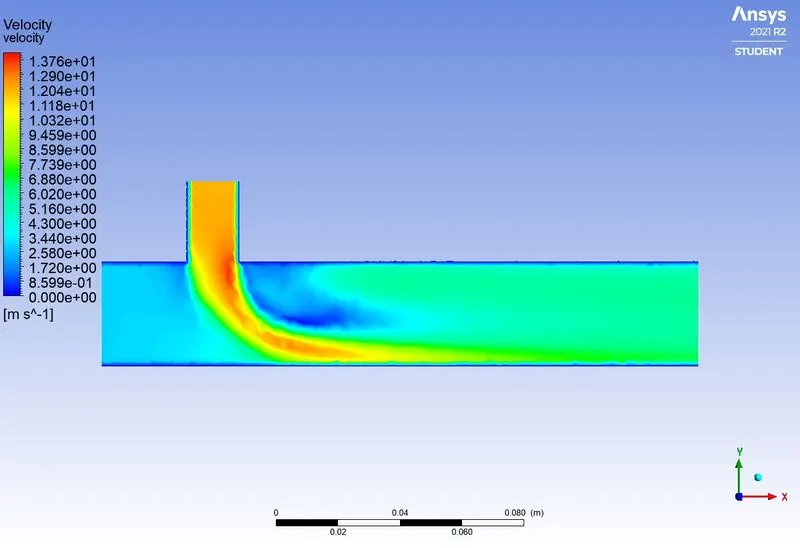
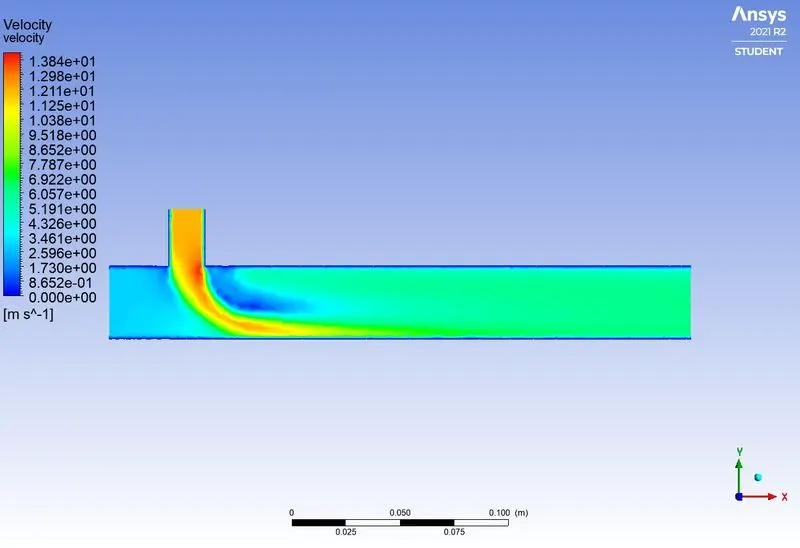
For momentum ratio 4 For momentum ratio 4
TEMPERATURE CONTOUR :
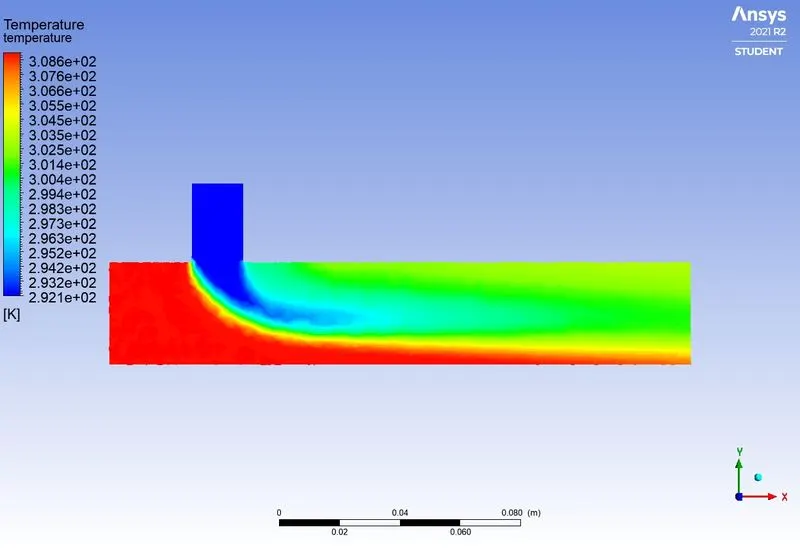
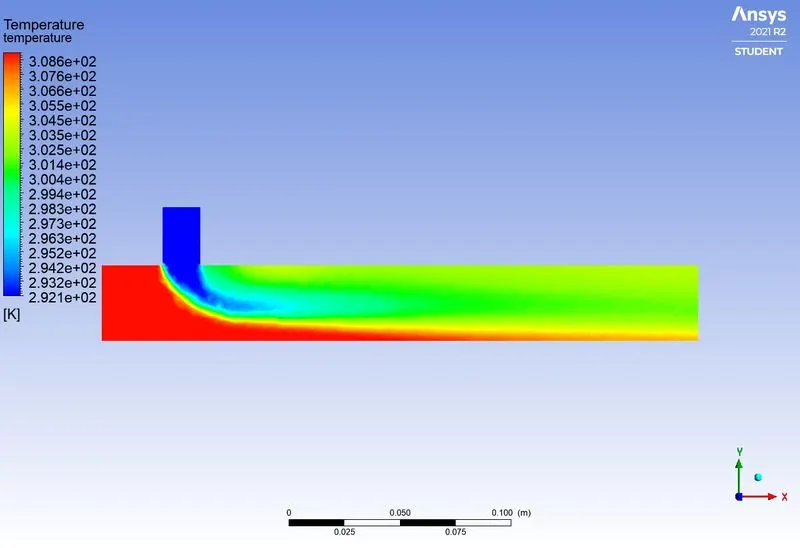
For momentum ratio 2 For momentum ratio 2
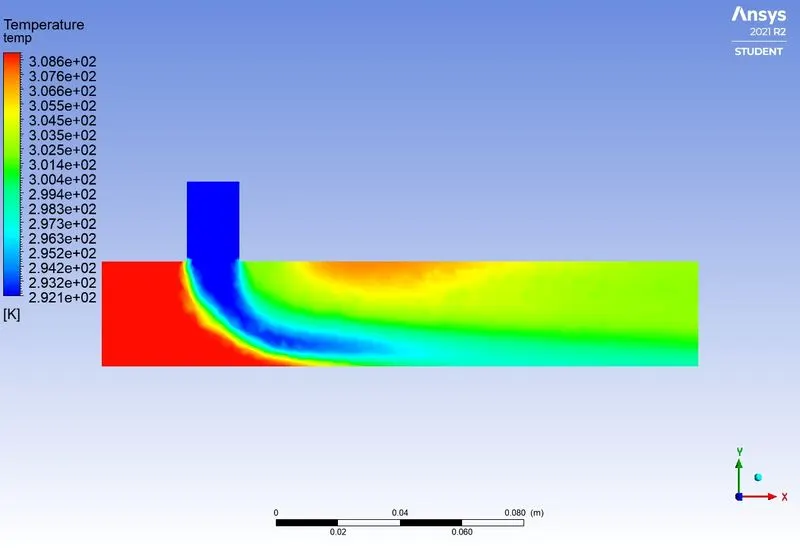
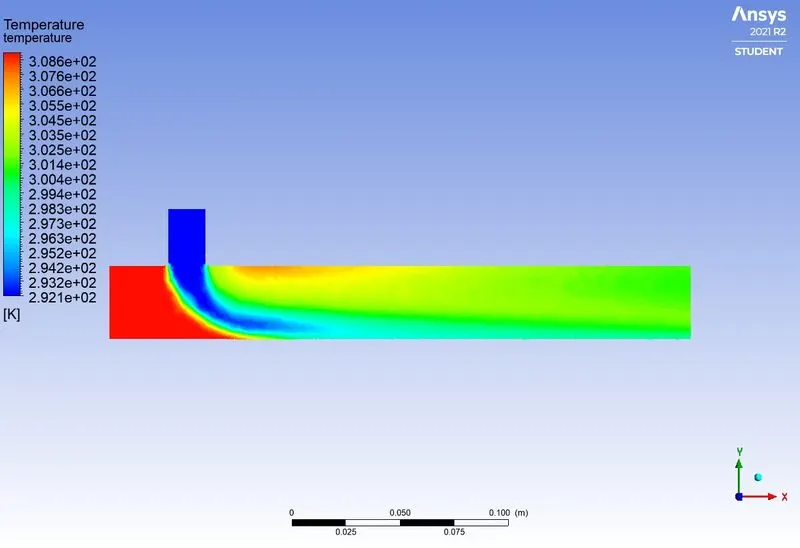
For momentum ratio 4 For momentum ratio 4
OBSERVATION :
- Increasing momentum ratio results in more uniform mixing and less deviation in temperature over the outlet area.
- Increasing in length of pipe doesnt show significant effect on mixing as compare to increase in momentum ratio but still better mixing and less deviation in otlet temperature is found.
- With increase in pipe length there is no significant change in outlet temperature.
- Momentum ratio means velocity plays bigger role in mixing because it causes flow to be more turbulent.