Week 1:- Introduction to BiW and Fixtures Challenge
Introduction to BiW and Fixture Challenges
Q1. What is BIW & define its parts?
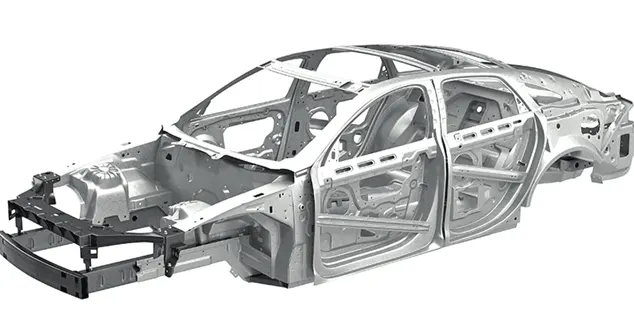
Ans. BIW refers to the welded sheet metal components which form the structure of the vehicle to which the other components will be married or assembled like engine, chassis, exterior & interior trims.
This is the stage in which the car body sheet metal components are been assembled by welding & other joining processes.
BIW is the steel structural shell composed of generally steel panels welded together. BIW structure supports the overall other subsystems in the vehicle.
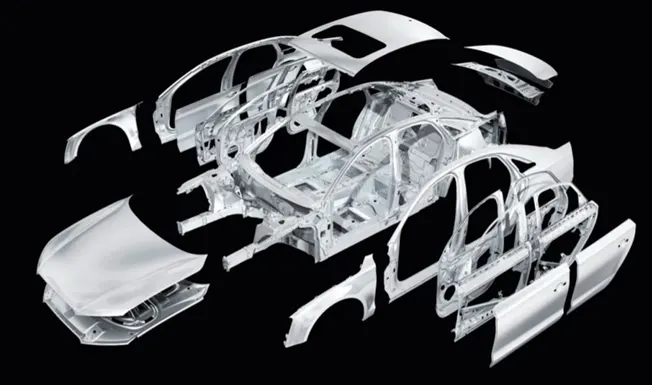
Figure shows the automated BiW structure and the exploaded view.
Major factors influencing BiW fixture design:
- Number of parts
- Materials
- Internal structure reinforcement
Parts in BiW
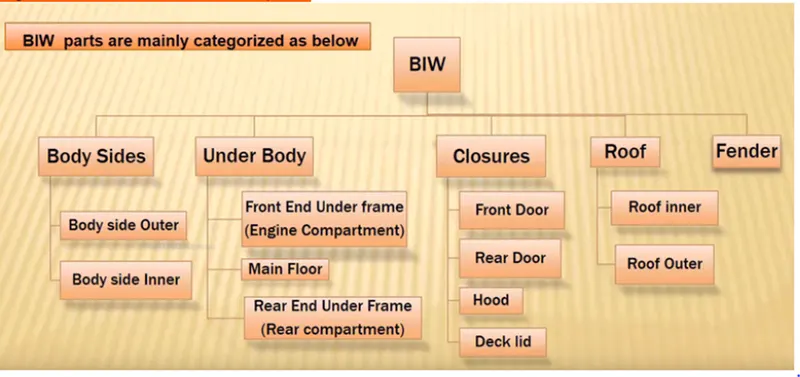
Parts in BiW consists of mainly 5 components:
- Body Sides: It denotes the right and left sides of the automotive sheet metal body. The outside panels provide the shape of the car body whereas the inner panels reinforce the shell of the body.
- Under Body: The main task of the underbody shield is to effectively protect vital parts of the powertrain and steering system.
- Closures: Automotive closures are a critical part of the vehicle, as they contribute to vehicle safety
- Roof: An automobile roof or car top is the portion of an automobile that sits above the passenger compartment, protecting the vehicle occupants from sun, wind, rain, and other external elements.
- Fender: Its primary purpose is to prevent sand, mud, rocks, liquids, and other road spray from being thrown into the air by the rotating tire.
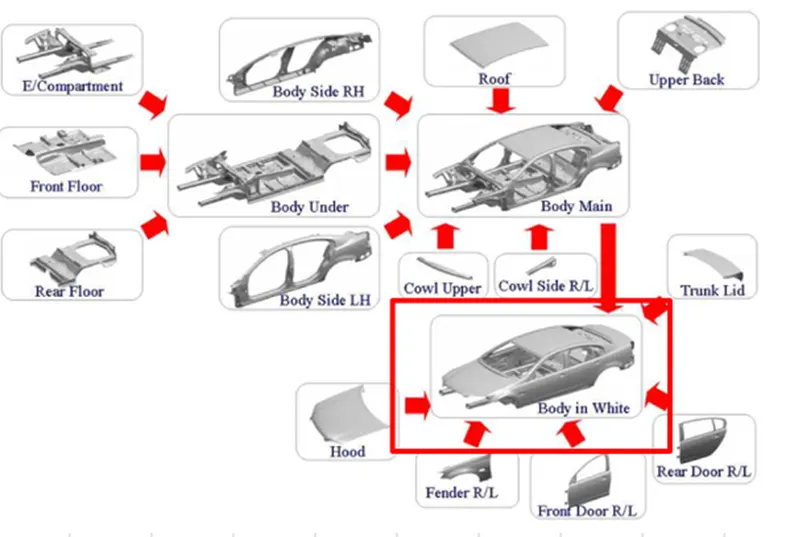
The first part that is body sides, it is further divided as Inner and Outer body Sides
The under body is divided as front end, main floor and Rear End
Closures are sub divided as Front door, Rear door, Hood, Deck lid.
Roof is divided as Inner and Outer roof.
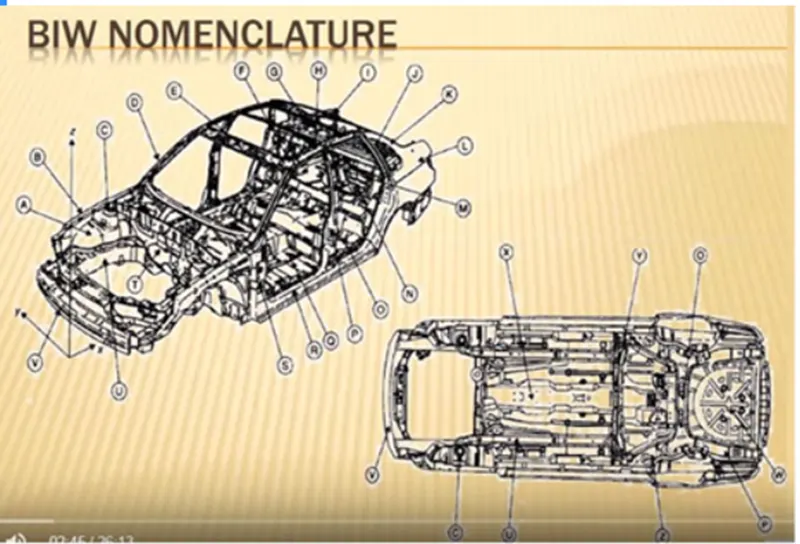
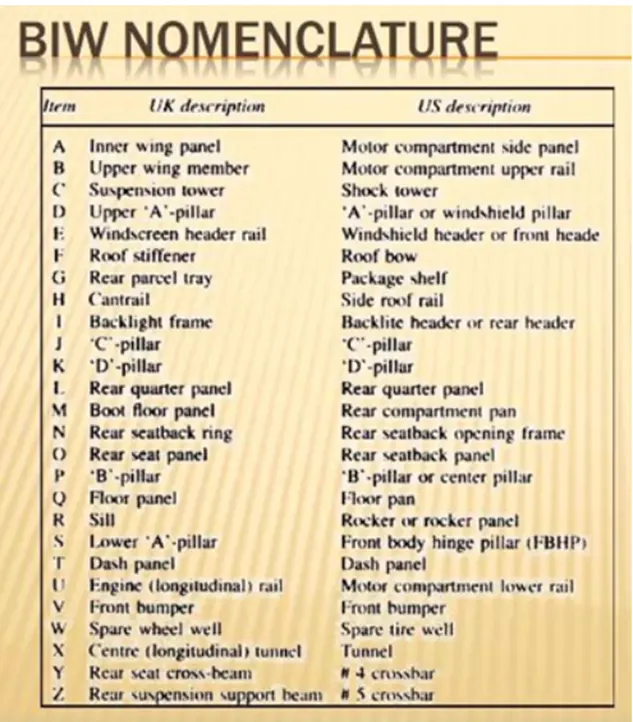
Q2. What do you understand by BIW nomenclature?
Ans. BiW nomenclature is the different names given to different components in sheet metal structure of body.
BiW or Body in White is basically spread into various different parts and components and to define them BiW nomenclature is used.
Through nomenclature, we give different names to different parts so that it becomes easier to define them.
A nomenclature in BIW is basically naming every part of the body. These names can be said as subparts of the already categorized parts above. The nomenclature differs a little bit from region to region but the overall idea is to name individual automotive sheet metal components. Below images show the nomenclature of BIW:
Q3. What is fixture & its types?
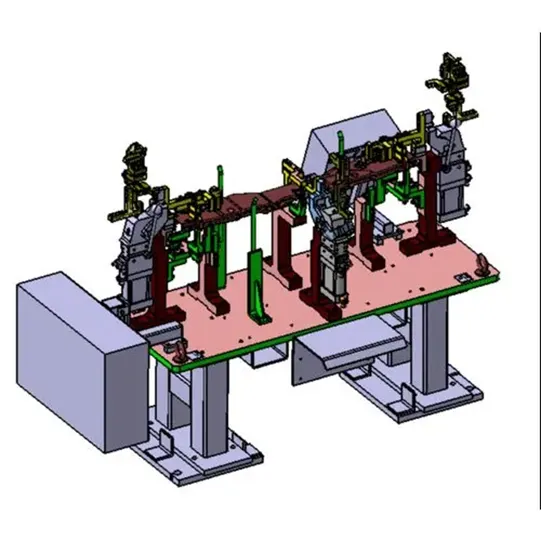
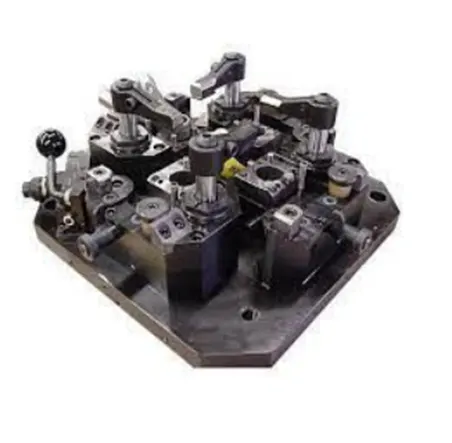
Ans. Fixture is a device which holds the workpiece by using 3-2-1 principle. Fixture should firmly hold the work piece without causing vibrations, distortions, stresses in the workpiece and fixture should not disturb or interfere the processing of the workpiece. For this the locating elements need to be placed carefully, clamping has to be light but firm, placement of clamping elements has to be clear of welding area and the fixture has to be quite stable and rigid to withstand the welding stresses.
A welding fixtures (tool) consist of number of units together to hold car panel together. Welding fixtures are normally designed to hold and support the various components to be welded.
Types of Fixtures:
- Production fixtures: This type of fixture is used for the purpose of mass production. It is fixture on which car body get assemble & go to end customer. These types of fixtures require high constancy through its operation to maintain geometry of parts. Since these fixtures are used for mass production, they should be simple, rigid and hard. These fixtures should be periodically maintained in regular intervals to avoid errors and repairs.
- Pre-Production Fixture: These can be referred as the protype fixtures. Once the preproduction operation fixture functions properly, then modifications are made to improve and to make it simple and reliable. These fixtures are used in special cases or during initial or trail stages of processing/production.
- Checking Fixture: These are used for checking and inspection purpose. No processing is done in these fixtures. These fixtures consist of gauges for checking the dimensions and tolerances and its accuracies. In some checking fixtures, fixtures are fixed and CMM devices check the geometrical accuracies. We check all locating and other assemblies through gauges.
Q4. What is the basic principle of fixture design?
Ans. The basic principle of fixture design says that for any body, there are 12 degree of freedom, 6 translational and 6 rotational. All the 12 degree of freedom should be fixed.
6 translation degrees of freedom: +X, -X, +Y, -Y, +Z, -Z
And 6 rotational degrees of freedom
-Clockwise around X axis (CROT-X)
-Anticlockwise around X axis (ACROT-X)
-Clockwise around Y axis (CROT-Y)
-Anticlockwise around Y axis (ACROT-Y)
-Clockwise around Z axis (CROT-Z)
-Anticlockwise around Z axis (ACROT-Z)
Locating principle:
3-2-1 Principle: The 3-2-1 method is a work-holding principle where three pins are located on the 1st principle plane, i.e., either XY, YZ, ZX. And two pins are located on the 2nd plane perpendicular to the 1st plane, and at last, one pin on the plane is mutually perpendicular to the 1st and 2nd planes.
Q5. Elaborate types of BIW Stations?
Ans. BIW assembly line is where different panels of the assembly are joined in each specified zone having individual zone as Underbody zone, door zone, hood zone etc.
These zones are classified as stations and these stations are sub divided as Tools, Gripper, Stands, etc.
A tool is a fixture which consists of units together to hold a car part in general. Tools are divided as
- Geo tool: Geo tool is a fixture in which the geometry of the panel which are welded together is joined accurately. The pin tolerance will be closer, approximately -0.15mm in general.
For example, panel hole size is 20mm, the pin diameter should be 19.85mm.
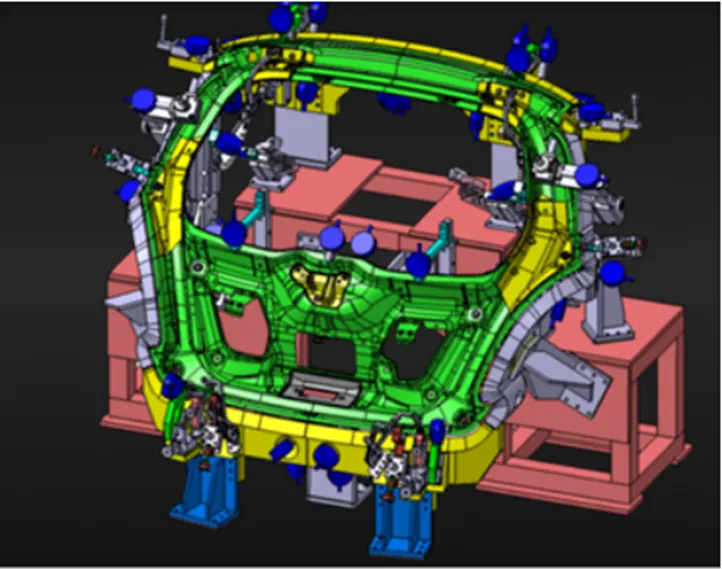
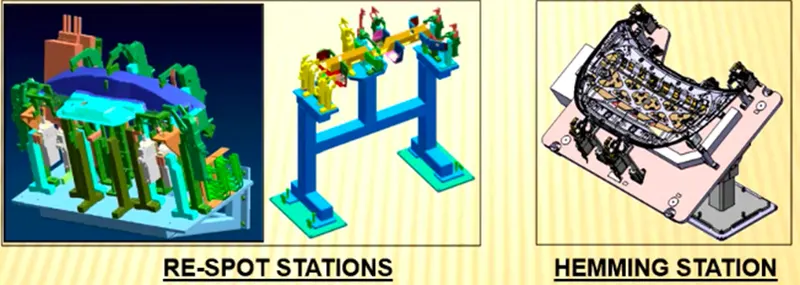
- Re Spot tool: A re-spot tool is the tool in which the remaining welding spots which are not achieved in the geo tool are welded from the pre welded panel from geo tool.
The pin tolerance for the re spot will be tolerance within -0.28mm in general.
For example considering a panel hole size 20mm, pin diameter should be 19.72mm
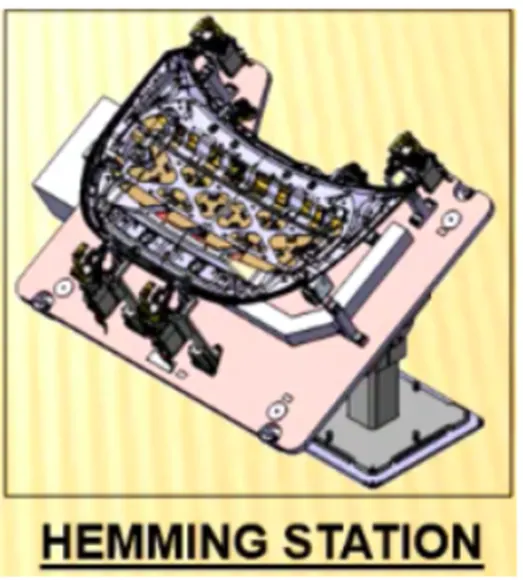
- Marriage or hemming tool: It is the fixture in which inner panel assembly and outer panel assembly are joined together. These are done by welding or hemming in case of closure panels.
- Checking station: It is a fixture which is used to check automotive parts or assemblies ensuring all the coordinates, relative dimensions, and positions as per tolerance
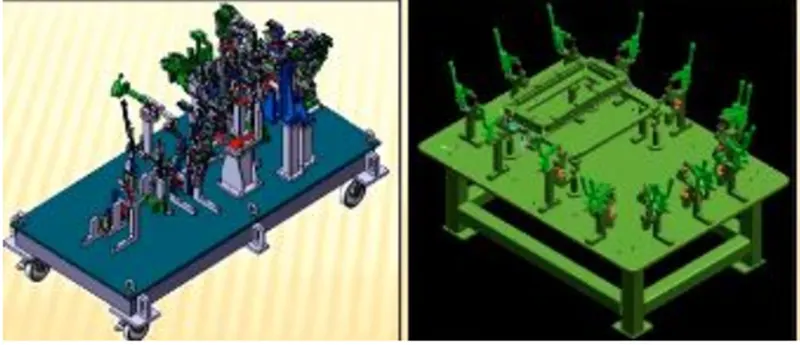
Gripper: A gripper is a device which holds the car panel and is fixed to the manipulating end of the robot.
Types of gripper:
Material Handling Gripper: These grippers are designed for handling the car panel from one tool(station) to other tool(station).
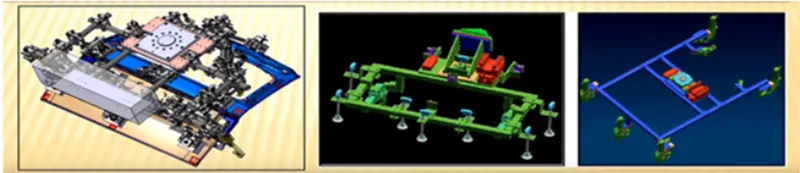
- Process gripper: These are used for handling car panel from one station to other along with the processes like pedestal welding, pedestal riveting, gluing, sealing, etc.
- Combo gripper: These are designed for handling the car panel from one tool to other along with combination of weld gun at another side of gripper for welding.
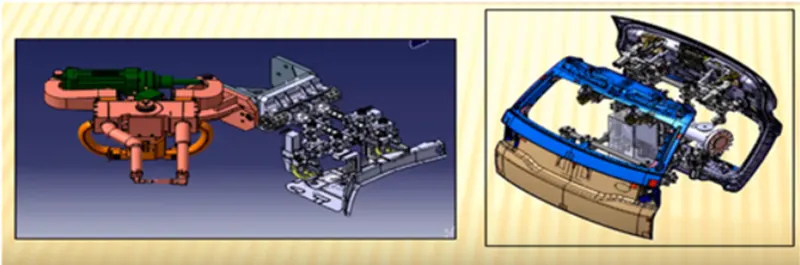
Dual gripper: These are designed for handling the car panel from one tool to other along with two sided gripper
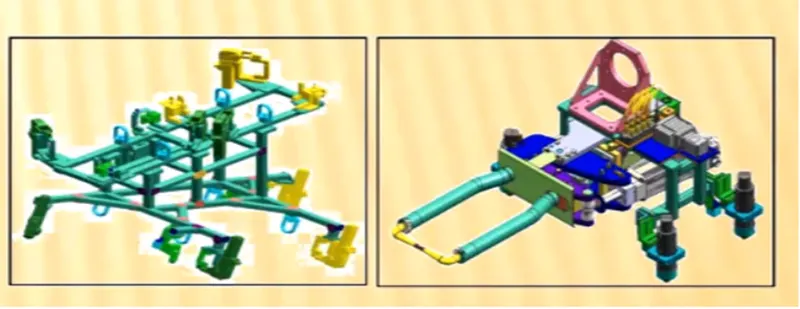
Stand and types:
Stands are used to hold the part when not in use or also it is used to mount some parts or bodies on it.
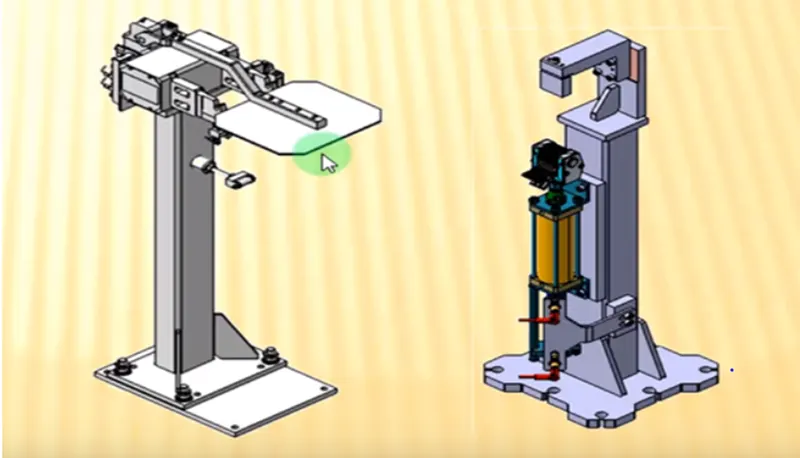
Gluing and sealer stand: Gluing gun or sealer gun is fixed to a welded or standard stand which is grouted to the floor permanently
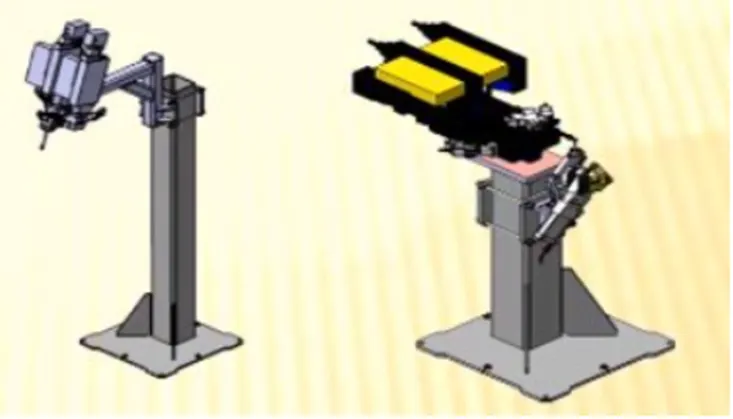
- Docking stand: When robots are selected for multitasking purpose like material handling & welding, which cannot carry both due to some limitations (pay load capacity of the robot or space constraint) the robot will drop & pick the gripper or gun after completing the respective operation with the help of docking stand.
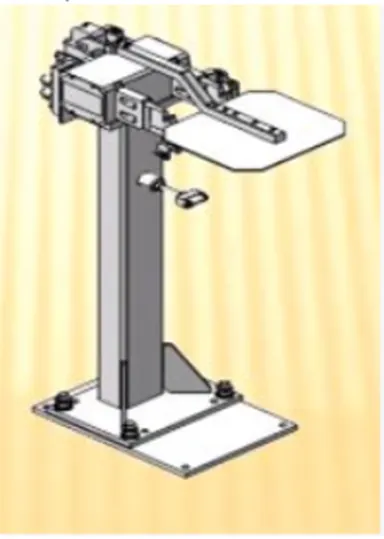
- Date stamp stand: The panel will get the date embossed on to it, with the date stamping device which is mounted on this date stamp stand.
- Pedestal gun stand: Weld gun is mounted to a fixed stand which is grouted to floor permanently.
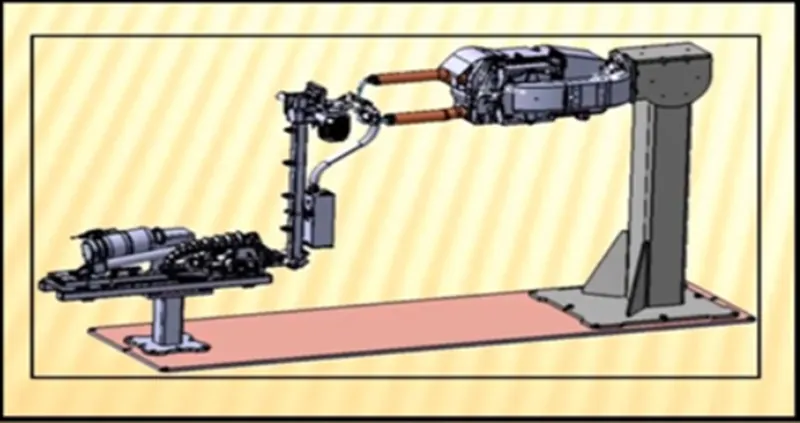
- Take out trolley: It is used to take out the car panel from the robotic working cell between the cycle for inspection purpose.
Q6. What are the basic terminologies used in the BIW fixture?
Ans.
- Mylar/ Fingers: These are the part holding the panel from top and bottom. Upper part is called clamping Mylar and lower part is called resting Mylar.
- PLP(Principle Location Points): These are the points which is used to locate the pins in panel to maintain geometry.
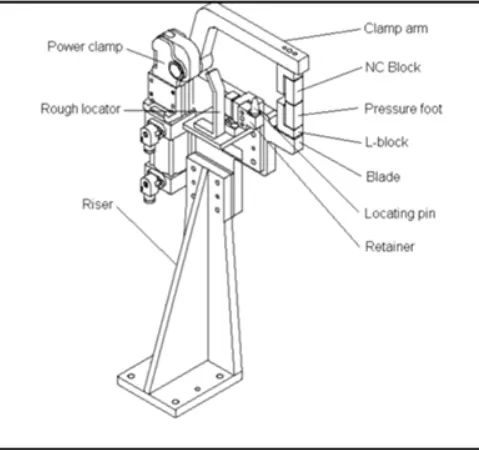
- Blade: Blades are plate like structure which are mounted to the riser.
- Riser: Riser is a structure which gives certain height to work piece.
- Shims: To rectify/balance the tolerances in fixture we use thin plate like structure called shims.
- Rough locators: It gives the rough idea or guide us to keep the work-piece in between certain limits.
- Hardware: Bolts, faster and nuts called hardware.
- CMM: Coordinate measuring machine is used for measuring the dimensions as per given data.
- Units: A fixture is assembly of different parts. Each part is called as unit.
- Number plate: To identify the unit easily in assembly of fixture number is embossed on that.
- Co-ordinate plate: Coordinate plates are coordinate measuring tool where the CMM measures the coordinate from and it takes that as origin and check all the other holes accordingly.
- Name plate: A plate where it is mentioned the date, type, panel number, company name etc. is mentioned.
- Clamp arm: The rotating/ movable structure in clamp.
- Class A surface/ skin surface: The surface which is visible to end customer ( without dent/mark)
- Reed switches: These are magnetic reeds that are mounted on cylinders and electronic switches which are operated by sensors.
- Sensors: These are used for knowing the positioning/accuracy of unit in their respective place by giving Input to them
- Pivot: The point with respect to clamp arm moves through a point call pivot.