Week 1:- Introduction to BiW and Fixtures Challenge
What is BIW-
Body in white (BIW) refers to the stage in the construction of a car body in which the frame has been put together before painting. Body in white refers to a car body sheet that has been welded together except for moving parts (e.g., hoods, fenders, etc.), trimmings (e.g., glass, seats, etc.), and chassis sub assemblies. BiW accounts for around 27% of a car's curb weight and is still the most important factor in how well it performs. BiW can be built in two different structures: the monocoque structure, in which all body components carry load and are integrated with each other, and the body-on-frame structure, in which the frame is the major load-carrying member.
BIW parts-
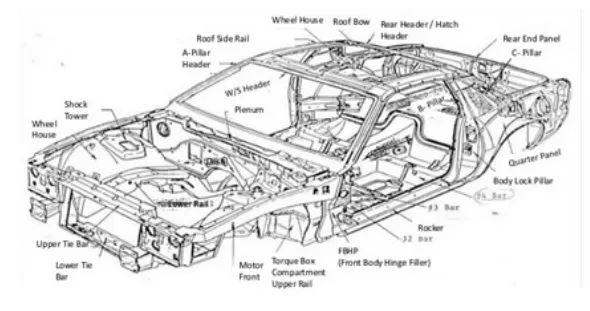
BIW consists of various parts such as hood, fender, roof, quarter panel, floor pan and bulkhead such as A pillar, B pillar, C pillar etc.
- Hood-
A hood is essentially a form of door that closes the engine compartment. Hoods are made up of two primary components: an inner panel and an exterior panel. The inner panel provides strength to the outside sheet, while the outer sheet is simply a sheet with curves for aesthetic purposes.
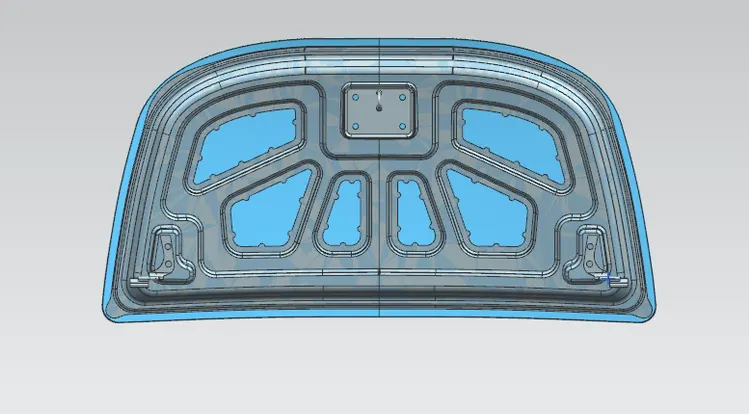
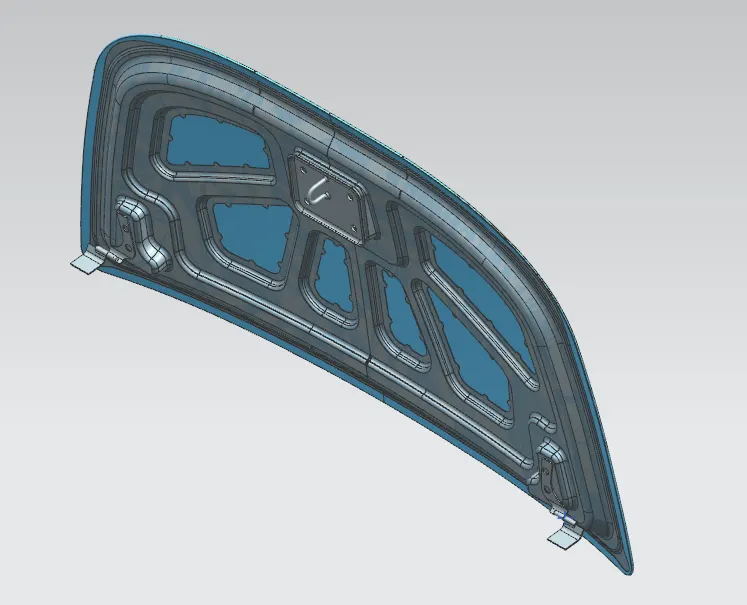
- Fender-
A fender is a curved sheet that is installed over a tyre to keep mud, gravel, and other road debris from flying off. A fender is simply a wheel housing that keeps road debris confined. The fender is attached to the bumper, the sill, and the A pillar. Baffles can also be mounted on Fender. Fenders not only protect your car from road debris, but they also keep road debris from being hurled at other vehicles or pedestrians, causing damage. On the fender, we can sometimes make space for indicators and a rear view mirror.
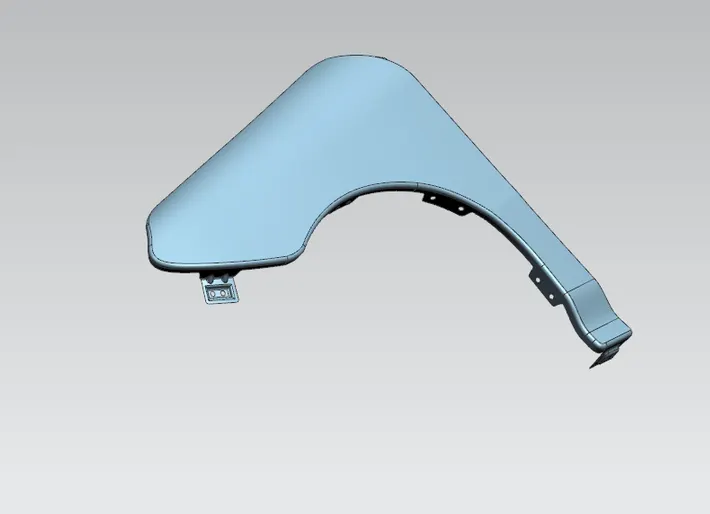
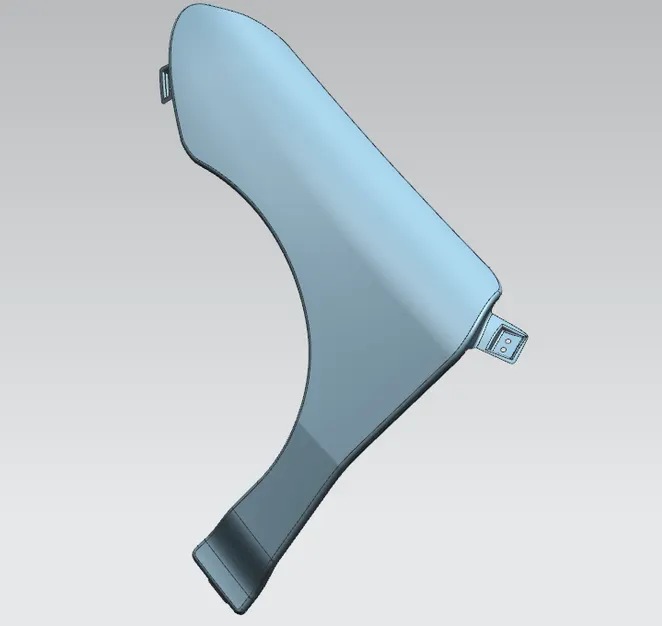
- ROOF-
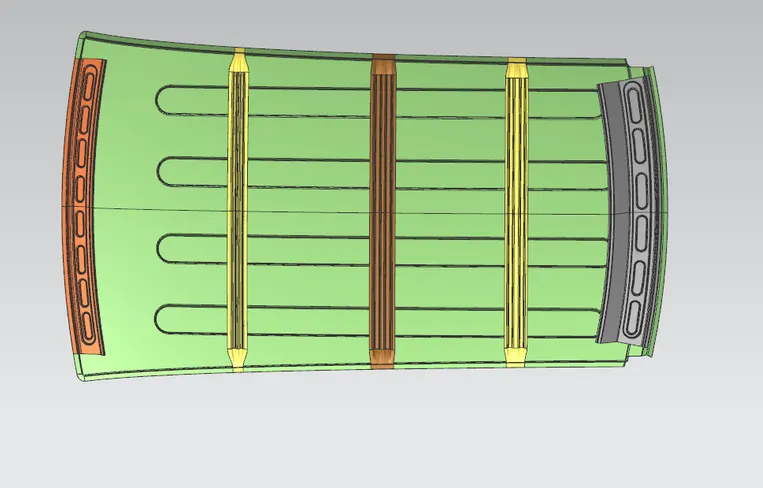
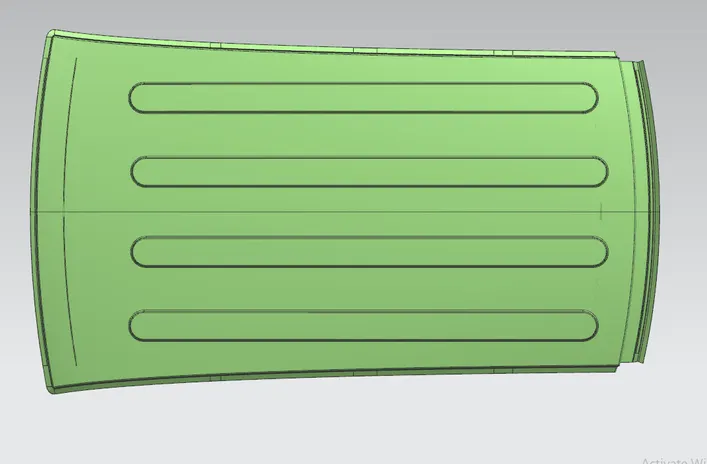
The roof of a car is a sheet metal structure that covers the upper portion of the vehicle. The primary goal of a roof is to shield the vehicle's passengers from rain, dust, sun, wind, and other external factors. The roof is made up of an outer panel, a front roof rail, a rear roof rail, and additional reinforcements; it may also include a sun roof, inside lighting, and other features.
Backdoor & reinforcements
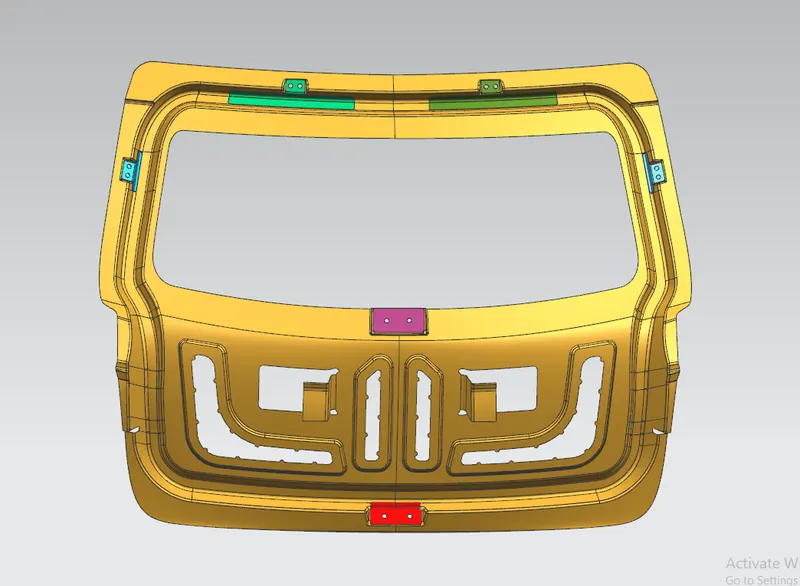
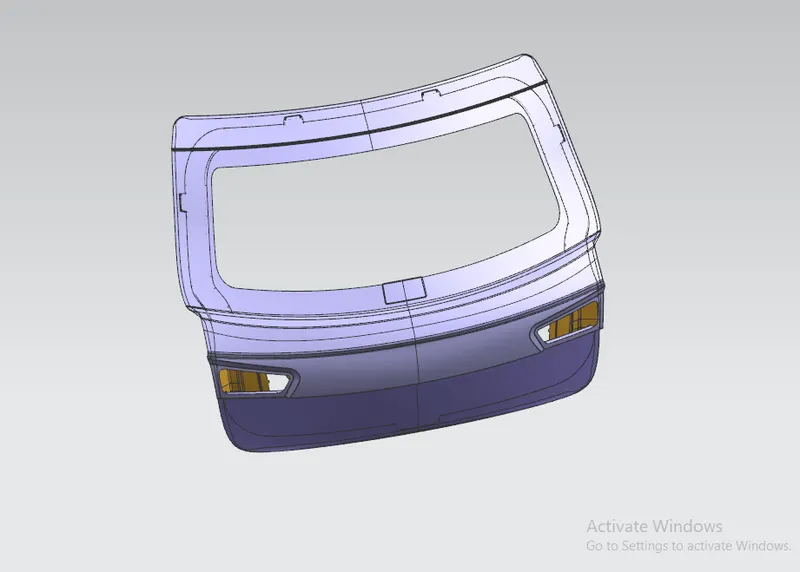
The backdoor of the automobile opens to reveal the boot, which may be used to store luggage, spare wheels, and other stuff. These doors can be operated manually or electrically. Electric vehicles account for the vast majority of high-end vehicles. In a four-door car, the back door is also known as the 'Hatch,' 'Tailgate,' 'Trunk-lid,' or 'Boot-door.' It's the part of the house at the back. The car that has wiper motor mounts, tail lamps, and hinges to hold the weight of the trunk when it is opened, as well as gas stays to help open and close it, radars and cameras, and so on
Body side- it consists of A pillar, B pillar, C pillar Cowl, Seal, Floor etc.
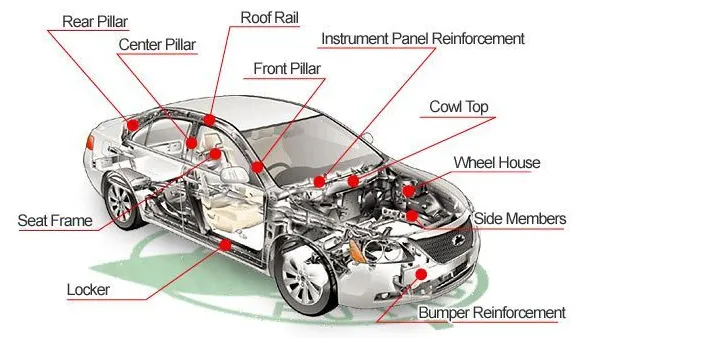
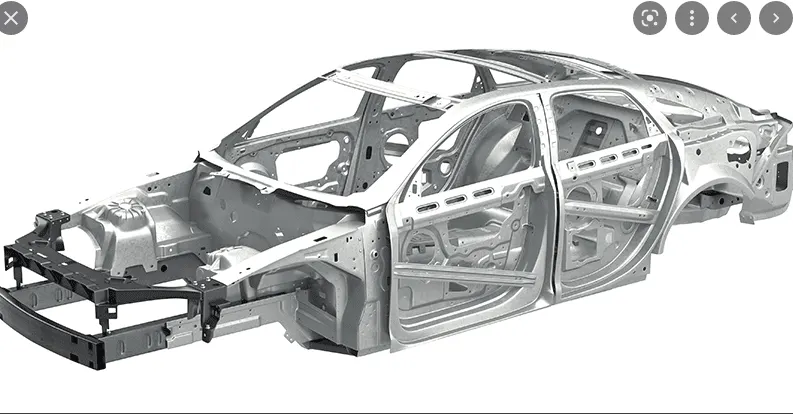
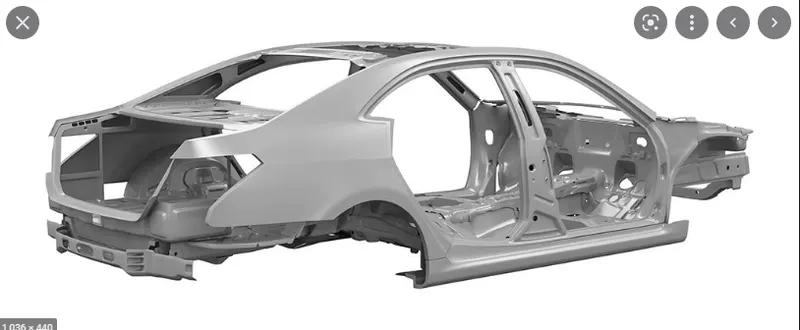
BIW Nomenclature
BIW Nomenclature is a set of parts names or words that are used when addressing a specific part or component in different parts of the world. Each part or component has its own name. For example, a hood is also known as a bonnet, and a backdoor is also known as a tailgate in some areas.
European BIW Nomenclature
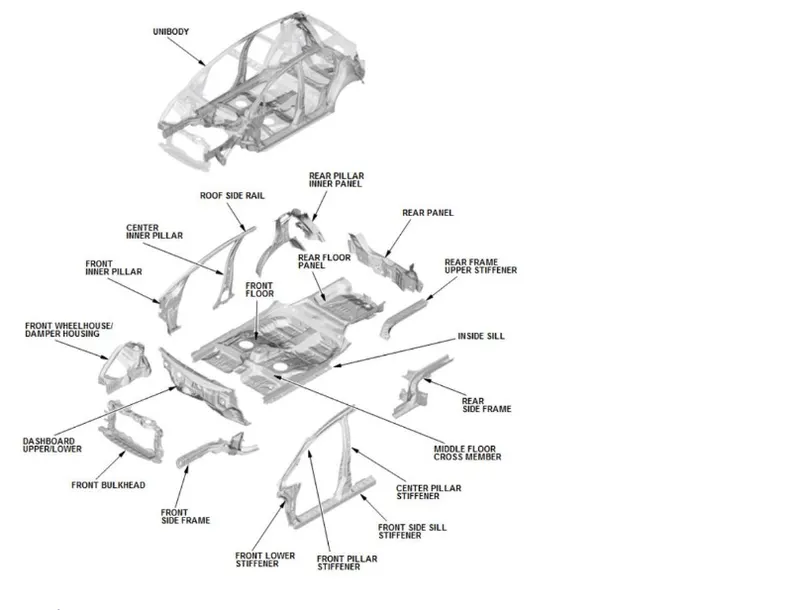
US BIW Nomenclature
What is Fixture & its types
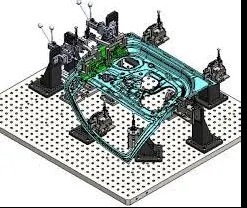
It's a device that holds the components/workpiece to be worked/processed using the 3-2-1 method. Fixtures are used to hold and support components while they are being treated, as well as to prevent deformation in the work-piece.
Fixtures come in a variety of shapes and sizes.
Production Fixture:
It is employed in mass production. It maintains the appropriate geometry structure and tolerance with high precision consistency throughout the process.
Pre-production Operation Fixture:
These fixtures are used in operations that are part of the planning process as well as the execution of every task that must be completed before production begins.
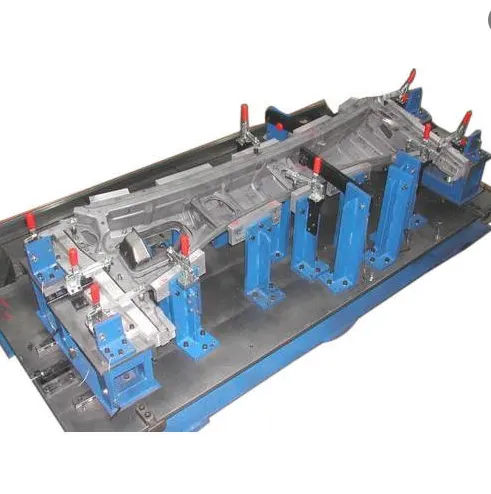
Checking Fixture:
The device that holds a part in place for CMM (Coordinate Measuring Machine) checks or other reasons is known as a checking fixture. CMM Fixture is another name for it.
What is the basic principle of fixture design?
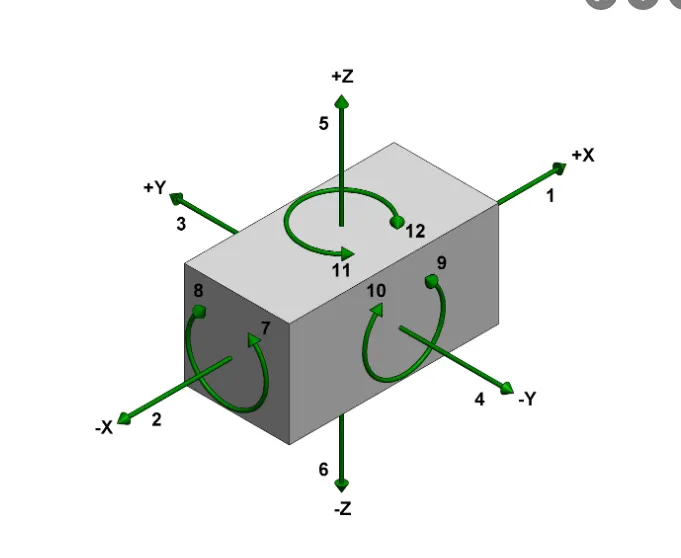
According to the 3-2-1 principle, "the six locators (Body face) are necessary to restrict every degree of freedom, i.e. six, but if positive and negative are considered, then 12 dof for anyone." Clamps and locators are used to constrain motion. To locate each work component in the fixture, all 12 degrees of freedom (6 rotation and 6 translation, positive and negative) must be fixed.
types of BIW stations
Many tools are kept at one place together to performed the work is called station.
Geo Station:
Tack welding is done on all of the parts that will be assembled in the Geo fixture. All parts must be located with two locating pins, according to standard Geo fixture guidelines. A pin can be used to connect two or more elements together.
In the case of a Geo fixture, all machine parts should have a maximum tolerance of ±0.02 mm, while pin positioning accuracy should be within ±0.1 mm.
Spot/MIG welding in Geo fixtures is done in such a way that it achieves the requisite accuracy after being removed from the fixture and is not disturbed during transportation from Geo fixture to re-spot fixture. The accuracy of the sub assembly is controlled by the geo fixture in all three axes.
Re-spot Station:
The already welded panel in Re-spot will be welded in the Re-spot fixture. If we require 15 locations welded between two panels, for example, we load two panels and hold them separately, welding 8 spots. In the second fixture, the remaining locations will be welded. The first is a geo fixture, followed by a Re-spot fixture.
Marriage or hemming station:
Inner and outer panels are bonded together using hemming or welding under this tool. Copper strips are employed between the weld tip and the A-class surface in this station to avoid leaving a mark on the outside panel (A class surface).
Checking Station:
Under this station tool, all coordinate systems, relative dimensions, and position as per tolerance are evaluated for automobile components or assemblies. This station can be of the gauge type, fixed type, or automated type.
Sealing Station
Sealant application is done at this station. This technique can be done manually or with the help of robots. A sealer is applied between two panels to prevent the panels from flattening due to friction.
Curing Station
The product received after sealing is stored at room temperature in this station to allow the sealant to dry and improve bonding strength between the panels and pieces.
Pedestal Weld/Rivet:
The weld gun is mounted to a fixed stand that is permanently grouted to the floor, and the process gripper carries the automobile panel to the weld site with the fixed weld gun.
Take out Trolley station
It is used to take the car panel out of the robotic working cell between the cycles for inspection purpose.
Buffer Station:
Buffer storage aids in the smooth running of production processes. Items that will be needed for manufacturing or orders are temporarily stored in buffer storage spaces or systems. Normally, there are no defined storage slots for individual things in buffer storage. To facilitate seamless processes, buffer storage facilities are frequently positioned near shipping and receiving ports, as well as in gaps between two production zones along manufacturing lines.
Basic terminologies used in the BIW fixture?
- NC/MYLARS/FINGERS: MYLAR is a sort of block that comes into contact with the panel and holds or clamps it in place. In the automobile line, mylars are always intended. NC (Numerically Controlled) Block is another name for Mylar.
- PIN: Pins are utilised to secure the panel's circular movement. In general, there are two types of pins: round pins and diamond pins. Pins are shimming in two and three directions depending on the angle of the pin with respect to the carline.
- BLADE:Blade is the plate that joins the Riser to the Clamp cylinder. This plate is crucial in the construction of the unit.
- L BLOCK:An L block is a plate with the shape of an L. This piece serves as a link between mylar and Blade. L blocks are commonly used to provide shimming.
- PIN BOCK:Pin Retainer is another name for Pin Block. This block holds the pin in place and prevents it from rotating. A manufactured pin block or a standard pin block are also available.
- RISER: The Riser is the portion that is fixed on the base plate and supports a clamp or pin cylinder on it. The riser might be a standard part or a custom-made part, depending on the project.
- WELDMENT: Weldment is the process of joining two or more components together by welding. The thumb rule for making a weldment is to have a 5 mm overlap on each other plate to allow space for welding.
- Principal Locating Points (PLP):The PLPs are the spots on the fixture where the automobile panels will be mounted. The welding fixture includes locating components to assist the operator in loading the automobile panels onto the fixture in the proper location and orientation.
- SHIMS:A shim is a small piece of material, commonly tapered or wedged, that is used to fill small gaps or voids between items. Shims are commonly used to give support, modify for a better fit, or level a surface. Shims can also be employed as spacers between parts that are prone to wear.
- ROUGH LOCATORS:Rough locators are used in the automation process to help locate workpieces. The intended place where you want the workpiece to be when it is being worked on by a person, team, or robot is referred to as "locating." It's a tool for establishing and maintaining a part's position in a jig or fixture.
- PIVOT:A mechanism's central point, pin, or shaft on which it rotates or oscillates.
- CLAMP ARM: It is a part of clamp unit which moves over a particular axis.
- NUMBER PLATE: It is a plate attached to each unit with a unique number on it to recognise the unit.
- REED SWITCHES & SENSORS: The flow of electricity in a circuit is controlled by a reed switch, which is an electromagnetic switch. When a magnetic field is directed towards the switch, two or more ferrous reeds housed within a tiny glass tube-like envelope become magnetised and move together or separate. Sensors are utilised to determine if the panel is loaded or not.
- CLASS-A SURFACE:Class-A (sometimes known as 'Strak') is a term used in the automotive industry. It specifies the final manufacturing surface data for the car's cosmetic components.