Design Overview in Automotive Industry
Aim:- To Study an overview of Choosing a Material for a component.
Q1. What are the factors to be considered while choosing a material for a component?
The main factors for selecting the material are
- Light Weight
- Economic Effectiveness
- Recycling
- Safty
LIGHTWEIGHT
Lightweight Material can improve fuel efficiency more than other factors. Experiments reveal that 10 per cent of weight reduction can lead to 6 to 8 per cent improvement in fuel usage.
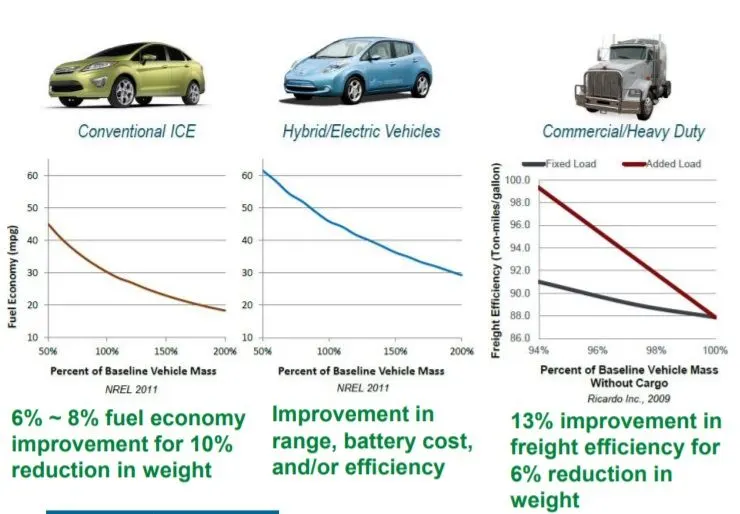
- Replacing material of high specific weight with lower density materials without reducing rigidity and durability.
- Optimizing the design of load-carrying elements and exterior attachments to reduce their weight without any loss of rigidity or functionality.
- Optimizing the production process, such as reducing spot welding and replacing new joining techniques.
ECONOMIC EFFECTIVENESS
One of the most important consumer-driven factors in the automotive industry is the cost, which determines whether any new material has an opportunity to b selected for a vehicle component.
Cost includes three components:
- The actual cost of raw materials.
- Manufacturing value-added.
- The cost to design and test the product.
RECYCLING
There are Some guidelines in the European Union and Asian countries about this issue.
For example, in the UK, around a million vehicles reached the end of their life each year these vehicles are considered hazardous waste until they have been fully treated.
If we count down to the smallest screws, a single car has about 30,000 different parts. Recycling a car is therefore a little more complicated than an empty beans tin. It takes time, knowledge and expertise to recycle, re-use or recover 95% of a car’s weight.
Here are some well-known car parts which can be recycled,
- Engine oil
- Windows and Windscreen
- Scrap metal
- Car batteries
- Car tyres
- Plastic components
- oil filters
- Car engines
- Car mats and carpets
- Starters & Alternators
SAFETY
The ability to absorb impact energy and be survivable for the passenger is called "crashworthiness" of the structure in the vehicle.
At first two concepts in the automotive industry should be considered:
- Crashworthiness
- Penetration resistance.
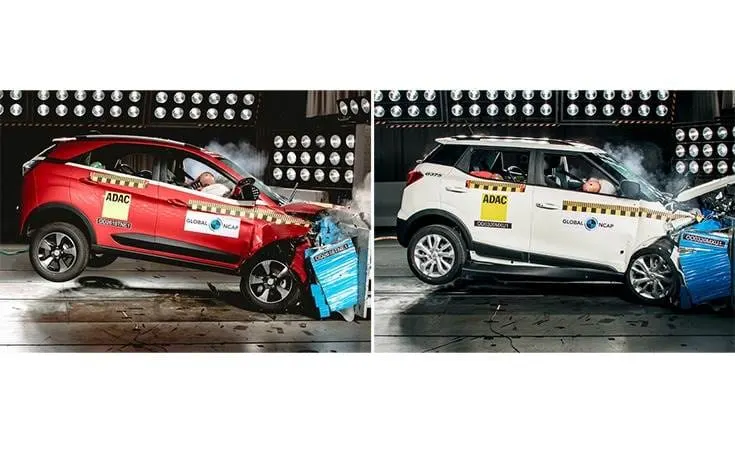
In the more accurate definition of crashworthiness, it is the potential of energy through controlled failure mode and mechanisms.
However, Penetration resistance is concerned with the total absorption by allowing projectile or fragment penetration.
| LIGHTWEIGHT | ECONOMIC EFFECTIVENESS | SAFETY | RECYCLING | |
| PLASTICS | + | + | + | + |
| STEEL | - | - | - | - |
The use of Plastics in the Automotive industry has proven extremely beneficial.
In response, Automotive Manufacturers are pursuing ways to reduce the weight of vehicles without compromising performance or safety by using plastic components to replace steel. The growing market for Electric vehicles is further driving the need as added weight decreases a vehicle's range between recharging. Among leading solutions are thermoplastic composites that are just as strong and significantly lighter than — the steel and aluminium they are engineered to replace.
Q2. Explain thermoset and thermoplastic materials in brief along with examples.
THERMOSET
A Thermoset plastic refers to a polymer that becomes rigid in an irreversible manner on the application of heat. Furthermore, such a material can also be called a thermosetting polymer or thermoset. Moreover, such materials have polymers that, during the curing process, cross-link together to form an irreversible chemical bond.
Application Of Thermoset Plastics:
Thermoset plastics offer an enhanced high-performance combination of thermal stability, chemical resistance, and structural integrity. Thermoset components are used extensively in a wide range of industries and are used for applications in the automotive, appliance, electrical, lighting, and energy markets due to excellent chemical and thermal stability along with superior strength, hardness, and moldability
THERMOPLASTIC
A thermoplastic refers to a plastic polymer material that can become mouldable or pliable at a particular temperature. Furthermore, the solidification of thermoplastic happens upon cooling down. Moreover, the molecular weight of thermoplastics tends to be high.
Common materials used to produce these pipes are PVC or CPVC. Additional materials include polypropylene, PVDF, ABS, nylon, and polyethylene. Polyethylene gas tanks are used to transport natural gas for use in residential and commercial applications.
Application Of ThermoPlastics:
Other common applications for thermoplastics include high-pressure polyethylene to encapsulate rigid objects like electrical equipment. Low-pressure polyethylene is very elastic and ideal for insulating electrical cables. Polyamide is most commonly associated with the production of ropes and belts.
The important difference between thermoplastic and thermoset plastic:
| Parameter | Thermoplastic | Thermosetting Plastic |
| Synthesis | The synthesis of thermoplastic can happen by a process of addition polymerization | The synthesis of thermosetting plastics can happen by the process of condensation polymerization |
| Tensile strength | They have a low tensile strength | Their tensile strength is high |
| Melting Points | The melting points of thermoplastics are low | The melting points of thermosetting plastics are high |
| Bonds | They involve secondary bonds that are between molecular chains | They have primary bonds between the molecular chains that are together due to strong cross-links |
| Molecular weight | In comparison to thermosetting plastic, their molecular weight is lower | Their molecular weight is higher |
| Processing | The processing of thermoplastic is by the thermoforming process, rotational moulding, injection moulding, blow moulding, and extrusion process | The processing of thermosetting plastic is by reaction injection moulding and compression moulding |
Q3. What are the pros and cons of thermoset plastic material?
|
Thermoset Pros2 |
Thermoset Cons2 |
|
More Resistant against high temperature |
Cannot be recycled. |
|
Hard and rigid |
Much more difficult to surface finish. |
|
Excellent aesthetics finishes |
Cannot be remoulded or reshaped. |
|
High mechanical property |
Poor thermal conductivity for housing replacements. |
|
Cost-effective |
The rigidity of the material can result in product failure when used in high vibration applications. |
|
Excellent dimensional stability |
Q4. What are the pros and cons of thermoplastic material?
|
Thermoplastic Pros |
Thermoplastic Cons |
|
Extremely adhesive to metal |
May soften when reheated |
|
High recyclable |
|
|
Superb impact resistance |
|
|
Can be remoulded and reshaped |
|
|
Excellent corrosion resistance |
|
|
Slip enhancement |
|
|
Detergent and chemical resistance |
Can be more expensive than a thermoset |
|
Flexibility and elongation of the coating film |
|
|
Electrical insulation |
|
|
Chip resistance |
|
|
Aesthetically-superior finishes |
|
|
Superb corrosion resistance |
Q5. Explain the manufacturing process in thermoset and thermoplastic material?
Manufacturing Process in Thermoset material:
They are types of manufacturing processes,
- Compression Moulding
- Sheet Moulding
- Bulk Moulding Component (BMC)
- Thermoset Injection Moulding
Thermoset products are made through liquid moulding processes. The polymers and other agents are fed into tanks or barrels, where they are heated to a liquid state and mixed. Then the liquid polymers and other agents are injected into a mould cavity. As the material cools and hardens to the configuration of the cavity, it goes through a curing process where the polymers cross-link together. That process forms an irreversible chemical bond that prevents the risk of melting, softening or warping when or if the finished product is subjected to high heat or corrosive environments. This makes thermosets perfect for high-heat applications and outdoor use.
There are two primary liquid moulding processes used to produce thermoset plastics:
Reaction Injection Molding(RIM):
The RIM moulding process begins when two liquid agents an A-component (polyol) and B-component are placed in separate tanks and heated to an elevated temperature. They are then fed at high pressure into a mixed. Once combined, the mixed liquid flows into a mould where the chemical reaction takes place, forming a polymer in the mould.
Resin Transfer Molding(RTM)
RTM is a closed-moulding process also known as liquid moulding. Resin formulations are mixed with a hardener, or catalyst, and injected into a mould that contains dry fibres, such as fibreglass, where the part is allowed to harden and form.
Compression Moulding:
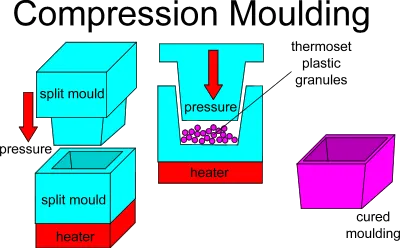
This is how thermosets are formed. The reaction occurs in the mould as the granules are heated and compressed. UF or urea-formaldehyde and MF melamine formaldehyde are formed by this method.
Manufacturing Process in Thermoplastic material:
There a many types of manufacturing processes of Thermoplastic:
- Injection Moulding
- Vacuum forming / Thermoforming
- Blow Moulding
- Rotational Moulding / Roto MOulding
- Extrusion
- Structural Foam
- RIM (Reaction Injection Moulding)
Injection Moulding
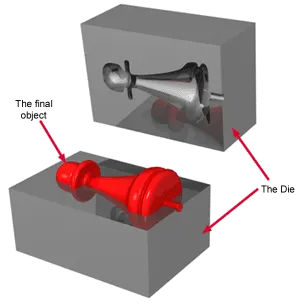
The injection moulding process is the most commonly used manufacturing process for the fabrication of plastic parts in the world. It is so popular because of its ability to create a wide variety of items of differing sizes, shapes, and complexities. Most injection moulding machines use the same process – thermoplastic conversion – to turn the plastic stock into the final moulded parts, using these five basic steps:
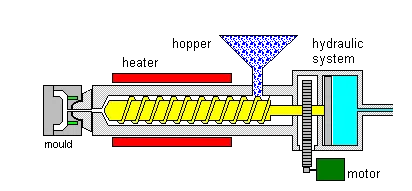
This technique is widely used for forming thermoplastic materials. It is similar to the casting technique used to form metal components. The plastic (in a powdered or granular form) is put in a hopper. A screw thread turns to force the plastic material through a heater, melting it. When all the materials have melted the screw thread then acts as a ram and forces the plastic into the mould, where it cools and solidifies.
Injection moulding is a very common process used in the manufacture of the casing of many electronic products such as TV's and radios.
Vacuum Forming of Thermoplastic:
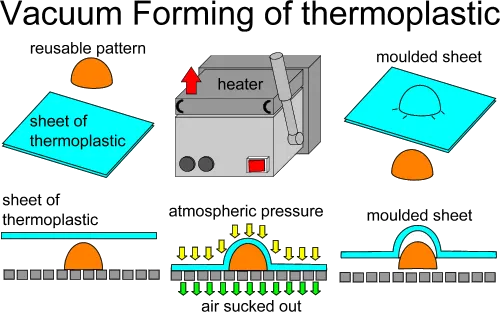
Vacuum forming is used to make simple moulds using thin sheets of thermoplastic. High impact polystyrene sheet is what is used in school (HIPS). PVC can also be used.
A mould is created from wood or epoxy resin and this is placed on the table (platten) of the vacuum forming machine. The sheet plastic is heated until it becomes soft.
The table with your mould on is lifted into position and a vacuum is used to draw the plastic over the mould. Vacuum forming only works with thin plastics and moulds with no undercuts.
The plastic can then be trimmed to the required shape.
Extrusion Blow Moulding:
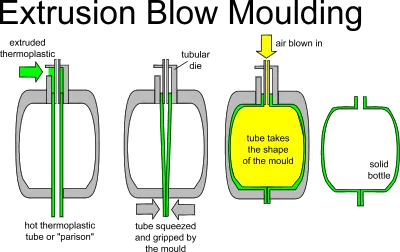
Blow moulding is used to manufacture bottles and containers with very thin walls. Blow moulding first requires a tube of plastic to be extruded. The tube of molten plastic is extruded between the two halves of a mould. Before the plastic cools the two halves of the mould are brought together and the air is blown into the centre of the material through a blow pin. This forces the plastic out forming the shape of the mould. The plastic can then be cooled and removed.
Extrusion Moulding of a Thermoplastic:
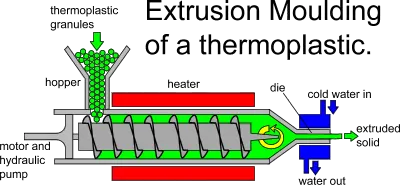
This process is widely used to form metal and plastic components that have constant cross-sectional shapes such as pipes, curtain rails etc.
The extrusion process is similar to injection moulding. Plastic granules are heated in a hopper and a screw thread forces the material through a die. The material is then cooled. Extrusion can only be used for simple shapes and the end product generally has a poor quality finish
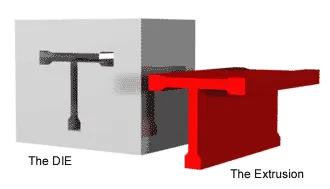
Q6. Materials classified as thermoplastic material? Self-learn on the above topic and include as much material as possible
Thermoplastic commonly employed for manufacturing include polyethene (PE), polyvinyl chloride (PVC) and polystyrene (PS), which often is used for packaging. Other groups of thermoplastics are acrylics, fluoropolymers, polyesters, polyimides, and nylons. All of these types can be melted down repeatedly and re-shaped into different forms. For example, a foam cup is a thermoplastic material man be re-melted and fabricated into a dish.
Some of the most common thermoplastic materials in use include:
- Polycarbonate
- Acetal Copolymer Polyoxymethylene
- Acetal Homopolymer Polyoxymethylene
- Acrylic
- Nylon
- Polyethene
- Polypropylene
- Polystyrene
- Polyvinyl chloride (PVC)
- Teflon
| Material | Properties | Uses |
| POLYETHYLENE OR POLYTHENE |
|
|
| POLYVINYLCHLORIDE (PVC) |
|
|
| POLYPROPYLENE (PP) |
|
|
| TEFLON OR POLYTETRAFLUOROETHYLENE (PTFE) |
|
|
| POLYSTYRENE |
|
|
| ACRYLICS (Polymethyl Methacrylate PMMA) |
|
|
| ABS (Acrylonitric Butadiene Styrene) |
|
|
| POLYVINYLIDENE CHLORIDE (PVC) |
|
|
| POLYAMIDES (Nylon) |
|
|
Q7. Materials classified as thermoset material? Self-learn on the above topic and include as much material as possible
Thermosetting polymers are built from various types of material that serve key roles and applications in the plastics fabrication industry. Thermal compounds are designed to form a thermally conductive layer on a substrate, either between components or within a finished electronic product. Thermoset purging compounds are used to clean moulding machines between runs of different colours or compositions. Gap filling products are used to fill in gaps or spaces between two surfaces to be bonded or sealed.
Specific types of thermoset materials that are in use within the plastics fabrication industry include the following:
RIM Thermosetting Plastic:
- PDCPD (polydicyclopentadiene)
- Polyurethanes
- Polyureas
- Structural Foams
RTM Thermosetting Plastic (Fiberglass-reinforced):
- Polyester
- Vinyl Ester
- Polyimides
Other Types of Thermosets and Thermoset Resins:
- Epoxy (e.g., carbon fibre epoxy resin)
- Phenolics
- Bismaleimide (BMI)
- Fluoropolymers
- Polytetrafluoroethylene (PTFE)
- Polyvinylidene fluoride (PVDF)
- Melamine
- Silicone
- Urea Formaldehyde
Q8. Which material is used for transparent property and what are its other properties?
- Poly Carbonate (PC) is used for transparent properties.
The other Properties:
- High Weathering Resistance: hence Used in Automobile Rear lamp
- High Strength and Toughness up to 140 degrees celsius
- Very good heat resistance and hence used in HVAC and radiator grills
- Good processing characteristics
- remains flexible down to -150 degrees celsius
- Non-flammable, self-extinguishing
- Good dimensional stability
- Resistance to weak acids, hydrocarbons and oils
CLEAR LENS OF HEADLAMP
IP CLUSTER COVER
Q9. Which property of ABS is used in Automotive components
Acrylonitrile Butadiene Styrene, or ABS plastic, is an opaque thermoplastic. It is an amorphous polymer comprised of three monomers, acrylonitrile, butadiene and styrene. ABS is most commonly polymerised through the emulsification process or the expert art of combining multiple products that don’t typically combine into a single product.
The acrylonitrile in ABS provides chemical and thermal stability, while the butadiene adds toughness and strength. The styrene gives the finished polymer a nice, glossy finish. ABS has a low melting point, which enables its easy use in the Injection moulding process and 3D printing. It also has high tensile strength and is very resistant to physical impacts and chemical corrosion, which allow the finished Plastic to withstand heavy use and adverse environmental conditions.
ABS can be easily moulded, sanded and shaped, while its glossy surface finish is highly compatible with a wider range of paints and glues. ABS plastics takes colour easily, allowing finished products to be dyed in exact shades to meet precise project specifications.
ABS/ PC BLEND
Polycarbonate/acrylonitrile butadiene styrene is most commonly used in the automotive and electronic industries.
PC-ABS plastic is used to make:
- Glove boxes
- Overhead and middle consoles
- Knee bolsters
- Blow-moulded seatbacks
- Automotive interiors
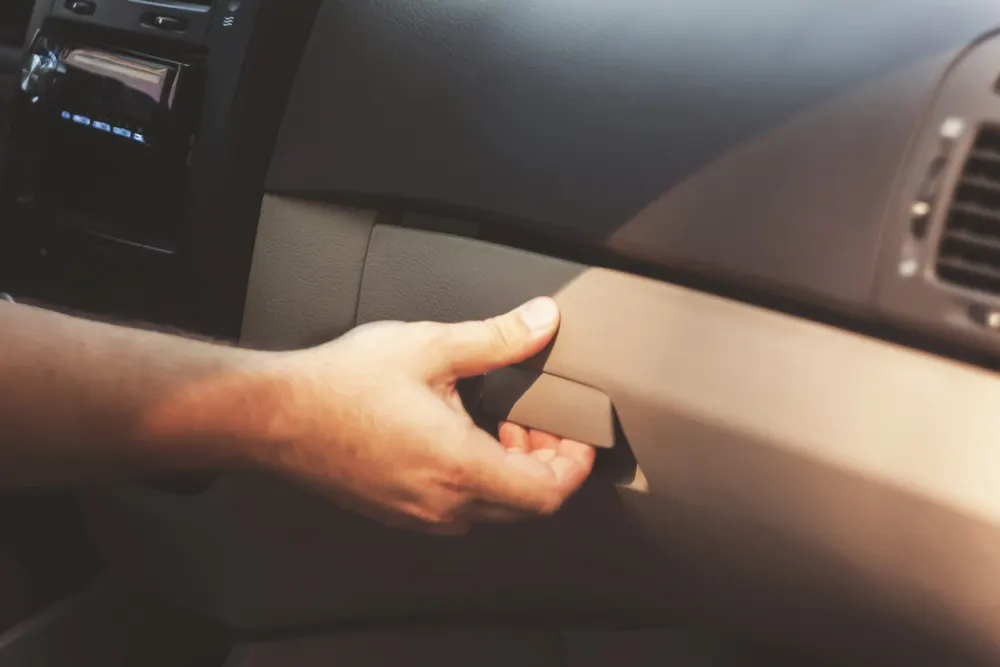
PC-ABS plastic is one of the most widely used engineering thermoplastics in the world and is commonly found in automotive interiors.
- Rear Lamp housing
ABS/PVC BLENDS
- Flame resistance
ABS/PVC used in
- Automotive instrument panels
ABS/PVC used in Automotive instrumental panels
Q10. What are the properties of nylon and its uses in Automotive components?
Polyamides or Nylon is a major high-performance engineering thermoplastics class because of its good balance of properties. The largest nylon market today, with more than 40% of the total demand, is in automobiles and transportation equipment.
Properties of Nylon:
- All nylons possess good abrasion resistance.
- They are very tough and strong but flexible too.
- They possess high impact strength.
- They absorb water which causes a reduction in strength and impact properties.
- They are resistant to most of the solvents and chemicals.
- They have very high softening temperatures and thus moulding becomes difficult.
Uses In Automotive components:
- Nylon Plastic Injection Molded Gears
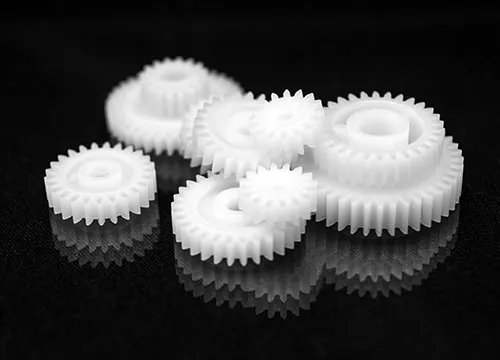
Plastic gearing has been increasing in usage as designers better understand its benefits and limitations. These gears can be produced by hobbing or stamping or, for large-volume runs, by injection moulding - Bushings and Bearings
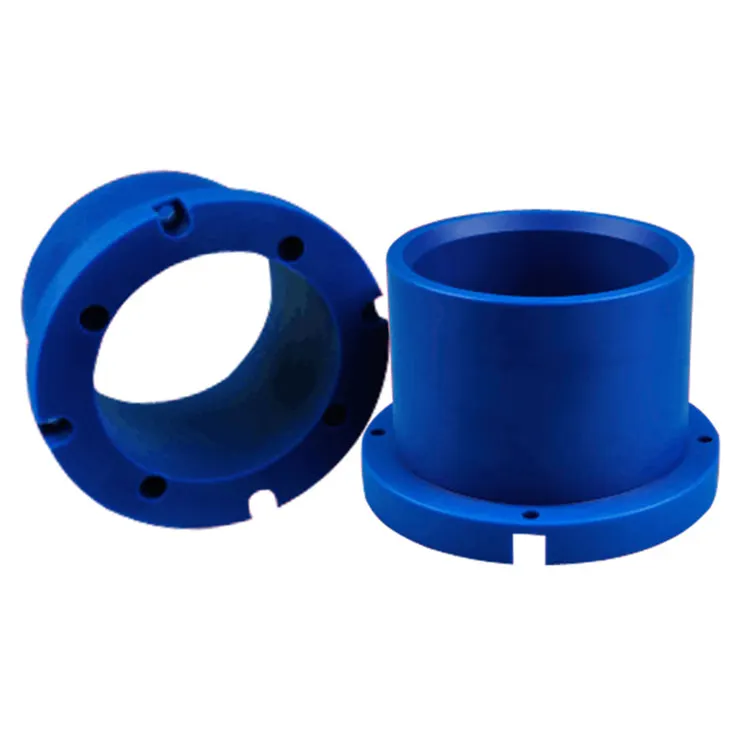
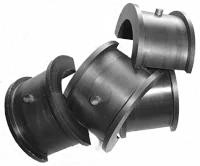
Nylon bushing and Bearings sleeve plastic flanged bushings used Automotive
- Push Clips
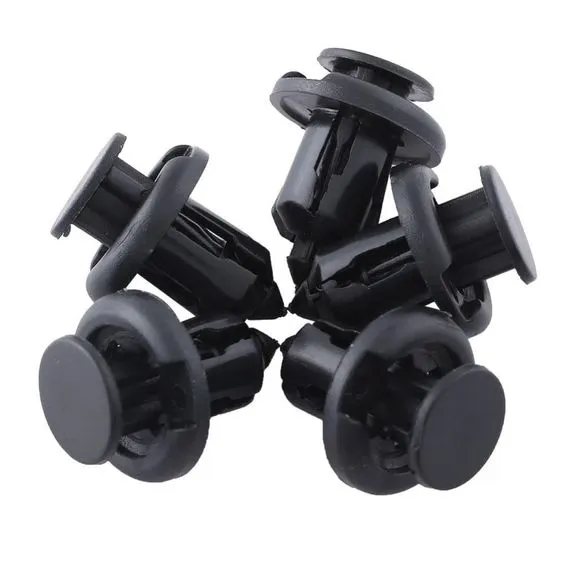
Nylon Plastic Push Clips for fastener in nuts and bolts.
Q11. What is a material blend? What are the blends used in the Automotive industry?
Material Blend is the Multi-Channel, Full Material Equivalent of the atomic Blend Node. It blends between two full materials (all possible channels) based on a grayscale mask, or optionally based on one single colour from a Color ID mask.
Blends used in the Automotive industry:
- ABS Blends
- PC/ABS Blends
- TPU/ABS Blends
- PVC/ABS Blends
- PPO/PS Blends
Q12. What are Fillers And Additives? Name some of them by explaining their properties.
Additives and fillers are organic or inorganic compounds that are introduced into plastic to change the properties of plastic. While most plastics in their original form are impact-resistant and long-lasting, they are often brittle, hard, combustible, or too heavy for the intended use.
ADDITIVES
A wide variety of additives and modifier ingredients can be used to expand the usefulness of polymers, enhance their processability or extend product durability. Many additives are used to modify and enhance resin properties that become a part of the polymer matrix. These additives include
Physically, additives may be divided into four groups, solids, rubbers, liquids and gases, the last of these being employed for making cellular polymers. In terms of function, there are rather larger numbers of groups, of which the
Following are the most important:
(1) Fillers.
(2) Plasticisers and softeners.
(3) Lubricants and flow promoters.
(4) Anti-aging additives.
(5) Flame retarders.
(6) Colorants.
(7) Blowing agents.
(8) Cross-linking agents.
(9) Ultraviolet-degradable additives.
FILLERS
Filler materials are particles added to resin or binders that can improve specific properties, make the product cheaper, or a mixture of both.
The top filler materials used are ground calcium carbonate (GCC), precipitated calcium carbonate (PCC), kaolin, talc, and carbon black.
| Components | Materials | Property of the Material |
|
|
|
|
|
|
|
|
|
|
|
|
|
|
|
|
|
|
|
|
|
|
|
|
|
|
|
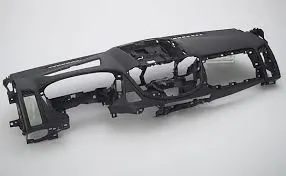
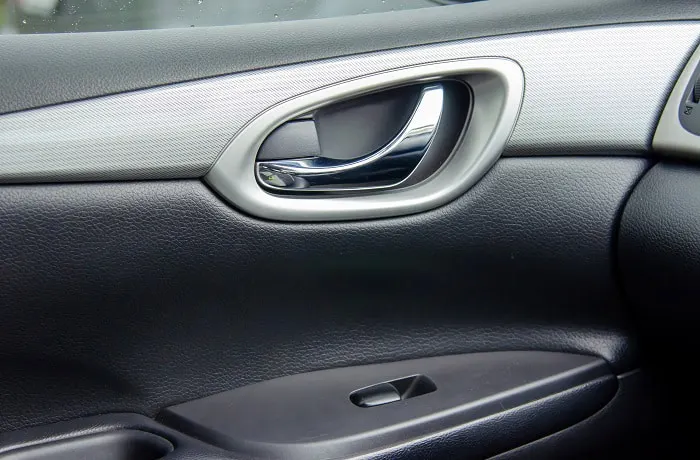


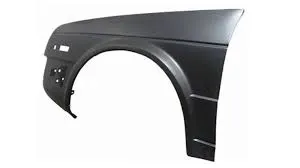
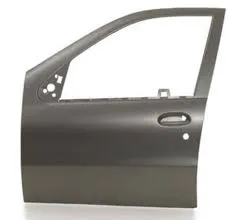
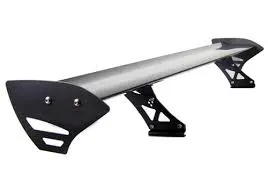
Q14. Name 10 Automotive exterior components and the materials used? Also, mention the property of the material which facilitates the use in the Component.
| Components | Material | Properties of a Material |
|
|
|
|
|
|
|
|
|
|
|
|
|
|
|
|
|
|
|
|
|
|
|
|
|
|
|
|
|
|

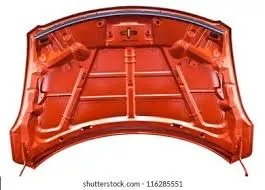
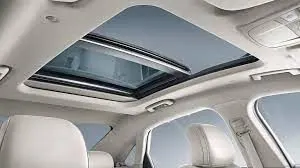
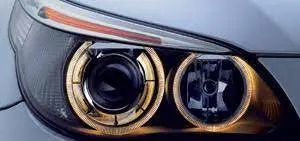
Q15. Explain 5 types of thermoplastic moulding with an automotive example?
These types are already explained in Q5, The Thermoplastic moulding is,
- Injection Moulding
- Extrusion Blow Moulding
- Extrusion Moulding
- Vacuum Forming
- Compression Moulding
INJECTION MOULDING
This technique is widely used for forming thermoplastic materials. It is similar to the casting technique used to form metal components. The plastic (in a powdered or granular form) is put in a hopper. A screw thread turns to force the plastic material through a heater, melting it. When all the materials have melted the screw thread then acts as a ram and forces the plastic into the mould, where it cools and solidifies.
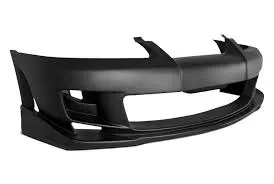
Example:- Front and Rear Bumper
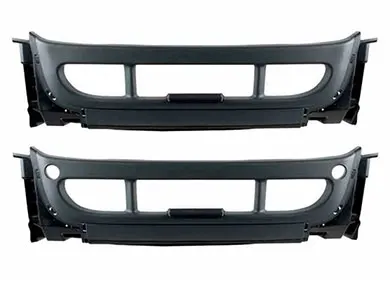
Automotive plastic front and rear bumpers are both safety and decorative parts. Bumper Molding’s structural design is not only closely related to the safety of the vehicle but also affects the texture. With the development of society, cars play an increasingly important role in the lives of modern people. Auto bumper mouldings also have been on the road of innovation, which is integrated into aesthetics, energy absorption, lightweight and low cost, high performance and fuel.
EXTRUSION BLOW MOULDING
Blow moulding is used to manufacture bottles and containers with very thin walls. Blow moulding first requires a tube of plastic to be extruded. The tube of molten plastic is extruded between the two halves of a mould. Before the plastic cools the two halves of the mould are brought together and the air is blown into the centre of the material through a blow pin. This forces the plastic out forming the shape of the mould. The plastic can then be cooled and removed.
Example:- HVAC Duct
To minimize wall thickness in the design phase, Regency Plastics uses a blow moulding process simulator throughout development to measure and optimize localized wall thickness. This bypasses the need for prototype tooling, cuts mould cost, reduces delivery time, and decreases product development time by up to 40%.
EXTRUSION MOULDING
The extrusion process is similar to injection moulding. Plastic granules are heated in a hopper and a screw thread forces the material through a die. The material is then cooled. Extrusion can only be used for simple shapes and the end product generally has a poor quality finish
Example:- Automotive Car Door and Window Seal Strips
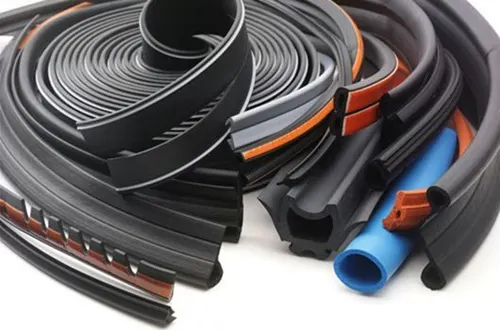
automotive car door window seal strips are installed on the auto door and windows to protect against weather damages, they are made of durable PVC plastic trim combined with EPDM sponge rubber bulb seal, weather seals are made up of the extrusion moulding.
VACUUM FORMING
Vacuum forming is used to make simple moulds using thin sheets of thermoplastic. High impact polystyrene sheet is what is used in school (HIPS). PVC can also be used.
A mould is created from wood or epoxy resin and this is placed on the table (platten) of the vacuum forming machine. The sheet plastic is heated until it becomes soft.
The table with your mould on is lifted into position and a vacuum is used to draw the plastic over the mould. Vacuum forming only works with thin plastics and moulds with no undercuts.
The plastic can then be trimmed to the required shape.
Example:- Cars doors, Dashboard are made from Vacuum Formed.
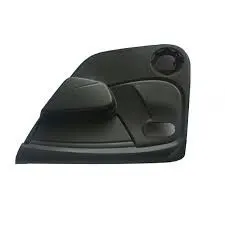
In this process, the parts are formed by heating acrylic to a suitable temperature. Place the acrylic sheet on the mould surface and fixed using a clamping unit. Heat it until it becomes soft and then quickly apply the vacuum. Using a surge tank, quickly pull the air out from between the mould and the sheet. This will trigger the formation of a cavity on the mould. The heated sheet will then conform to the shape of the mould cavity, cool and be ejected from the cavity.
COMPRESSION MOULDING
This is how thermosets are formed. The reaction occurs in the mould as the granules are heated and compressed. UF or urea-formaldehyde and MF melamine formaldehyde are formed by this method.
Example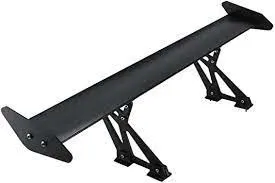
The compression moulding process is frequently chosen for high-volume composite parts that are produced with BMC and SMC materials. This closed mould process creates high strength complex parts of various sizes. Once the matching metal dies are mounted into a hydraulic moulding press and heated, the material charge is placed into the mould, the two haves are closed, and up to 2,000 psi of pressure is applied, depending on the material type and part thickness.
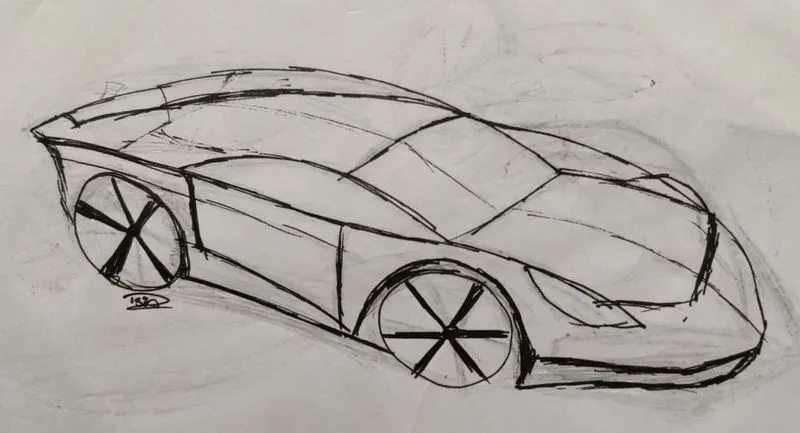
Q16. Draw an Automotive Freehand sketch. A sketch can be any automotive component or complete vehicle
A free hand sketch was done through lines, perspective
References:-
- https://atecentral.net/downloads/1585/Lightweight_Materials_for_Automotive.pdf
- https://www.cartakeback.com/blog/in-the-know/recycling-week-10-car-components-that-can-be-recycled
- https://www.toppr.com/guides/chemistry/difference-between-thermoplastic-and-thermosetting-plastic/
- https://www.thomasnet.com/articles/plastics-rubber/thermoset-vs-thermoplastics/
- https://www.osborneindustries.com/news/thermosetting-plastic-uses-applications/
- https://www.osborneindustries.com/news/how-thermoset-plastics-are-manufactured/
- https://www.the-warren.org/GCSERevision/engineering/plastic%20forming.htm
- https://www.engineeringenotes.com/engineering/thermoplastic-materials/list-of-thermoplastic-materials-engineering/42255
- https://en.wikipedia.org/wiki/Acrylonitrile_butadiene_styrene
- https://adrecoplastics.co.uk/abs-plastic-properties/
- https://www.fastradius.com/resources/know-your-materials-polycarbonate-acrylonitrile-butadiene-styrene-pc-abs/
- https://industrial.bostik.com/3-trends-shaping-the-automotive-instrument-panel-market/
- https://omnexus.specialchem.com/selection-guide/polyamide-pa-nylon/key-applications
- https://www.machinedesign.com/materials/article/21836156/plastic-gears-are-the-future
- http://www.plastivision.org/blog/8-advanced-plastics-used-in-the-automobile-sector/
- https://www.resource-innovations.com/resources/plastics-automotive-industry-which-materials-will-be-winners-and-losers
- http://compositeslab.com/composite-materials/additives-fillers/
- https://www.theengineerspost.com/car-interior-parts/
- file:///C:/Users/Lenovo/Downloads/AUTOMOTIVE_Interior_E.pdf
- https://www.carid.com/interior-parts.html
- https://iopscience.iop.org/article/10.1088/1757-899X/810/1/012033/pdf
- https://www.city-data.com/forum/automotive/3063719-what-material-steering-wheels-made.html
- https://en.wikipedia.org/wiki/List_of_auto_parts
- https://www.easypacelearning.com/all-lessons/english-level-2/1299-car-parts-vocabulary-list-learn-the-english-words-for-car-parts-using-pictures
- https://msicarolina.com/2016/05/06/what-is-thermoplastic-molding/
- https://www.moldplasticinjection.com/bumper-plastic-injection-molding
- https://www.rapiddirect.com/knowledge-base/article/injection-molding-for-automotive-applications/
- https://geminigroup.net/plastics/blow-molding-regency/blow-molded-products/hvac-ducts/
- http://www.talbotdesigns.co.uk/latest-news/applications-of-the-vacuum-forming-process/
- https://www.weetect.com/thermoforming-acrylic/
- https://platinum-tool.com/compression-molding/