Week - 1 - Consistency of Units
Objective:
- To convert the given quantities(such as Mass, Length & Time etc) with the "SI" system of units into the required system of units(As mentioned in the question.
- LS-DYNA doesn't have a default system of units. To solve various problems associated with the different system of units, This consistency of units is performed. In order to find the conversion factors.
- To create a table at the end, for the obtained results.
Given quantities in SI units are:
MASS as "1kg"
LENGTH as "1m"
TIME as "1s"
FORCE as "1N"
STRESS as "1Pa"
ENERGY as "1Nm"
DENSITY as "1`(Kg)/m^3`"
YOUNG'S Modulus as "210GPa"
Velocity as "56.33`(KM)/H`"
GRAVITY as "9.8`m/s^2`"
The required system of units into which, The given quantities are to be converted are as follows:
Kg cm ms
Kg cm s
gm mm ms
kg m s
g cm s
g cm us
g mm s
ton mm s
slug ft s
kg mm s
g cm ms
kg mm ms
Usually, the quantities are classified into two types. They are:
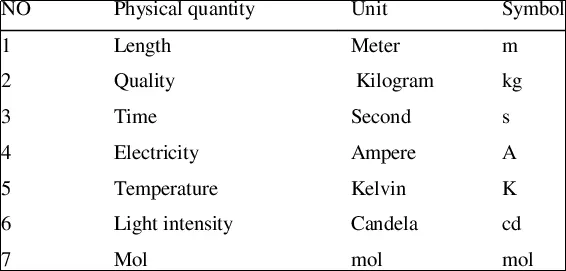
- Physical quantities(These are Independent quantities. These are also known as "Fundamental quantities").
- Derived quantities(These are dependent quantities).
Some of the physical quantities with SI system of units are as follows:
Some of the derived quantities with SI system of units are as follows:
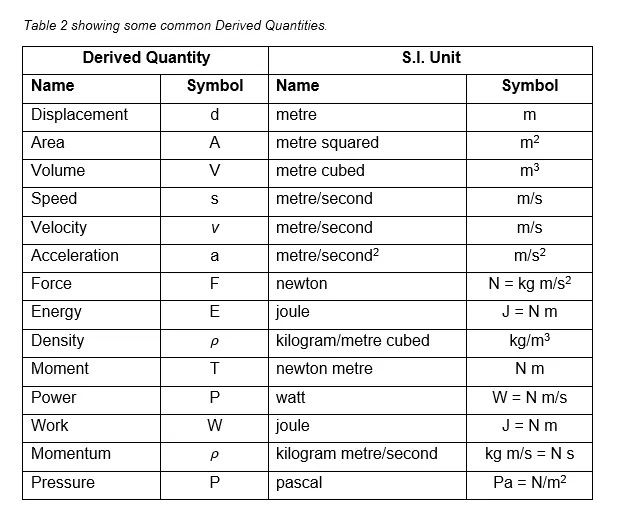
They are named as derived quantities because They are obtained with the help of two or more physical quantities.
Some basic conversions of the base quantities such as mass, length & time are as follows:
Mass; 1 Kilogram(Kg) = 1000grams(gm) = 0.001 ton = 0.068 slug. [1 ton = 1000kg]
Length; 1 Meter(M) = 100 centi-meters(cm) = 1000milli-meters(mm) = 3.28 ft.
Time; 1 seconds(S) = 1000 milli-seconds(ms) = `10^6`micro-seconds.
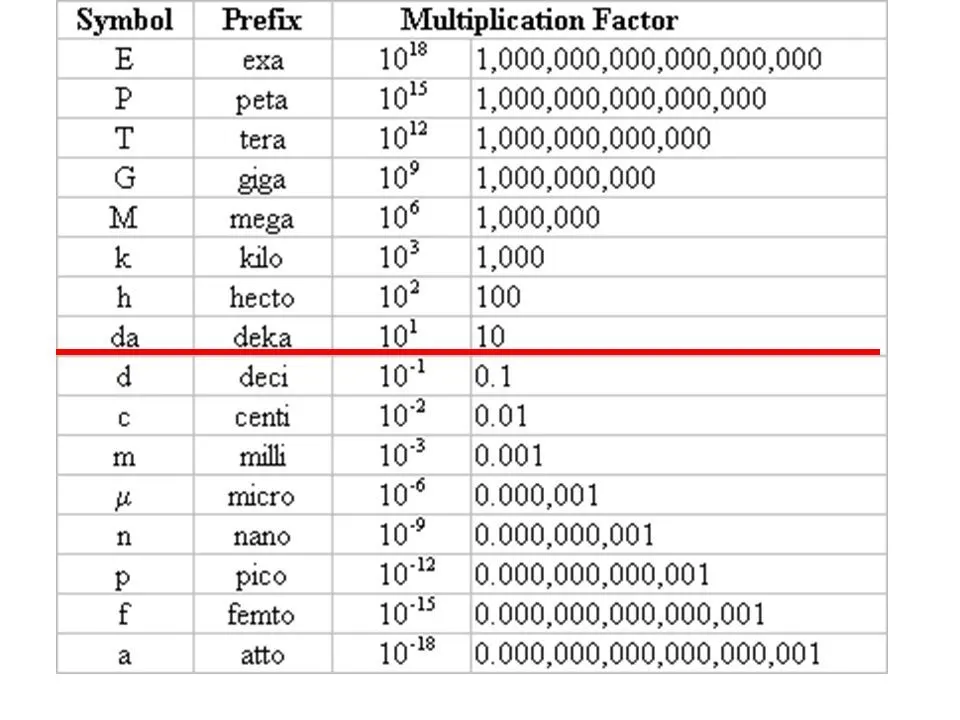
Some common terms of conversions, That is mostly seen are listed as follows:
1. Conversion of given quantities with SI units to kg cm ms:
Given mass => 1kg
Length => 1m = 100cm
Time => 1s = 1000ms
Force => 1N
The general formula for force derived from Newton's second law of motion is: Force(F) = Mass(M)*Acceleration(A)
Where Acceleration is the rate of change of velocity(With the SI units as: `m/(s^2)`
Then F = Mass(kg)*(Length(cm)/`Time^2`(`ms^2`)) = 1*(`100/(1000^2))` = `10^-4`kg*(`(cm)/(ms^2)`)
Therefore, the conversion factor is: `10^-4`
Stress =>1 Pascal(Pa) = 1 `N/m^2`
From the above derive unit for force => 1N = `10^-4`Kg*(`(cm)/(ms^2)`)
Then Stress = `10^-4`kg*(cm)/(ms^2)`/(10^2)^2`(`cm^2`) = `10^-8``(kg)/(cm*ms^2)` [Where 1m = 100 cm = 10^2 cm]
Therefore, the conversion factor is: `10^-8`
Energy => 1Nm
From the above derive unit for force => 1N = `10^-4`Kg*(`(cm)/(ms^2)`)
Then Energy = `10^-4`(Kg*(`(cm)/(ms^2)`))*`10^2`cm
= `10^-2``((kg*cm^2)/(ms^2))`
Therefore, the conversion factor is: `10^-2`
Density => 1`(kg)/m^3`
= `(1kg)/((10^2)^3 cm^3)`
= `(10^-6 )(kg)/(cm^3`
Therefore, the conversion factor is: `10^-6`
Youngs Modulus => 210 Giga-pascals(GPa)
= 210 *`10^9*(10^-8)(kg)/(cm*ms^2)`
= 210*10 = 2100 `(kg)/(cm*ms^2)`
Therefore, The conversion factor is: 10
Velocity => 56.33Kmph
1km = 1000m = 1000*`10^2`cm = `10^5`cm
1hr = 60(minutes)*60(seconds) = 3600 seconds = 3600*1000(milli seconds)
= 36*`10^5)`ms
1kmph = `(10^5)/(36*10^5)` = 0.0278 `(cm)/(ms)`
Therefore, 56.33*0.0278 = 1.566 `(cm)/(ms)`
Therefore, The conversion factor is: 0.0278 `(cm)/(ms)`
Gravity => 9.8m/s2
1m = 100cm
1s = `(10^3)^2``ms^2` = `10^6 ms^2`
Then, 9.8 `m/(s^2)`= `9.8*(100)/(10^6)``(cm)/(ms^2)`
= 9.8*`10^-4``(cm)/(ms^2)`
Therefore, The conversion factor is: `10^-4`
2. Conversion of given quantities with SI units to Kg cm s:
Given mass => 1kg
Length => 1m = 100cm
Time => 1s
Force => 1N
Force(F) = Mass(M)*Acceleration(A)
Where Acceleration is the rate of change of velocity(With the SI units as: `m/(s^2)`
Then F = Mass(kg)*(Length(cm)/`Time^2`(`s^2`)) = 1*(`100/(1^2))` = `10^2`kg*(`(cm)/(s^2)`)
Therefore, the conversion factor is: `10^2`
Stress =>1 Pascal(Pa) = 1 `N/m^2`
From the above derive unit for force => 1N = `10^2`Kg*(`(cm)/(s^2)`)
Then Stress = `10^2`kg*(cm)/(s^2)`/(10^2)^2`(`cm^2`) = `10^-2``(kg)/(cm*s^2)` [Where 1m = 100 cm = 10^2 cm]
Therefore, the conversion factor is: `10^-2`
Energy => 1Nm
From the above derive unit for force => 1N = `10^2`Kg*(`(cm)/(s^2)`)
Then Energy = `10^2`(Kg*(`(cm)/(s^2)`))*`10^2`cm
= `10^4``((kg*cm^2)/(s^2))`
Therefore, the conversion factor is: `10^4`
Density => 1`(kg)/m^3`
= `(1kg)/((10^2)^3 cm^3)`
= `(10^-6 )(kg)/(cm^3`
Therefore, the conversion factor is: `10^-6`
Youngs Modulus => 210 Giga-pascals(GPa)
= 210 *`10^9`*(10^-2)(kg)/(cm*s^2)`
= 210*`10^7` `(kg)/(cm*s^2)`
Therefore, The conversion factor is: `10^7`
Velocity => 56.33Kmph
1km = 1000m = 1000*`10^2`cm = `10^5`cm
1hr = 60(minutes)*60(seconds) = 3600 seconds
1kmph = `(10^5)/(3600)` = 27.78 `(cm)/(s)`
Therefore, 56.33*27.78 = 1564.84 `(cm)/(s)`
Therefore, The conversion factor is: 27.78 `(cm)/(ms)`
Gravity => 9.8m/s2
1m = 100cm
Then, 9.8 `m/(s^2)`= `9.8*(100)/(1^2)``(cm)/(s^2)`
= 9.8*`10^2``(cm)/(s^2)`
Therefore, The conversion factor is: `10^2`
3. Conversion of given quantities with SI units to gm mm ms:
Given mass => 1kg = 1000gm
Length => 1m = 100cm = 1000mm
Time => 1s = 1000ms
Force => 1N
Force(F) = Mass(M)*Acceleration(A)
Where Acceleration is the rate of change of velocity(With the SI units as: `m/(s^2)`
Then F = Mass(gm)*(Length(mm)/`Time^2`(`ms^2`)) = 1000*(`1000/(1000^2))` = `1`gm*(`(mm)/(ms^2)`)
Therefore, the conversion factor is: `1`
Stress =>1 Pascal(Pa) = 1 `N/m^2`
From the above derive unit for force => 1N = `1`gm*(`(mm)/(ms^2)`)
Then Stress = `1`gm*(mm)/(ms^2)`/(10^3)^2`(`mm^2`) = `10^-6``(gm)/(mm*ms^2)` [Where 1m = 100 cm = `10^2` cm = `10^3`mm]
Therefore, the conversion factor is: `10^-6`
Energy => 1Nm
From the above derive unit for force => 1N = 1 gm*(`(mm)/(ms^2)`)
Then Energy = 1 gm*(`(mm)/(ms^2)`)*`10^3`mm
= `10^3``((gm*mm^2)/(ms^2))`
Therefore, the conversion factor is: `10^3`
Density => 1`(kg)/m^3`
= `(1000gm)/((10^3)^3 mm^3)`
= `(10^-6 )(gm)/(mm^3)`
Therefore, the conversion factor is: `10^-6`
Youngs Modulus => 210 Giga-pascals(GPa)
= 210 *`10^9*(10^-6)(gm)/(mm*ms^2)`
= 210*`10^3` `(gm)/(mm*ms^2)`
Therefore, The conversion factor is: `10^3`
Velocity => 56.33Kmph
1km = 1000m = 1000*`10^3`mm = `10^6`mm
1hr = 60(minutes)*60(seconds) = 3600 seconds = 3600*1000(milli seconds)
= 36*`(10^5)`ms
1kmph = `(10^6)/(36*10^5)` = 2777.78 `(mm)/(ms)`
Therefore, 56.33*2777.78 = 156472.34`(mm)/(ms)`
Therefore, The conversion factor is: 2777.78 `(mm)/(ms)`
Gravity => 9.8m/s2
1m = 100cm =1000mm
1s = `(10^3)^2``ms^2` = `10^6 ms^2`
Then, 9.8 `m/(s^2)`= `9.8*(1000)/(10^6)``(mm)/(ms^2)`
= 9.8*`10^-3``(mm)/(ms^2)`
Therefore, The conversion factor is: `10^-3`
4. Conversion of given quantities with SI units to kg m s:
Given mass => 1kg
Length => 1m
Time => 1s
Force => 1N
Force(F) = Mass(M)*Acceleration(A)
Where Acceleration is the rate of change of velocity(With the SI units as: `m/(s^2)`
Then F = Mass(Kg)*(Length(m)/`Time^2`(`s^2`)) = 1*(`(1)/(`1^2`))` = `1`kg*(`(m)/(s^2)`)
Therefore, the conversion factor is: `1`
Stress =>1 Pascal(Pa) = 1 `N/m^2`
From the above derive unit for force => 1N = `1`kg*(`(m)/(s^2)`)
Then Stress = `1`kg*(m)/(s^2)`/(1)^2`(`m^2`) = `1``(kg)/(m*s^2)`
Therefore, the conversion factor is: `1`
Energy => 1Nm
From the above derive unit for force => 1N = `1`Kg*(`(m)/(s^2)`)
Then Energy = `1`(Kg*(`(m)/(s^2)`))*`1`m
= `1``((kg*m^2)/(s^2))`
Therefore, the conversion factor is: `1`
Density => 1`(kg)/m^3`
= `(1kg)/((1)^3 m^3)`
= `(1)(kg)/(m^3)`
Therefore, the conversion factor is: `1`
Youngs Modulus => 210 Giga-pascals(GPa)
= 210 *`10^9*(1)(kg)/(m*s^2)`
= 210*`10^9``(kg)/(m*s^2)`
Therefore, The conversion factor is: `10^9`
Velocity => 56.33Kmph
1km = 1000m
1hr = 60(minutes)*60(seconds) = 3600 seconds
1kmph = `(10^3)/(3600)` = 0.278 `(m)/(s)`
Therefore, 56.33*0.278 = 15.659 `(m)/(s)`
Therefore, The conversion factor is: 0.278 `(m)/(s)`
Gravity => 9.8m/s2 [Here, The units of the quantities are same as that of for SI units]
Therefore, The conversion factor is: `1`
5. Conversion of given quantities with SI units to g cm s:
Given mass => 1kg =1000gm
Length => 1m = 100cm
Time => 1s
Force => 1N
Force(F) = Mass(M)*Acceleration(A)
Where Acceleration is the rate of change of velocity(With the SI units as: `m/(s^2)`
Then F = Mass(gm)*(Length(cm)/`Time^2`(`s^2`)) = (1000)*(`100/(1^2))` = `10^5`gm*(`(cm)/(s^2)`)
Therefore, the conversion factor is: `10^5`
Stress =>1 Pascal(Pa) = 1 `N/m^2`
From the above derive unit for force => 1N = `10^5`gm*(`(cm)/(s^2)`)
Then Stress = `10^5`gm*(cm)/(s^2)`/(10^2)^2`(`cm^2`) = `10``(gm)/(cm*s^2)` [Where 1m = 100 cm = 10^2 cm]
Therefore, the conversion factor is: `10`
Energy => 1Nm
From the above derive unit for force => 1N = `10^5`gm*(`(cm)/(s^2)`)
Then Energy = `10^5`(gm*(`(cm)/(s^2)`))*`10^2`cm
= `10^7``((gm*cm^2)/(s^2))`
Therefore, the conversion factor is: `10^7`
Density => 1`(kg)/m^3`
= `(1000gm)/((10^2)^3 cm^3)`
= `(10^-3 )(gm)/(cm^3)`
Therefore, the conversion factor is: `10^-3`
Youngs Modulus => 210 Giga-pascals(GPa)
= 210 *`10^9*(10)(gm)/(cm*s^2)`
= 210*`10^10``(gm)/(cm*s^2)`
Therefore, The conversion factor is: `10^10`
Velocity => 56.33Kmph
1km = 1000m = 1000*`10^2`cm = `10^5`cm
1hr = 60(minutes)*60(seconds) = 3600 seconds
1kmph = `(10^5)/(3600)` = 27.78 `(cm)/(s)`
Therefore, 56.33*0.0278 = 1564.85 `(cm)/(s)`
Therefore, The conversion factor is: 27.78`(cm)/(s)`
Gravity => 9.8m/s2
1m = 100cm
Then, 9.8 `m/(s^2)`= `9.8*(100)/(`1^2`)``(cm)/(s^2)`
= 9.8*`10^2``(cm)/(s^2)`
Therefore, The conversion factor is: `10^2`
6. Conversion of given quantities with SI units to g cm `mu`s:
Given mass => 1kg = 1000gm
Length => 1m = 100cm
Time => 1s = `10^6``mu`s [Where, 1`mu`=`10^-6`]
Force => 1N
Force(F) = Mass(M)*Acceleration(A)
Where Acceleration is the rate of change of velocity(With the SI units as: `m/(s^2)`
Then F = Mass(gm)*(Length(cm)/`Time^2`(``mu`s^2`)) = 1000*(`(100)/`(10^6)^2`)` = `10^-7`gm*(`(cm)/(`mu`s^2)`)
Therefore, the conversion factor is: `10^-7`
Stress =>1 Pascal(Pa) = 1 `N/m^2`
From the above derive unit for force => 1N = `10^-7`gm*(`(cm)/(`mu`s^2)`)
Then Stress = `10^-7`gm*(cm)/(`mu`s^2)`/(10^2)^2`(`cm^2`) = `10^-11``(gm)/(cm*`mu`s^2)` [Where 1m = 100 cm = 10^2 cm]
Therefore, the conversion factor is: `10^-11`
Energy => 1Nm
From the above derive unit for force => 1N = `10^-7`gm*(`(cm)/(`mu`s^2)`)
Then Energy = `10^-7`(gm*(`(cm)/(`mu`s^2)`))*`10^2`cm
= `10^-5``((gm*cm^2)/(`mu`s^2))`
Therefore, the conversion factor is: `10^-5`
Density => 1`(kg)/m^3`
= `(1000gm)/((10^2)^3 cm^3)`
= `(10^-3)(gm)/(cm^3)`
Therefore, the conversion factor is: `10^-3`
Youngs Modulus => 210 Giga-pascals(GPa)
= 210 *`10^9*(10^-11)(gm)/(cm*`mu`s^2)`
= 210*`10^-2``(gm)/(cm*`mu`s^2)`
Therefore, The conversion factor is: `10^-2`
Velocity => 56.33Kmph
1km = 1000m = 1000*`10^2`cm = `10^5`cm
1hr = 60(minutes)*60(seconds) = 3600 seconds = 3600*`10^6`(micro seconds)
= 36*`(10^8)``mu`s
1kmph = `(10^5)/(36*10^8)` = 0.0278 *`10^-3``(cm)/(`mu`s)`
Therefore, 56.33*0.0278* `10^-3` = 0.00156`(cm)/(`mu`s)`
Therefore, The conversion factor is: 0.0278 *`10^-3``(cm)/(`mu`s)`
Gravity => 9.8m/s2
1m = 100cm
1s = `10^6``mu`s
Then, 9.8 `m/(s^2)`= `9.8*(100)/((10^6)^2)``(cm)/(`mu`s^2)`
= 9.8*`10^-10``(cm)/(`mu`s^2)`
Therefore, The conversion factor is: `10^-10`
7. Conversion of given quantities with SI units to g mm s:
Given mass => 1kg = 1000gm
Length => 1m = 1000mm
Time => 1s
Force => 1N
Force(F) = Mass(M)*Acceleration(A)
Where Acceleration is the rate of change of velocity(With the SI units as: `m/(s^2)`
Then F = Mass(gm)*(Length(mm)/`Time^2`(`s^2`)) = 1000*(`1000/(1^2))` = `10^6`gm*(`(mm)/(s^2)`)
Therefore, the conversion factor is: `10^6`
Stress =>1 Pascal(Pa) = 1 `N/m^2`
From the above derive unit for force => 1N = `10^6`gm*(`(mm)/(s^2)`)
Then Stress = `10^6`gm*(mm)/(s^2)`/(10^3)^2`(`mm^2`) = `1``(g)/(mm*s^2)`
Therefore, the conversion factor is: `1`
Energy => 1Nm
From the above derive unit for force => 1N = `10^6`gm*(`(mm)/(s^2)`)
Then Energy = `10^6`(gm*(`(mm)/(s^2)`))*`10^3`mm
= `10^9``((gm*mm^2)/(s^2))`
Therefore, the conversion factor is: `10^9`
Density => 1`(kg)/m^3`
= `(1000gm)/((10^3)^3 mm^3)`
= `(10^-6 )(gm)/(mm^3)`
Therefore, the conversion factor is: `10^-6`
Youngs Modulus => 210 Giga-pascals(GPa)
= 210 *`10^9*(1)(gm)/(mm*s^2)`
= 210*`10^9``(kg)/(cm*ms^2)`
Therefore, The conversion factor is: `10 ^9`
Velocity => 56.33Kmph
1km = 1000m = 1000*`10^3`mm = `10^6`mm
1hr = 60(minutes)*60(seconds) = 3600 seconds
1kmph = `(10^6)/(3600)` = 277.78 `(mm)/(s)`
Therefore, 56.33*277.78 = 15647.34 `(mm)/(s)`
Therefore, The conversion factor is: 277.78 `(mm)/(s)`
Gravity => 9.8m/s2
1m = 1000mm
Then, 9.8 `m/(s^2)`= `9.8*(1000)/(`1^2`)``(mm)/(s^2)`
= 9.8*`10^3``(mm)/(s^2)`
Therefore, The conversion factor is: `10^3`
8. Conversion of given quantities with SI units to ton mm s:
Given mass => 1kg = `10^-3`ton
Length => 1m = 1000mm
Time => 1s
Force => 1N
Force(F) = Mass(M)*Acceleration(A)
Where Acceleration is the rate of change of velocity(With the SI units as: `m/(s^2)`
Then F = Mass(ton)*(Length(mm)/`Time^2`(`s^2`)) = `10^-3`*(`1000/(1^2))` = `1`ton*(`(mm)/(s^2)`)
Therefore, the conversion factor is: `1`
Stress =>1 Pascal(Pa) = 1 `N/m^2`
From the above derive unit for force => 1N = `1`ton*(`(mm)/(s^2)`)
Then Stress = `1`ton*(`(mm)/(s^2)`)/((10^3)^2)`(`mm^2`) = `10^-6``(ton)/(mm*s^2)` [Where 1m = 100 cm = 10^2 cm]
Therefore, the conversion factor is: `10^-6`
Energy => 1Nm
From the above derive unit for force => 1N = `1`ton*(`(mm)/(s^2)`)
Then Energy = `1`ton*(`(mm)/(s^2)`)*`10^3`mm
= `10^3``((ton*mm^2)/(s^2))`
Therefore, the conversion factor is: `10^3`
Density => 1`(kg)/m^3`
= `(`10^-3`ton)/((10^3)^3 mm^3)`
= `(10^-12 )(ton)/(mm^3)`
Therefore, the conversion factor is: `10^-12`
Youngs Modulus => 210 Giga-pascals(GPa)
= 210 *`10^9`*(`10^-6`)(ton)/(mm*s^2)`
= 210*`10^3``(ton)/(mm*s^2)`
Therefore, The conversion factor is: `10^3`
Velocity => 56.33Kmph
1km = 1000m = 1000*`10^3`mm = `10^6`mm
1hr = 60(minutes)*60(seconds) = 3600 seconds
1kmph = `(10^6)/(3600)` = 277.78`(mm)/(s)`
Therefore, 56.33*277.78 = 15647.35 `(mm)/(s)`
Therefore, The conversion factor is: 277.78 `(mm)/(s)`
Gravity => 9.8m/s2
1m = 1000mm
Then, 9.8 `m/(s^2)`= `9.8*(1000)/(`1^2`)``(mm)/(s^2)`
= 9.8*`10^3``(mm)/(s^2)`
Therefore, The conversion factor is: `10^3`
9. Conversion of given quantities with SI units to slug ft s:
Given mass => 1kg = 0.068slug
Length => 1m = 3.28ft
Time => 1s
Force => 1N
Force(F) = Mass(M)*Acceleration(A)
Where Acceleration is the rate of change of velocity(With the SI units as: `m/(s^2)`
Then F = Mass(slug)*(Length(ft)/`Time^2`(`s^2`)) = 0.068*(`(3.28)/(1^2))` = `0.22304`slug*(`(ft)/(s^2)`)
Therefore, the conversion factor is: `0.22304`
Stress =>1 Pascal(Pa) = 1 `N/m^2`
From the above derive unit for force => 1N = `0.22304`slug*(`(ft)/(s^2)`)
Then Stress =`0.22304`slug*(`(ft)/(s^2)`)/(3.28)^2`(`ft^2`) = `0.0207``(slug)/(ft*s^2)`
Therefore, the conversion factor is: `0.0207`
Energy => 1Nm
From the above derive unit for force => 1N = `0.22304`slug*(`(ft)/(s^2)`)
Then Energy = `0.22304`slug*(`(ft)/(s^2)`)*`3.28`ft
= `0.732``((slug*ft^2)/(s^2))`
Therefore, the conversion factor is: `0.732`
Density => 1`(kg)/m^3`
= `(0.068slug)/`((3.28)^3)` ft^3)`
= `(2.4)(slug)/(ft^3)`
Therefore, the conversion factor is: `2.4`
Youngs Modulus => 210 Giga-pascals(GPa)
= 210 *`10^9*`0.0207``(slug)/(ft*s^2)`
= 210*207*`10^-5` `(slug)/(ft*s^2)` = 0.4347 `(slug)/(ft*s^2)`
Therefore, The conversion factor is: 207*`10^-5`
Velocity => 56.33Kmph
1km = 1000m = 1000*3.28 = 3280ft
1hr = 60(minutes)*60(seconds) = 3600 seconds
1kmph = `(3280)/(3600)` = 0.91 `(ft)/(s)`
Therefore, 56.33*0.0278 = 1.566 `(ft)/(s)`
Therefore, The conversion factor is: 0.91 `(ft)/(s)`
Gravity => 9.8m/s2
1m = 3.28ft
Then, 9.8 `m/(s^2)`= `9.8*(3.28)/(1^2)``(ft)/(s^2)`
= 32.14`(ft)/(s^2)`
Therefore, The conversion factor is: `3.28`
10. Conversion of given quantities with SI units to kg mm s:
Given mass => 1kg
Length => 1m = 1000mm
Time => 1s
Force => 1N
Force(F) = Mass(M)*Acceleration(A)
Where Acceleration is the rate of change of velocity(With the SI units as: `m/(s^2)`
Then F = Mass(kg)*(Length(mm)/`Time^2`(`s^2`)) = 1*(`1000/(1^2))` = `10^3`kg*(`(mm)/(s^2)`)
Therefore, the conversion factor is: `10^3`
Stress =>1 Pascal(Pa) = 1 `N/m^2`
From the above derive unit for force => 1N = `10^3`Kg*(`(mm)/(s^2)`)
Then Stress = `10^3`Kg*(`(mm)/(s^2)`)/(`10^3`)^2`(`mm^2`) = `10^-3``(kg)/(mm*s^2)`
Therefore, the conversion factor is: `10^-3`
Energy => 1Nm
From the above derive unit for force => 1N = `10^3`Kg*(`(mm)/(s^2)`)
Then Energy = `10^3`Kg*(`(mm)/(s^2)`)*`10^3`mm
= `10^6``((kg*mm^2)/(s^2))`
Therefore, the conversion factor is: `10^6`
Density => 1`(kg)/m^3`
= `(1kg)/((10^3)^3 mm^3)`
= `(`10^-9`)`(kg)/(mm^3)`
Therefore, the conversion factor is: `10^-9`
Youngs Modulus => 210 Giga-pascals(GPa)
= 210 *`10^9*(10^-3)(kg)/(mm*s^2)`
= 210*`10^6``(kg)/(mm*s^2)`
Therefore, The conversion factor is: `10^6`
Velocity => 56.33Kmph
1km = 1000m = 1000*`10^3`cm = `10^6`mm
1hr = 60(minutes)*60(seconds) = 3600 seconds
1kmph = `(10^6)/(3600)` = 277.78 `(mm)/(s)`
Therefore, 56.33*277.78 = 15647.35 `(mm)/(s)`
Therefore, The conversion factor is: 277.78 `(mm)/(s)`
Gravity => 9.8m/s2
9.8 `m/(s^2)`= `9.8*(1000)/(1^2)``(mm)/(s^2)`
= 9.8*`10^3``(mm)/(s^2)`
Therefore, The conversion factor is: `10^3`
11. Conversion of given quantities with SI units to g cm ms:
Given mass => 1kg = 1000gm
Length => 1m = 100cm
Time => 1s = 1000ms
Force => 1N
The general formula for force derived from Newton's second law of motion is: Force(F) = Mass(M)*Acceleration(A)
Where Acceleration is the rate of change of velocity(With the SI units as: `m/(s^2)`
Then F = Mass(gm)*(Length(cm)/`Time^2`(`ms^2`)) = 1000*(`100/(`1000^2`)` = `10^-1`gm*(`(cm)/(ms^2)`)
Therefore, the conversion factor is: `10^-1`
Stress =>1 Pascal(Pa) = 1 `N/m^2`
From the above derive unit for force => 1N = `10^-1`gm*(`(cm)/(ms^2)`)
Then Stress = `10^-1`gm*(`(cm)/(ms^2)`)/(10^2)^2`(`cm^2`) = `10^-5``(gm)/(cm*ms^2)`
Therefore, the conversion factor is: `10^-5`
Energy => 1Nm
From the above derive unit for force => 1N = `10^-1`gm*(`(cm)/(ms^2)`)
Then Energy = `10^-1`gm*(`(cm)/(ms^2)`)*`10^2`cm
= `10``((gm*cm^2)/(ms^2))`
Therefore, the conversion factor is: `10`
Density => 1`(kg)/m^3`
= `(1000gm)/((10^2)^3 cm^3)`
= `(10^-3 )(gm)/(cm^3)`
Therefore, the conversion factor is: `10^-3`
Youngs Modulus => 210 Giga-pascals(GPa)
= 210 *`10^9*(10^-5)(gm)/(cm*`ms^2`)`
= 210*`10^4``(gm)/(cm*`ms^2`)`
Therefore, The conversion factor is: `10^4`
Velocity => 56.33Kmph
1km = 1000m = 1000*`10^2`cm = `10^5`cm
1hr = 60(minutes)*60(seconds) = 3600 seconds = 3600*1000(milli seconds)
= 36*`(10^5)`ms
1kmph = `(10^5)/(36*10^5)` = 0.0278 `(cm)/(ms)`
Therefore, 56.33*0.0278 = 1.566 `(cm)/(ms)`
Therefore, The conversion factor is: 0.0278 `(cm)/(ms)`
Gravity => 9.8m/s2
1m = 100cm
1s = `(10^3)^2``ms^2` = `10^6 ms^2`
Then, 9.8 `m/(s^2)`= `9.8*(100)/(10^6)``(cm)/(ms^2)`
= 9.8*`10^-4``(cm)/(ms^2)`
Therefore, The conversion factor is: `10^-4`
12. Conversion of given quantities with SI units to kg mm ms:
Given mass => 1kg
Length => 1m = 1000mm
Time => 1s = 1000ms
Force => 1N
Force(F) = Mass(M)*Acceleration(A)
Where Acceleration is the rate of change of velocity(With the SI units as: `m/(s^2)`
Then F = Mass(kg)*(Length(mm)/`Time^2`(`ms^2`)) = 1*(`1000/(1000^2))` = `10^-3`kg*(`(mm)/(ms^2)`)
Therefore, the conversion factor is: `10^-3`
Stress =>1 Pascal(Pa) = 1 `N/m^2`
From the above derive unit for force => 1N = `10^-3`kg*(`(mm)/(ms^2)`)
Then Stress = `10^-3`kg*(`(mm)/(ms^2)`)/(10^3)^2`(`mm^2`) = `10^-9``(kg)/(mm*ms^2)`
Therefore, the conversion factor is: `10^-9`
Energy => 1Nm
From the above derive unit for force => 1N = `10^-3`kg*(`(cm)/(ms^2)`)
Then Energy = `10^-3`kg*(`(mm)/(ms^2)`)*`10^3`mm
= `1``((kg*mm^2)/(ms^2))`
Therefore, the conversion factor is: `1`
Density => 1`(kg)/m^3`
= `(1kg)/((`10^3`)^3 mm^3)`
= `10^-9``(kg)/(cm^3)`
Therefore, the conversion factor is: `10^-9`
Youngs Modulus => 210 Giga-pascals(GPa)
= 210 *`10^9*(10^-9)(kg)/(mm*ms^2)`
= 210`(kg)/(mm*ms^2)`
Therefore, The conversion factor is: 1
Velocity => 56.33Kmph
1km = 1000m = 1000*`10^3`cm = `10^6`mm
1hr = 60(minutes)*60(seconds) = 3600 seconds = 3600*1000(milli seconds)
= 36*`(10^5)`ms
1kmph = `(10^6)/(36*10^5)` = 0.278 `(mm)/(ms)`
Therefore, 56.33*0.278 = 15.66 `(mm)/(ms)`
Therefore, The conversion factor is: 0.278 `(mm)/(ms)`
Gravity => 9.8m/s2
1m = 1000mm
1s = `(10^3)^2``ms^2` = `10^6 ms^2`
Then, 9.8 `m/(s^2)`= `9.8*(1000)/(10^6)``(mm)/(ms^2)`
= 9.8*`10^-3``(mm)/(ms^2)`
Therefore, The conversion factor is: `10^-3`
Final table:
| MASS | LENGTH | TIME | FORCE | STRESS | ENERGY | DENSITY | YOUNG's | 35MPH 56.33KMPH |
GRAVITY |
|---|---|---|---|---|---|---|---|---|---|
| kg | m | s | N | Pa | J | 7.83e+03 | 2.07e+11 | 15.65 | 9.806 |
| kg | cm | s | 1.0e-02 N | 7.83e-03 | 2.07e+09 | 1.56e+03 | 9.806e+02 | ||
| kg | cm | ms | 1.0e+04 N | 7.83e-03 | 2.07e+03 | 1.56 | 9.806e-04 | ||
| kg | cm | us | 1.0e+10 N | 7.83e-03 | 2.07e-03 | 1.56e-03 | 9.806e-10 | ||
| kg | mm | ms | kN | GPa | kN-mm | 7.83e-06 | 2.07e+02 | 15.65 | 9.806e-03 |
| g | cm | s | dyne | dyne/cm² | erg | 7.83e+00 | 2.07e+12 | 1.56e+03 | 9.806e+02 |
| g | cm | us | 1.0e+07 N | Mbar | 1.0e+07 Ncm | 7.83e+00 | 2.07e+00 | 1.56e-03 | 9.806e-10 |
| g | mm | s | 1.0e-06 N | Pa | 7.83e-03 | 2.07e+11 | 1.56e+04 | 9.806e+03 | |
| g | mm | ms | N | MPa | N-mm | 7.83e-03 | 2.07e+05 | 15.65 | 9.806e-03 |
| ton | mm | s | N | MPa | N-mm | 7.83e-09 | 2.07e+05 | 1.56e+04 | 9.806e+03 |
| lbf-s²/in | in | s | lbf | psi | lbf-in | 7.33e-04 | 3.00e+07 | 6.16e+02 | 386 |
| slug | ft | s | lbf | psf | lbf-ft | 1.52e+01 | 4.32e+09 | 51.33 | 32.17 |
| kgf-s²/mm | mm | s | kgf | kgf/mm² | kgf-mm | 7.98e-10 | 2.11e+04 | 1.56e+04 | 9.806e+03 |
| kg | mm | s | mN | 1.0e+03 Pa | 7.83e-06 | 2.07e+08 | 9.806e+03 | ||
| g | cm | ms | 1.0e+1 N | 1.0e+05 Pa | 7.83e+00 | 2.07e+06 | 9.806e-04 |
Conclusion:
- Converted the given quantities(such as Mass, Length & Time etc) with in the "SI" system of units into the required system of units(As mentioned in the question.
- Finally, Createda table at the end for the obtained results.