Week 1 Challenge
1.What are different type of foundation in bridges and how selection of type is made.
There are two types of foundation
-Shallow foundation
-Deep foundation
SHALLOW FOUNDATION
Definition : -
When the Depth of the foundation is less than or equal to its breadth then we choose shallow foundation
Types : -
*Combined footing
*Mat Footing
*Isolated footing
*Strip footing
*Cantilever footing
Selection of type : -
Combined footing -
When the soil is weak and the distance between the two columns is large, then it is more economical to provide a combined footing. The combined footing is generally rectangular or trapezoidal in shape.
The combined footing is generally constructed of concrete. The concrete is poured into the forms that have been placed around the columns or walls. The forms are then removed and the footing is left to cure.
Mat footing - A mat foundation is a type of foundation that is typically used in areas where the soil is not stable enough to support a traditional foundation. A mat foundation is a thick slab of concrete that is typically reinforced with steel rebar. The mat foundation is then placed over the entire area of the building, which distributes the weight of the building evenly over the soil.
Isolated footing - Isolated footings are often used in areas where the soil is not strong enough to support the weight of the structure. They are also used when the structure is not attached to another structure, such as a building. This type of footing is typically used for small structures, such as sheds or decks.
Strip footing - When a row of columns or wall is to be provided, then strip footing is provided. It is also known as wall footing or trench footing. Strip footing is usually provided for the load-bearing walls.This type of footing is typically used when the soil is not strong enough to support the weight of the structure. By spreading the load over a larger area, the strip footing or continuous footing can help to prevent the foundation from sinking into the ground.
Cantilever footing - A strap footing is a type of combined footing that is used when the edge of the footing cannot be extended beyond the property line. The foundation under the columns is built individually and connected by a strap beam.
DEEP FOUNDATION
Definition : -
When the Depth of the foundation is more than its breadth then we choose Deep foundation
Types : -
*Basement foundation
*Buoyancy raft
*Caisson foundation
*Drilled shaft foundation
*Pile foundation
Selection of type : -
Basement foundation - These are hollow substructures designed to provide working or storage space below ground level. The structural design is governed by their functional requirements rather than from considerations of the most efficient method of resisting external earth and hydrostatic pressures. They are constructed in place in open excavation.
Buoyancy raft - Buoyancy rafts are hollow substructures designed to provide a buoyant or semi-buoyant substructure beneath which the net loading on the soil is reduced to the desired low intensity. Buoyancy rafts can be designed to be sunk as caissons, they can also be constructed in place in open excavations
Caisson foundation - Caissons are hollow substructures designed to be constructed on or near the surface and then sunk as a single unit to their required level.
Drilled shaft foundation - Shaft foundations are constructed within deep excavations supported by lining constructed in place and subsequently filled with concrete or other pre-fabricated load-bearing units.
Pile foundation - Pile foundations are relatively long and slender members constructed by driving preformed units to the desired founding level, or by driving or drilling-in tubes to the required depth – the tubes being filled with concrete before or during withdrawal or by drilling unlined or wholly or partly lined boreholes which are then filled with concrete.
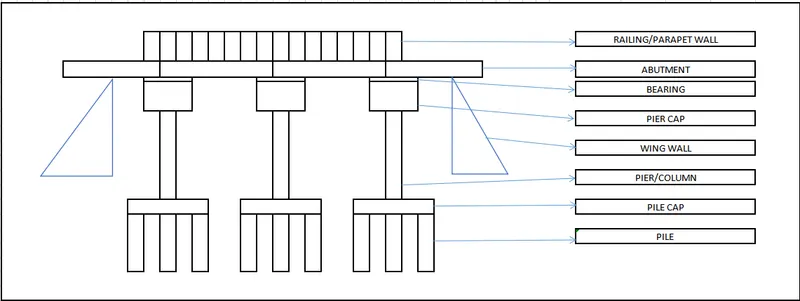
2.Name all the components of a RCC girder bridge resting on open foundation. what additional effects it will create if we have a) seismic case 5, b)3 span continuous bridge Position all the loads on the bridge having 12 m and 7.5 m carriageway transverse width with to the scale drawings. Also mention all the clauses of IRC 6
a) Seismic effect in a RCC bridge
The characteristics of seismic ground motion expected at any location depend upon
the magnitude of earthquake, depth of focus, distance of epicenter and characteristics
of the path through which the seismic wave travels. The random ground motion can be
resolved in three mutually perpendicular directions. The components are considered to
act simultaneously, but independently and their method of combination is described in
Clause 218.4. Two horizontal components are taken as of equal magnitude, and vertical
component is taken as two third of horizontal component.
In zones IV and V the effects of vertical components shall be considered for all elements
of the bridge.
b)3 span continuous bridge Position all the loads on the bridge having 12 m and 7.5 m carriageway transverse width with to the scale drawings. Also mention all the clauses of IRC 6
IRC 6 CLAUSES
201 Classification
202 Loads, Forces and Load Effects
203 Dead Load
204 Live Loads
205 Reduction in the Longitudinal Effect on Bridges Accommodating more than Two Traffic Lanes
206 Foot Over Bridges, Footway, Kerb, Railings, Parapet and Crash Barriers
207 Tramway Loading
208 Impact
209 Wind Load
210 Horizontal Forces due to Water Currents
211 Longitudinal Forces
212 Centrifugal Forces
213 Buoyancy
214 Earth Pressure
215 Temperature
216 Secondary Effects
217 Erection Effects and Construction Loads
218 Guidelines for Seismic Design of Road Bridges
219 Barge Impact on Bridges
220 Snow Load
221 Vehicle Collision Loads on Supports of Bridges, Flyover Supports and Foot over Bridges
222 Indeterminate Structures and Composite Structures
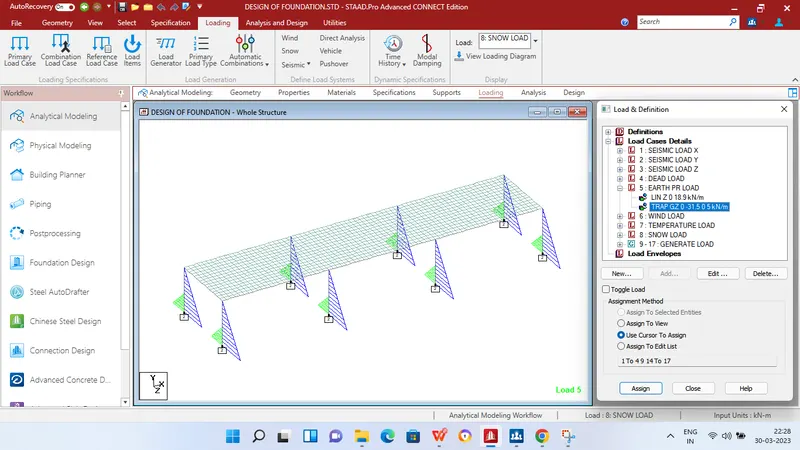
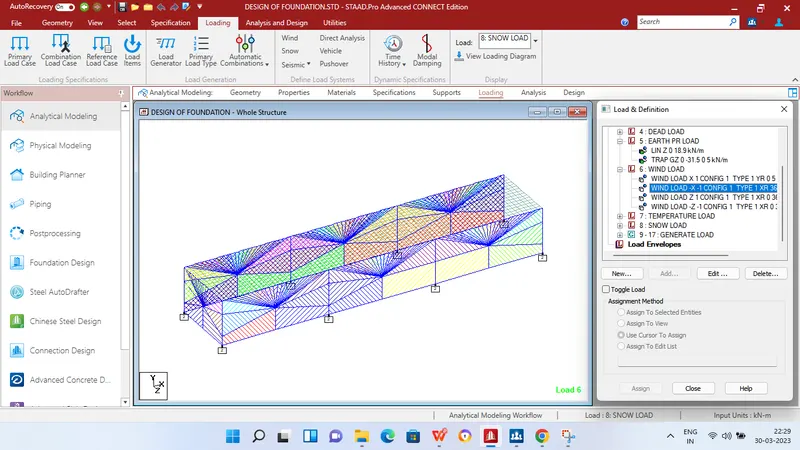
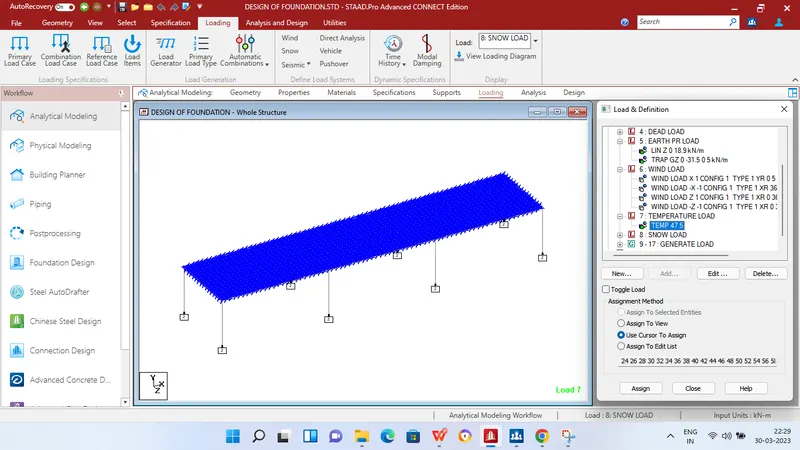
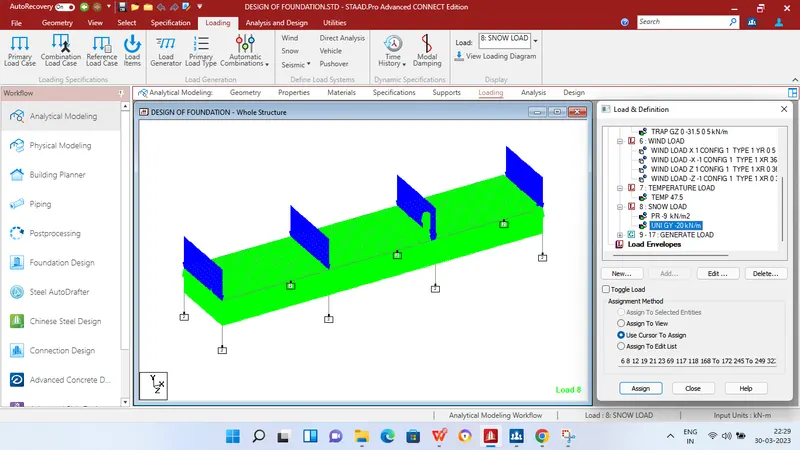
3 SPAN BRIDGE WITH LOADINGS
Earth Pressure load
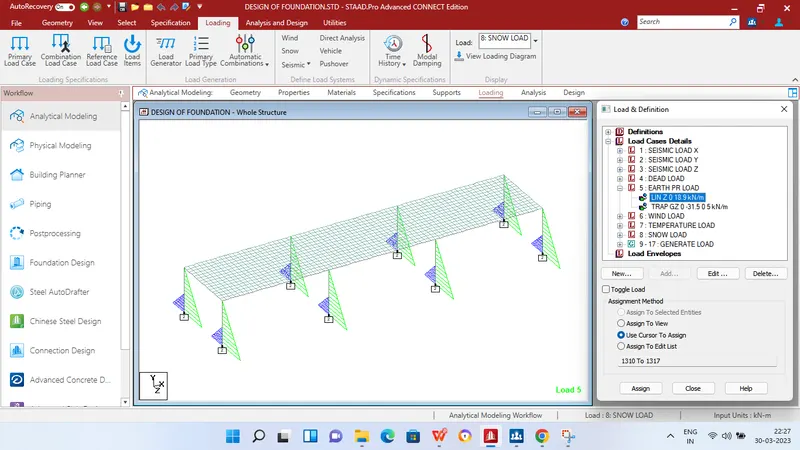
Wind Load
Temperature load
Snow load
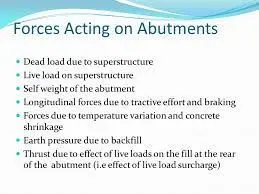
3.What are the various forces acting on the shallow foundations. how they will be different in the case free pier, fix pier and abutment. Show a diagram and loads acting on it.
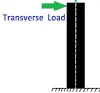
Fixed Piers - Piers which supports fixed bearings are called as fixed piers.Fixed piers are subjected to Longitudinal and transverse forces.
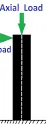
Free Pier - Piers which supports free bearings are called as free piers.Free piers are subjected to only axial forces.
Abutment - The part of a structure (such as an arch or a bridge) that directly receives thrust or pressure. dentistry : a tooth or part of a dental implant to which a prosthetic appliance (such as a bridge or artificial crown) is attached for support.
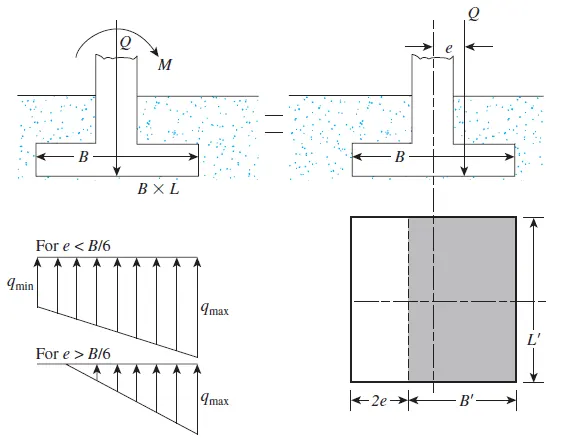
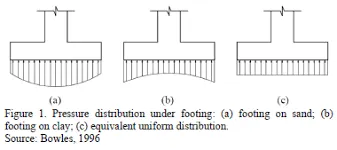
B)Show the distribution of forces in the footing afterwards due to the loadings.