Week 1 Challenge
Question 1 - What are different type of foundation in bridges and how selection of type is made.
Answer 1 -
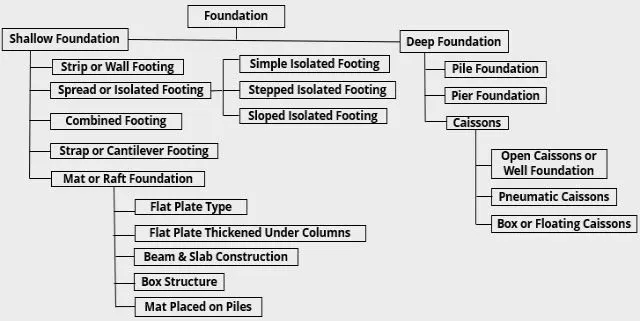
Foundations : It is the Bottom Most part of the Bridge Substructure which is responsible to transfer the Vertical Load from Bridge Superstructure & Substructure as well as The Backfill Horizontal load to the ground. It Allows all the Loads to transfer into the soil which is very essential for any bridge structure's stability.
Types of Foundations : There are Basically two Types of Foundations which are further sub classified as different types as shown in the image above.
1. Shallow Foundations: These foundations are provided when the bed strata is found to be ideal and having a good safe bearing capacity to hold all the vertical and horizontal forces from the bridge structure. They are mostly provided when the Weathered or Hard rock is found beneath the soil and depth of the rock is also less so that the cost of excavation is less. they are further divided into different classses such as:
- Spread Footing - These are the most common types of footing which are provided in Buildings, they support single coloumn and transfers the load of the coloumn to the ground. They are basically provided when the vertical load is less.
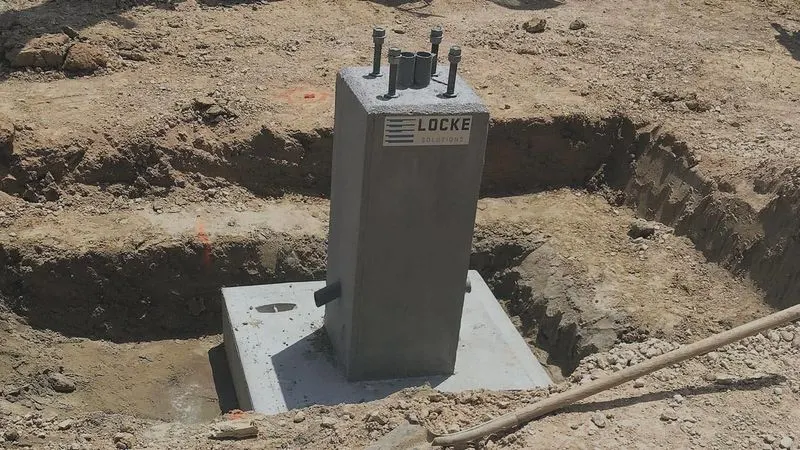
- Combined Footing : Combined Footing is also similar to spread footing only difference is it supports two or more than two coloumns, these types of footings are designed to withstand loads of multiple coloumns for which the footing has been designed it provides a raft platform for each and every coloums.
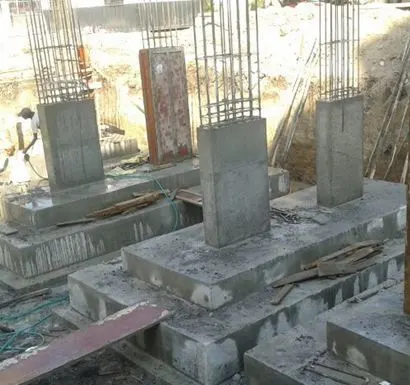
- Strap Footings : These are the footings which are designed in such a way that two different footings are connected with the help of beam and all the three unit act as a singular structure.
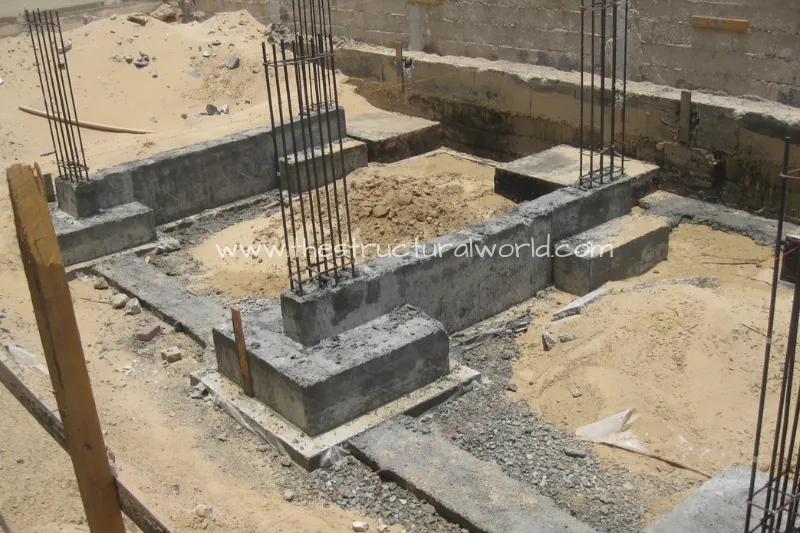
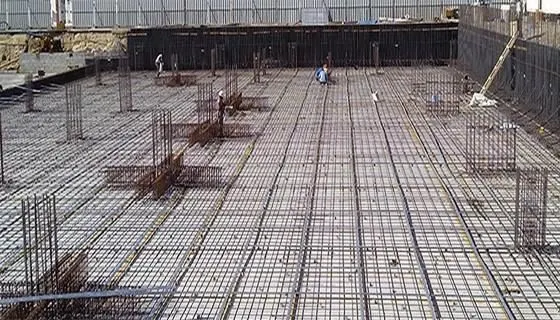
- Raft Footing : It is also a type of combined footing but it supports a group of coloumns and creates a base for all the coloumns. these are provided in areas where the safe bearing capacity of the soil is very less and normal spread footing can't able to withstand the vertical load.
2. Deep Foundations : These foundations are provided when the bed strata is doesn't found to be ideal and having a poor safe bearing capacity at the top so to achieve desired safe bearing capacity the soil must dig deeper and in that condition spread footing is not provided because of the large excavation cost and overall foundation cost is higher, in that condition we opt for deep foundations. They are further divided into different classses such as:
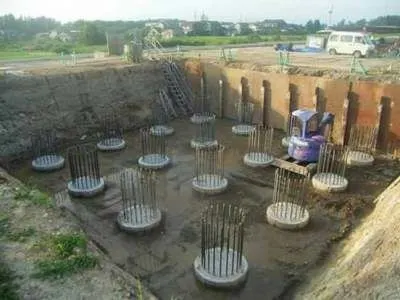
- Pile Foundations : These types are foundations are commanly used in bridge structures, vast majority of bridges have pile foundations specially bridges which are built in large rivers, in these types of foundations Piles are supported by the help of Pile cap which is connected to the substructure and piles, pile cap acts as a base of the foundation and by the help of piles the load is transferred into the earth.
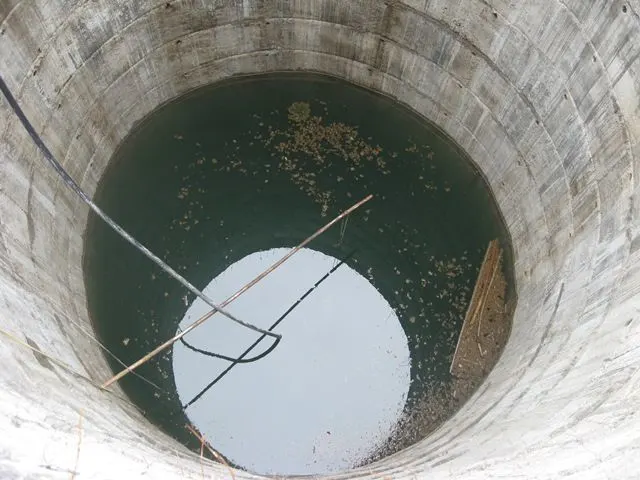
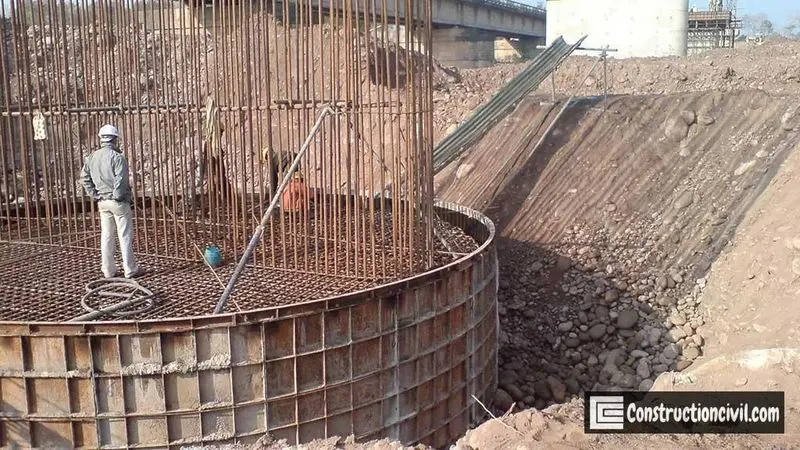
- Well Foundations : These type of foundations are provided when the foundation is laid inside the deep water, If the river is very wide and there is large amount of water flowing to construct a pier foundation in that river a cassion is made which obstructs the water and inside the cassion the construction of foundation is done. Deep wells are constructed inside the cassion which protects the bridge as it retains
Question 2 - Name all the components of a RCC girder bridge resting on open foundation. what additional effects it will create if we have a) seismic case 5, b)3 span continuous bridge Position all the loads on the bridge having 12 m and 7.5 m carriageway transverse width with to the scale drawings. Also mention all the clauses of IRC 6.
Answer 2 - There are Saveral Components of RCC Girder Bridge in Open Foundations These Components are Subdivided into Three Groups Namely Superstructure, Substructure & Foundations.
Superstructure : The Top Most part of the Bridge it consists of various components such as :
- Railing/Crash-Barriers/Parapet Walls : These components are considered as Super Imposed Dead Loads in Superstructures, Also they are provided to protect the vehicle from crashing it to the river or lake in which the bridge is constructed.
- Wearing Coat - These are the top layers provide on top of deck slab they are mainly RCC M30 Concrete grade laid over the carriageway having depth of 75mm, also the other provision is to provide mastic asphalt over the carriageway having depth 65mm.
- Deck Slab - Deck is the top slab whcih is provided at the top of RCC Girder Mostly M30 or higher grade.
- RCC Longitudinal Girders - These are the girders which are provided along the direction of traffic, they are designed as per the width of the bridge as well as length.
- RCC Cross Girders - These are the girders which are provided along the direction of river, they are designed as per the width of the bridge, they are provided at the ends of the span and one in the middle.
- Strip Seal Expansion Joints - These are the components which are provided at the expansion gap of the slab.
Subrstructure : The Mid part of the Bridge it consists of various components such as :
- Abutment/Pier shaft - The shaft is provided to transfer the superstructure load onto the foundations, it acts as a coloumn in the bridge structure.
- Abutment/Pier Cap - The cap is provided as the base for Pedestal and bearings, and these components are directly connected to bridge superstructure.
- Pedestal - These are the blocks of concrete provided at the top of abutment/pier cap to provide the base for bearings for easy load transfer they are mainly rectangular or sqaure in shape the standard size for the pedestal is 800 x 700 x 210 mm.
- Bearings - Bearings are placed at the top of pedestal to absorb certain vibrations and vertical load from the superstructure, they are of saveral types - Neoprene Elastomeric Bearing, Rocker Roller Bearing ( Mostly Provided in Railway Bridges), Pot Bearings etc.
- Dirt Wall - Dirt walls are provide at the edge of the abutments, and at the top of the abutment cap these are essential to provide as they provide a barrier between backfilling of the abutment with the superstructure.
- Solid/Cantilever Return Walls - Return walls are provided at the heel portion of the foundation these are walls which are provided to restrict the backfilling of the abutment, the one end of the return wall is fixed to foundations heel part and the other end is connected to abutment shaft and other two ends are left free, the design of these components are done by the help of plate theory.
- Backfilling - Backfilling is provided at the back of abutment shaft they are mainly in three layers, 1. Sandy Material 2. Granular Materials 3. 600 mm thick filter media.
Open Foundations : The Bottom most part of the Bridge it consists of various components such as :
- Concrete Sloped Foundations - These sloped foundations are designed by the designer and requires various checks as stability, overturning , sliding , base pressures etc. It basically consists of two parts 1 the rectangular bottom part whcih is provided as per the dimensions of the bridge i.e. width and designed length of the foundations and they are having certain depth of 300 mm, 500 mm upto 800 mm. The second part is the sloped portion the designer design the heel portion of the foundation and depth of the sloped portion must be the 1/3 rd of the heel part suppose if the heel designed length is 3300 mm so we have to provide the sloped depth of 1100 mm.
- PCC Below the foundations - It acts as a base for the foundations, which is provided taking the offset of 150 mm at both ends as well as the depth and are made of PCC M15 Concrete.
Additional Effects of Seismic Case : As the Seismic Zone changes the seismic factor is also changes, seismic zone 1 and 2 are considered as normal zones but zone 3 and above that it considered as high seismic zones, these zones requires additional coefficient of factor of safety while checking for overturning, sliding and while making combination of loads seismic load cases have more factors as per the IRC 6.
Clauses Mentioned in IRC 6 :
- Check for Loss of equilibrium
- Verification against overturning
- Verification against sliding
- Verification for Bearing Resistance
- Partial factor for actions and combination of actions
- Partial factor on materials
- Calculation of bearing pressure for structural design of foundation
- Calculation of allowable bearing capacity
- Verification of uplift limit state
- Verification of Serviceability limit state
- Verification of contact area of base and bearing pressure
- Calculation of Settlement
- Allowable Settlement
- Special vehicle loading
Question 3 - What are the various forces acting on the shallow foundations. how they will be different in the case free pier, fix pier and abutment. Show a diagram and loads acting on it.
Answer 3 - There are various forces acting on shallow foundations such as :
- Dead Load : All the Components such as supertructure, substructure act their self load to the foundations.
- Super Imposed Dead Load - Components such as Railing/Crash Barrier/ parapet wall acts as a SIDL for foundations.
- Live Load : Live Load of the Bridge Superstructure having combinations of the different vehicles such as Class A, Class B and 70 R Tracked or Wheeled.
- Impact Load
- Wave Load
- Wind Load
- Water Pressure - The HFL of the bridge resembles the height of the wave and this wave exerts load on the substructres.
- Uplift Pressure - Current Wave also exerts the uplift pressure while flowing into the maximum velocity.
- Seismic Forces - If the Bridge comes under seismic zone 3 and above seismic effects should be considered into the design, these effects might act in any direction in the bridge but considered only in one direction at a time.
- Earth Pressure Load - These Loads are applied in the abutment shaft and foundation by the backfilling of the abutment and in the case of overburden of the soil it largely effects the foundation.
- Temperature Loads - Temperature loads are also considered as the temprature changes are huge in the certain locations the temperature varience also effect the foundations.
In Case of Free Piers : In Case of Free Piers, as the name suggests the bearing in this case if free so that free bearings acts as a simply supported beam where no moment will generate only horizontal and vertical movements are allowed.
In Case of Fix Piers : In Case of Fix Piers, as the name suggests the bearing in this case if fixed so that fixed bearings the moment is resisted only by the abouve forces the moment will generate.
In Case of Abutments : The Abutments are subjected to backfill and will generate earth pressure load these loads are predominant in abutment and due to that abutment should be checked for sliding and overturning checks. All the Loads acts same but above mentioned additional checks are required.