Week 1 Challenge
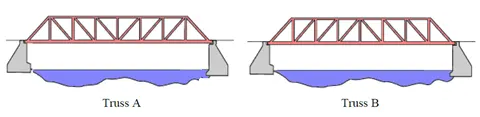
Out of the two through type truss systems shown below, which is the most efficient in carrying gravity load? Reason it out.
Sol:
Truss (A) is a "Pratt Truss And Truss (B) is a " Howe" Truss.
The design of howe truss is opposite to that of pratt truss in wich diagonal memebers are slanted in the direction posite to that of Pratt Truss
The vertical members in Pratt truss are develop compression forces. that menas it is more capable to resisting the buckiling
Pratt truss have vertical membres in compression and diagonal members in tension upon the application of gravity load at the joints of the top chord .
Results : Hence Truss (A) is more efficiency in carrying gravity load.
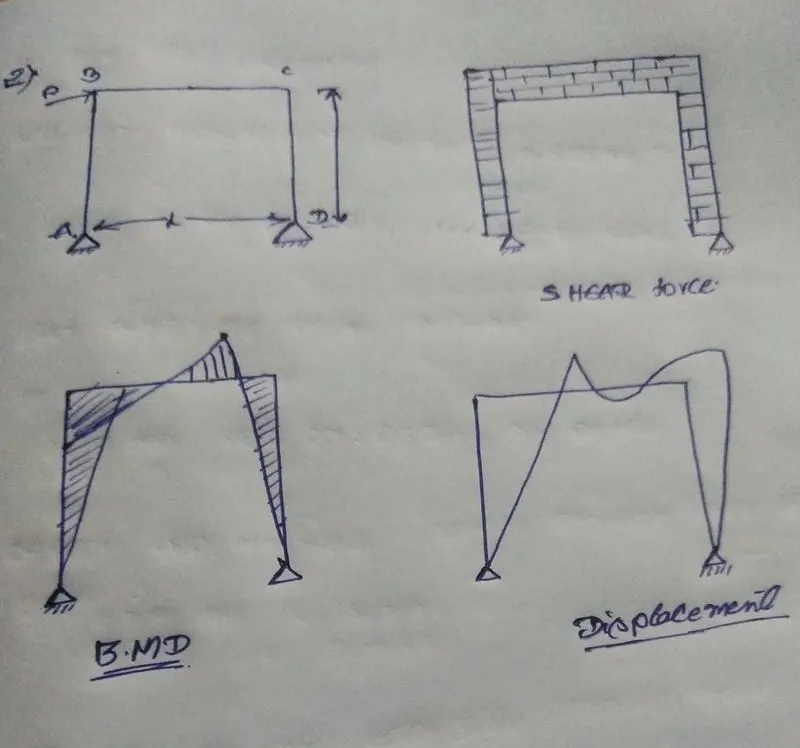
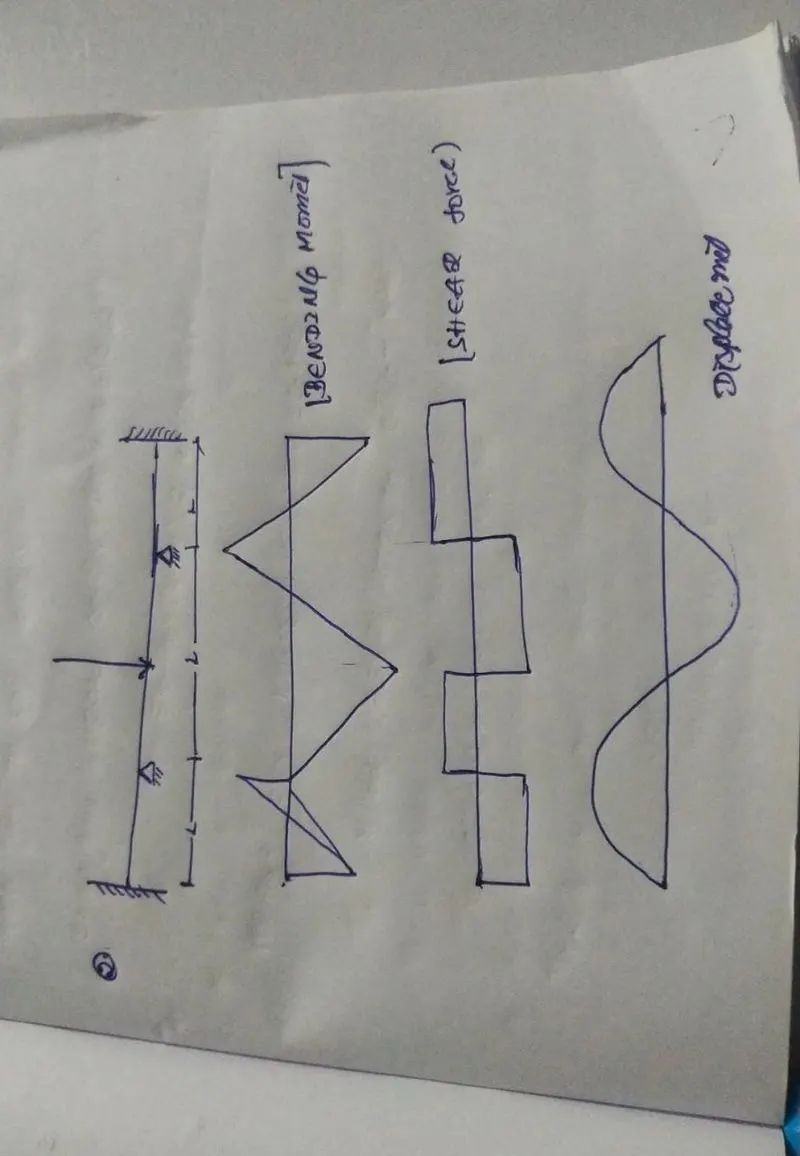
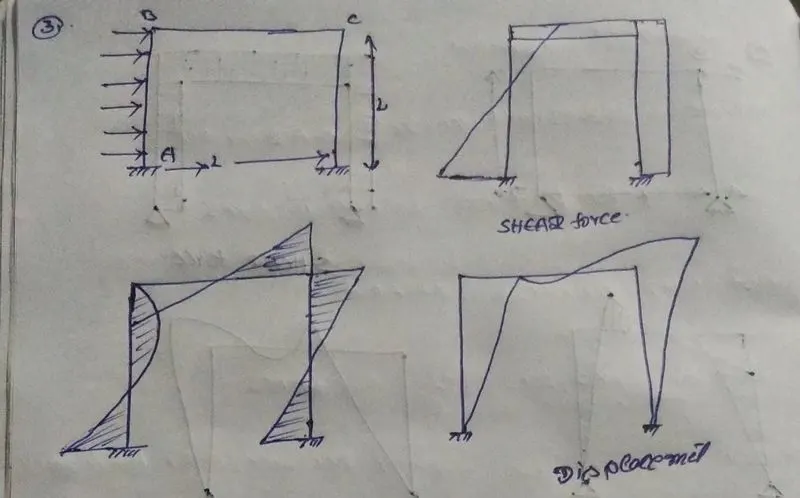
2Q)
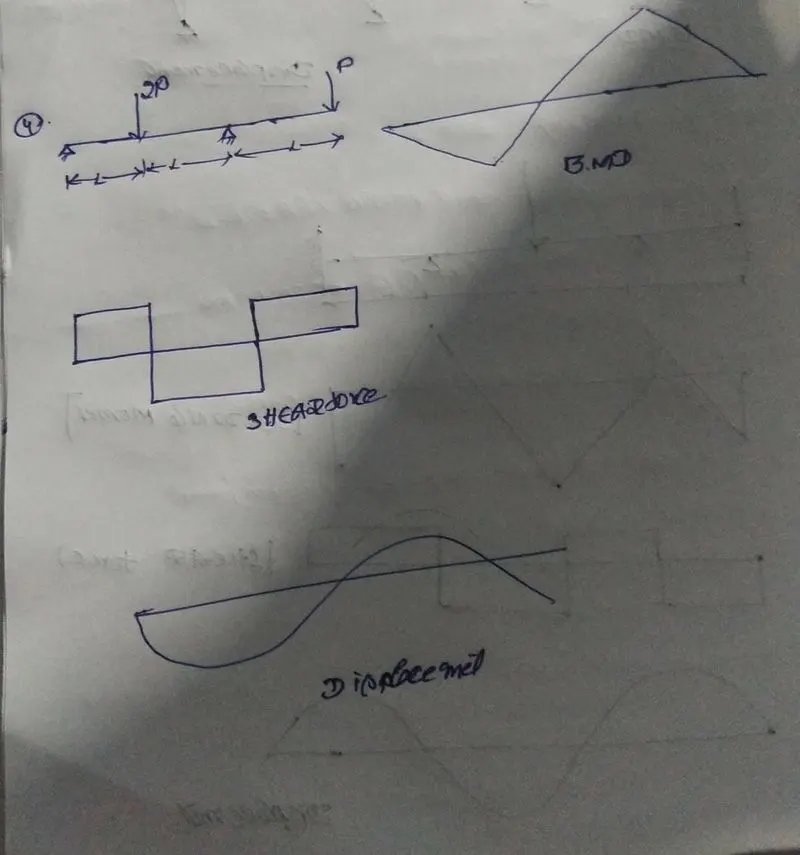
Aim:For the beam & Frame below draw deflected shape and bending moment drawing. (Qualitative approach). E & I are constants.
3Q)
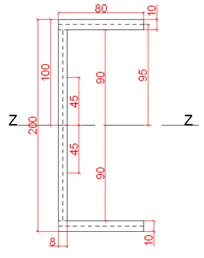
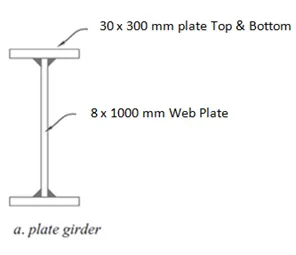
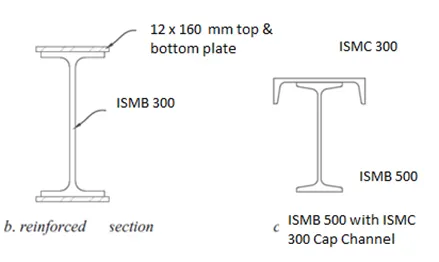
3. Determine MOI, Weight, C/S area of sections below
A)
MOI along Iz - 18341333.33mm4
MOI along Iy - 1843244.91mm4
weight per meter = 23.84kg/m
b
MOI along Iz -544206666.66mm4
MOI along Iy - 135042666.66mm4
weight per meter =201.1kg/m
c
MOI along Iz - 1854000.mm4
MOI along Iy - 1420000mm4
weight per meter =73.34kg/m
4Q)
Aim:
For the floor framing below, Calculate the load on interior beam, Exterior beam, Interior Girder and exterior girder having Floor Load of 10kN/m2
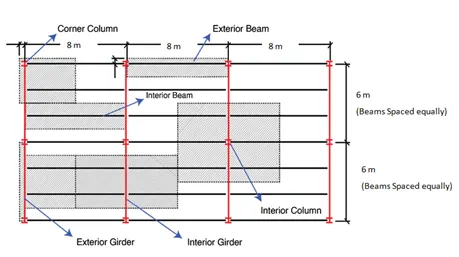
Floor load 10kn/sq.m
int.beam =10kn/sq.m*2=20kn/m-UDL
Ext beam=10kn/sq.m*1=10kn/m-udl
Interior Grider = 22.5kn/m
Exeterior grider=20.1kn/m
interior column=22.5kn/m
5Q)
Expansion joint size determination for temperature stated problem
Assuming a bridge, made of steel, with an initial total length of 2000 m at -20 ºC, calculate the length difference at 40 ºC and its total length.
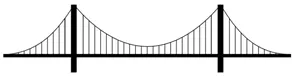
Coefficient of Thermal expansion of steel = 12x10-6/°C
given:
An initial total length of 2000 m and Coefficient of Thermal expansion of steel = 12x10-6/°C
Length difference 12x10-6/°C *2000m*40 ºC
Total length difference at 40 ºC is 0.96m