Week 1 Challenge(Fuel Cell history and its trends)
CHALLENGE 1
Objective:
1)To discuss about what were the first fuel cell vehicle models in Asia,Europe,Noth america with their initial specifications to compare with current model fuel cell vehicles.
2)Trend for cost of production in USD of per KW power from fuel cell from past to future.How they are in improving stages?
Discussions:
1)First fuel cell vehicle models in Asia,Europe,Noth america:
Fuel cell vehicle in North America:
In 1966 General Motors developed the first fuel cell road vehicle,the Chevrolet Electrovan.It had a PEM fuel cell,a range of 120 miles and a top speed of 70mph.
There are only two seats as the fuel cell stack and large tank of hydrogen and oxygen took up the rear portion of the van.
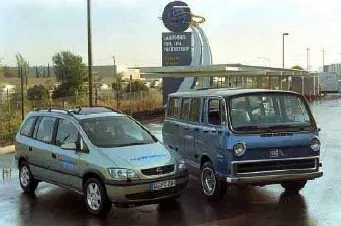
General Electric and other continuous to work on PEM fuel cells in 1970's .Fuel cell stack was still limited principally to space applications in 1980's,including the space shuttle.
In 1990's the auto mobile manufacturers were intrested in fuel cell applications and demonstration vehicles were readied.
In 2001,the first 700Bar hydrogen tanks were introduced,reducing the size of fuel tanks that could be used in vehicles and extended the range.
Fuel cell vehicle in Asia:
Honda FCX concept-
The Honda FCX (Fuel Cell Experimental )is a family of hydrogen fuel cell automobiles manufactured by Honda.
The first prototype FCX is four door four seat vehicle that was launched in 1999. Dimensions are Th length 4165 mm, width 1760 mm and height 1645 mm.
The fuel cell used was PEM manufactured by Ballard Power systems.
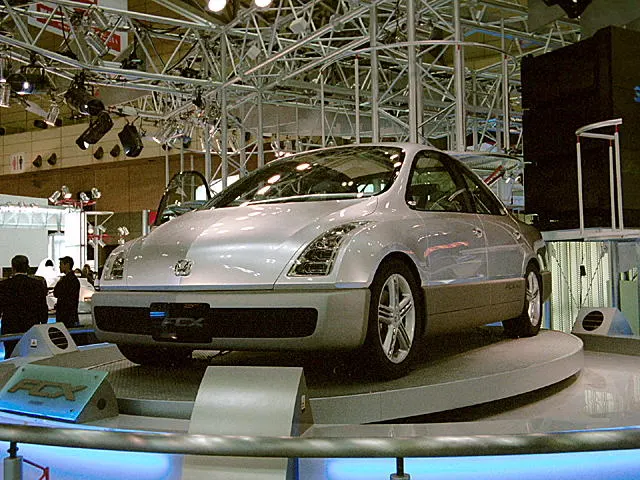
The 2005 FCX was the second-generation fuel-cell vehicle (FCV) from Honda. It was Honda's first fuel-cell vehicle powered by a fuel-cell stack designed and manufactured by Honda and was certified by both the EPA and CARB for commercial use.
It had an EPA city/highway rating of 62/51 mpkg (57 mpkg combined).
It achieved a nearly 20-percent improvement in EPA fuel economy rating a 33-percent gain in peak power (107 hp vs. 80 hp) and also a nearly 20-percent gain in operating range compared to the 2004 FCX (a range of 160 miles).
FCX was, according to Honda, the only fuel cell vehicle fully certified to meet the applicable federal government crash safety standards at the time. Later with software upgrades for 2006 FCX, this was enhanced to 210 miles.
In 2006, Honda announced that it would make a production version of the FCX concept shown at the 2005 Tokio Moto Show .
On 25 September 2006, this production version was unveiled.
The updated four-door sedan version looks sleeker and more futuristic, and has a high focus on comfort and interior space. It has a much more spacious interior with a mixture of plastic, wood and leather.
Production is expected to begin in 2008 in Japan and the U.S. The production version will closely resemble the concept, although it is unknown if some of the concept's more radical features such as a tilting instrument panel, will be included.
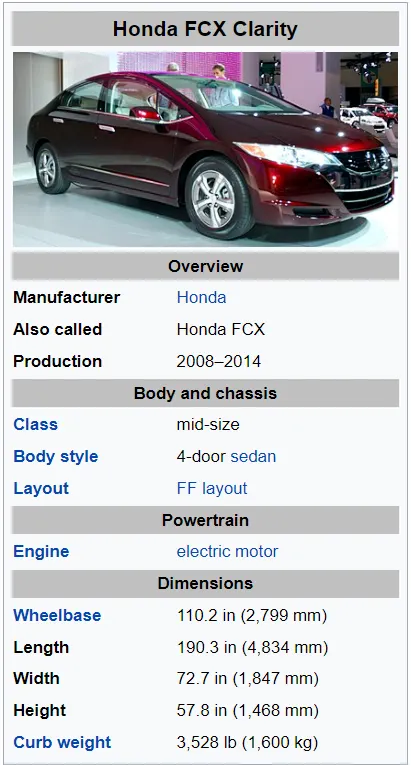
In 2007 Honda unveiled the FCX Clarity, the first production model, and announced that the car would be available for lease beginning in the summer 2008. Initial availability will be limited to the Southern california market, with availability expanding as hydrogen fueling stations become available.
Toyota FCV consept-
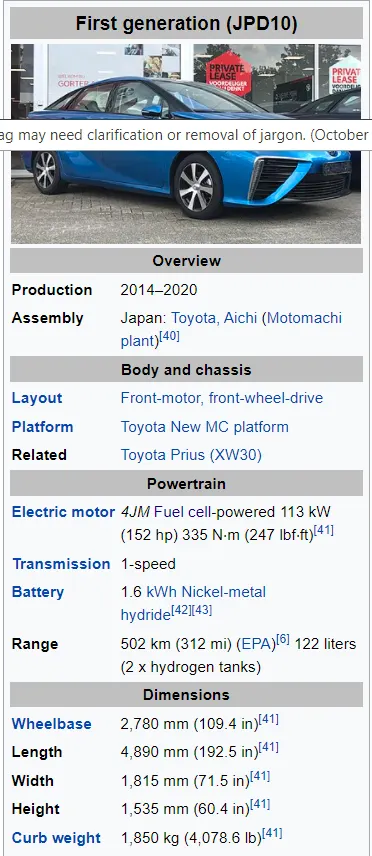
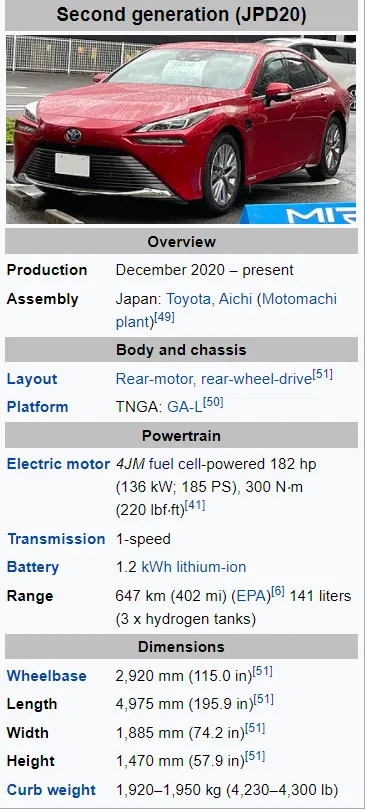
The Toyota Mirai is a mid size Hydrogen Fuel Cell (FCV) manufactured by Toyoto, and represents one of the first FCV automobiles to be mass produced and sold commercially.
The Mirai was unveiled at the November 2014 Los Angles aoto show. As of December 2019, global sales totalled 10,250 Mirais. The top-selling markets were the U.S. with 6,200 units, Japan with 3,500 and Europe with 640.
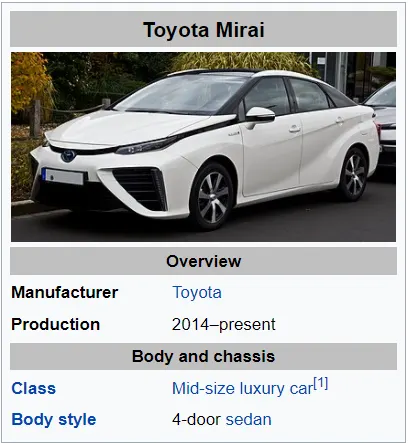
Under the United States of Environment Protection Agency (EPA) cycle, the 2016 model year mirai has a total range of 502 km (312 mi) on a full tank, with a combined city/highway fuel economy rating of 66 mpg. Sales in Japan began on 15 December 2014.
The Mirai is based on the Toyota FCV-R (Fuel Cell Vehicle) concept car, which was unveiled at the 2011 Tokyo Motor show and the Toyota FCV (Fuel Cell Vehicle) concept car, which was unveiled at the 2013 Tokyo Motor Show.
The FCV range is expected to be approximately 700 km (430 mi) under Japan's JCO8 Test cycle.
The FCV concept also uses portions of Toyota's Hybrid Synergy Drive technology including the electric motor, power control unit and other parts and components from its hybrid vehicles to improve reliability and minimize cost.
The hybrid technology is also used to work together with the fuel cell. At low speeds such as city driving, the FCV runs just like any all-electric car by using the energy stored in its battery, which is charged through regenerative breaking.
At higher speeds, the hydrogen fuel cell alone powers the electric motor. When more power is needed, for example during sudden acceleration, the battery supports the fuel cell system as both work together to provide propulsion.
Comparision of specifications of Toyoto Mirai as a concept car and present factors:
As Concept car At present
Fuel cell vehicles in Europe:
Daimler unquestionably has been the global fuel cell car leader and trend setter since 1994.
The company built the world’s first fuel cell car and has introduced one new fuel cell car nearly every year between 1996 and 2002. In each successive model, fuel cells were smaller in size and better in performance.
In 2002, Daimler unveiled the world’s first series-produced fuel cell car, the Mercedes-Benz A Class F-cell.
The car had a range of 100 miles, with a top speed of 82 mph. A fleet of 60 vehicles were produced and leased to customers for daily use in Germany, Japan, Singapore,and in the United States. However, no commercialization has materialized, but Daimler continues to introduce new fuel cell cars.
In September 2009, Daimler presented a significantly advanced Mercedes - Benz B Class F-cell , which had a range of 248 miles and a top speed of 106 mph.
In early 2009, it announced plans to begin commercial FCV production in 2009 with the aim of 100,000 vehicles in 2012–2013.
At the beginning of 2010, Daimler started to lease up to a total of 200 B-Class F-Cell vehicles. In June 2011. Which convinced Daimler that the technology was now ready for mass production.
In September 2011, Daimler introduced the Mercedes -Benz F125, an F-CELL plug-in Hybrid, another indicator of the company’s commitment to F-Cell.
At present New Mercedes Benz-GLC F-cell, as special hybrid with fuel cell vehicle is introduced.
The Mercedes-Benz GLC F-CELL (weighted hydrogen consumption: 0.91 kg/100 km,CO₂ emissions: 0 g/km, weighted power consumption: 18 kWh/100 km) is a very special plug-in hybrid, as it operates on innovative fuel cell and battery technology for the first time apart from electricity, it also runs on pure hydrogen.
Its power train consist of hydrogen tank for fuel cell stack along with battery pack for hybrid operation as shown below.
The lithium-ion battery has a gross capacity of 13.5 kWh and additionally serves as an energy source for the electric motor.
Plug-in technology makes it easy to charge via the 7.4 kW onboard charger at a standard household socket, a wallbox or a public charging station.
Just like the drive motor, an asynchronous motor with an output of 160 kW (217 hp) and a torque of 375 Nm,the powerful storage battery is space-savingly installed in the rear of the SUV.
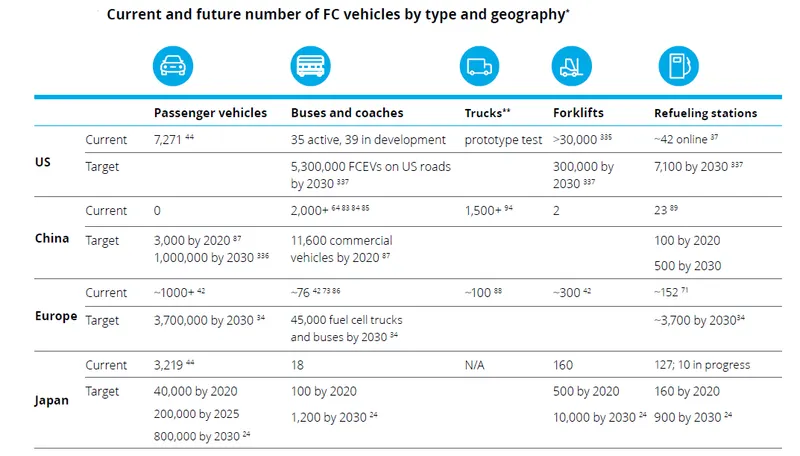
Number of Fuel cell vehicles in current and future predictions:
2)Trend for cost of production in USD of per KW power from fuel cell:
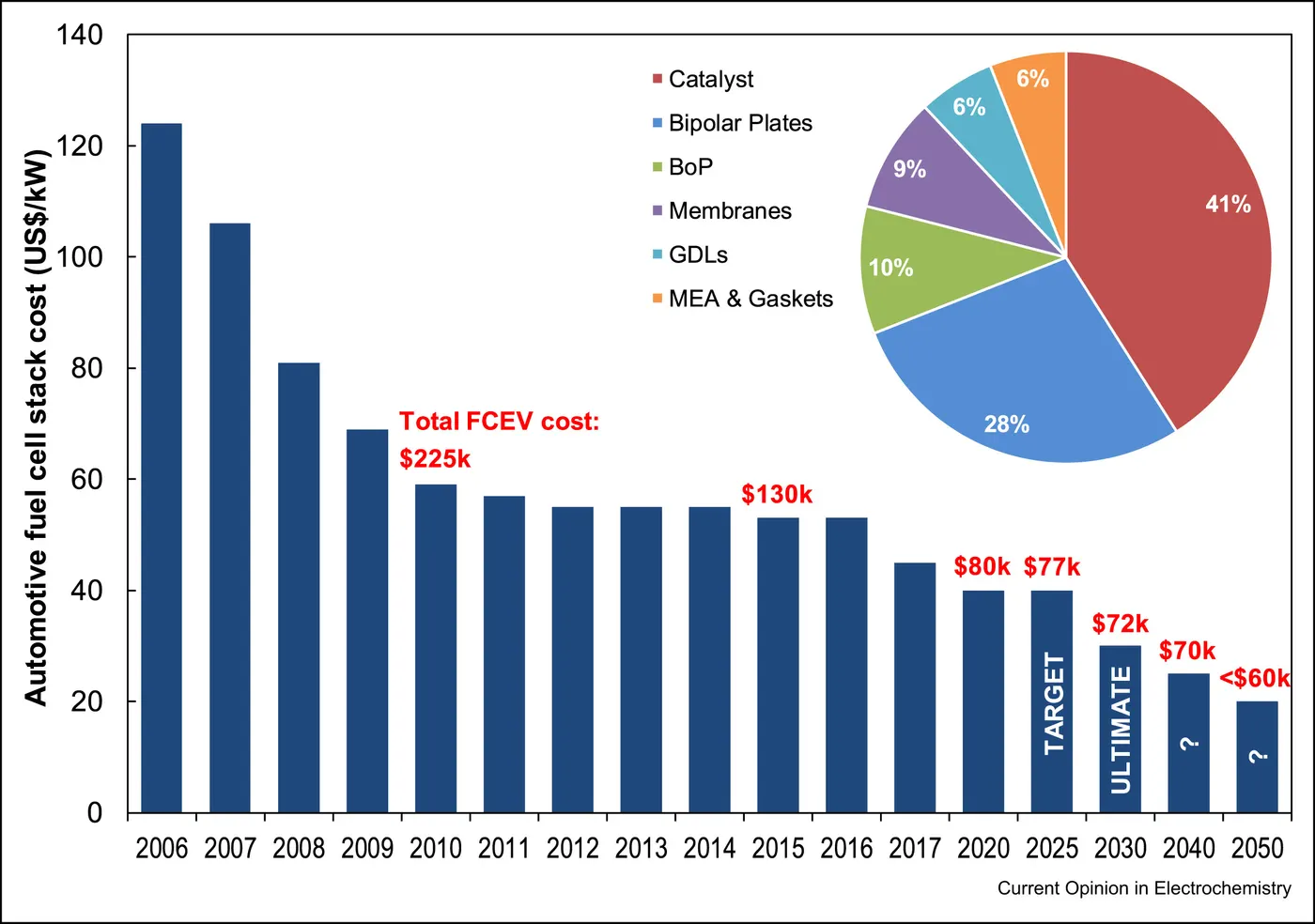
From the above trend chart we can see that automotive fuel cell stack cost in USD for production of 1 KW in a bar graph.
Initially from the year of 2006,most of the fuel cell vehicles are come into the commercial use for mass production.So the trends are analysed from the year of mid 2005 to 2006.
In 2006 we are having the cost of nearly 125 USD for the production of 1KW fuel cell stack as highest as we see above.
Upto the year of 2010 the cost is exponentially decreased ,nearly around 45% to 55 USD.
Then from the year of 2010 to 2016 the cost is overall in constant amount of 50 USD.
After 2016 the amount for 1KW stake production gets reduced slower from 50 USD in 2017 and at present(2021) it is around 40 USD.The overall cost to manufacture the entire system is around 80000 USD.
It is predicted the cost will be reducing in slow manner in future as we see from trend chart.
Reason for cost reduction and improvements over years:
The U.S. Department of Energy (DOE) is working closely with its national laboratories, universities, and industry partners to overcome critical technical barriers to fuel cell development.
Cost, performance, and durability are still key challenges in the fuel cell industry.
Cost-
Research, development, and demonstration (RD&D) focuses on the development of low-cost fuel cell stack and balance of plant (BOP) components and advanced high-volume manufacturing approaches to reduce overall system cost.
As platinum refered as most costiler material used as a catalyst for direct hydrogen PEM fuel cells, some research are in process to avoid platenium and even platenium group metal free catalyst for long term applications.
Performance-
To improve fuel cell efficiency and performance, RD&D focuses on innovative materials and integration strategies.
Efforts include developing ion-exchange membrane electrolytes with enhanced efficiency and durability at reduced cost,improving membrane electrode assemblies (MEAs) with high power density through integration of state-of-the-art MEA components.
Durability-
DOE has set ultimate targets for fuel cell system lifetime under realistic operating conditions at 8,000 hours for light-duty vehicles, 30,000 hours for heavy-duty trucks, and 80,000 hours for distributed power systems.
Realistic operating conditions include starting and stopping, freezing and thawing, impurities in the fuel and air, and humidity and dynamic load cycles that result in stresses on the chemical and mechanical stability of the fuel cell system materials and components.
RD&D focuses on identifying and understanding the fuel cell degradation mechanisms and developing materials and strategies to mitigate their effects.
Thank you
Submitted by,
Praveen Kumar L V,
Date:29/08/2021.