Week 1 Challenge
Week 1 Challenge
1) List of first developed models of fuel cell vehicles:
Aim:
To list out the first models and specifications of fuel cell vehicle developed in Asia, Europe and North America. And to compare those with the recent fuel cell vehicle.
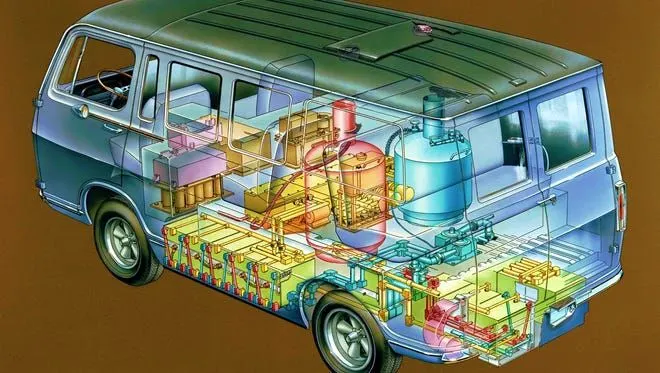
First model of fuel cell vehicle in North America:
Manufacturer: General Motors
Model: GMC Electrovan
Year: 1966
Country: United States
Specifications:
Power: 32kW
Peak power: 160kW
Fuel cell modules: 32 numbers
Fuel type: Liquid Hydrogen and Liquid Oxygen
Top speed: 70mph and 60mph in 30 seconds.
Range: 150miles

First model of fuel cell vehicle in Europe:
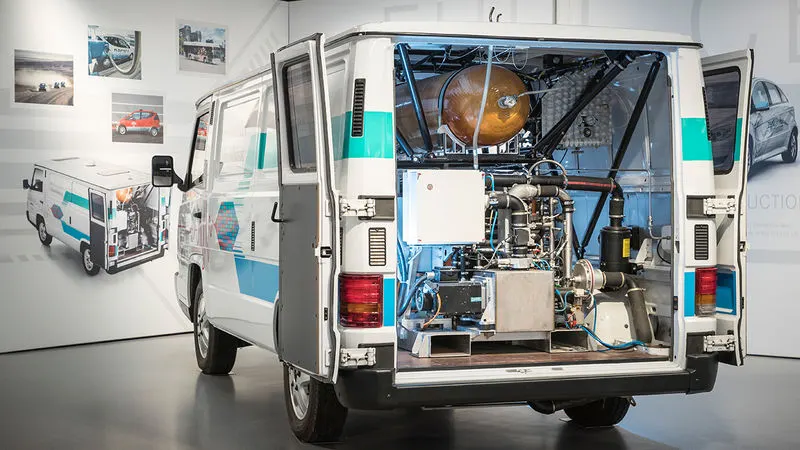
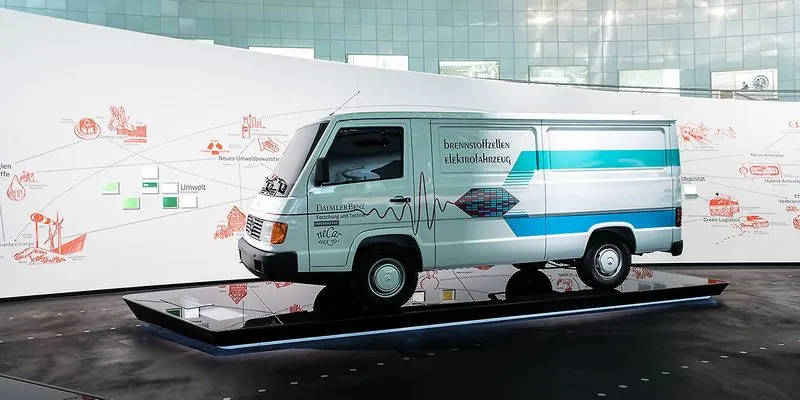
Manufacturer: Daimler Benz AG
Model: NECAR 1 (New Electric car)
Year: 1994
Country: Germany
Specifications:
Power of motor: 31kW
Number of Fuel cell stack: 12
Output of fuel cell stack: 50kW
Fuel cell stack Manufacturer: Ballard Power Systems Inc.,
Fuel type: Hydrogen
Fuel tank: 150 Liters at 300 bars.
Top speed: 90kmph
Range: 130 km.
First model of fuel cell vehicle in Asia:
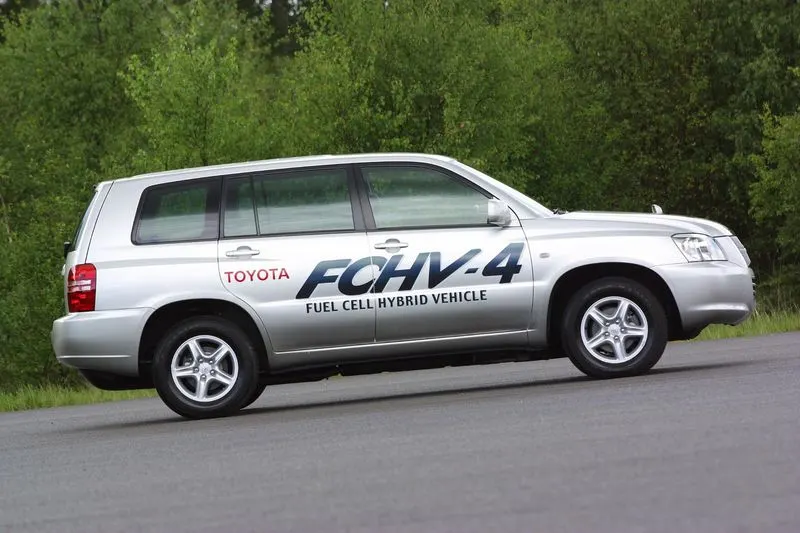
Manufacturer: TOYOTA
Model: FCHV
Year: Prototype 1997
Country: Japan
Certified by Japan’s Ministry of land: 2002 FCHV-4
Specifications:
Power of motor: 80kW
Fuel cell: Toyota FC stack
Fuel cell type: Polymer electrolyte
Fuel cell output: 90kW
Fuel type: Hydrogen
Storage pressure: 35 MPa (350 Bars)
Top speed: 155kmph
Range: 300 km.
Battery type: Nickel Manganese Cobalt
Battery output: 21kW.
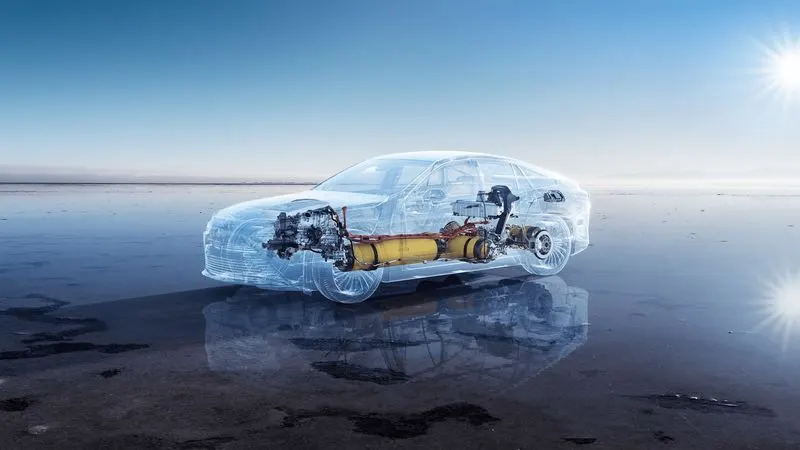
Specification of Present day Fuel cell Vehicle:
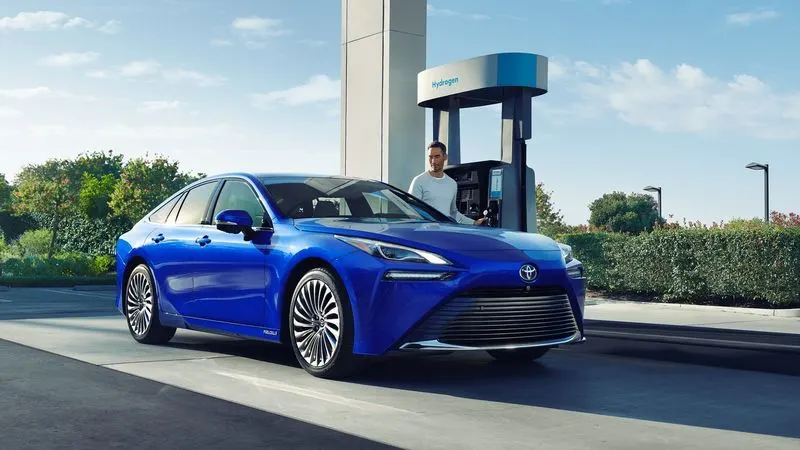
Toyota Mirai Fuel cell Electric XLE
Year: 2021
Range: 402 miles
Motor power: 182hp
Maximum torque: 300Nm
Speed: 0-60mph in 9.2seconds
Fuel cell: Toyota FC stack
Fuel cell type: Polymer electrolyte
Fuel cell output: 128kW
Output density by Volume: 5.4
Number of cells: 330
Fuel type: Hydrogen
Number of Tank: 3
Maximum filling pressure: 87.5MPa
Nominal filling pressure: 70MPa
Battery type: Lithium ion
Battery output: 1.24kWh.
Summary:
Initially the space for storage of hydrogen and oxygen required is more. It reduces the person to seated in the vehicle. For 6 persons vehicle, only 2 can be seated. With the advancement in technology, number of tanks are increased with reduced size and pressure of storage is also increased. The number of fuel cells are also increased to meet the high voltage application and the motor power is also increased. This increases the range of vehicle. Initially in general motors the liquid hydrogen and liquid oxygen is used. In Toyota Mirai the hydrogen gas is used and the oxygen is filtered from the atmosphere.
2) Cost of fuel cell
Aim:
To compare the cost of fuel cell per kW in the past and prediction of cost in the future. And to explore about the probable reasons for improvement.
As of 2014:
- The cost of fuel cell is very high.
- This is mainly due to manufacturing process.
- The membrane electrode assembly is very thick or of high volume.
- The catalyst is used all over the membrane and more density of catalyst is used.
- The catalyst used is platinum which is of high in cost.
- It has to be operated around 800 degree celcius to obtain the optimum efficiency.
- Because, the high temperature and catalyst speeds up the reaction.
- In order to get the sudden acceleration, the reaction have to speeds up.
- But, high temperature can degrade the membrane and other cell components.
- So, the membrane has to be designed to withstand high temperature.
- This can directly increase the cost of fuel cell.
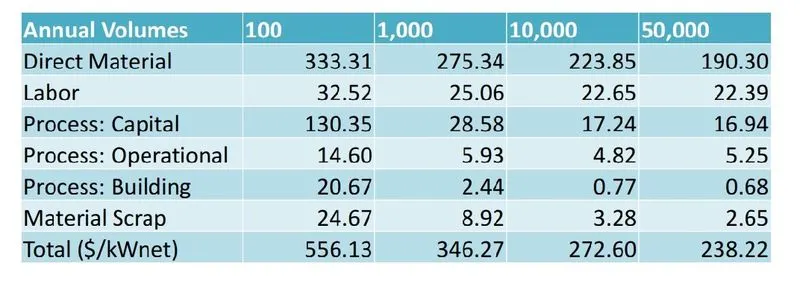
- The cost of fuel cell stack with the low temperature proton exchange membrane ranges from $550/kW to $240/kW.
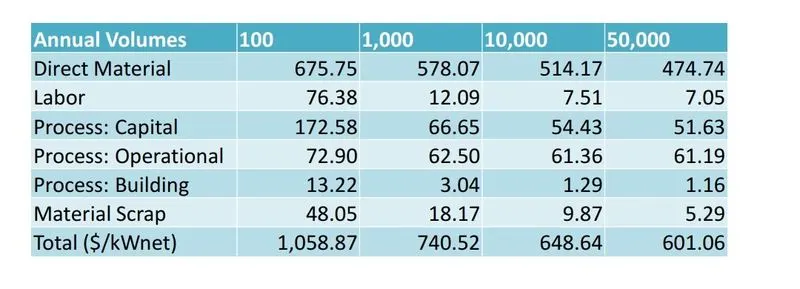
- The cost of fuel cell stack with the high temperature proton exchange membrane ranges from $1050/kW to $600/kW.
In future:
- Ballard Power System Inc., is accelerating the price reduction of fuel cells.
- Ballard is partnered with Weichai to industrialize the fuel cell products.
- When the production volume increases the cost will reduce.
- Automotive supply chain is now developing the low cost reliable components fuel cell powertrains.
- Ballard is improving the Membrane electrode assembly and fuel cell stack designs.
- They are focusing on technology to increase the power density and lower the precious metal catalyst loading of fuel cell stacks.
- The density of platinum can be reduced.
- The coating of platinum can be limited only to the active area of the membrane.
- Instead of using precious metal platinum as catalyst, the research has been going on for using the cerium oxide (ceria).
- Cerium oxide can give the same efficiency at 600 degree celcius which other catalyst gives at 800 degree celcius.
- From the experiment using high brilliance X-rays on splitting the water into hydrogen and oxygen and tracking the routes of oxygen ions, Ceria is a super catalytic material. It is paradoxically defective.
- In this the material is defective and there are missing some oxygen atoms.
- For a fuel cell catalyst this is highly desirable.
- This oxygen vacancies allow higher reactivity and quicker ion transport.
- This increases the accelerated fuel cell reaction rate and higher power.
- The cost can be further reduced by using the low cost carbon instead of metal for bipolar plates.
- The cost of fuel cell will drop below battery and diesel within a decade.
- The cost of fuel cell per kW in the future will be less than $100/kW as per US Department of energy.
Summary:
The cost of fuel cell is rapidly dropping by 60-80%. Many automakers are moving towards the fuel cell electric vehicle. And more research is going on to reduce the fuel cell furthermore to make it commercially viable to the consumers. This is preferable because the fueling time is less and is green energy. It has a great range of running distance with single time fueling.