Understanding the concepts on Degrees of Freedom
Question 1:
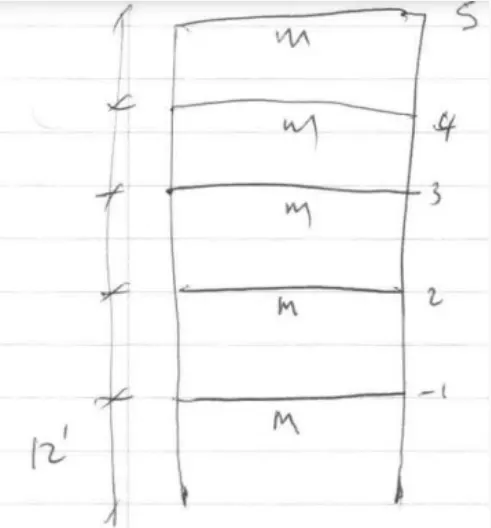
A five storey structure with 5 translational DOF is shown here. Each storey has mass ‘m’. The eigenvalue problem has been solved and the 5 periods of vibration Tn and their corresponding mode shapes, φn, have been derived.
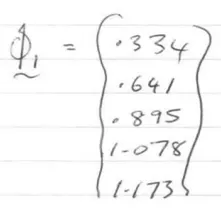
The fundamental period of vibration (T1 = 2 seconds) and its associated mode shape:
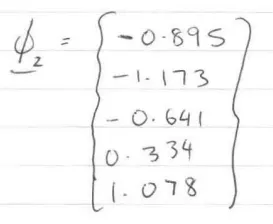
The second mode of vibration (T2 = 0.6852 seconds) and its associated mode shape:
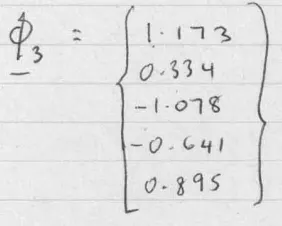
The third mode of vibration (T3 = 0.4346 seconds) and its associated mode shape:
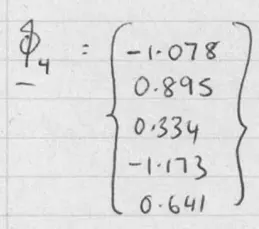
The fourth mode of vibration (T4 = 0.3383 seconds) and its associated mode shape:
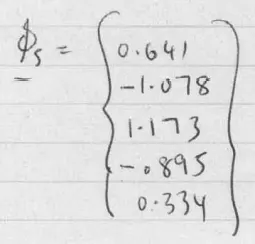
The fifth mode of vibration (T4 = 0.2966 seconds) and its associated mode shape:
- Ln , Mn and Γn for each of the five modes are to be computed from Equations below.
- Also, calculate the effective modal mass Mn* and the modal mass participating ratio for the 5 modes. The mass matrix will be required to evaluate these parameters.

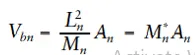
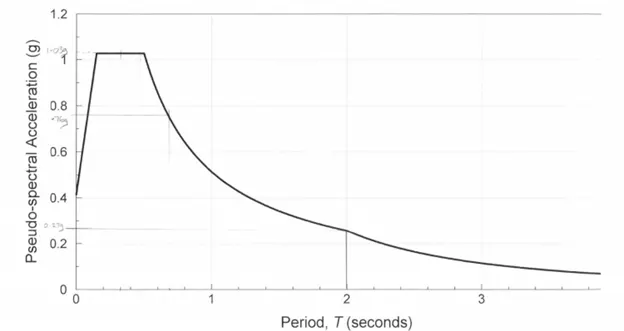
- Finally, obtain the base shear for each of the 5 modes of vibration and the combined base shear as per SRSS rule. The pseudo acceleration design spectrum to obtain the base shear for each mode is provided below.
- How many modes are to be considered such that a modal mass participating ratio of 90% is obtained?
ANS:
Mass matrix m =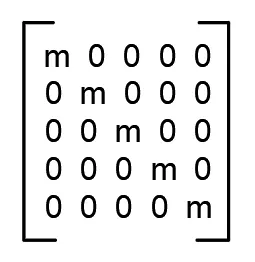
Modified mass matrix 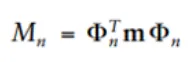
Model property Ln 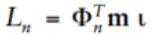
For the first mode
n=1
Modified mass matrix M1 =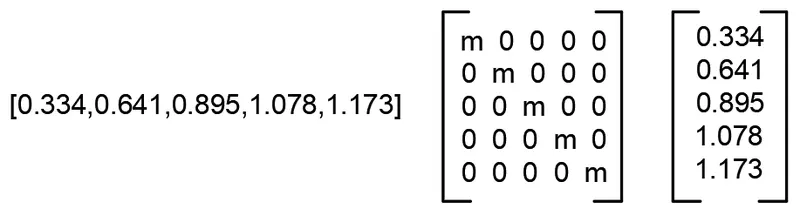
m1=3.861m
Model property L1 =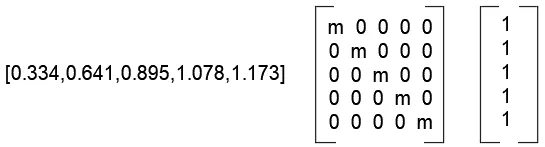
L1=4.121m
Model participation factor
Γ1=L1/M1
=4.121m/3.861m
=1.067
Effective modal mass
M1* =(4.121m)^2/3.861m
M1*=4.398m
For the second mode
n=2
Modified mass matrix M2 =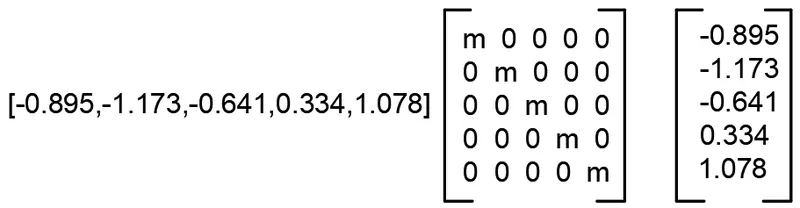
m2=3.861m
Model property L2 =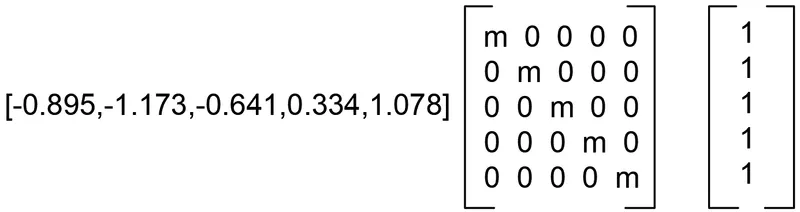
L2=-1.293m
Model participation factor
Γ2=L2/M2
=-1.293m/3.861m
=-0.335
Effective modal mass
M2* =(-1.293m)^2/3.861m
M2*=0.436m
For the third mode
n=3
Modified mass matrix M3 =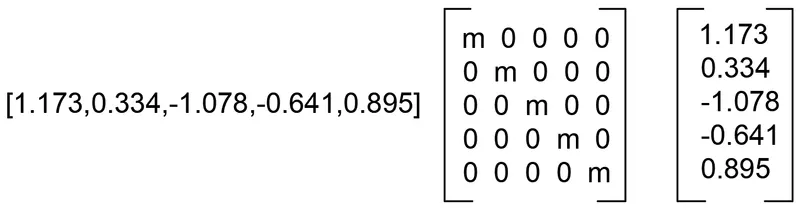
m3=3.861m
Model property L3 =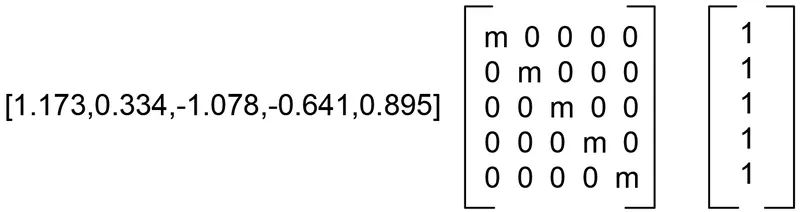
L3=0.6834m
Model participation factor
Γ3=L3/M3
=-1.293m/3.861m
=0.177
Effective modal mass
M3* =(-1.293m)^2/3.861m
M3*=0.121m
For the fourth mode
n=4
Modified mass matrix M4 =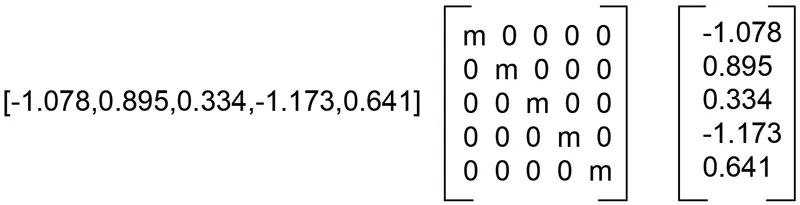
m4=3.861m
Model property L4 =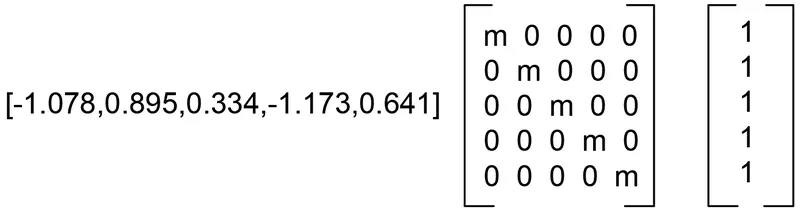
L4=-0.3783m
Model participation factor
Γ4=L4/M4
=-0.3783m/3.861m
=-0.098
Effective modal mass
M4* =(-0.3783m)^2/3.861m
M4*=0.038m
For the fifth mode
n=5
Modified mass matrix M5 =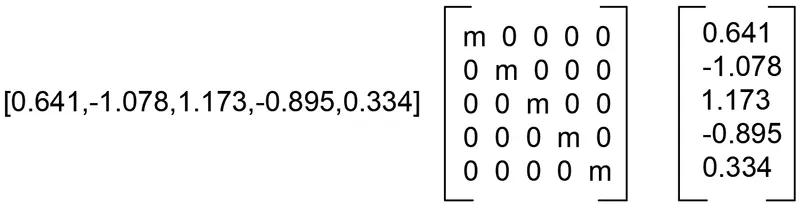
m5=3.861m
Model property L5 =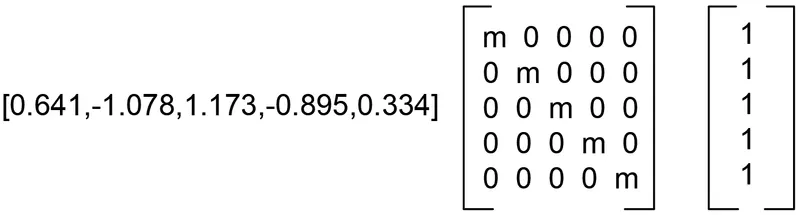
L5=0.1737m
Model participation factor
Γ5=L5/M5
=0.1737m/3.861m
=0.045
Effective modal mass
M5* =(0.1737m)^2/3.861m
M5*=0.008m
Modal mass participation ratio= Mn*/ Mj
Mj=Total mass of building=m+m+m+m+m=5m
Modal mass participation ratio for first node (n=1)= M1*/ Mj
=4.398m/5m =.88
Modal mass participation ratio for second node (n=2)= M2*/ Mj
=0.436m/5m =.09
Modal mass participation ratio for third node (n=3)= M3*/ Mj
=0.121m/5m =.02
Modal mass participation ratio for fourth node (n=4)= M4*/ Mj
=0.038m/5m =.01
Modal mass participation ratio for fifth node (n=5)= M5*/ Mj
=0.008m/5m =.0002
Adding first two modal mass participation ratios we get, 0.88 + 0.09 = 0.97 i.e 96%
To achieve 90% first two modes are enough
Base Shear
Vbn = Mn* An
For first node
From graph
A1=.27g
Vb1 = M1* A1
=4.398m/.27g
=1.187mg
For second node
From graph
A2=.75g
Vb2 = M2* A2
=0.436m/.75g
=0.327mg
For third node
From graph
A3=1.05g
Vb3 = M3* A3
=0.121m/1.05g
=0.126mg
For fourth node
From graph
A4=1.02g
Vb4 = M4* A4
=0.038m/1.02g
=0.039mg
For fifth node
From graph
A5=1g
Vb5 = M5* A5
=0.008m/1g
=0.008mg
Average Base shear Vb =square root of(Vb1^2+Vb2^2+Vb3^2+Vb4^2+Vb5^2)
=square root of(1.187^2+0.327^2+0.126^2+0.039^2+0.008^2)
=1.15mg