Underbody Coating
UNDERBODY COATING
- What is underbody coating in a car?
Underbody coating is a spray based application of a cogulative-based material like wax or rubber-based composite on the entire underside of the vehicle. It's designed to create a rust-proof layer between the underside of the vehicle and the water, ice, and salt of the road.
Undercoating provides a more comprehensive protective layer for your vehicle. This includes the floorboards, wheel wells, and frame. Even if your car's underside isn't actually visible, it is still exposed to potential damage when you go out driving. Things like dirt, debris, mud, and salt are kicked up from the road and get into the nooks and crannies of your vehicle's undercarriage. So in addition to protecting against rust and corrosion, it also provides additional protection from the nasty from the road condition.
MODERN AUTOMOTIVE COATING PROCESS
- PRE-TREATMENT
- ELECTRODEPOSTION
- RUST-PROOF MATERIALS:SEALER/PVC
- PRIMER
- TOPCOAT
- PRE-TREATMENT
The first sequence in preparing BIW subsequent coating is pre-treatment. Pre-treatment is the cleaning of the body which removes excessive oil or greasing from the metal surface of the body, after the stamping process and remaining welding residues on the body surface. It also enable the surface structure to protect from corrosion.
A phosphate treatment is applied to insert in the metal to avoid the corrosion spread. The degreasing solution is mainly consist of alkaline salt and surfactant including caustic soda, sodium carbonate. The surfactant are the type of detergents for emulsifying oils and lubricants on the BIW.
- ELETRODEPOSTION
E-coating involves dipping of the automobile bodies in the coating solution and passing electric current through the body and in the liquid ED paint solution. The charged nature of the coating process, penetrates every section of the body structure and it is impossible for the spraying process to give same kind of the flawless work. It not only provides corrosion protection, durability and toughness but also provide the smooth surface body for the topcoat for the final coating process.
- RUST-PROOF MATERIALS: SEALER/PVC
This the third phase process where PVC or urethanes i.e. sealant which is applied to the lower door section, rocker panels, front edge of the hoods, rear edge of the trunk section, integrated joint sections and outer area of the wheel well. This sealant provides anti-chipping protection but in order to make chip resistance, a soft tip primer coating is applied. It also help to avoid water entering inside the cabin during rainy season, flood prone area etc.
- PRIMER
This the fourth phase process, primer which is water-borne, solvent-borne or powder. It is the crucial step of this process, which improve adhesion between the E-coat and topcoat. The primer fills the imperfection and scratches in the body surface by grinding and sanding process. It also protect against the corrosion and increase the durability of the paint.
- TOPCOAT
This the final phase process, it contains two layers one is base coat and the other one is clear coat. Before applying base coat and clear coat, check for the primer and no foreign particles like dust and impurity should be present.
Base coat contain primary coloring pigment which is done on the primer layer. Some manufactures do two or more layer of base coat to avoid corrosion in the body but also give the richness of pigmentation of the color.
Clearcoat is the transparent like epoxy or resin type material which is applied after the basecoat gives the durability of the color pigmentation and does not allow water deposit on the body which helps to avoid the corrosion in the body surface. It also avoid for deep scratches and fade away the pigmentation of the color due to UV rays coming from the sun.
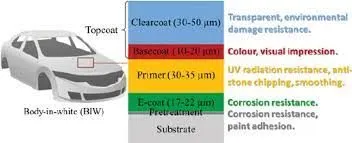
MODERN AUTOMOTIVE COATING PROCESS
TYPES OF UNDERCOATING
- Rubberized Undercoating
- Asphalt-Based Undercoating
- Polyurethane Undercoating
- Wax or Paraffin-Based Undercoating
- RUBBERIZED UNDERCOATING
Rubberized undercoating is easy apply and are the best protective coating for the undercarriage of the vehicle. It has the cushioning surface against the moisture, rust and dents. This undercoating is safe to use for the quarter panels and wheel wells and dries with a soft rubbery finish.
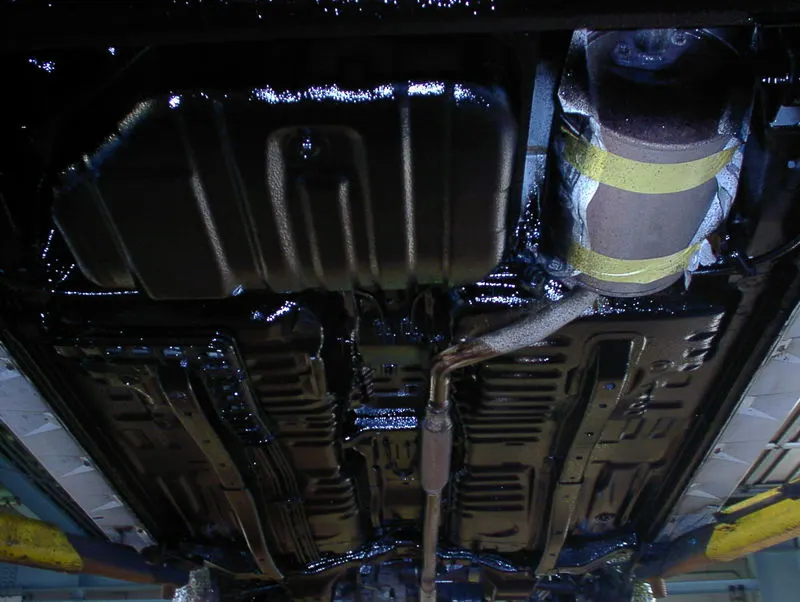
RUBBERIZED UNDERCOATING
- ASPHALT-BASED UNDERCOATING
Asphalt-based undercoating offers higher level of protection for larger vehicle like trucks and heavy machinery. It is formulated with some bit of rubberized material to reduce noise reduction. It avoid against chips and moisture but not paintable. It is only suitable for undercarriages.
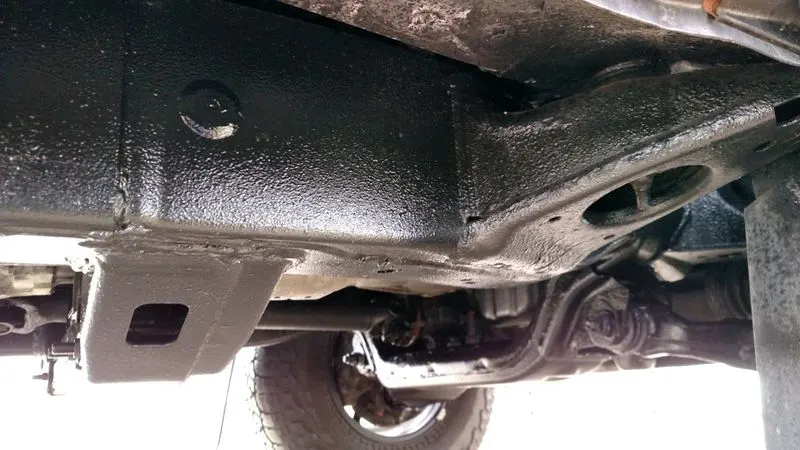
ASPHALT-BASED UNDERCOATING
- POLYURETHANE UNDERCOATING
Polyurethane undercoating is easy to apply and works by sealing up the cracks and seams. The compound displaces salt and protects the unoxidized metal from rust. It is readily available canister which can be pre-loaded in the application gun. Before applying, it requires some surface prep work like degreasing and apply etching primer to the bare metal.
- WAX OR PARAFFIN-BASED UNDERCOATING
Wax or paraffin-based undercoating sprays are the cheapest and quickest option available but not quite reliable for long time. This undercoating can last for few months. It is not much adhesive on the metal surface. This type of undercoating for temporary purpose.
ADVANTAGES & DISADVANTAGES OF UNDERCOATING
ADVANTAGES-
- It provides a layer of protection against corrosion.
- It will extend the life of your vehicle.
- It may help to reduce interior noise.
- It has anti-chipping property.
- It has heat insulation property.
DISADVANTAGES-
- It makes the vehicle heavier.
- It cannot protect from major undercarriage damage.
- It is expensive in cost.