Underbody Coating
Underbody Coating is a process of giving an extra layer of protection applied uniformly to the undercarriage of the automobile. It provides long-term protection from corrosion to the car's underbody. It also protects parts like internal body panels, frame rails, and other inner cavities that are not physically accessible but are prone to corrosion. It is normally sprayed or painted on when the car is just out of the dealership and is clean.
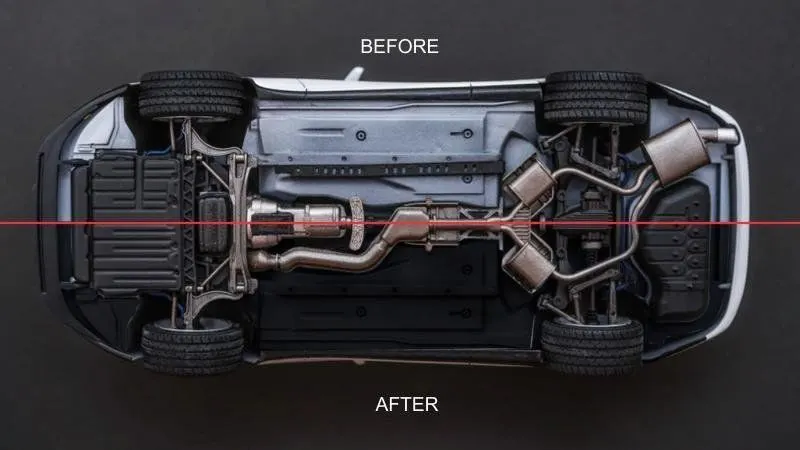
In Indian road conditions, underbody coating plays a vital role in increasing the lifespan of your vehicle. The underbody is exposed to the most wear and tear caused by muddy water, potholed roads, stones, and other obstacles on the road. Besides, the rains, and salts in the coastal region also affect the lifespan of the car. To protect from all these kinds of things underbody coating must one. There are some more benefits to it. The most commonly used coating is the rubberized coating. Below given figure shows phase change before and after undercoating.
Types of UnderBody Coating:
1. Rubberized Underbody Coating
This is widely considered to be the best underbody coating for your car. Because is easy to apply and offers protection from moisture, dust and scratches It is the simplest coating among all.
2. Wax Based Underbody Coating
Wax-based undercoating is the cheapest option among all other types of coatings. However, this transitory undercoating will fade away after a few months. So we need to reapply it again before a year.
3. Asphalt Based Automotive Undercoating
This coating is best suited for lorries, trucks, and large vehicles. Because it provides a greater degree of protection. However, asphalt-based coatings contain little amount of rubber for sound-insulation purposes. This type of coating needs more time for applying than the others.
4. Polyurethane Underbody Coating
It is easy to apply and works by sealing breaks and fractures in the vehicle's underbody. It gives protection against corrosion as well as offers bonds with the metal. Unlike in the case of asphalt-based coating, you can paint over the polyurethane coating.
Pros of Underbody Coating:
1. It fights against corrosion
When undercoating is properly applied to a vehicle, then you’ll be providing the underbelly with a layer of protection against rust and corrosion. It plays an important role in keeping corrosion at bay. Underbody coating can come in handy especially if you live near the sea, where there is too much humidity. So, it extends the life of your vehicle because of its rust-stopping power.
2. It minimizes sound
Applying a layer of undercoating minimizes the sound from underneath the car resulting a noiseless, smooth driving experience.
3. It provides heat insulation
It insulates the interior of the car from extreme temperatures from beneath the vehicle providing a comfortable cabin experience. It make travelling by road easier even during summers.
4. Anti-chipping property
If any stone hits the coating it does not get chipped away hence protecting the underbody from exposure to water.
Cons of Underbody Coating:
1. It is less helpful if corrosion already present
If you apply the coating after corrosion starts then undercoating is less effective. It can slow down corrosion process but, it will help your vehicle looks better. If rust is present, it is better to remove the rust and then apply the undercoating.
2. It works best on new cars
If you've purchased a used vehicle, he cost of preparing the underbelly for an undercoating might be more expensive compared to the value of car. The best time to have an undercoating applied is when a vehicle is purchased new because it offers a superior level of protection then.
3. It adds weight to the vehicle
Although the amount of weight added to a vehicle with an undercoating is minimal (between 10 to 20 pounds for most vehicles), there is a small element of fuel economy to consider. When your vehicle weighs more, the distance you can travel on a single tank of fuel is reduced. The undercoating might reduce your efficiency by up to one mile per gallon, which creates a small additional fuel cost over time. Still, the effect on mileage of this additional weight is negligible compared to the effect a driver can have by the way they drive.
4. It must be reapplied every 3 to 5 years for the best results
The only way for an undercoating to provide ongoing protection for your vehicle is to have the service repeated frequently. Most owners can have a new layer applied in about 5 years without worrying about their underbelly being compromised. In salty or destructive environments, however, you may need to have a new undercoating applied every 3 years for the best results.