Underbody Coating
UNDERBODY COATING
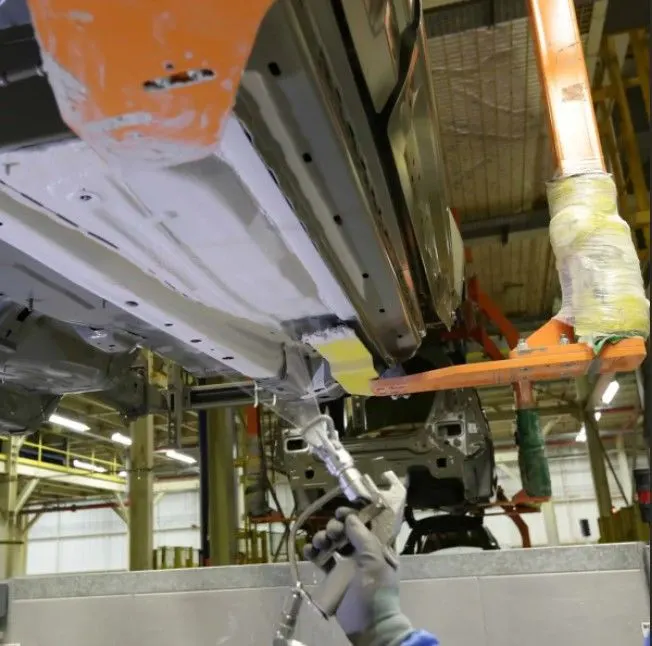
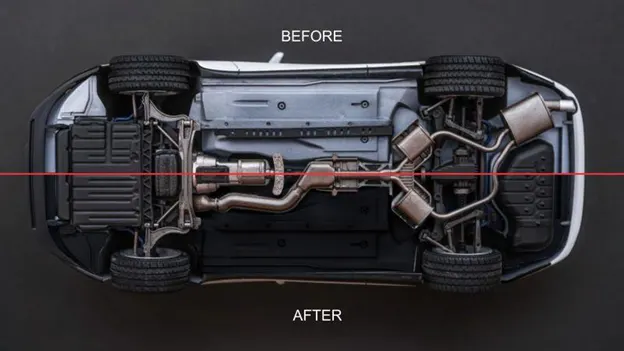
Underbody Coating is a sprayable coating, which protects the under surface of the vehicle from corrosion.
Underbody coating provides long-term protection from corrosion to cars underbody.
It also protects parts like internal body panels, frame rails and other inner cavities that are not physically accessible but are prone to corrosion.
Protecting the underbelly of the car should be our top priority. Especially during monsoon when heavy precipitation causes the roads to become mini rivers and our cars are left stranded there. This makes them prone to heavy corrosion in the underbody region.
The underbody of your car is always exposed to muddy water, stones, rugged roads, and potholes. This makes it prone to wear and tear.
So, therefore keeping this in mind underbody coating is required.
It protects the underbody substrates from:
- Environmental conditions
- Impacts
- Dampens sound and vibration
- Insulates against cold and heat
- Protects against corrosion
- Seals off seams
- Hides welds, repairs & bodywork with spray
TYPES OF UNDERBODY COATING
Rubberized Undercoating
Rubberized Undercoating is easy to apply and offers sound-cushioning as well as protection from dust, moisture, and dings or dents.
In addition to your undercarriage, rubberized undercoating is also safe to use on wheel wells and quarter panels, and dries to a soft rubbery finish that prevents further rust, damage, or moisture seeps. The coating can be painted over and, if necessary for bodywork, can be easily removed with an undercoating removal spray.
Overall, Rubberized coating is generally the best option for protecting your vehicle's undercarriage, as it provides the simplest and best protective measures against rust and moisture.
Polyurethane Undercoating
The other option for undercoating your vehicle is to use a polyurethane-based-sealent This type of vehicle undercoating is a little bit quicker and easier to apply.
Oftentimes, polyurethane undercoating will come in canisters ready to preload into an application gun. This type of sealant works by seeping into all cracks and seams, displacing salt and moisture and oozing around rusty areas to bond with and protect unoxidized metal. It also sands quickly in case you'll need to perform bodywork and can be painted over.
On the flipside, this type of car undercoating generally requires a little bit more surface prep work before applying -- sanding and applying an etching primer to bare metals before using are generally recommended.
Wax or Paraffin-Based Undercoatings
A paraffin-based undercoating will be the cheapest and quickest option available with which to protect the undercarriage of your vehicle. However, keep in mind that it will wear off quicker than other types of undercoating and will need to be stripped and reapplied at least once every year.
Wax-based undercoatings never truly harden. During application, they drip or flow into seams and cracks to provide protective properties. They are usually available in a spray gun canister or in an aerosol can and offer at least a base protection in moderately humid climates.
Asphalt-Based Undercoating
For standard vehicles, any of the aforementioned types of undercoating will provide sufficient protection. For large trucks and heavy machinery, asphalt-based undercoating provides a bit of extra durability against rocks, chips, and moisture.
Asphalt-based undercoating generally contains a little bit of rubberized material that sets up firmly and also helps soften noise. Generally sold in five-gallon containers, this type of undercoating also needs more cure time than the other three, and is NOT paintable, making it best to use only for undercarriages.
ADVANTAGES OF UNDERCOATING
1. Provides an Extra Layer of Protection
In most cases, new cars, SUV’s and trucks come with good protection underneath. But, if you are living in cold climates or coastal areas, having a coated underpart is a great advantage. It provides your car with an extra layer of protection from rust and corrosion. While driving your car, road debris will come into contact with the undercoating instead of underneath metal components.
Before the coating wears out, you can enjoy years of protection against early corrosion. Not only underneath but also the trailer of your car can be coated the same way using trailer paint.
If the undercoating is applied properly, it can extend the lifetime of your vehicle for a significant amount of time.
Vehicle undercoating gives your car rust prevention power and makes your ride safe and functional. When you don’t apply it to your vehicle, then quick rust is the outcome, which will lead to corrosion eventually. Meanwhile, corrosion affects the integrity of the metal parts of your vehicle, causing mechanical breakdown sooner than expected. Most probably, you wouldn’t like to see your car having such an end this early. So, undercoating would be a smart investment here.
3. Reduces Internal Noise
No one likes to have a noisy ride in their vehicles. Sometimes roads with heavy traffic cause unbearable noise pollution outside. I’m sure that you wouldn’t like to have a noisy interior as well.
4. Self-Applied Facility
It is always preferable to go for professional touch for any kind of technical maintenance. But if your budget is tight, you need not worry about it much. With your basic car maintenance skills, you can do the job for yourself. When you go for professional help to undercoat your vehicle, it might cost you around 1500$. On the contrary, you can cover up the whole within 100$-150$ if you do the job for yourself.
This self-applied facility doesn’t come with a smooth finish like a professional one, but it surely is worth the money.
5. Comes with Several Undercoating Methods
When you go for undercoating your vehicle you might come across several methods that are applied for this job. Among them, the electronic method, dripless oil spray and drip oil methods are well known. If you consider the cost then the last one is mostly applied by professionals.
You can also check out the coating paint options whether you want to go for single stage paint or double stage paint. If you are not too much concerned with the look and single stage paint is for you, though it’s old-fashioned but classic. Meanwhile, 2 stage paint gives you the proper color along with a more durable coating.
DISADVANTAGES OF UNDERCOATING
1. It is less helpful if corrosion is already present.
For an undercoating to be the most effective, it should be in place before the underbelly of your car begins to rust. If you apply it over corrosion, you will still isolate the metal from further moisture and airflow, which is good, but the existing oxidizing/rusting process will still continue to occur.
After rust is already present, applying an undercoating will slow the continuation of the corrosion process and will make your vehicle look better… until the rust breaks its way through the layer of undercoating you’ve applied. If you have rust present, it is better to remove the rust and then apply the undercoating.
2. It works best on new cars.
If you’ve purchased a used vehicle, then the cost of preparing the underbelly for an undercoating might be more than the value of the car. You must remove all the residue from the bottom before it can be applied.
Failing to do so will seal in the debris that is present already, which can lead to more problems. The best time to have an undercoating applied is when a vehicle is purchased new because it offers a superior level of protection then.
3. Most vehicles make it five years before corrosion begins to show.
For vehicle owners who purchase something new every 3 to 5 years, then rustproofing may not be a good use of your cash. Although an undercoating does add value to a used car, that only applies when the rustproofing product used provides a transferable lifetime warranty.
Most vehicles that are on the road today are able to make it five years before any corrosion begins to show. It may be 7 to 10 years before the functionality of the vehicle is negatively impacted by the lack of undercoating.
4. A third-party undercoating service might void your vehicle’s warranty.
Some new cars no longer need the undercoating service provided because the structure of the vehicle has it built-in already. If you hire a third-party provider to apply an undercoating, you could void the corrosion-perforation warranty that is factory-provided. Most vehicles today that leave the factory floor are all provided with included rust-proofing.
If you are purchasing a used vehicle, an undercoating to a clean underbelly could extend the life of the vehicle and give it more value. For new vehicle purchases, you should ask the dealer what rustproofing options are included before paying for a separate undercoating option. Ask for documentation of what is provided instead of taking the word of the salesperson or the service personnel.
Many dealers have language in their terms and conditions that only written agreements are binding.
5. It adds weight to the vehicle.
Although the amount of weight added to a vehicle with an undercoating is minimal (between 10 to 20 pounds for most vehicles), there is a small element of fuel economy to consider. When your vehicle weighs more, the distance you can travel on a single tank of fuel is reduced.
The undercoating might reduce your efficiency by up to one mile per gallon, which creates a small additional fuel cost over time. Still, the effect on mileage of this additional weight is negligible compared to the effect a driver can have by the way they drive.
6. An undercoating is not impervious to damage.
An undercoating can provide a hardened layer of protection against dirt and debris that may cause corrosion. Depending on where you drive, however, the lifespan of this product may be minimal. If you drive your vehicle on gravel roads or dirty areas frequently, you reduce the integrity of the protective layer
You might find that your undercoating begins to chip off in as little as 25,000 miles because of this issue. Driving in a salty environment is not the only threat to the integrity of this product.
7. It must be reapplied every 3 to 5 years for the best results.
The only way for an undercoating to provide ongoing protection for your vehicle is to have the service repeated frequently. Most owners can have a new layer applied in about 5 years without worrying about their underbelly being compromised. In salty or destructive environments, however, you may need to have a new undercoating applied every 3 years for the best results.
The pros and cons of a vehicle undercoating offer a complex opportunity to protect some new and used cars, but not all new vehicles require it. You must perform your own due diligence on a vehicle you’re wanting to purchase to decide if this service is right for you. And, if the cost is an issue, it is possible to apply your own undercoating, though such an action might void an active warranty.
CONCLUSION
Underbody coating is one of the hidden factors for prolonged life of the car. As it protects the car from dust, minor hit of small gravel, minor wear and tear and rust.
It provides strength to the underbody, But the coating is not for lifetime, it removes or chipped out as time passes. In a went area, the coating damages faster as compared to dry area. So therefore, a checkup is required over every 1 or 2 years.