Section Modulus calculation and optimization
Section Modulus Calculation & Optimization
Aim/ Objective:
The main aim is to check the strength of hood by calculate the section modulus of the hood cross section by taking different parameter of moment of inertia
Bending Equation
σ/y = M/I = E/R
Factors in Bending Equation
Multiple factors have been used in the bending equation. They are:
- M = Bending Moment
- I = Moment of inertia on the axis of bending
- σ = Stress of fiber at distance ‘y’ from neutral axis
- E = Young’s modulus of the material of beam
- R = Radius of curvature of the bent beam
- Y = Distance between neutral axes and outermost fiber (mm)
M/l = σmax/Ymax
Hence, σmax = MY/lmin = M/S
Where S = I / Y
S is called the section modulus of beam.
Section Modulus:
Section Modulus is the geometric property of the given cross-section of any shaft or beam structures. It is the direct measure of the strength of the shaft section or the beam section. Higher the section modulus of a structure, the more the resistive it becomes to bending.
Section modulus is defined as the ratio of polar moment of inertia to the radius of the shaft or the distance from the neutral axis to the outer fibers.
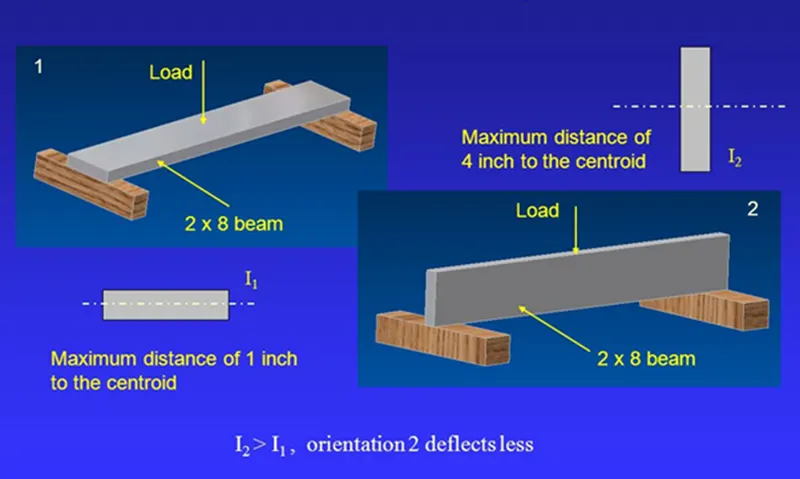
The section modulus is classified into two types:-
1] Elastic section modulus(S): - The elastic section modulus is applicable up to the yield point of material. It is used in most engineering applications.
The formula of elastic section modulus is given by,
S=IN.A./Ymax
I = Moment of inertia (mm4)
Y = Distance between neutral axes and outermost fiber (m)
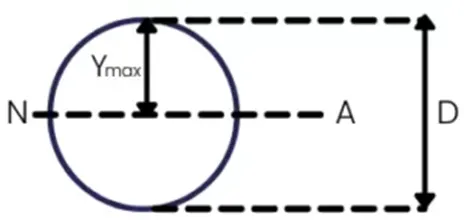
For Example: Elastic section modulus of circle:-
The moment of inertia about Neutral axes for a circular section is,
IN.A. = πD^4/64
The Ymax is given by,
Ymax = D/2
The elastic section modulus for circular section is,
S = INA/Ymax= πD^4/64/D/2
= π.D^3/32
2] Plastic section modulus (Zp): - The plastic section modulus is generally used for material in
Plastic section modulus equation:–
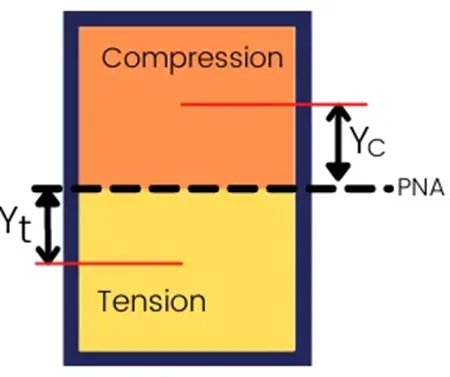
For the above cross-section, the plastic section modulus is given by,
ZP =∑ACYC+∑ATYT
Where,
AC = Area of cross-section under compression.
AT = Area of cross-section under tension.
YC = Distance from PNA to CG of the areas under compression.
YT = Distance from PND to CG of areas under tension.
For Example: Plastic section modulus of circle
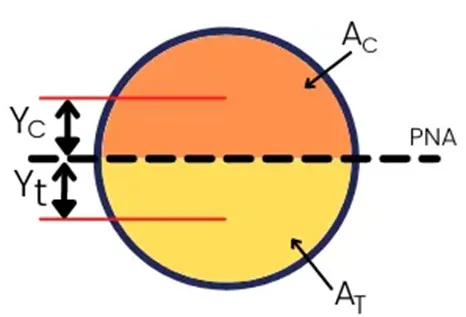
For circular section, the plastic neutral axis passes through the center of circle that divides AC and AT.
The areas are given by,
AC = AT =πd^²/8
And YC = Yt =2d/3π
∑ACYC = πd²/8 × (2d/3π) = d³/12
∑ATYT = πd²/8 × (2d/3π) = d³/12
The plastic section modulus for a circular section is given by,
Zp = ∑ACYC + ∑ATYT
Zp = d³/12 + d³/12
Zp = d³/6
Why We Calculate Section Modulus?
- Moment of inertia is offering resistance against moment, bending etc... As if we applied the external load to the body. The inertia work against the deformation of body.
- So higher will be the value of inertia higher will be the resistance tendency against deformation under the certain applied load hence we can say that moment of inertia directly proportional to the strength of material and strength of material will be calculated with the help of section modulus
- If we vary the neutral axis towards positive & negative the strength may decrease
Let’s calculate the strength of hood using section modulus (S)
Case study 1
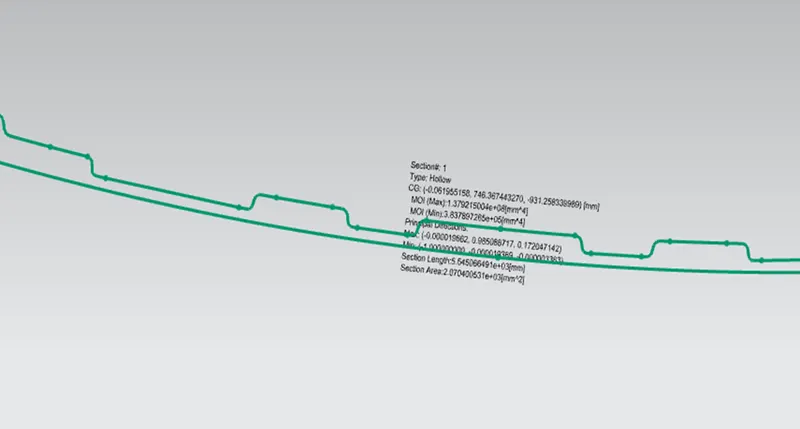
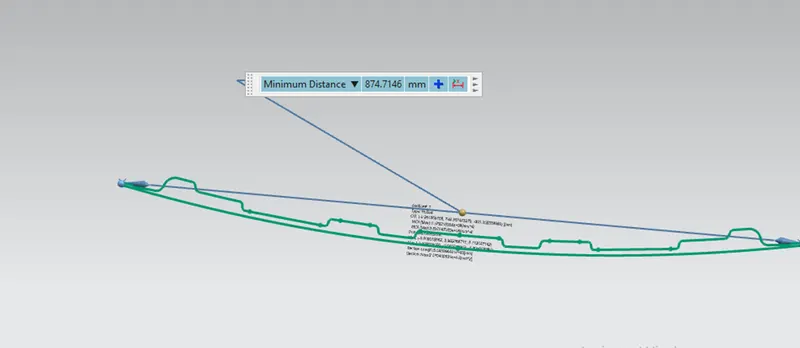
Here are the MOI was calculated by using NX CAD
- Imax = 1.379215004 × 10^8 mm4
- Imin or N.A = 3.837897265 × 10^5 mm4
- Total Length of hood section Y = 874.71456 mm
- Distance from neutral axis Ymax = 874.7145/2 = 437.3572 mm
The section Modulus will be
S = Imin or N.A/Ymax
S = 383.78972 × 10^3 /437.3572
S = 0.8775 mm3
Case study 2
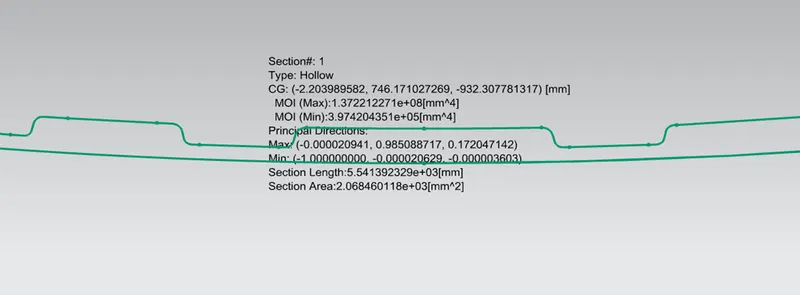
Here are the MOI was calculated by using NX CAD
- Imax = 1.372212271 × 10^8 mm4
- Imin or N.A = 3.974204351 × 10^5 mm4
- Total Length of hood section Y = 874.71456 mm
- Ymax = 874.7145/2 = 437.3572 mm
The section Modulus will be
S = Imin or N.A/Ymax
S = 397.4204351 × 10^3 /437.3572
S = 0.9082 mm3
Conclusion:
- So after comparing both the hoods when doing case Study 1 & Case study 2 I came to know that when I increase the cross sectional area by 1mm the strength of hood meanwhile section modulus increase as shown in the calculation (0.8775 mm3 to 0.9082mm3).
- 2It means that the strength of the material is directly proportional to Moment of Inertia hence increase in cross sectional area there will be increasing mass of the object hence increase in strength.