Underbody Coating
Underbody Coating
Automotive Corrosion Protection
corrosion protection product solutions including underbody chassis coatings have been used by OEM automotive manufacturers extensively throughout the vehicle aftermarket. The OEM-approved corrosion prevention products include solvent-borne bitumen-based and waterborne technology solution options. We also have corrosion prevention zero-emission coating solutions that do not contain any organic solvent or water, along with stone chip protection products that are fully over paintable. Within the OEM-approved corrosion protection system range, you will find specialist engine preservation treatments and sound damping solutions.
Electrophoretic deposition
Electrophoretic deposition (EPD), is a term for a broad range of industrial processes which includes electrocoating, cathodic electrodeposition, anodic electrodeposition, electrophoretic coating, or electrophoretic painting. A characteristic feature of this process is that colloidal particles suspended in a liquid medium migrate under the influence of an electric field (electrophoresis) and are deposited onto an electrode. All colloidal particles that can be used to form stable suspensions and that can carry a charge can be used in an electrophoretic deposition. This includes materials such as polymers, pigments, dyes, ceramics, and metals.
The process is useful for applying materials to any electrically conductive surface. The materials which are being deposited are the major determining factor in the actual processing conditions and equipment which may be used.
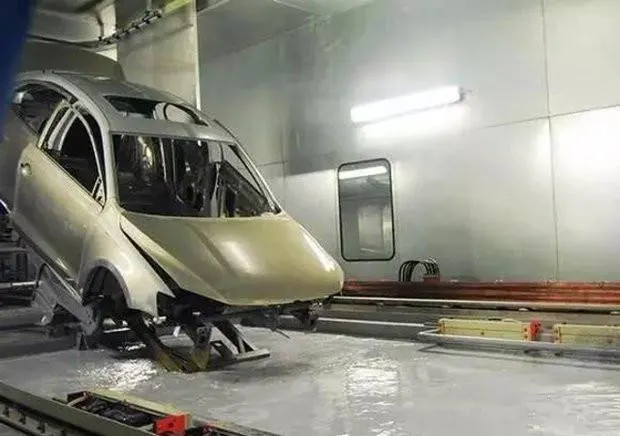
What is the electrophoretic coating?
Electrophoretic coating (hereinafter referred to as electropainting) is a painting process that is extensively used in industry to coat a wide range of metal components. Its primary use and development have been within the automotive sector but it also has many other applications. The electropainting process is most often available commercially in black (other colors are however possible but much less commonly used.)
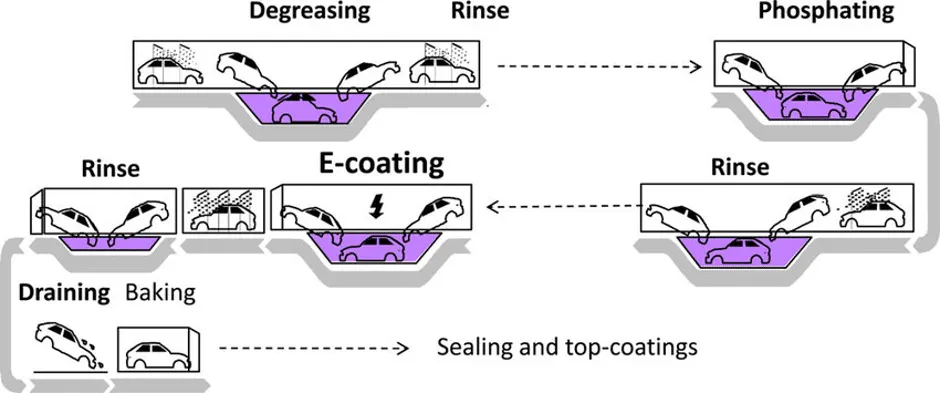
The process typically involves a number of stages including a cleaning stage followed by a phosphate conversion coating which enhances the corrosion resistance of the metal and also provides an improved base for the subsequent coating. After the metal is properly prepared the electropainting process can take place. This is then followed by an oven curing stage.
The complete process stages at Euro Quality Coatings are as follows:
Alkali Cleaner
Water rinse
Refiner rinse
Zinc phosphate pre-treatment
Water rinse
De-mineralized water rinse
Electropainting
3 stage ultra-filtration rinse
Curing
There are many different terms used to describe the electropainting process and these fall into 3 main categories; they relate to the process itself, the type of electrode used and the trade name of the bath material used:
The process
Terms such as electrophoretic coating, electrodeposition, electropainting, and electrocoating describe the process whereby a pigment is deposited onto a component by means of an electric field. The terms e-coating and e-coat also refer to this process.
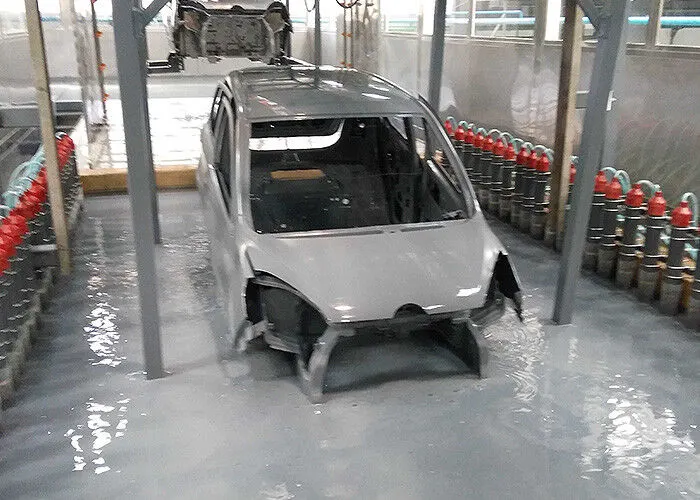
Electropainting is usually achieved by submerging the components into the electro-paint bath and applying an electrical charge through the bath.
The type of electrode
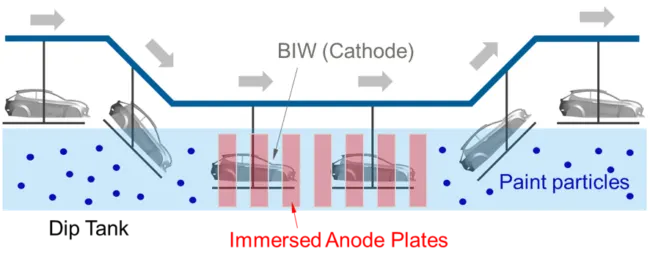
There are two types of electrocoating; they are known as anodic and cathodic. The anodic process was the first to be developed commercially but now the cathodic process is more widely used. In the anodic process, negatively charged material is deposited on the positively charged component (this is the anode). In the cathodic process, positively charged material is deposited on the negatively charged component (this is the cathode.) The process used at Euro Quality Coatings is the cathodic type and can be called by various names including cathodic dip painting (CDP), cathodic dip coating, cataphoretic coating, cataphoresis and cathodic electrodeposition. This process may also be described by German-based specifiers as KTL (Kathodische Tauchlackierung – cathodic dip painting.)
Uses
This process is industrially used for applying coatings to metal fabricated products. It has been widely used to coat automobile bodies and parts, tractors and heavy equipment, electrical switchgear, appliances, metal furniture, beverage containers, fasteners, and many other industrial products.
EPD processes are often applied for the fabrication of supported titanium dioxide (TiO2) photocatalysts for water purification applications, using precursor powders that can be immobilized using EPD methods onto various support materials. Thick films produced this way allow cheaper and more rapid synthesis relative to sol-gel thin films, along with higher levels of photocatalyst surface area.
In the fabrication of solid oxide fuel cells, EPD techniques are widely employed for the fabrication of porous ZrO2 anodes from powder precursors onto conductive substrates.
EPD is processed to have a number of advantages that have made such methods widely used.
- The process applies coatings that generally have a very uniform coating thickness without porosity.
- Complex fabricated objects can easily be coated, both inside cavities as well as on the outside surfaces.
- Relatively high speed of coating.
- Relatively high purity.
- Applicability to a wide range of materials (metals, ceramics, polymers, )
- Easy control of the coating composition.
- The process is normally automated and requires less human labor than other coating processes.
- Highly efficient utilization of the coating materials results in lower costs relative to other processes.
- The aqueous process which is commonly used has less risk of fire relative to the solvent-borne coatings that they have replaced.
- Modern electrophoretic paint products are significantly more environmentally friendly than many other painting technologies.
Thick, complex ceramic pieces have been made in several research laboratories. Furthermore, EPD has been used to produce customized microstructures, such as functional gradients and laminates, through suspension control during processing.
The Electrocoating Process
The E-coat process is best described as a cross between plating and painting. A metal part is immersed in a pure water-based solution containing a paint emulsion.
An electric voltage is then applied to the substrate, from a rectifier to tubular anode cells within the tank causing the paint emulsion to stick onto the part. All of their parts within the paint bath can be painted both inside and out; any area the liquid can reach on a metal surface will get coated.
The thickness of the coat can be determined by the voltage and current applied to the part. Areas of high voltage build a coating that becomes an insulator, allowing lower voltage areas to build up.
This painted surface then travels through to a curing oven where the paint is baked onto the part.
With the nature of the process being able to coat every surface, it forms an extremely good base layer.
These parts can then withstand aggressive environmental conditions for long periods of time. It also allows the parts to then be repainted, either wet paint or powder coated for a decorative finish and color.
Types of Undercoating
Now let us look at the various kinds of automotive underbody coating you can go for, for your vehicle.
-
Rubberized Underbody Coating
This is generally thought of as the best underbody coating for your car. It preserves the underbody well, protecting it from scratches. Applying this to the undercarriage is not much of a hassle either.
-
Wax Based Underbody Coating
This – more or less – ephemeral undercoating will wear away in a few months’ time. On the upside, wax-based undercoating puts up a big fight against moisture. It is also the most affordable option out there.
-
Asphalt Based Automotive Undercoating
Best suited for lorries, trucks, and large vehicles this provides a greater degree of protection compared to rubber-based coatings. However, asphalt-based coatings contain little amount of rubber for sound-insulation purposes. The process of applying this coating is a bit time-consuming though.
-
Polyurethane Underbody Coating
This coating closes up splits and fractures on the underbody of the vehicle. It offers up good protection against corrosion and also bonds with the metal. Unlike in the case of asphalt-based coating, you can paint over the polyurethane coating.
Advantages of Undercoating
Now we will tell you why you should consider investing in a vehicle underbody coating.
-
Fights Rust
It plays an important role in keeping corrosion at bay. Underbody coating can come in handy especially if you live near the sea, where there is too much humidity, and rusting is just one of those everyday things. You should also seriously consider undercoating if you reside in a place where it snows in winter.
-
Absorbs Noise
Believe it or not, very thick undercoating can soften the noises that reach the cabin. Since the undercoating is often made up of rubber it absorbs some of the rackets. The occupants of the car could spare themselves of the road noises – at least up to a certain extent.
-
Reinforcement
If your car comes with stock underbody coating, using another coating on top of it, is not going to hurt. It will offer additional reinforcement, protecting the underbody from water, road debris, gravel, and small pebbles. There would also be a lesser chance for the factory coat to flake away.
-
Prolong Car’s Life
Good undercoating not only defends the underbody from corrosion but also protects the engine and transmission as well! Less rusting coupled with slower wear and tear can surely add years to the lifespan of your vehicle. There would be fewer dents, dings, and scratches on the undercarriage for you to fret about.
The advantages and disadvantages of anodic electrocoat include:
- The ability to penetrate and coat interior portions of complex products and parts
- Poorer corrosion resistance than cathodic electrocoat as it traps acid at the metal/paint surface
- Oxidizes or corrodes the metal surface during the deposition process
The advantages and disadvantages of cathodic electrocoat include:
- Normally must be top-coated to provide a variety of colors and improved resistance to UV degradation
- Excellent corrosion resistance, even at lower film thicknesses
- Offers excellent resistance to bimetallic corrosion (when dissimilar metals are in direct contact)
Automotive Painting Process Simulation
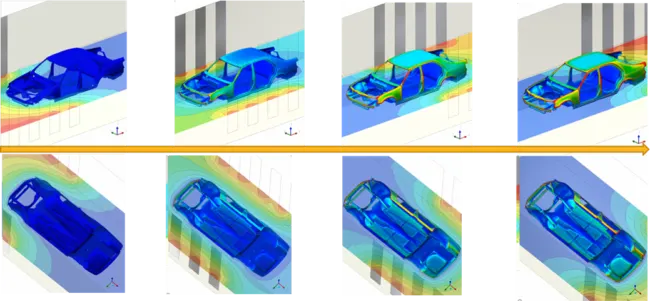
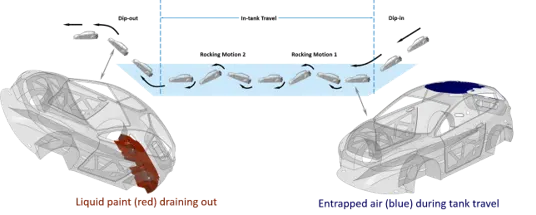
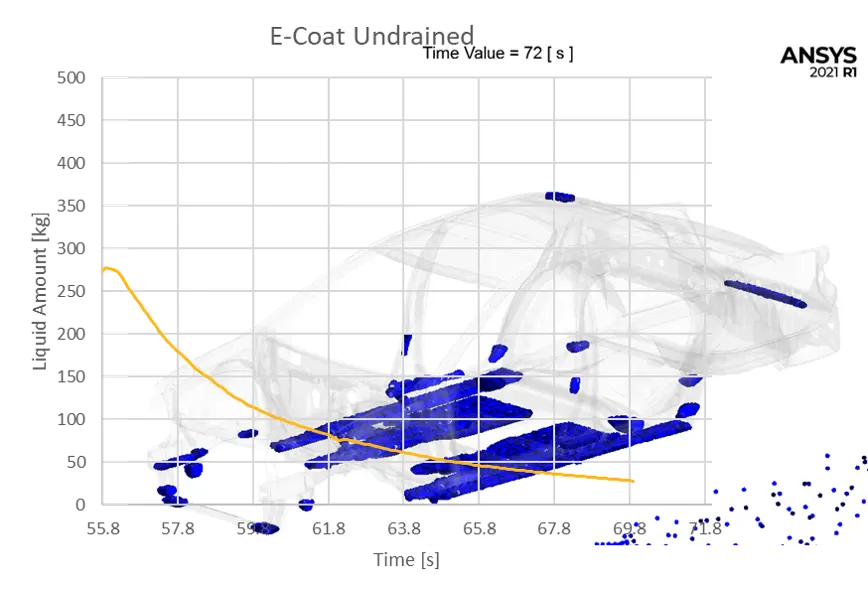
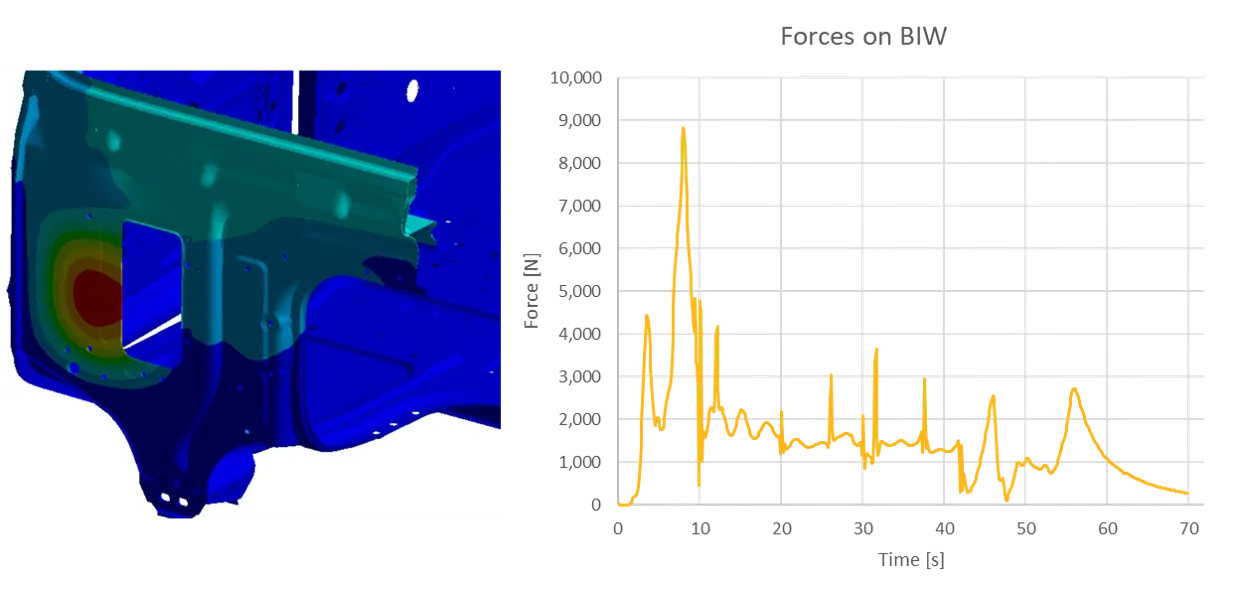
The automotive paint shop is a critical part of car manufacturing, and this is not going to change with a new wave of electric and autonomous vehicles. Painting is critical because it gives a feel for quality to customers and is critical for corrosion protection in the long run. There are new manufacturers and new factories with new models, all requiring paint planning. The modern car painting process involves multiple steps where careful preparation to achieve top quality is a must. The first step is the e-coating where the body in white is dipped into an electrocoating solution, and a high voltage is applied for film build-up. Follow-up is the application of primer, base coat, and clear coat layers via spray painting. Each of these steps includes baking and cooling cycles in between. Uniform e-coat thickness is required for corrosion protection. There should not be any air entrapments or e-coat undrained during e-coating.
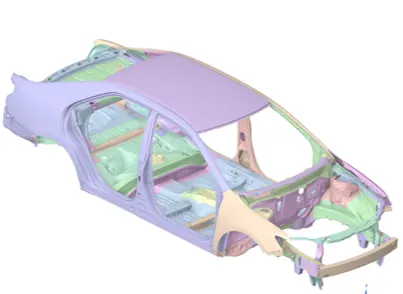
Body in White CAD Imported into Ansys SpaceClaim
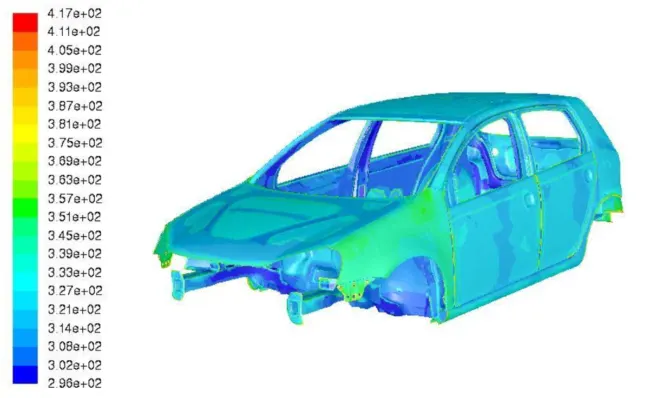
The baking process is required for curing structural and cosmetic seals and proper heating is a must. Unequal or insufficient heating can result in different seal-related quality problems. The uniform paint thickness at spray painting is critical as well. Too much or too little can cause orange peel or fish eye problems. All these problems can be predicted and planned in parallel with car design using Ansys tools. Multiphase fluid flow, electrostatics, particle tracking, wall film modeling, conjugate heat transfer, and radiation, in other words, the physics behind car paint shop can be modeled and tuned for perfection. Recent developments in Ansys tools also enable the processing of complex and large automotive CAD geometries. Ozen Engineering has completed numerous consulting projects in regards to painting process modeling and can help companies paint shop planning. Ozen Engineering makes use of cloud computing as an enabler for large and long transient runs.
- The first step of coating, negatively charged vehicles is deposited with a protective coating
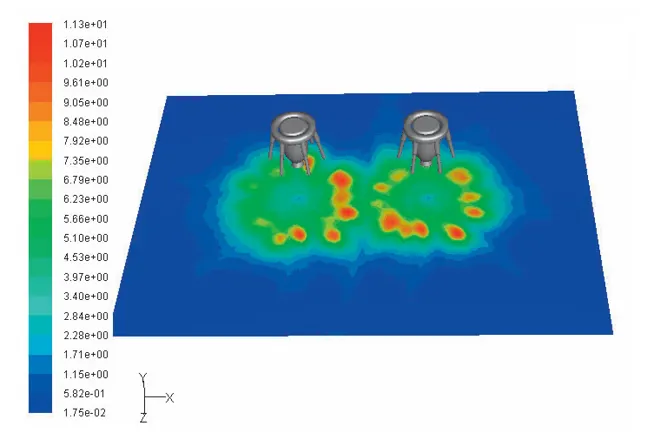
- Ansys CFD provides tools to analyze coupled field analysis (electro-static and multiphase flow)
- Visualize the e-coat thickness on inner cavities, where the physical process requires the teardown of the BIW
- Identify the reach of electric potential on inner cavities and take remedial actions early in the design cycle
- Test various BIW motion speeds to achieve minimum threshold and uniformity of paint thickness deposition
Ozen Engineering Automotive Paint Process Simulations
Contact us to learn more or to schedule a demonstration.
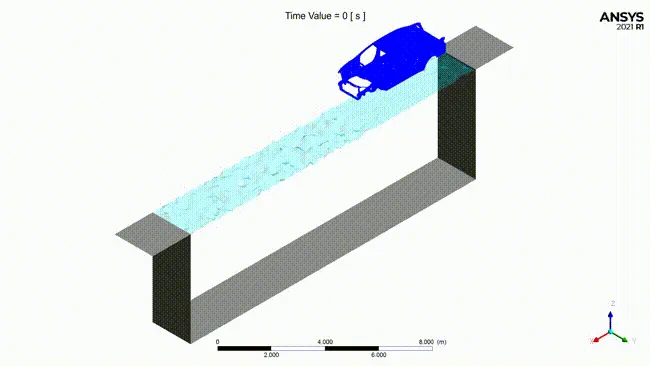
Ecoat Dipping Process Animation
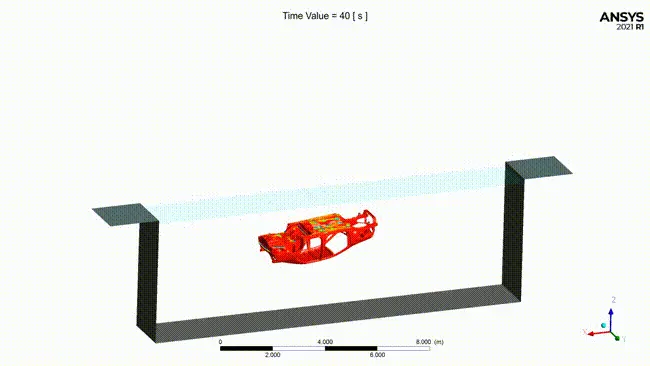
Electrocoating Pull Out Process
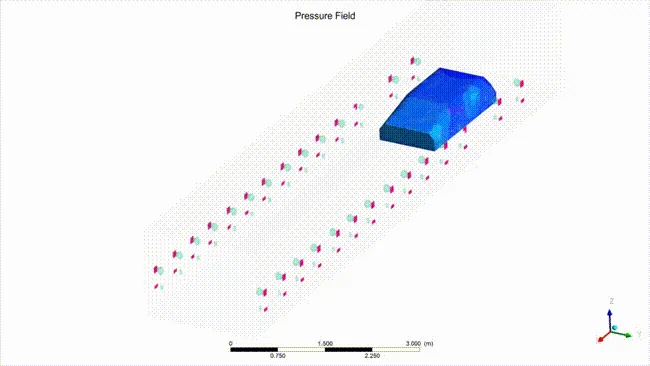
Oven Drying in Paint Process Simulation Help Understanding Temperature Time History