Underbody Coating
UNDERBODY COATING
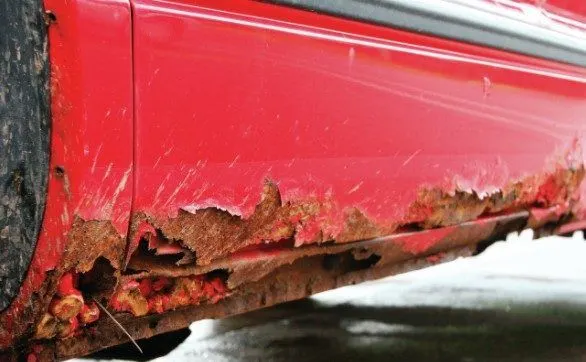
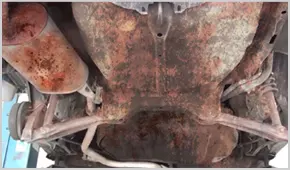
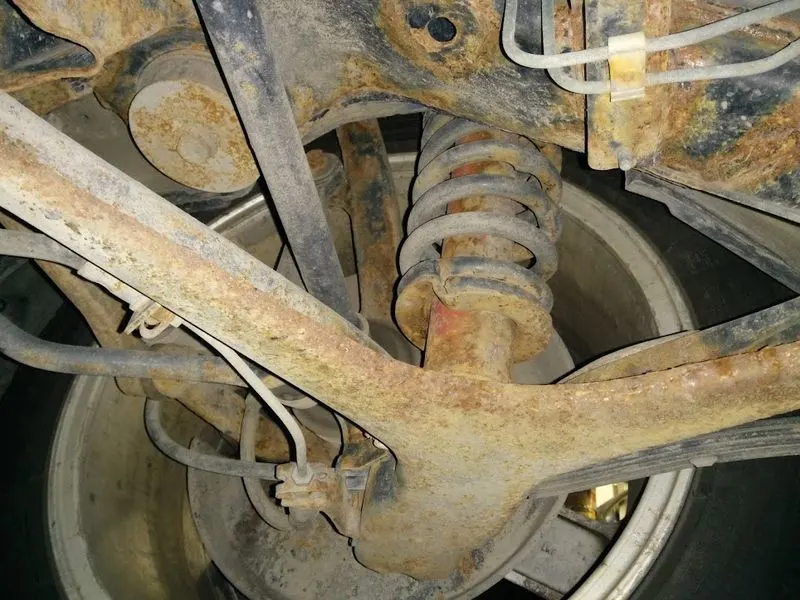
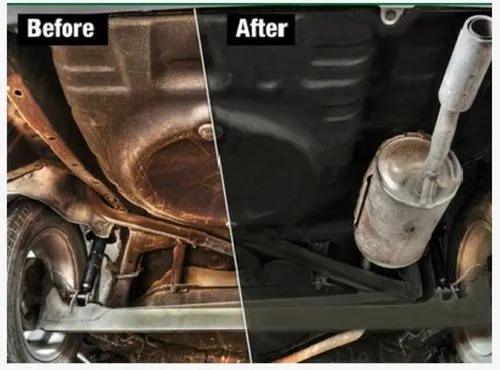
It is the process of applying dense cladding material uniformly over the undercarriage surface of Automobiles. In other words; An undercoating is a spraying accessory that protects the vehicle’s body underneath. This is mainly done to protect the under-chassis from rust over a long time period. It delays the decay period of the underbody which are in open contact with the sorrounding, watery impact, dust & other substances.
 |
 |
 |
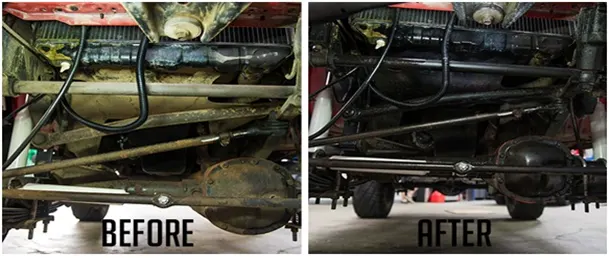
- After applying UnderBody Coating
 |
 |
UNDERBODY COATING PROCESS :-
(A) POWDER COATING :
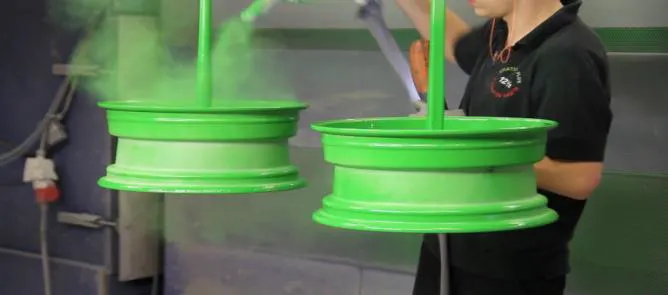
- The coating is in form of dry, perticulate solid and the composition contains very low concentration of volatile solvent. Currently, the Automotive industry uses powder coating on wheels, bumpers, hubcaps, door handles, decorative trim & accent parts, truck beds, radiators, & numerous engine parts.
steps
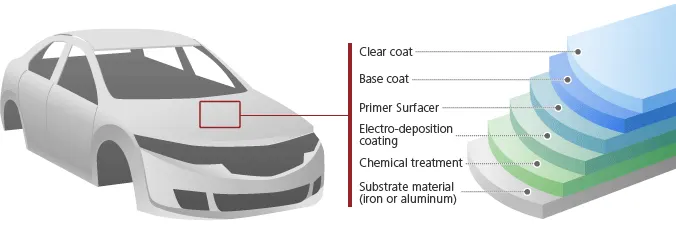
1) PRETREATEMENT :
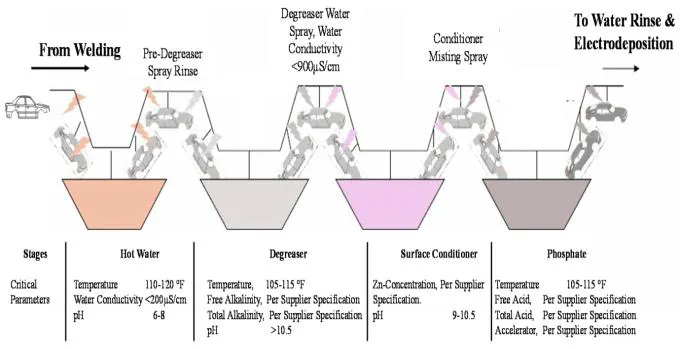
- Pretreatement removes and clean extra metals and form appropriate surface enabling bonding of corrosion protective layer.
- It consists of cleaning the body surface to remove remaining oils from the staming process & welding residues through three primary liquid dip processes of degreasing,
conditioning, & phosphating. - Pretreament helps the primer to bond onto the metal.
- A phosphate treatment applies an inert layer of metal phosphate, providing resistance to corrosion spread.
2) ELECTRO-DEPOSITION (ED) :
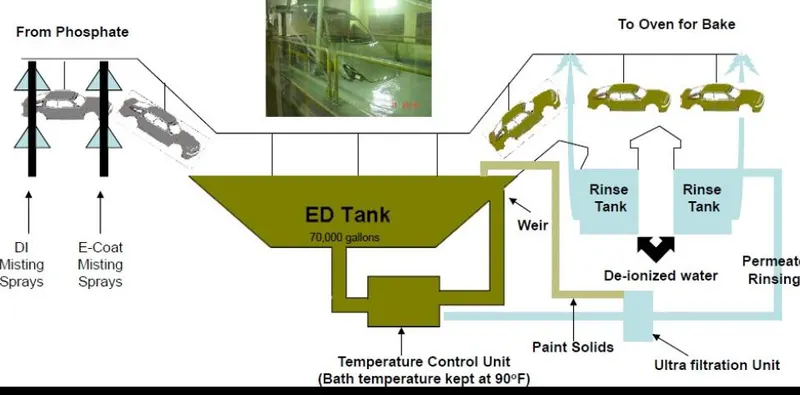
- It involves with the dipping Automobile body into Coating solution and passing current through the body & liquid ED paint solution.
- because of the charge nature of coating process, the ED paints penetrates into places where spray would not reach.
- During operation, a mixture of resin, binder, & a paste containing the pigments is fed into the ED tank.
- After Coating, the Automobiles enter into bake oven where it keeps at 160degree C for 10 minutes, It increases the maximum performance property.
3) RUST PROOF MATERIAL: SEALER/PVC :-
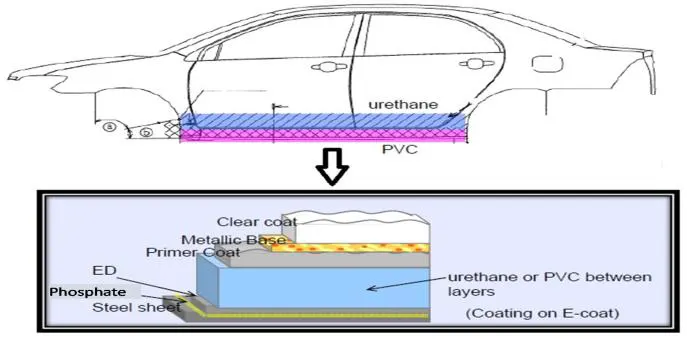
- The third step is underbody coating & seam sealing using PVC.
- the lower door sections & rocker panel locations where PVC or urethanes are applied as an anti-chipping protection, & shows the cross section of this layer with respect to the other coatings on the body parts.
4) PRIMER :-
- The fourth coating step is the primer. It can be water-borne, solvent-borne, or a powder. The primer fills & smoothes minor imperfections & scratches that may be created during prior steps & by the intermediate sanding or grinding used to remove small imperfections.
- It also provides additional protection against corrosion & maximise adhesion between it & the E-coat.
- The primer incrases paint durability.
5) TOPCOAT :-
- The final step in the body coating process is to apply the topcoat, which consists of two layers the basecoat & clearcoat.
- BASECOAT - It contains the primary coloring pigments. eg: solvent-borne medium solids (MS), solvent-borne high solids (HS), & water-borne.
- CLEARCOAT - The final coating on an automobile surface is the clearcoat; it provides durability, environmental etch, & scratch resistance to the overall coating. It protects against damage such as fading that is caused by UV rays from the sun & imparts a gloss & depth. The clearcoat also makes repairs & maintenance easier.
Different types of UnderCoating
(a) Rubberized Undercoating :
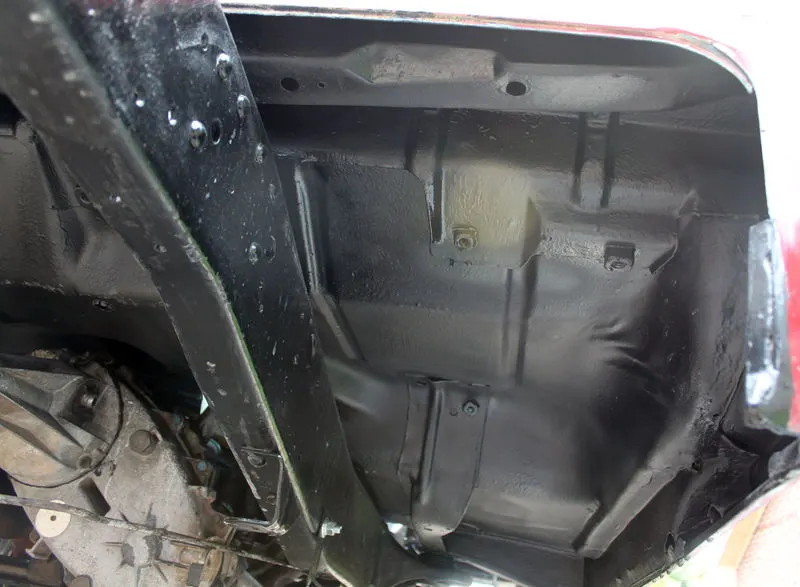
- Rubberized Undercoating is easy to apply and offers sound-cushioning as well as protection from dust, moisture, and dings or dents.
- This is also safe to use on wheel wells and quarter panels, and dries to a soft rubbery finish that prevents further rust, damage, or moisture seeps.
(b) Polyurethane Undercoating :
- It’s effective and easy to apply, soaking into small seams and cracks in the underside of the vehicle, displacing salt and moisture, and bonding with and protecting the metal.
- you can also apply paint over it.
- however, it requires a fair amount of surface preparation before it can be applied, with sanding and an etching primer generally recommended before application.
(c) Asphalt-Based Undercoating :
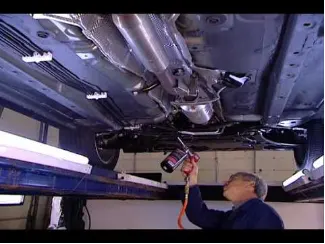
- For standard vehicles, any types of undercoating will provide sufficient protection. For large trucks and heavy machinery, asphalt-based undercoating provides a bit of extra durability against rocks, chips, and moisture.
- Asphalt-based undercoating generally contains a little bit of rubberized material that sets up firmly and also helps soften noise.
- Asphalt Based Undercoating does require a thicker film thickness meaning you will have to apply more product to the surface to be protected.
- This type of undercoating also needs more cure time than the others, and is NOT paintable.
(d) Wax or Paraffin-Based Undercoatings :
- A paraffin-based undercoating will be the cheapest and quickest option available with which to protect the undercarriage of your vehicle. However, keep in mind that it will wear off quicker than other types of undercoating and will need to be stripped and reapplied at least once every year.
- hey are usually available in a spray gun canister or in an aerosol can and offer at least a base protection in moderately humid climates.
Diffrent ways of applying UnderBody Coating :-
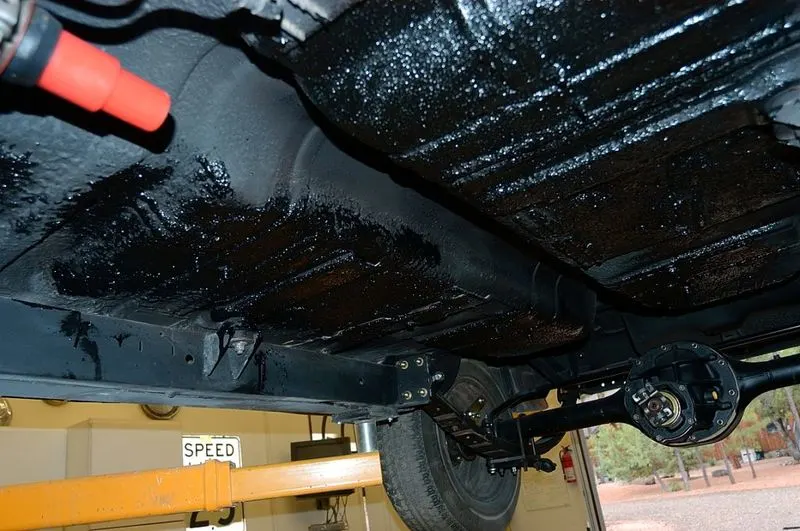
(a) TAR BASED UNDER-COATING
- It is the most commonly used method of undercoating. The Spray is consist of Tar like substance that is applied to the undercarriage of vehicle.
(b) ELECTRONIC
- It is the new, quite neat and easy to implement anti corrosion method.
- here, a small device Electronic rust inhibitor is used that supplies weak current to rust prone area of the cars.
- This will prevent a car from rusting by disrupting the electrochemical reaction that causes corrosion.
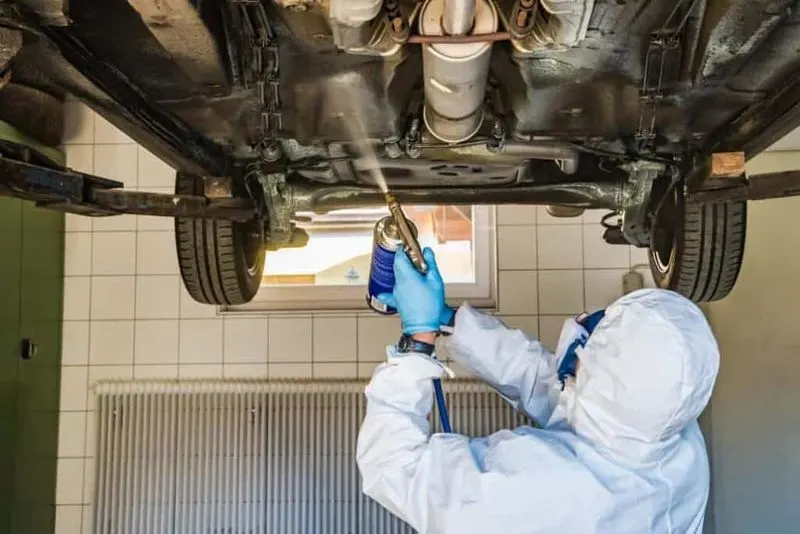
(c) DRIP OIL SPRAY
- The process involves with applying liquid rust proofing product on the surface of underbody that is designed to protect it from the outside moisture.
- The downside to this method is that there will be some dripping oil after application. This can cause some stains if your vehicle is left in one spot, but typically the dripping stops after 24 – 48 hours.
- These solutions seep into the hard to reach door seam, joints, and crevices that are hotspots for rust and corrosion
(d) DRIPLESS OIL SPRAY
- A dense oil based solution can be applied to the entire body of the vehicle or the underbody. This solution is designed such a way that it prevents the rust without any dripping after the application.
- The only issue with the dripless spray is the Viscosity of the solution. The solution should be thin enough to after application it goes into the small holes, spots also.
Advantage :-
- Provides a protective layer over the surface to avoid Rusting.
- It also helps to protect the parts because it is not in open surrounding.
- Extend the Life span of Vehicle.
- No more loud road noise - reduce the noise from penetration inside materials.
- Easy maintenance
Disadvatage :-
- Undercoating needs extra cost.
- These Undercoatings are not permanent, so we have to apply it again after some years.
- It also increases the weight of vehicle little-bit.