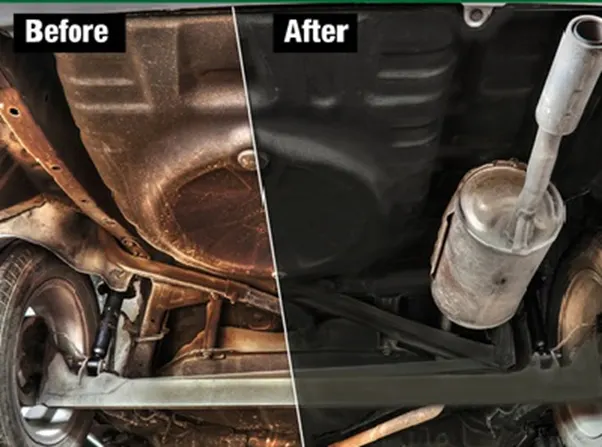
Underbody Coating
Underbody Coating:
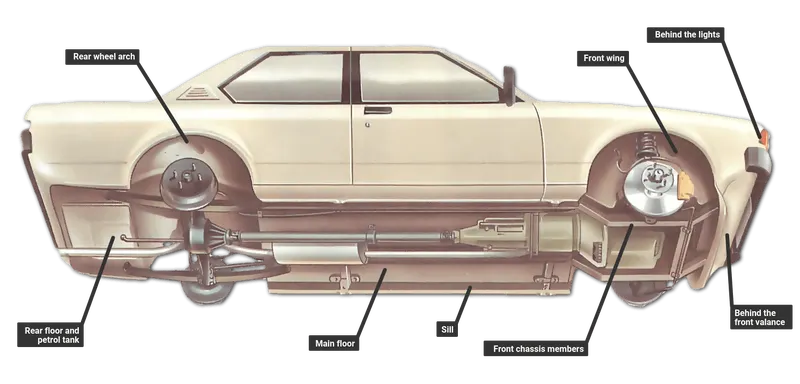
Underbody Coating is a sprayable coating, which protects the under surface of the vehicle from corrosion. Underbody coating provides long term protection from corrosion to car's underbody. It also protects parts like internal body panels, frame rails and other inner cavities that are not physically accessible but are prone to corrosion. Protecting the underbody of the car should be our top priority. Especially during monsoon when heavy precipitation causes the roads to become mini-rivers and our cars are left stranded there. This makes them prone to heavy corrosion in the underbody region.
TYPES OF UNDERBODY COATING
When having your vehicle rust proofed or an undercoating applied, you have a few options to choose from. Whether you prefer the latest technology or a more tried and true method, knowing what the different options are should allow you to choose the best one for your vehicle.
Electronic method
Using a weak electric current, this small device can stop the corroding effects of rust.
You can have these electronic devices installed at the dealership, or save some money and buy them from a source outside of the dealership.
The reviews on these devices are mixed, as this is a virtually new technology.
Undercoating
This method involves spraying a tar-based substance on the exposed parts of a vehicle's underbody.
The tar-like undercoating acts as a barrier once it hardens, keeping out moisture, salt, and other substances.
This undercoating works best when applied to the undercarriage of a new vehicle. It also requires expert application, or it can crack, letting in moisture.
Drip less oil spray
A wax-like substance applied to the entire body of the vehicle, it hardens once it has dried.
One of the downsides of drip less oil sprays is that you need to have holes drilled into the body of the car at specific points to make it effective.
The spray also has a high viscosity, meaning that it does not always get into all of the nooks and crannies of your vehicle.
Drip oil spray
This is the most commonly recommended rust protection.
Drip oil sprays tend to continue to drip once applied until they dry. This dripping can last anywhere up to 48 hours after application.
Unlike the drip less varieties, the more watery nature of drip oil sprays means it gets into more areas on your vehicle, though you still need to have holes drilled in your vehicle's fenders, doors, and other areas to make sure that it gets to all the areas it needs to.
TYPES OF UNDERBODY PAINT
A car underbody coating can be factory-applied or aftermarket. Most commonly these coatings are one of the three types:
Resin-based
Polyurethanes and rubber coating are popular because their elastomeric properties provide long-term stone chip damage and corrosion protection as well as sound deadening effects. These also have the benefit of being suitable for a wide range of substrates and they can be painted over. Can be spray-applied, high build, and particularly good for areas of possible salt exposure.
Wax-based
An excellent anti rust coating suitable for all substrates. The wax is applied soft and cures hard, either by brush or spray, and can be layered thickly. It cannot be top coated.
Bitumen-based
These underbody paint systems provide hard-wearing protection against stone chip damage and corrosion. They also have sound-deadening properties. Suitable across many substrates, but cannot be painted over.
BENIFITS:
- Minimizes Sound:It minimizes the sound from underneath the car resulting in the noiseless, smooth driving experience.
- Heat Insulation:It insulates the interior of the car from extreme temperatures from beneath the vehicle providing a comfortable cabin experience.
- Anti-chipping property: If any stone hits the coating it does not get chipped away hence protects the underbody from exposure to water.