Underbody Coating
Objective
The aim of this project is mainly academic, to research and document on the definition of underbody coatings, including its types, advantages and disadvantages.
Topic under the scope - Underbody coating
This section details the subject of interest for this project by dividing it into three sections mainly:
- Introduction: Definition and purpose
- Types
- Advantages
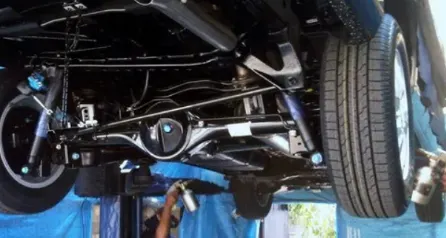
Relevant images are also attached for reference.
1. Introduction
- Definition: A coating designed to protect the underbody of a vehicle from wear and corrosion. It also provides sound dampening and is applied under fenders, the vehicle underbody, skirts, sills and protection plates
- Requirements:
- Should offer excellent adhesion and boost corrosion resistance
- Should be durable
- Should form films without evaporation of solvents (for thick layer application)
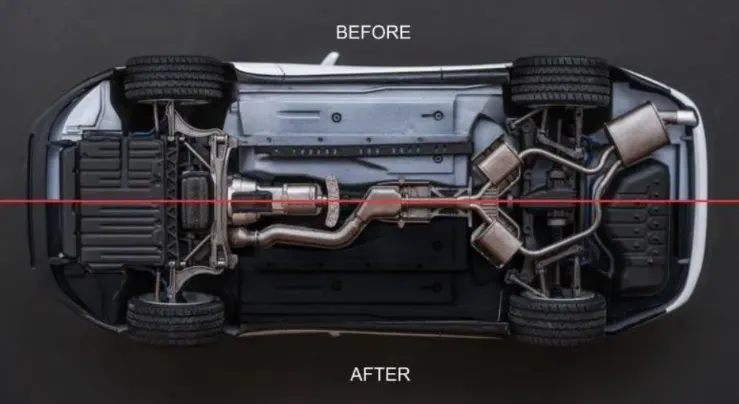
Fig: Before and after applying underbody coating
2. Types
- The following are the different types of underbody coatings widely used in the industry:
- Rubberized underbody coating
- Wax based underbody coating
- Asphalt based underbody coating
- Polyurethane based underbody coating
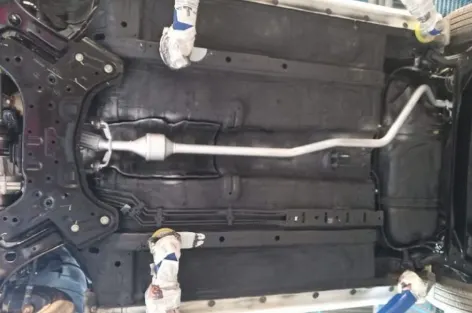
- Rubberized underbody coating:
- Considered to be one of the best underbody coatings to be used
- Protects the underbody from scratches and keeps it properly
- Ideal for sound deadening
- Keeps the underbody corrosion free
- Wax based underbody coating:
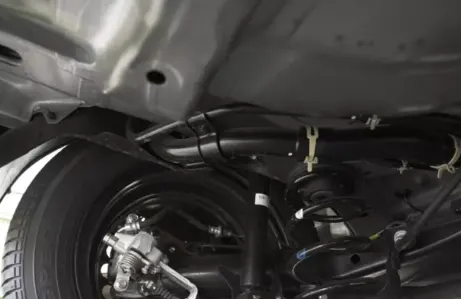
- Most cost effective option
- High resistance to dampening, which in turn, prevents rusting
- Will fade away within few months, since it is a transitory coating
- Asphalt based underbody coating:
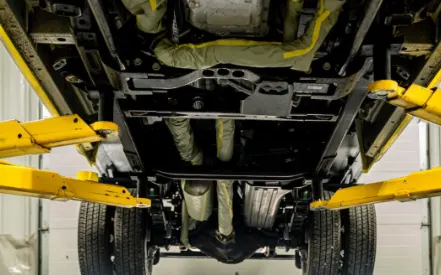
- Provides a higher level of protection, in comparison to rubber based coatings
- Due to the incorporation of less quantity of rubber, sound isolation is poor
- Application is time consuming
- Cannot be painted over
- Suitable for lorries, trucks and other vehicles
- Polyurethane based underbody coating:
- Seals breaks and fractures in the vehicle's underbody
- Provides strong corrosion resistance
- Binds to the metal
- Can be painted over
3. Advantages
- Corrosion resistance:
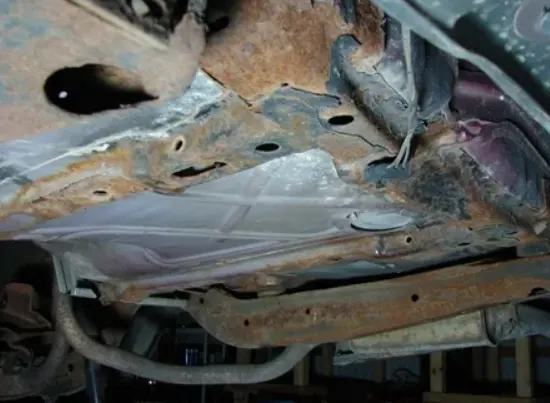
- Underbody coatings are extremely beneficial for vehicles which are used in coastal areas where rusting due to excessive humidity is a common occurrence
- For vehicles being commonly used in areas where heavy snow/rain occurs, underbody coating helps to prevent damages due to rusting
- Noise absorption:
- A very strong underbody coating based on rubber can help to reduce noises inside the cabin which can ensure a smooth journey
- Reinforcement:
- A vehicle with default underbody coating, can be reinforced by choosing another coating over it, which further prevents underbody damages due to stone chipping and rust
- Prolong vehicle life:
- By preventing damages due to stone chipping or rust, an underbody coating can prolong the life of a vehicle and protect critical components like the engine and gearbox
Conclusion
This study has imparted valuable insights on the underbody processes, including its types and advantages
Bibliography
- Garagepro blog
- Linex blog
- Automotive coatings formulation - Chemistry, Physics und Practices by Ulrich Poth, 2008, Pg 74-75
- Automotive paints and coatings, Wiley publications, Pg 178
- Code of Federal regulations, Environmental Protection Agency 59.101