Underbody Coating
UNDERBODY COATING:
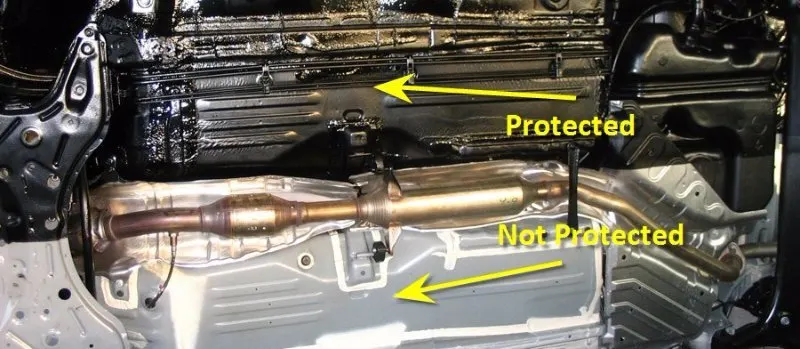
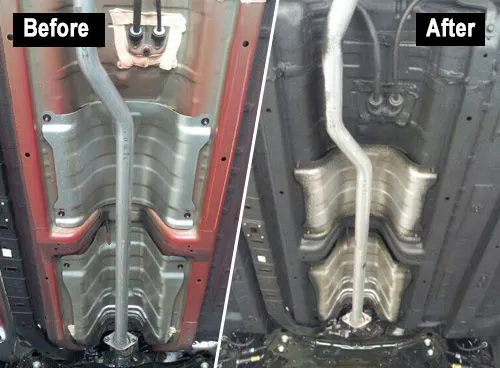
Underbody Coating is a sprayable coating, which safeguards the undersurface of the vehicle from degradation. Underbody coating gives long-haul assurance from erosion to the vehicle's underbody. It additionally safeguards parts like inward body boards, outline rails, and other internal depressions that are not open but are inclined to erosion. Safeguarding the underside of the vehicle ought to be our main concern. Particularly during rainstorms when weighty precipitation makes the streets smaller than usual waterways and our vehicles are left abandoned there. This makes them inclined to weighty consumption in the underbody area.
Process:
With regards to refreshing your vehicle or utilizing any sort of covering, eliminate the rust first and afterward continue. Rust evacuation is effectively accomplished by sandblasting or sanding, contingent upon the region and the degree of the rust. Whenever you've taken out the rust and prepared your undercarriage for covering, give it a speedy wash and let it dry to guarantee you're not further catching any pollutants on your vehicle's underside. Utilizing a degreaser to clean the metal initially is likewise suggested. Most undercoating is by and large applied with a shower firearm. A dispensable shower weapon will work best; when the undercoating solidifies, it turns out to be truly challenging to clean the firearm even with a great deal of more slender. A Schutz expendable shower weapon is the most ideal choice. Regardless of what kind of vehicle undercoating you've chosen, two coats will give the ideal security. Permit adequate dry time between coats. Allow the undercoating to fix totally (typically short-term) before driving your vehicle out and about.
Types :
- Rubberized Undercoating
- Polyurethane Undercoating
- Asphalt-Based Undercoating
- Wax or Paraffin-Based Undercoating
Rubberized Undercoating:
Rubberized Undercoating is not difficult to apply and offers sound padding as well as security from residue, dampness, and dings or scratches. Notwithstanding your undercarriage, rubberized undercoating is likewise protected to use on wheel wells and quarter boards, and dries to a delicate rubbery completion that forestalls further rust, harm, or dampness leaks. The covering can be covered up and, if fundamental for bodywork, can be handily taken out with an undercoating expulsion splash. By and large, Rubberized Undercoating is for the most part the most ideal choice for safeguarding your vehicle's undercarriage, as it gives the least difficult and best defensive measures against rust and dampness.
Polyurethane Undercoating:
The other choice for undercoating your vehicle is to utilize a polyurethane-based sealant. This kind of vehicle undercoating is a tad faster and simpler to apply. Periodically, polyurethane undercoating will come in a canister preload into an application weapon. This kind of sealant works by saturating all breaks and creases, dislodging salt and dampness, and overflowing around rusty regions to bond with and safeguard the unoxidized metal. It additionally sands rapidly on the off chance that you'll have to perform bodywork and can be covered up. On the flip side, this kind of vehicle undercoating, by and large, requires somewhat more surface prep work before applying to sand, and applying a scratching groundwork to uncovered metals before utilizing is for the most part suggested.
Asphalt-Based Undercoating:
For standard vehicles, any of the aforementioned kinds of undercoating will give adequate insurance. For huge trucks and large equipment, asphalt-based undercoating gives a touch of additional sturdiness against rocks, chips, and dampness. Asphalt-based undercoating for the most part contains a tad of rubberized material that sets up immovably and mellow commotion. By and largely, sold in five-gallon compartments, this kind of undercoating likewise needs more fix time than the other three, and isn't workable, making it best to utilize just for undercarriages.
Wax or Paraffin-Based Undercoatings:
A paraffin-based undercoating will be the least expensive and fastest choice that anyone could hope to find with which to safeguard the undercarriage of your vehicle. Nonetheless, remember that it will wear off faster than different sorts of undercoating and should be stripped and reapplied no less than once consistently. Wax-based undercoatings never genuinely solidify. During application, they dribble or stream into creases and breaks to give defensive properties. They are normally accessible in a shower firearm canister or a sprayer and deal base security in decently sticky environments.
Advantages:
- Prevents paint chipping
- Protects against rust & corrosion
- External weather influence
- Protects vital components
- Reduces noise vibrations harshness levels
- Increases vehicle underbody life
Dis-Advantages:
- Adds weight to the vehicle
- Underbody coating is costly
- An undercoating is not impervious to damage
- Coating must be reapplied every three to five years
- Protects against rust & corrosion only