Underbody Coating
Underbody Coating:
Underbody coatings are those which are used to prevent car bodies against rust & corrosion. This underbody coating helps in protection from dust and moisture also some other factors such as poor road conditions, rocks getting thrown from tires and denting the metal, and salt from water during monsoon plays an important role in damaging the underbelly of a car.
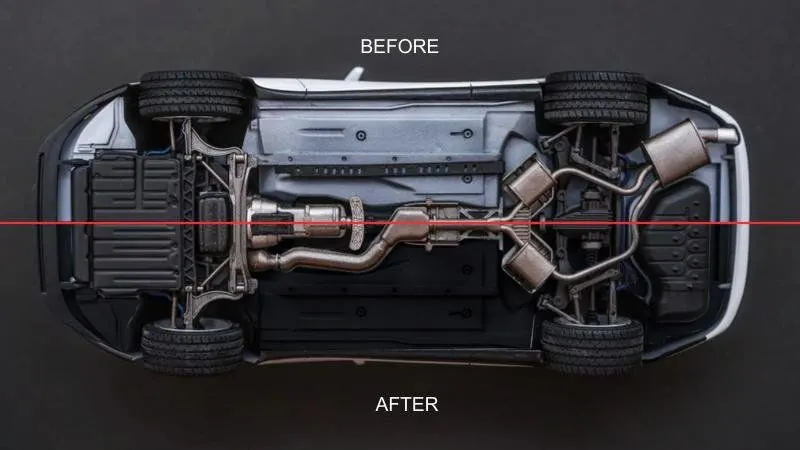
Types of under-body coating
i) Primer:
The fourth coating step is the application of a primer surface or simple primer. It can be water-borne, solvent-borne, or powder. These primers are used to improve adhesion between the E-coat and topcoat, provide chipping protection, enhance paint appearance and also be environmentally compatible with emission regulations.
ii) Top-coat :
The final step in the body coating process is to apply the topcoat, which consists of two layers—the base coat and the clear coat. The basecoat contains the primary coloring pigment and the clear coat provides a protective coating against environmental effects, corrosion, and UV light degradation promoting unmatched color retention and providing a smooth unblemished even finish.
iii) Rust-proof materials: Sealer/PVC :
Third step is underbody coating (UBC) and seam sealing using PVC and urethane. The sealant is applied around and inside the doors, hood, trunk, and front dash and onto the exterior and interior of metal joints and the outer area of the back wheel well.
DIFFERENT TYPES OF UNDERBODY COATING :
i) Wax or paraffin-based underbody coating:
Wax or paraffin-based undercoating will be the cheapest and quickest option available in the market. But these coatings last only for one year of duration.
ii) Asphalt-based underbody coating:
The above-mentioned undercoating is mainly used for light commercial vehicles. For vehicles such as trucks, buses, vans, etc. asphalt-based undercoating is used for sufficient protection against rock chips and moisture. These asphalt-based undercoatings have a little bit of rubberized material that is set up firmly and also helps in the reduction of noise.
iii) Rubberized underbody coating :
These coatings are easy to apply and offer sound cushioning as well as protection from dust, moisture, and dents. The coatings are safe even to use on wheel wells and quarter panels and when it is dried form a soft rubbery finish that prevents further rust and moisture seep.
PROS:
It insulates the interior of the car from the extreme temperature beneath the vehicle.
The coating does not chip away when hit by stones.
It minimizes the sound from underneath the car.
CONS:
A used vehicle may already have residue on the bottom of the car or even have spots of rust and corrosion. Undercoating will not help you if corrosion already exists and the corrosion needs to be removed first before it can be applied, which can be expensive for you.