Underbody Coating
Under-Body Coating :
Under-body coating simply refers to a defensive layer of specific materials that is applied to the underpart of vehicles for protection from mold, moisture, dust, rot, and all the other road scraps.
To offer you a safe driving experience, all the running parts underneath your vehicle must work incoherence.
The undercarriage of your car often gets unnoticed as it’s not usually visible like other body parts of your vehicle. If you want a safe and functional riding experience for a long, you must consider the matter seriously. Otherwise, it can cause mechanical breakdowns in the long run.
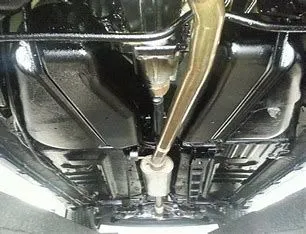
A lot of attention is given to the coating and paintwork of the visible aspects of a vehicle but those unseen places tend to get overlooked. The underbody is one such place. Automotive underbody coating protects a vehicle from everything the road can throw at it and more: they provide a layer of protection between a vehicle’s more vulnerable underside and damaging forces such as corrosion and moisture ingress.
Car Underbody Protects the vehicle in 5 ways as mentioned below.
If you have ever travelled in an old car down a gravel road you have heard the thunderous sound of hundreds of tiny pieces of rock being hurled at the underside of a vehicle. Not only is it deafening, it is also damaging.
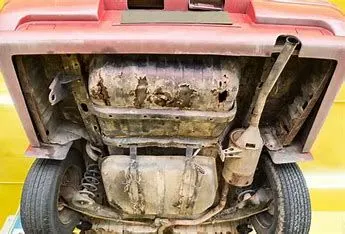
A car underbody coating:
- Prevents stone chip damage – A car underbody coating provides a durable elastic over the underbody and wheel arches which protects the substrate from stones, gravel, salt, and other debris which is thrown up by the road.
- Protects from corrosion – The automotive coating process consists of at least five layers of protective and decorative paint. However, the underbody only receives the first two layers – the layers that provide the corrosion protection. But if that is the case why would another layer of coating be needed to protect from corrosion? The initial two layers provide corrosion protection, but are not very durable. Stone chip damage may expose the metal itself, leading inevitably to corrosion.
- Prevents water ingress – By covering cracks in the paintwork or joints in the undercarriage of a vehicle, moisture or water from humid or wet environments is prevented from creeping into the underbody and causing corrosion.
- Minimises sound – The noise of debris hitting a vehicle, or vibrations from the road can be dampened by the application of a car underbody coating. They prevent vibrations and because they are elastic they make far less noise when struck than the metal underneath.
- Is easy to maintain – Giving the undercarriage of a vehicle a uniform appearance means cleaning it down is simpler and so is identifying possible problems.
There are mostly three types of coating as mentioned below.
- Wax-based: An excellent anti rust coating suitable for all substrates. The wax is applied soft and cures hard, either by brush or spray, and can be layered thickly. It cannot be top coated.
- Bitumen-based: These car underbody coatings provide hard-wearing protection against stone chip damage and corrosion. They also have sound-deadening properties. Suitable across many substrates, but cannot be painted over. Can be applied by brush or spray, high build, and good for very tough conditions such as off-road.
- Resin-based: Polyurethanes and rubber coating are popular because their elastomeric properties provide long-term stone chip damage and corrosion protection as well as sound deadening effects. These also have the benefit of being suitable for a wide range of substrates and they can be painted over. Can be spray-applied, high build, and particularly good for salted roads.
Advantages of under-coating :
- Fights Rust : It has a crucial function in preventing corrosion. Underbody coating is particularly useful if you live near the sea, where there is excessive humidity and rust is a common occurrence. If you live somewhere where it snows in the winter, you should seriously consider undercoating. During the monsoon season, cars are at high risk of getting corrosion. If you want to extend your car’s life you should get an underbody coating.
- Absorbs Noise : Very strong undercoating, realize it or not, can attenuate noises that enter the cabin. The undercoating, which is frequently made of rubber, absorbs part of the rackets. The car’s occupants could avoid the road sounds — at least to some extent. So if you want a quite ride and pleasant experience it is always a good idea to consider getting an underbody coating.
- Reinforcement : If your automobile already has an underbody covering, applying another one on top of it will not harm it. It will provide further protection for the underbody from water, road debris, gravel, and tiny stones. The factory coat would also have a lower risk of flaking away.
- Prolong Car's life : A good undercoat protects not just the underbody from corrosion, but also the engine and gearbox! Less corrosion combined with slower wear and tear can extend the life of your car by many years. On the undercarriage, there would be fewer dents, dings, and scratches to worry about.
Disadvantages of under-coating :
- It is less helpful if corrosion is already present.
For an undercoating to be the most effective, it should be in place before the underbelly of your car begins to rust. If you apply it over corrosion, you will still isolate the metal from further moisture and airflow, which is good, but the existing oxidizing/rusting process will still continue to occur. After rust is already present, applying an undercoating will slow the continuation of the corrosion process and will make your vehicle look better… until the rust breaks its way through the layer of undercoating you’ve applied. If you have rust present, it is better to remove the rust and then apply the undercoating. - It works best on new cars.
If you’ve purchased a used vehicle, then the cost of preparing the underbelly for an undercoating might be more than the value of the car. You must remove all the residue from the bottom before it can be applied. Failing to do so will seal in the debris that is present already, which can lead to more problems. The best time to have an undercoating applied is when a vehicle is purchased new because it offers a superior level of protection then. - An undercoating is not impervious to damage.
An undercoating can provide a hardened layer of protection against dirt and debris that may cause corrosion. Depending on where you drive, however, the lifespan of this product may be minimal. If you drive your vehicle on gravel roads or dirty areas frequently, you reduce the integrity of the protective layer.