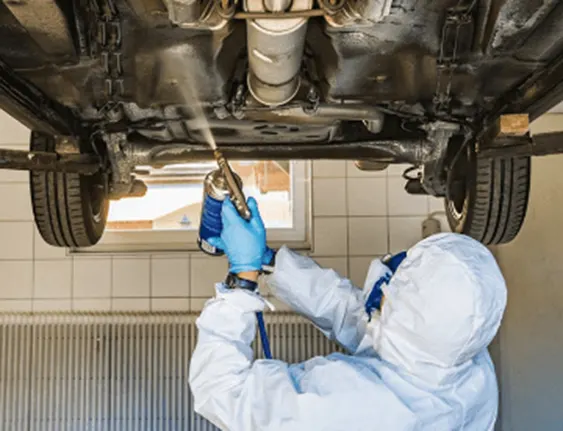
Underbody Coating
|
Underbody Coating Underbody coating is a dense protective layer of coating applied to the underside of an automobile and it is also called as an anti-rust or anti-corrosion coating. In Indian road conditions, the car’s underbody is most prone to corrosion. Hence the coating provides a long term protection to the parts exposed at the underside of a car from corrosion. Underbody coating is highly important as it is difficult to maintain the underside of a vehicle as there are a lot of unreachable areas that are not accessible for cleaning. In such scenarios such coating restricts the need to clean frequently.
Types of Underbody Coating:
This is considered one of the best underbody coatings for a car. Spraying rubber based coating is also easier compared to other types. This type protects the parts at the bottom of the car from scratches and also corrosion by acting as a repellent for water. 2. Wax Based Underbody Coating This type is one of the most affordable types of coating. But on the con side it does not last long and wears off frequently. It acts a good repellent of water particles. 3. Asphalt Based Automotive Undercoating This type is generally preferred for large vehicles such as trucks and buses as it provides a much better protection compared to rubberized coating. This type of coating is also a time consuming process. Painting can’t be done on this coating. 4. Polyurethane Underbody Coating It is used to cover-up damage or fractures on the underbody of the vehicle. It offers up good protection against corrosion and also bonds with the metal. Unlike in the case of asphalt-based coating, painting can be done over the polyurethane coating. Advantages of Underbody Coating:
Disadvantages of Underbody Coating:
|