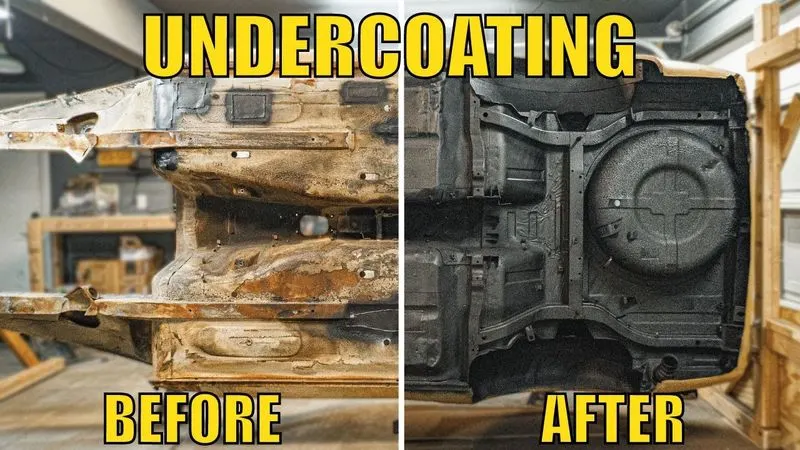
Underbody Coating
As we know, special during monsoon season car’s underbody is exposed the most to muddy terrains, potholes, debris and stones, and wet and even flooded roads that lead to corrosion of the underbody. So it is important to have an underbody coating in order to ensure your car is protected during these times. Underbody coating is usually a dense cladding (often based on rubber) applied uniformly to the undercarriage of the automobile. It is normally sprayed or painted on when the car is just out of the dealership and is clean.
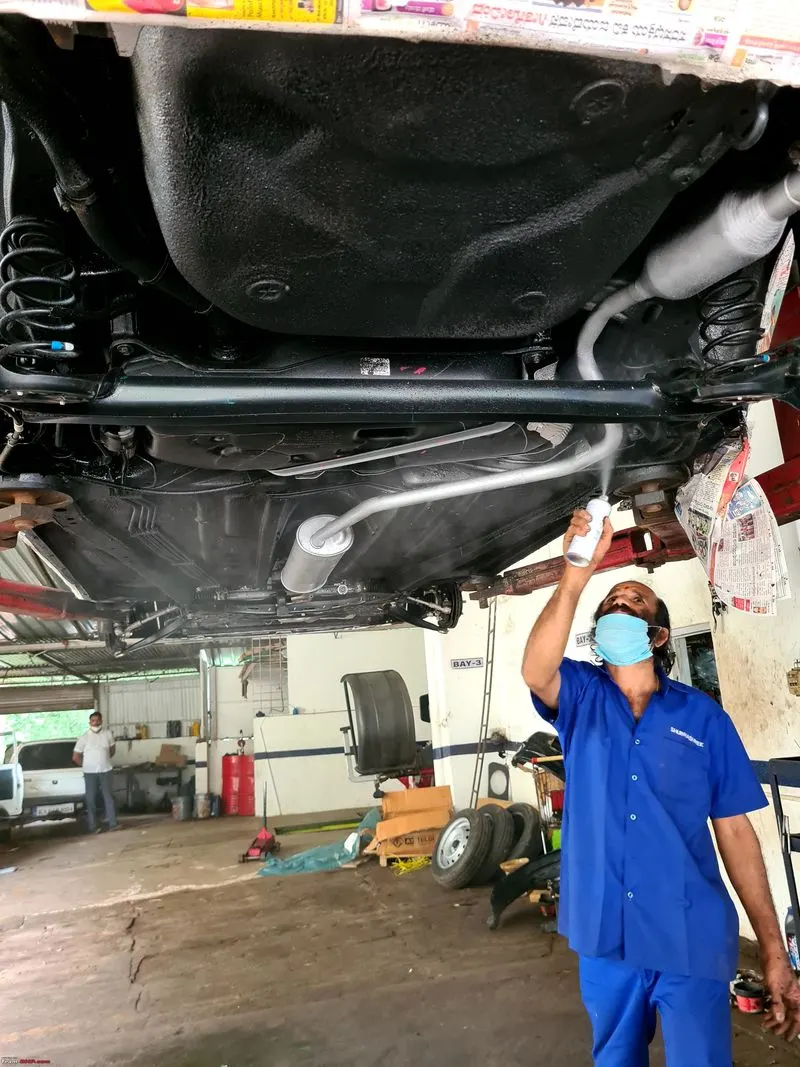
Its purpose
- The main reason for getting an underbody coating is to prevent rusting and corrosion.
- This is not only required during the monsoon season but also in hot and humid climatic conditions.
- The coating is also a must if you tend to live in coastal regions where the humidity in these areas speeds up the process of corrosion.
- Underbody coating can also reduce wear and tear. Getting a fresh coat can cost you up to ₹6,000.
TYPES OF UNDERBODY COATING
- Rubberized Underbody Coating.
- Wax or Paraffin-Based Undercoatings
- Asphalt Based Automotive Underbody coating.
- Polyurethane Underbody Coating.
Rubberized Underbody Coating-
- It is easy to apply and offers sound-cushioning as well as protection from dust, moisture, and dings or dents.
- In addition to your undercarriage, rubberized undercoating is also safe to use on wheel wells and quarter panels, and dries to a soft rubbery finish that prevents further rust, damage, or moisture seeps.
- The coating can be painted over and, if necessary for bodywork, can be easily removed with an undercoating removal spray.
Wax or Paraffin-Based Undercoatings
- A paraffin-based undercoating will be the cheapest and quickest option available with which to protect the undercarriage of your vehicle.
- However, keep in mind that it will wear off quicker than other types of undercoating and will need to be stripped and reapplied at least once every year.
- Wax-based undercoatings never truly harden. During application, they drip or flow into seams and cracks to provide protective properties.
- They are usually available in a spray gun canister or in an aerosol can and offer at least a base protection in moderately humid climates.
Polyurethane Underbody Coating.
- This type of vehicle undercoating is a little bit quicker and easier to apply.
- This coating closes up splits and fractures on the underbody of the vehicle
- Oftentimes, polyurethane undercoating will come in canisters ready to preload into an application gun.
Asphalt Based Automotive Underbody coating.
- For large trucks and heavy machinery, asphalt-based undercoating provides a bit of extra durability against rocks, chips, and moisture.
- Asphalt-based undercoating generally contains a little bit of rubberized material that sets up firmly and also helps soften noise.
- Generally sold in five gallon containers, this type of undercoating also needs more cure time than the other three, and is not paintable, making it best to use only for undercarriages.
The Pros of Undercoating
- It provide protection to carriage of the vehicle.
- Protect against rust and corrison.
- Absorb noise
- Increase lifetime of vehicle
Cons of Undercoating
- It is expensive
- Time consumping process