Underbody Coating
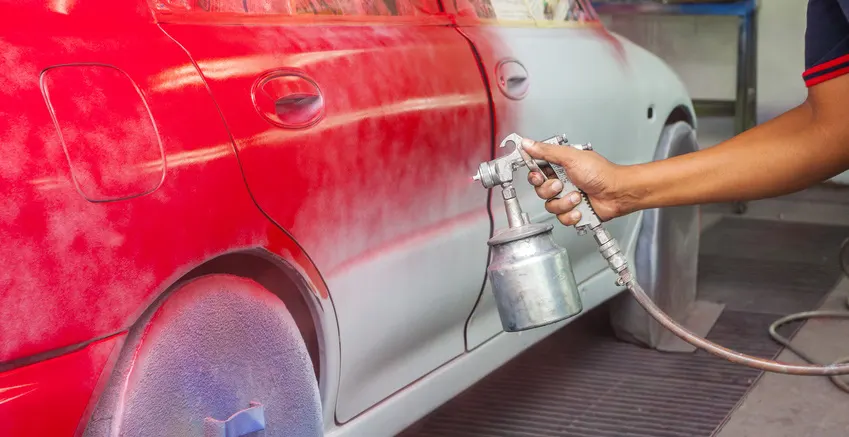
In cars, eveyone has heard body paint in which the car is painted with a primer that matches the color which would be painted on the body of the car. Primer actually becomes the base paint of the car that saves the steel body(which is liable to get corroded) from corrosion after continous exposure to enviromental conditions like heat,rain,moisture,dust etc. By the word body, it means the external body panels like doors,hood,roof etc. Primer becomes the base coat or undercoat that also provides a strong adhesion of the paint to the surface of the body. Paint gives the car a specifiic color and gives a shinny look to the car. The panels are fitted on the base structure which is known as frame chassis of the car. In automobile, this frame chassis is also known as body in white. BIW is a group of metal sheets brought together and welded together to form the base structure of the car. There are different structures that form a BIW amongst which....is the underbody structure.
Underbody structure is made of front and rear floor, dash panel and raiser.
Front and rear floor forms the base for front and rear seats.
Dash panel seperates the engine space with the driver compartment.
Raiser helps to combine the front and rear floor.
These all are exposed to majority of the road conditions like water, sand, snow etc. Underbody structure regularly comes in contact with the above mentioned conditions and makes it one the highest alarming portion of the car to get corroded. Also, some users take their cars for off-roading and there is a huge possiblity where the underbody gets damaged at the time of crossing a speed breaker or any similar obstacle. These are conditions when satisfied, calls for a underbody coating in which a coating wax or paraffin based coating is applying using a sprayer. This acts just similar to a regular paint of the body panels.
A simple procedure including least steps to know whether a car requires an underbody coating or not is as follows:-
1) Load the car on the hydraulic ramp.
2) Operate the ramp and bring the car to a sufficient height so that the underbody structure could be easily surveyed for corrosion.
3) If there are several regions suffering from corrosion or spots with worn out paint then the expert recommends for underbody coating to the customer.
4) After the customer agrees for the coating, the car is again brought to the surface by lowering the ramp.
5) All the lock nuts of all the wheels are loosend and again the ramp is raised. The reason behind this is to make the wheel removal process easy before coating is initiated.
6) All the wheels are removed. Wheels are removed to make the get access to tight spots near the wheel easy and also to avoid any error of spraying the coating on the wheels.
7) Before coating is applied on the underbody, the car has to be washed with soap water and water properly to remove dirt,oil or any foreign object stuck on the underbody structure.
8) The car is left to dry up.
9) A thickness of the layer depends on the sensitivity of the region.
10) The car is left to dry again and after it the coating has dried, all the wheels are fitted back on the wheel hub.
11) The car is removed from the hydraulic ramp and the car is ready for delivery.
Purpose
1) Protects from envirnmental conditions that could lead to body rusting.
2) Protects from underbody impact from any obstacle like high speed braker, rock etc.
3) Helps in insulation from extreme temperature conditions.
4) Acts like a sound proof damper.
5) Hides all the welding spots and makes the underbody look neater.
6) Improves overall life of the car
Types
1)Rubberized underbody coating
This is considered to be the best underbody coating which includes a dense cladding(based on rubber) applied uniformly across the undercarriage of the car. It is easy to apply and offer soft cushioning with other protections also. It safe to be used on wheel well and quarter panels etc. It can also be removed easily if necessary just by applying a underbody coat removal spray.
2)Wax based underbody coating
It is the most cheapest and quickest option availabe in the market today to protect the underbody structure. At the same time, the coat worns out quickly as well so it has to be applied in every 2 years. The old coat is scrapped out and new one is applied on the surface. The coat never truly hardens. They drip or flow into seems and crack to provide a protective layer. In market, they are available in spray gun canister, aerosol can and offer a base protection in humid climate.
3)Polyurethane underbody coating
This type of coating uses polyurethane based sealant. It is quicker to apply and also an easy task. In market, it is available in cannister preload into an application gun. It works in a way by seeking into the cracks and seems, displaces salt, moisture and oozing around rusty regions and bonds with it and protects the unoxidized metal. It can be removed easily by using a sand paper and can be painted over.
4) Asphalt based automotive underbody coating
For any of the standard vehicles, the aforementioned types of underbody coating can be adapted. For large and over-sized vehicles, heavy machinery....asphalt based coating is adapted. This helps in providing a thick layer or and extra layer of the coat that gives extra durability against rocks, moisture etc. This type of coating contains a little bit of rubberized material that set up firmly and helps soften the noise. In market, it is available in 5 gallon container. When the coating is prepared, it requires more cure time and is not paintable. This makes it only usage for underbody coating only. IT requires a more surface prep work before applying. Sanding and applying etching primer to bare metals before using this coat.