Underbody Coating
Underbody Coating:
Underbody coating is a thick resilient coating applied to the underbody or chassis of an automobile to protect against impact damage from small stones which protects the under surface of the vehicle from corrosion or rust.
Purpose of Underbody Coating:
- Protecting the underbelly of the car should be our top priority. Especially during monsoon when heavy rain-fall causes the roads to become mini-rivers and our cars are left stranded there. This makes them prone to heavy corrosion in the underbody region.
- A car’s underbody is exposed to the most wear and tear caused by muddy water, potholed roads, stones and other obstacles on the road. Because it’s not in plain sight, we often do not see the damage.
- The main purpouse of getting underbody coating is to prevent metal components that are exposed on the bottom side of the car to damage from corrosion. You can shut out the Adverse effects of corrosion on your car by simply applying a underbody coating all over the belly of the car.
- Another purpouse is to reduce Noise Vibration Harshness level that is when unpaved crumbs, and pebbles hit the car from underneath or get stuck in the wheel wells underbody coating consistency is so thick that the layer it creates absorbs all the unpleasant noises and vibrations and marginally improves the driving experience.
- Running on the highway or while pacing through a city road, the vehicle will often encounter sharp gravel or any other unattended object hitting the belly of your car with high momentum. This scrapes and chips off the metal from down below. A thick layer of Underbody Coating definitely comes to aid and minimises the effects of such contacts on the body.
- Underneath a car is somewhere a lot of indispensable parts of a car are left exposed like the Engine, silencer, etc. One simply can’t afford to let these parts go bad due to rusting and hence in order to save yourself from a heavy repair bill, a considerably less expensive Underbody coating is done.
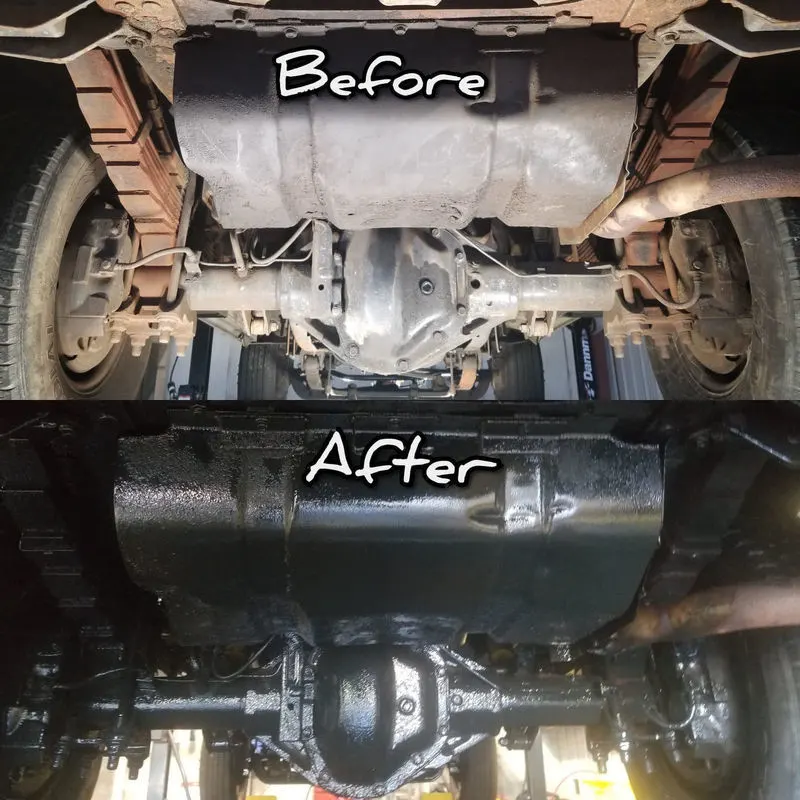
- The image shows the Car Before and After Underbody Coating
Types of Underbody Coating:
Wax or Paraffin Based Undercoating:
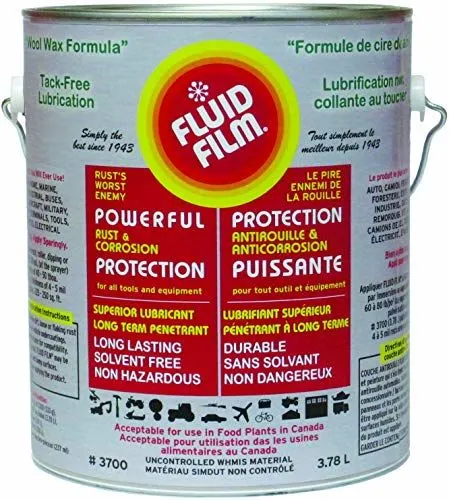
It is the preferred coating for cars where often used for driving on highways and normal roads. Sometimes it is also known as wax-based undercoating. It provides sufficient guard for cars in fairly moist regions. An example of a Wax/ Paraffin Undercoat is Fluid Film 1, a rust inhibitor, anti-corrosion, and anti-rust undercoat. The image shows the Wax or Paraffin based undercoating
Rubberised Undercoating:
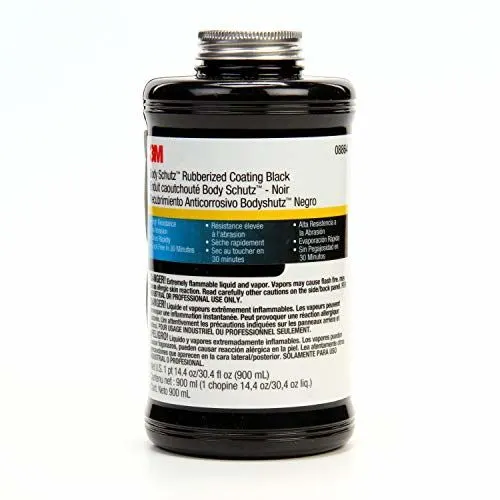
It is used for cars driven in rough terrain. This coating involves applying a rubber agent to the underbelly to protect and cushion it against dents, dust, and moisture. It can also be applied around wheel wells and quarter panels. Considered the best option for standard vehicles when it comes to the different types of undercoating. Examples of rubberized undercoating include 3M 3584 Professional Grade Rubberized Undercoating Rust-Oleum Black Rubberized Undercoating, 3M Body Schutz Rubberized Coating Black, SEM 40523 Low Voc Rubberised Undercoating Aerosol. The images shows the Rubberised undercoating
Polyurethane Undercoating:
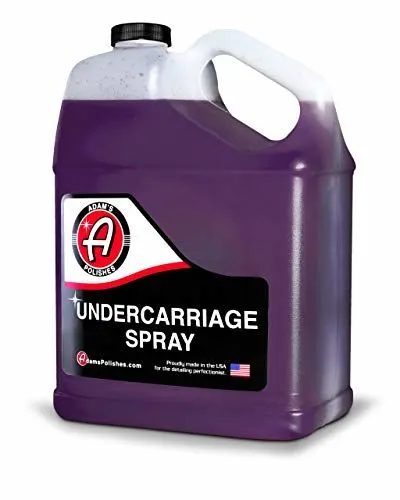
It uses a polyurethane-based sealant that comes in canisters ready to be loaded into a spray gun and sprayed to guard the undercarriage of the vehicle. The polyurethane used in this product is a high-quality and durable material that is perfect for any weather condition. It is ideal for standard vehicles. An example of a Polyutherane undercoat is Adam’s SiO2 Infused Invisible Undercarriage Dressing Spray for car detailing. The image shows the Polyurethane undercoating
Asphalt based Undercoating:
This type is made of asphalt and generally also contains some rubberized material that sets up firmly and helps soften noise from the engine. It has the most damage-resistant properties. Although asphalt-based undercoating is ideal for trucks, military, and all-terrain vehicles, it will also help protect the car, truck, motorcycle, and heavy machinery from the elements. It last long and is best for endurance vehicles that have to undergo heavy road use. When it comes to large trucks, heavy machinery, military, and all-terrain vehicles, asphalt-based undercoating provides added durability against rocks, chips, and moisture. It’s usually available from professional service shops.
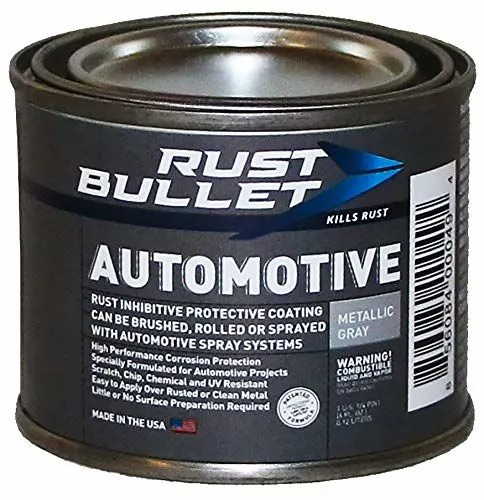
Examples of asphalt-based undercoats are Rust Bullet, an automotive inhibitor paint for rust preventive and protective coating. As well as Skyco-Ospho protective coating. The images shows the Asphalt undercoating
Pros of Undercoating:
It provides a layer of protection against corrosion:
- When an undercoating is properly applied to a vehicle, then the underbelly is provided with a layer of protection against rust and corrosion. Instead of contacting the metal components of the vehicle, the debris encounters the undercoating, which then proactively repels the dangerous items away. Although an undercoating will eventually wear out, it can provide years of protection against premature corrosion.
It will extend the life of your vehicle:
- A proper undercoating extends the life of the vehicle because of its rust-stopping power. Corrosion does more than affect the integrity of the metals in the vehicle. It can get into the metal wires and cables, affecting any component which is comprised of steel or aluminum. Even the transmission and engine have exposure to rust when there isn’t a vehicle undercoating applied.
It can be applied to damaged areas:
- Over time, the underbelly of the vehicle is going to develop nicks, chips, and scratches because of the debris which is encountered while driving. Unlike older forms of undercoating, which included the use of asphalt and animal fat, modern products provide a real layer of protection because it can morph into the various areas of small damage.
It may help to reduce interior noise:
- While driving, the sounds of the road can be soothing if they aren’t too loud. For lightweight vehicles, noise pollution can be overwhelming to the driver in some situations. Applying a layer of undercoating creates a barrier against the sound, which creates an interior that is quieter. After the service is performed, many drivers notice that audio levels are noticeably lower inside their vehicles.
Cons of Undercoating:
It is less helpful if corrosion is already present:
- For an undercoating to be the most effective, it should be in place before the underbelly of your car begins to rust. If it is applied over corrosion, it will still isolate the metal from further moisture and airflow, which is good, but the existing oxidizing/rusting process will still continue to occur. As rust is already present, applying an undercoating will slow the continuation of the corrosion process and will make the vehicle look better until the rust breaks its way through the layer of undercoating have applied. If the rust present, it is better to remove the rust and then apply the undercoating.
It is costly for coating the used cars:
- The cost of preparing the underbelly of the vehicle for an undercoating might be more than the value of the car. You must remove all the residue from the bottom before it can be applied. Failing to do so will seal in the debris that is present already, which can lead to more problems.
It adds weight to the vehicle:
- Although the amount of weight added to a vehicle with an undercoating is minimal (between 10 to 20 pounds for most vehicles), there is a small element of fuel economy to consider. When your vehicle weighs more, the distance you can travel on a single tank of fuel is reduced. The undercoating might reduce your efficiency by up to one mile per gallon, which creates a small additional fuel cost over time. Still, the effect on mileage of this additional weight is negligible compared to the effect a driver how they drive the vehicle.
An undercoating is not impervious to damage:
- An undercoating can provide a hardened layer of protection against dirt and debris that may cause corrosion. Depending on where the vehicle is drived, however, the lifespan of this product may be minimal. If vehicle is drived on gravel roads or dirty areas frequently reduces the integrity of the protective layer.