Underbody Coating
UNDERBODY COATING
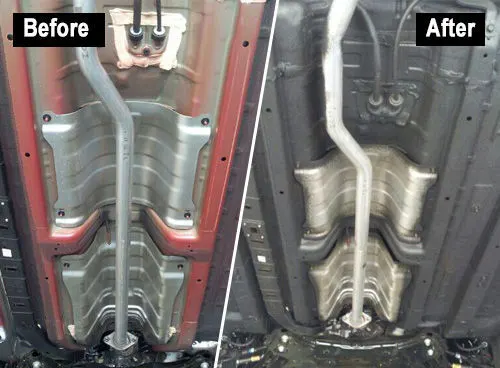
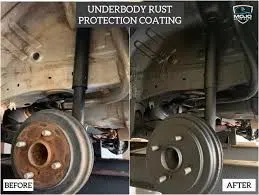
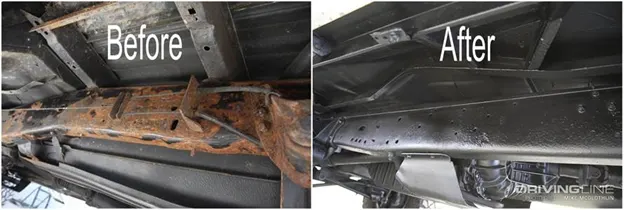
Coating means a material applied onto a surface for protective, decorative, or functional purpose. Underbody coating is usually a dense cladding applied uniformly to under carriage of automobile. Underbody coating is a sprayable coating which protects the under surface of vehicle from corrosion. It is often based on rubberized material. It prevents further damage to the under carriage of the car. Underbody coating often called as Underseal in United States. If the area of underbody coating is less then the car in the international market is being rejected as it does not fulfill the government policy. On the other side if area of underbody coating is adequate, then the car is accepted worldwide. Underbody coating is a thick rubberized material paint that coated all over underbody surface of the car when sprayed. It forms about 2–3mm thick coating layer.
Difference between Rust protection and Underbody coating: -
- Rust protection coating is done inside the vehicle.
- While, underbody coating is done outside the vehicle to protect outer parts of vehicle such as Silencer, Underneath the vehicle area.
- Rust proofing treats specific, hard to reach places all over your car that are good places for rust to form. These are done by spraying a kind of protective wax all over parts that can easily chip or where moisture can accumulate. These are typically the most exposed areas of the vehicle like the fenders, tailgate, upper body panels etc.
- Rust-proofing is the treatment of specific areas all around the vehicle where rust can claim an initial foothold.
- Undercoating is the sprayed application of a wax or rubber-based composite onto the entire underside of the vehicle.
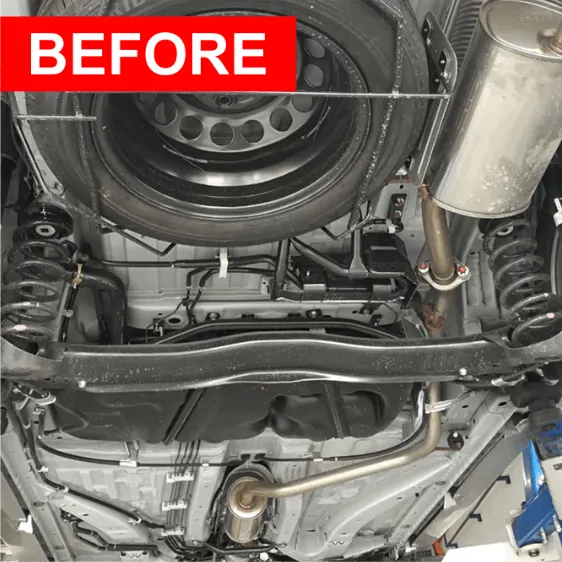
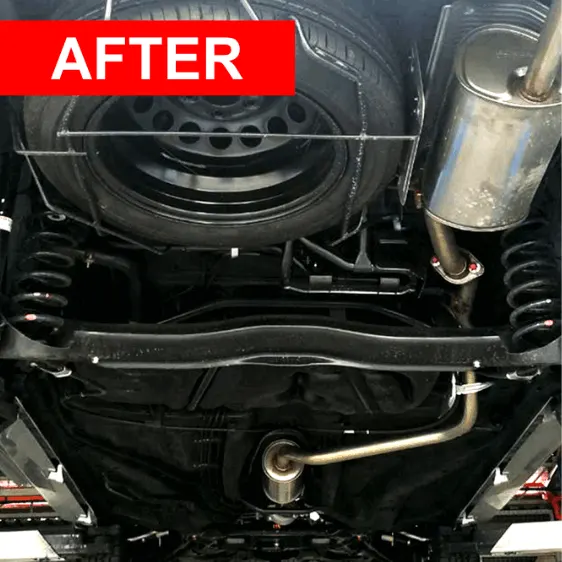
PURPOSE OF UNDERBODY COATING
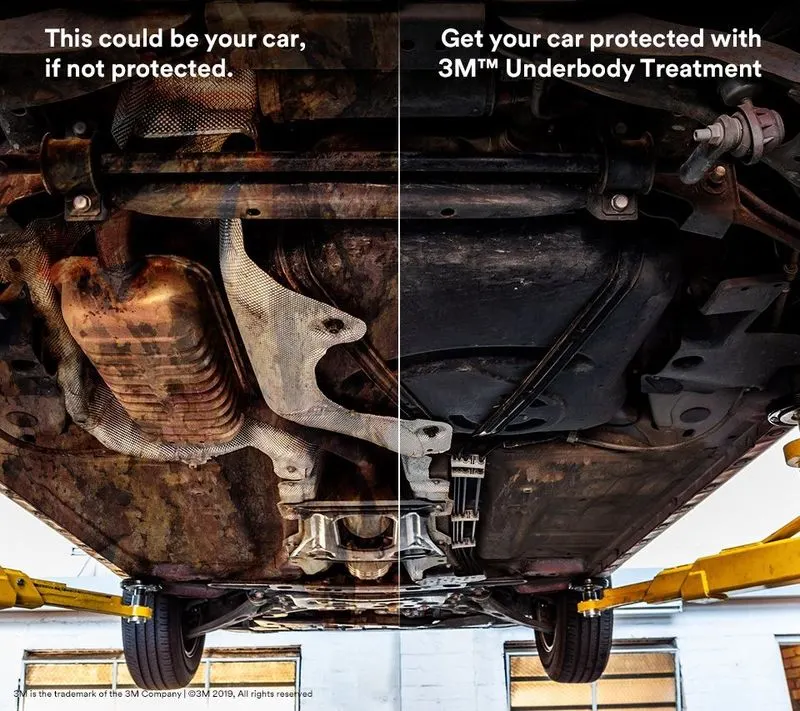
- A car underbody is exposed to the most wear & tear caused by muddy water, potholed roads, stones and other obstacles on the road throughout its life span. Because it’s in the lower side we often neglect it or can’t see the damage happened beneath the car.
- Underbody coating provides long term protection from corrosion happening underbody of the car.
- It protects parts like body panels, silencer, frame rails, & other inner cavities of the car which are not physically accessible but prone to corrosion.
- Vehicle in some territories may get corrode way faster then other states due to climatic conditions. Countries which has coastal area more, heavy rainfall, cold winters and salting roads in common the corrosion rate of vehicles here are high.
- In Indian conditions, a car underbody is most likely to be prone to corrosion as it has nine states as a coastal area.
- Underbody coating helps the car and prevents it from corrosion.
- A proper underbody coating extends the life of your vehicle because of its rust–stopping power.
TYPES OF UNDERBODY COATING
1. Rubberized Undercoating
Rubberized undercoating is easy to appl and offers sound cushioning as well as protection from dust, moisture and dings or dents. Rubberized undercoating creates a protective barrier that seals out grit, grime and moisture that could otherwise corrode the metal components. Applying this to undercarriage is not much of a hassle either. Rubberized undercoating is safe to use on quarter panels and wheel wells and dries with a soft rubbery finish. Generally, this is the best method for the protection of undercarriage of the vehicle as it provides the simplest and the best protective measure against rust, moisture and it can be sprayed easily on to the surface. Companies like 3M provides Aerosol cans of rubberized undercoating which is very handy to use and allows easy spray on application.
In the marke companies like 3M™ Rubberized Undercoating helps protect the undercarriage of cars, trucks, vans and recreational vehicles from both corrosion and abrasion. The coating may also be used to protect wheel wells, quarter panels, interior side of fenders, door skins, under side of the hood and trunk lid, floor pans, and more. The rubberized undercoating also helps deaden noise, allowing for a more pleasant and quieter ride. The spray goes on as a textured black finish that resists chipping, abrasion, exterior rusting, and weathering. It provides one-coat build-up with no dripping, running, or sagging. Protecting your vehicle with an application of rubberized undercoating is advised for long-term protection of the undercarriage. his extra protection is a low-cost measure that can pay off by potentially extending the service life of a vehicle.
2. Wax or Paraffin Based Undercoating
They are available in a spray gun canister or a aerosol based cans and offers at least a base protection in moderate humid climate. It is cheapest & quickest option available in the market for protection of under carriage of the vehicle. Wax based undercoating never truly harden. However, keep in mind that it will wear it off quicker as compared to other coatings. Main drawback of this undercoating is it last for minimum 6–8 months.
3. Polyurethane Undercoating
Other option for underbody coating is Polyurethane undercoating. This is usually available in canisters ready to preload into an application gun. The compound displaces salt and moisture and protects the unoxidized metal from rust. It takes long process for coating. This type of coating requires a little bit more surface preparation work before applying the cat such as sanding & applying an etching primer to bare metal before using this coating process.
4. Asphalt Based Undercoating
Mainly suitable for large trucks and heavy machinery. Asphalt undercoating provides a bit of extra durability against rock, chip and moisture. Generally, it contains a little bit rubberized material that sets up firmly and also soften the noise caused by the rocks. This type of undercoating also needs more cure time than other three coating process and is NOT paintable, making it best to use only for undercarriage.
BENEFITS OF UNDERBODY COATING
1. Fights Rust
- Protects against rust and corrosion.
- Underbody coating may come handy especially if you live near coastal areas, near sea where there is too much humidity in the air and rusting is just one of those everyday things.
- In places were snowfall comes in winter season, then underbody coating should be necessarily done t prevent from rusting the vehicle underbody.
2. It extends Lifespan of the Car
- If undercoating is done right and taken care of the car time to time, doing service properly the lifespan of the car can be extended up to 10 years and beyond also.
- Good undercoating not only defends the underbody from corrosion but also protects the engine and transmission as well. Less rusting coupled with slower wear and tear can surely add years to the lifespan of your vehicle.
3. Noise cancellation
- It minimizes the sound from underneath the car resulting a noiseless, smooth driving experience.
- Very thick undercoating can soften the noises that reach the cabin.
- Since, undercoating is often made of rubber it absorbs some of the rackets.
- It provides extra layer of insulation to the car’s underbody, reducing the noise from penetrating inside the cabin.
4. Anti-chipping property
- If any stone hits the coating it does not get chipped away hence protects the underbody from exposure to water.
5.Heat Insulation
- It insulates the interior of the car from extreme temperatures from beneath the vehicle providing a comfortable cabin experience.
DISADVANTAGES OF UNDERCOATING
1. Less Effective, if corrosion already exists.
Once there is rust underneath the vehicle, there is No use of underbody coating it is less effective. Though the coating will cover the damage that already took place. The rust inside will continue its job to lead to corrosion. Undercoating of vehicle slowdown, the process of rusting but you must remove rust first before applying coat.
2. High in Cost
Underbody coating is expensive. This is because the underbody coating offered by a car dealer is one way in which they make money off the customer
3. Risk of Damage during Application
Care must be taken while applying the underbody coating. This thick rubberized paint if not applied properly, can get into moving mechanical parts and cause premature failures such as into the Disk, connecting rods, U-joint or CV joints in a cars propeller shaft or drive shafts. They can also hinder the smooth movement of suspension components if applied incorrectly. And there’s also the risk of overspray on to the car’s paint finish on the lower edges of the car.
4. Frequent Application
One should apply twice in 10 years to last long effect of coating and prevent the car from corrosion. Most of the cars ride their vehicle 5 years without worrying much once the under coating is done.