Fender Design
FENDER DESIGN
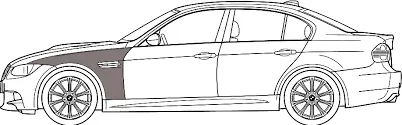
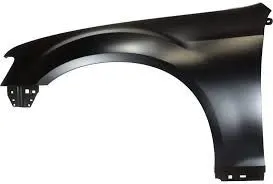
Fenders are panels on a car that are located on the sides of the car in front of the doors. Fender is the American English term for the part of an automobile, motorcycle or other vehicle body that frames a wheel well (the fender underside). Its primary purpose is to prevent sand, mud, rocks, liquids, and other road spray from being thrown into the air by the rotating tire.
The fender is the metal structure that extends between your front door and your front bumper, providing necessary protection for your front wheels. Depending on the design, fenders can also act to make a car more aerodynamic. Many sports cars have very sleek fenders for this reason, and they may have additional features such as grooves or grillwork which are designed to enhance the car's performance at high speed.
Many people think that bumpers and fenders are the same part of the car. In actuality, the bumper is a plastic component that covers the front and back of your vehicle, while the fender is a metal structure that frames the wheel well.

Do you need fender in car?
The fender is the curved part of the car's body located above the wheel well, and yes, it is necessary. Fenders are crucial body panels on a vehicle because they contain dirt and debris that your tyres kick up and which can damage your car or other vehicles on the road.
Purpose of Designing Fenders in a car
It is an aesthetic component/part of a car that frames the wheels. Prevention of sand, mud particles, and other road contaminants from being thrown into the engine compartment and also to the pedestrians by the rotating tires are the main purpose served by the fenders.
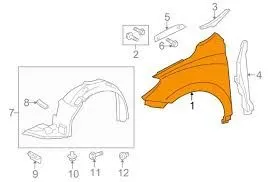
Depending on the maker of the car, fenders may be made from fiberglass, steel, or other materials. Many of these materials are designed to crumple in a crash, distributing the impact across the frame of the car to make the crash more survivable for the occupants of the vehicle. Depending on the materials used, fenders can sometimes be bent back into shape after a minor accident; in other cases, they will probably need to be replaced.

TYPES OF FENDER DESIGN
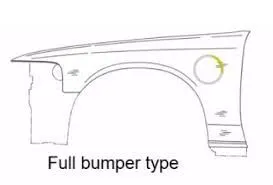
1. Full Bumper type
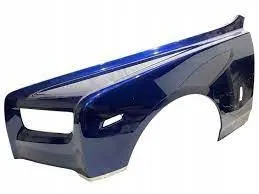
The full bumper type fender was used in old cars, it covers the full area until the front lighting. But it has a lot of sheet metal material which is unnecessary and increases the weight of the fender. These type fenders are no longer used in the automobiles. The problem associated with this kind of fender is there is a lot of wastage in the blank and every inch of a material cost increase value of car in an industry.
2. Half Bumper type
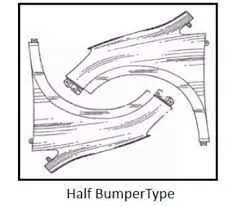
Currently we are using the half bumper type, the reason for choosing the half bumper type is that when we choose the full bumper type the blank used for creating it is very large and also has the lot of wastage of sheet metal, but in the case of the half bumper type we have the possibility to reduce the scrap. This is what we called as scrap management in industry.
In half bumper type we reduce the usage of the steel sheet material and use lots of plastic on the bumper which in term decreases the cars weight and increases the performance.

Material
Previously in late 60’s–90’s inner fender or wheel arch were made of sheet metal. To reduce weight of the car and achieve high fuel economy of the car companies all around the world started to reducing the overall weight of the car. And by adding Baffle to the fender design it gives much more good looks to the car and wastage of sheet in manufacturing the fender has being also reduced. The most commonly used wheel arch is of plastic material. If the vehicle with metal inner fenders is used, there's a good chance winter salt and moisture has caused them to develop some rust in hard-to-spot areas. Improper repairs after an accident can also accelerate corrosion here as well. It's important to note that metal inner fender parts are typically welded to each other, and to the body of the vehicle.
Wheel Cladding
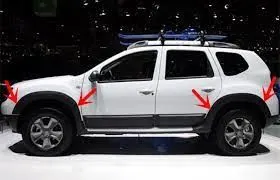
The wheel well cladding is used to minimize road noise, especially during highway cruising (in Indian cities, you'll never hear the tires over the din of everything else). There are various variations: No cladding at all, metal is exposed. Partial cladding, usually towards the passenger compartment. There are many other types which are used only for aesthetics and scratch prevention.
Plastic cladding allows the cars to look beefier than it is. For example, in India, there was a trend where the carmaker was adding a set of this plastic trim all around to their hatchbacks and called them Cross (Volkswagen Polo Cross, Toyota Etios Liva Cross, Fiat Aventura).
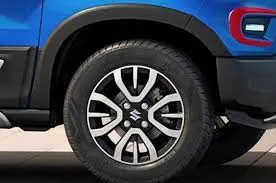
WHAT IS PLASTIC VEHICLE CLADDING AND WHY DO WE NEED IT?
Plastic cladding is a functional and cost-effective choice for vehicle manufacturers. Not only do consumers also benefit from the lower production costs, but they also get to enjoy the perks of a smartly designed car throughout its lifetime. There are obvious benefits for some plastic components such as cladded wheel wells. These can hide and prevent possible dings from rock or debris that gets kicked up while driving, dampen the sound of the tires on the road, and reduce corrosion from salt and water along the body of the car. If the plastic panel on your vehicle does get damaged, it’s far cheaper to replace than steel or aluminium, and you may not need to hire out any expensive colour matching or paint jobs.


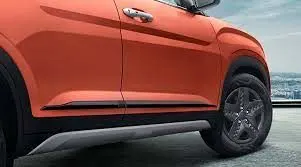
The design of a vehicle lies at the crossroads of marketability, functionality, and safety. With ways to make trim, lift gates, hoods, and bumpers in plastic, we’re seeing extremely safe, lightweight and fuel-efficient tastefully designed vehicles available at a price that average consumers can afford.
Benefits of using Plastic Baffles/Plastic Cladding in Wheel arch design
Crumple zones of cladding is good on impact are responsible for saving thousands of lives in the last 50 years. Many of these crumple zones are made with plastics and composites that absorb impact more effectively, and predictably, when compared to vehicles with an all-steel frame. Polymer composites weigh around half the weight of steel and play an integral role in car safety as they can absorb four to five times more energy in an impact.
In modern cars, plastics make up around half of a vehicle’s volume, but only 10% of the vehicle’s weight. Innovation in plastic and bioplastics have made vehicles lighter, contributing to better fuel efficiency and increased safety. A vehicle constructed in lightweight materials leads to a reduction in fatalities per vehicle miles travelled.
Wheel Arch
The shape of the wheel arches allows the front wheels to steer without rubbing on the bodywork.
The shaped part of the bodywork of a car or other vehicle that allows the wheel to be accessed, and in the case of front wheels, enable them to be steered.
The wheel arch is the semi-circular part positioned above the wheel of a vehicle. The most important body change was that the front wheel arch was cut higher into the fender. Corrosion had occurred around the splash plate at the back of the wheel arch.
The wheel arc is an integrated part of a fender assembly. It is a semi-circular part which is positioned above the wheel of a vehicle. In some countries, it is also called as an inner fender.
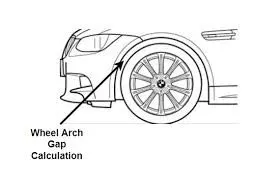
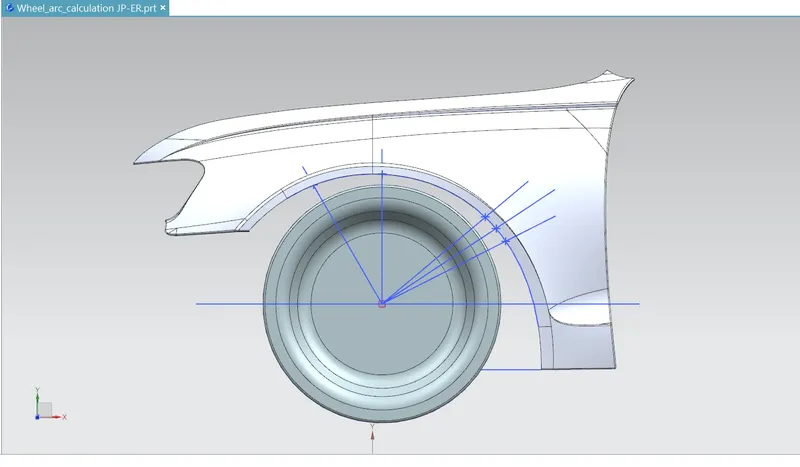
Design requirement for front fender and its components –
- Functional Requirement
- Important Regulations
- Standard Regulations while designing wheel arch are Japanese Regulations, European Regulations, US Regulations.
- Drip Area
- Wheel Arch
- Baffle & ORVM Mounting Area
- Frontal Crash Regulations and Requirements
- GAP & Flushness Requirement
- Gap between Tyre and Front fender.
Mounting Regions on Fender
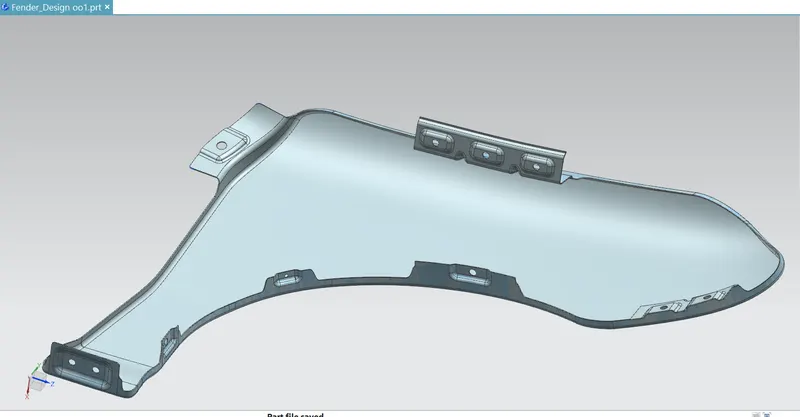
There are Five main Mounting Points on Fender they are as follows –
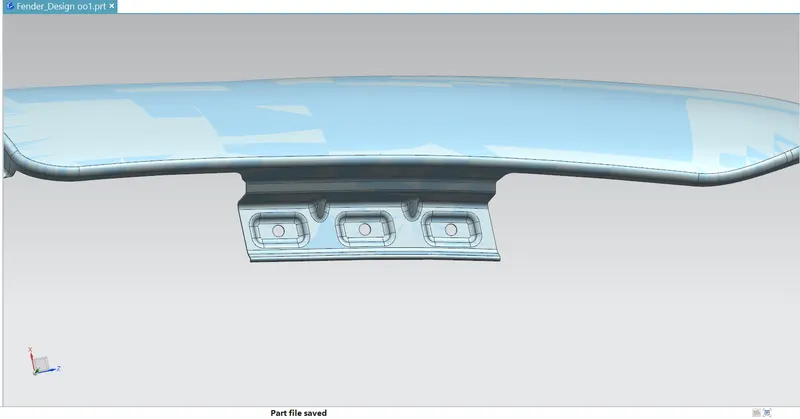
1. Drip Area
The drip area should be designed in such a way that it should be at least 150mm away from the front end of the fender to have sufficient space for mounting headlamps housing.
Mostly the drip area starts from 200mm away from the rear end of the fender, to have sufficient space for the cowl which carries the wiper equipment.
2. Sill Mounting
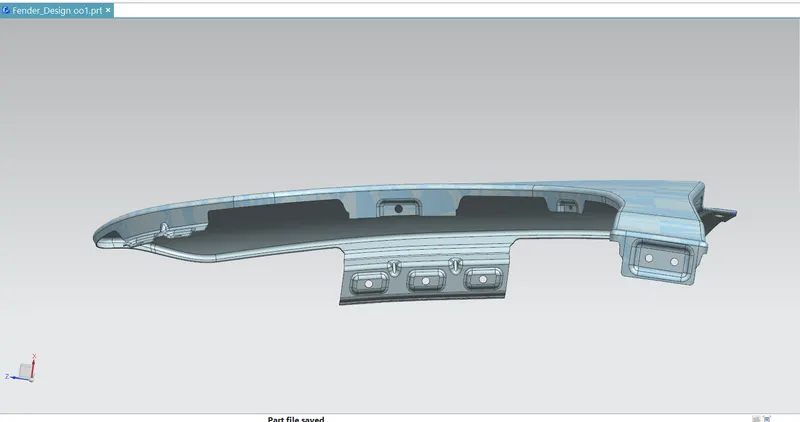
The Sill Mounting area is in the bottom of the fender. It is mostly gets connected with the door region of the car. Here, proper embossing and holes for the fasteners are provided. Sill is the panel directly below the bottom of the door supporting the floor and may be used to combine the floor and the body. the bottom end of the fender is mounting on the sill body for reinforcement of the fender panel, thus the sill mounting position is designed with holes and emboss.
3. A-Pillar Mounting
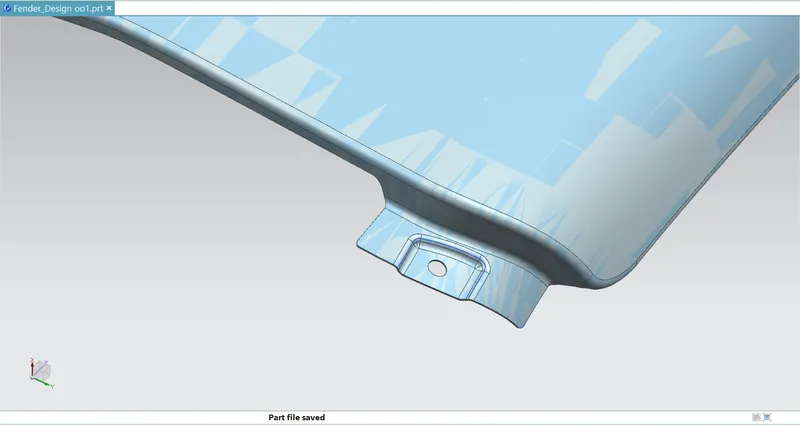
This mounting position is created for attaching the fender to A Pillar of the vehicle. The mounting has to be created by taking the reference from the A-pillar of the vehicle.
4. Cowl Mounting
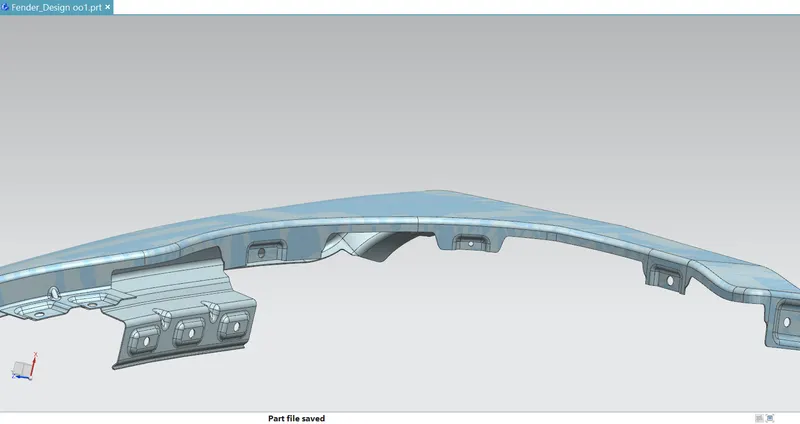
A cowl is the panel that covers the gap between your car's hood and windshield. It supports both the windshield and the dashboard while also protecting the area between the windshield and the hood.
Cowl is the plastic part where the wiper mounting and wiper motor mounting is being done.
5. Baffle Mounting
These mounting points are created for attaching plastic components i.e. Wheel cladding as called as baffle which prevents chipping foreign particles inside the engine compartment. Baffle gives an aesthetic new look to the SUV’s Segment cars and also gives an muscular look from outside.
Conclusion
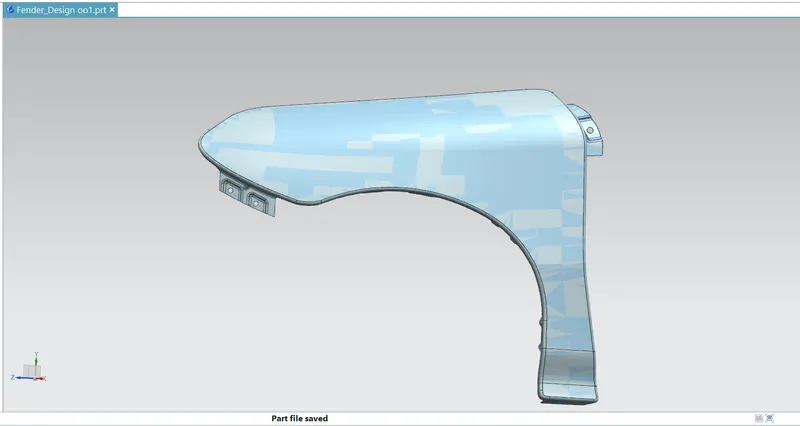
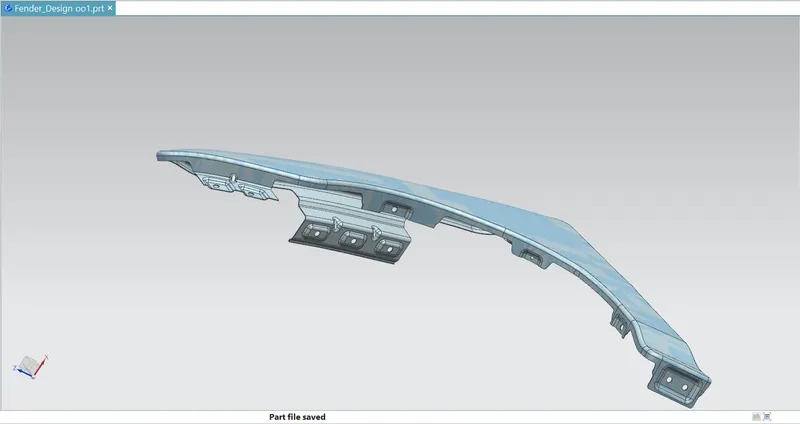
Thus, we have designed the Front Fender with the given Master section as per Standard Requirements.