Hood design-Week 2
Hood Panel or Bonnet
A car hood, also known as a bonnet in some other countries, is a hinged cover that rests on the engine of a front-engine vehicle. Its purpose is to provide access to the engine for repair and maintenance. A hidden latch is usually used to hold the hood down.
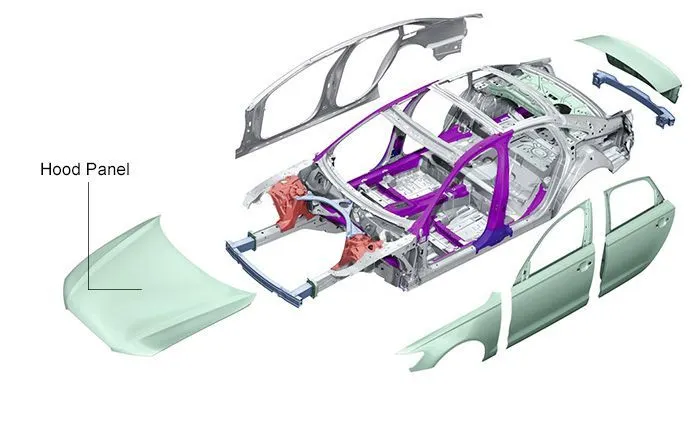

A car hood panel is one of the most important components of the BIW (body in white), it is considered as the closure sheet-metal component. A hood panel consists of two panels that are hemmed together to form the automotive hood assembly. Some high-performance cars have ‘hood scoops’ which channel outside air directly to the air filter, which gives improved performance and efficiency.
The inner panel of the hood is not visible to the customer but this is the engineering feature of the outer panel. The outer panel has the aesthetic look to it but on its own is very weak and not capable of handling force during impact.
Why Do Cars Need A Hood?
The hood is meant to protect the vehicle’s performance parts such as the engine or battery. They also provide easy access to car maintenance and repair. Vehicle owners should be aware that hoods are susceptible to damage.
Types of Hood
- Inlaid Hood
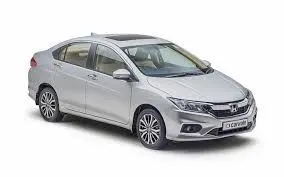
Inlaid hood is Normally seen in budget friendly cars all around the world.
- Wrap Around Hood
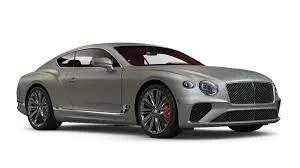
Wrap around hood are usually in high-end cars like Audi, BMW, Rolls Royce.
Cars which includes this type of hood are costlier than a normal budget car for an average working person.
This type of cars has hood features such as scoops in hood, hood ornaments/symbols, front wipers, louvers.
Hood Opening and Closing Mechanics
A standard hood on a modern car with an engine in the bonnet has hinges on the edge facing the windshield and a latch near the centre of the bumper edge that holds it in place. This design is simple and intuitive, but it does pose a risk of airflow pushing the hood upwards and backwards – right onto the windshield and roof of your vehicle before potentially ripping away altogether.
A well-fitted hood will connect with its latch and have a flush edge with the rest of the vehicle’s body. Extra space may indicate a bad fit or an improperly latched hood. Lifting the hood lightly and reaching towards the middle of the bumper should reveal the latch enough to release it. Some vehicles have hoods with hinges near the bumper. When opened, the hood tilts forward and exposes most of the engine block; this style is common on big rigs. Even more rarely, two-panel hoods with a split down the middle of the vehicle are used, but they are typically a cosmetic decision.
Types of Hood Support
- Gas Stay
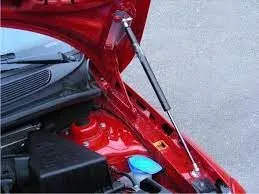
This is used to open the car hood by just providing little lift force. A small effort is all it needs and other work is done by gas pressure. It is normally found in high-end cars where the mass of hood is more than normal.
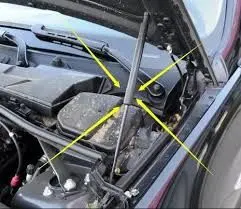
Advantages of Gas stay
- No human effort is required
- Easy to operate
Disadvantages of Gas stay
- They are heavy in weight compared to support rod.
- Cost is more
2. Support Rod
It is a simple metallic rod. It is not usually made linear to increase rigidity of rod but the length from line connecting support rod retaining point with retaining point on body side to maximum bending point should be less than 35mm to ensure the strength of support rod.
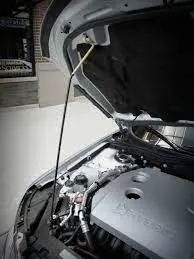
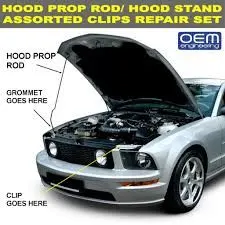
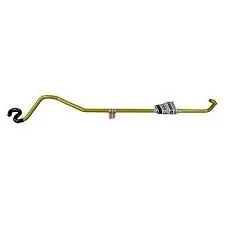
It should have sufficient clearance with other engine components to avoid rattling noise. Gourmets are provided to keep the support rod in rest condition. It keeps the rod from moving around under the hood and from causing trouble.
Advantages of support rod
- They are economical, Cost effective simple.
- Light in weight.
Disadvantages of support rod
- When striking with the automotive body panel, leaves scars which are very likely to cause rust.
- The metal rod is often too hot to be gripped by hands immediately after the vehicle has been stopped.
Hood Materials
Because the hood is usually detachable from the rest of the frame with relatively minimal effort, vehicles may sport hoods made from different materials than the rest of the body.
- Steel
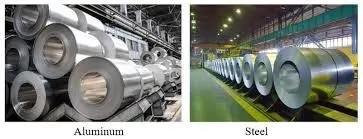
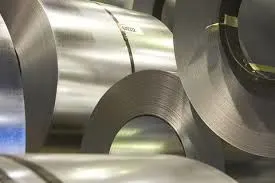
Steel is synonymous with strength and durability. It has been the go-to metal for engineering needs, including automobiles.
The varying formulas for steel have a large impact on its performance, so the standard form of steel used for cars has a higher weight than the alternative hood materials. Its low price is still a major reason for its continued usage as the standard hood material.
- Aluminum
Although most people interact with aluminum as a lightweight foil, thick aluminium is a durable metal that’s resistant to rust while weighing less than heavier elements.
Aluminum isn’t quite as strong as steel, so these hoods can be dinged and dented more easily. The durability isn’t as significant in a crash where the vehicle will be reliant on crumple zones and other safety features more than the strength of the hood.
- Fiberglass
While lightweight, inexpensive, and convenient, fiberglass is the least durable of the common hood materials. It’s also prone to ignition and produces toxic fumes. These problems rear their head in cheaper fiberglass products, but higher quality ones are less prone to issues.
That offsets some of the price reduction, but a good fiberglass hood will cut vehicle weight without sacrificing much safety or durability.
- Carbon Fiber
Specially engineered strands of carbon can be turned into a light yet incredibly durable material. The extra chemical and mechanical processing does make it the most expensive option, but using it can easily shave up to half of the hood’s weight.
It’s not a major cut off of the overall weight, but it can add up with other weight reduction measures when trying to maximize performance. Fiberglass weighs about the same while being cheaper, but you can make the majority of a car out of carbon fiber without sacrificing structural integrity or safety.
Why Automotive Industry Choose Aluminum Sheet?
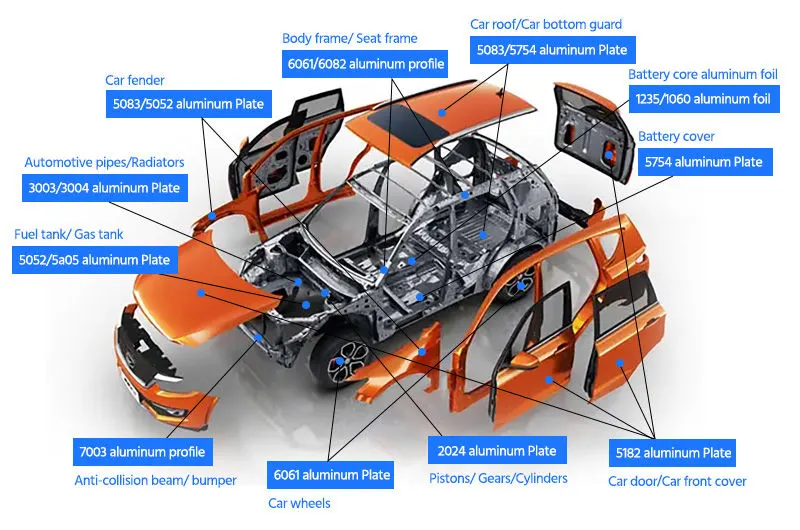
With the spread of energy saving and emission reduction concept, lightweight vehicles have been quickly promoted. Aluminum alloy is one of the lightweight materials for automobiles, most of which are 5xxx Al-Mg-Si aluminium alloy. They are often used as manufacturing materials for automobile wheels, engines, chassis, and automobile bodies.
The benefits of lightweight automobile chassis in terms of fuel consumption and handling far exceed the lightweight of other parts. Automobile chassis, including steering system, suspension system, braking system and driving system, is an important component of a car, car hood, accounting for 30% of the entire car's weight.
Most automobile hood outer panels are made of traditional steel plates, and their quality does not meet the needs of lightweight development. For this reason, it is necessary to obtain lightweight effects through the application of the automotive aluminium sheets. The most widely used car aluminum alloys in the market are deformed aluminium alloys of 6111, 6016, and 5182.
The production process of the outer panel of the hood mainly includes blanking, deep drawing, trimming, turnup, and side turnup, Hemming. Among them, deep drawing is a key process to ensure the quality of parts.
The Properties of Aluminum Alloys for Hood Panel
6111 aluminium: It features excellent corrosion resistance and precipitation hardening, which is the premiere aluminium alloy used for automotive hood panel. Aluminium 6111 alloy is a wrought alloy that is a heat treatable. It possesses high strength and excellent stretch-forming characteristics.
6016 aluminium: It has good forming properties and bake hardening properties, and is widely used in automobile body coverings (especially outer panels) such as engine hoods, doors, trunk lids, roof covers, etc.
An important indicator to measure the performance of 6016 aluminium sheet is the bending limit. Generally speaking, the 6016-aluminium alloy in O temper is the softest and is suitable for various bending processing.
5182 aluminium sheets: 5182-O aluminium alloy is often used as the engine hood inner panel. It is a kind of Al-Mg alloy. The 5182 aluminum alloy has good corrosion resistance, excellent weldability, good cold workability, and has a moderate amount of silicon, so the weldability is better than 5A02.
Hood Features
- Windshield Washer Nozzle
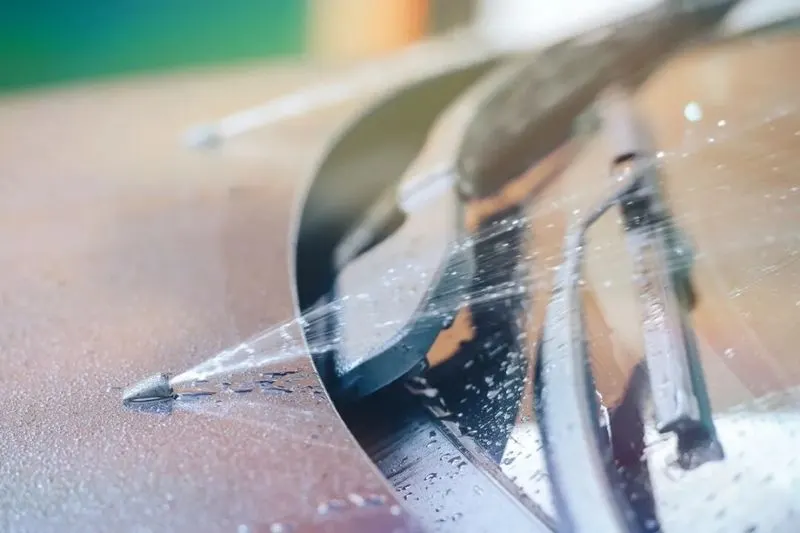
Windshield washer nozzles are the most common additional feature of vehicle hoods. A quick touch of a lever inside the cabin mists the windshield with a special cleaner that improves visibility as the wipers do their job. They are fairly cheap and easy to install if your vehicle lacks nozzles.
- Scoops
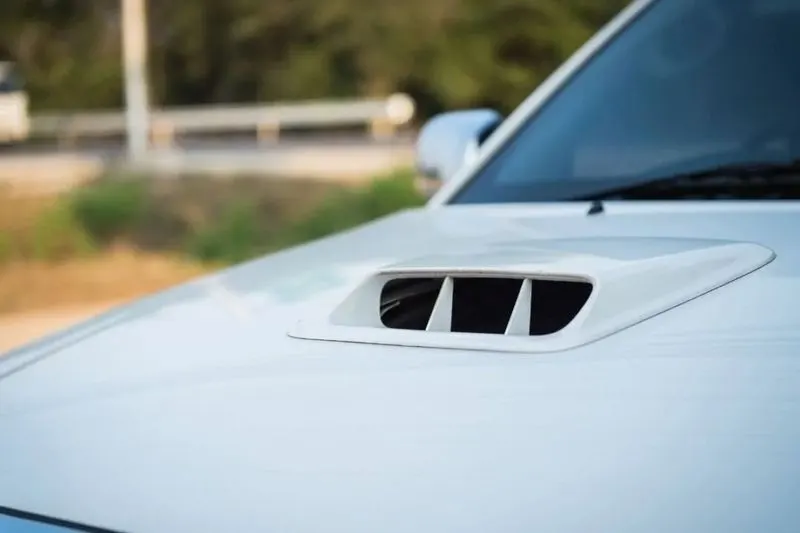
Combustion engines rely on the interaction between fuel, heat, and oxygen to create power. They also use the surrounding air to cool down the engine. Hood scoops alter the airflow in ways that can help one or the other, depending on the style of scoop. The extra openings allow more sound to escape the bonnet, so the noise level of the engine may be a concern as you add scoops of any type.
a. Ram Air Intake ScoopsThese scoops face forward to get more cold air into the engine as the vehicle moves faster. The air pushes its way through a narrow opening before spreading out into the engine, cooling the air while manipulating the pressure within the compartment. Even with protected openings, the additional front-facing vents of these scoops will allow more dirt into the engine and can become blocked by larger debris.
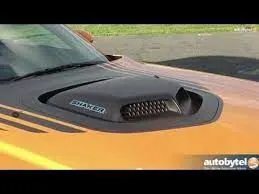
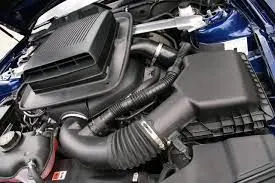
b. Shaker Scoops Named for its tell-tale rumbling while the engine is running, shaker scoops are attached directly to the engine. Since the extra air is expedited to the parts that need it most, they are great at reducing heat and improving performance. Even the best shaker scoop is incredibly noisy, though, and larger ones may obstruct a bit of your view.
c. Intercooler Scoops
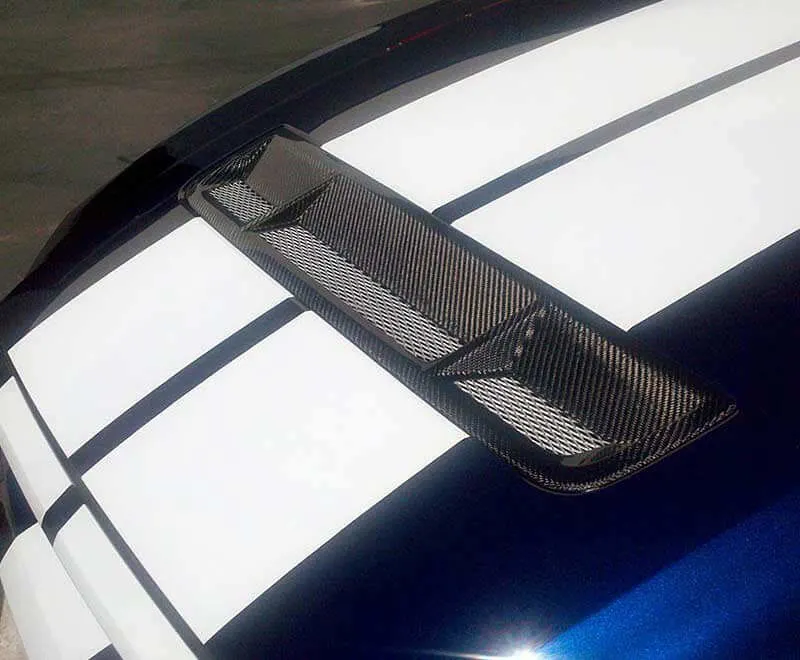
Turbochargers allow vehicle designers to either improve overall performance or get the same performance out of a smaller engine. The extra oxygen along with the fuel creates a more powerful explosion with a lower quantity. An intercooler scoop is similar to a ram air scoop, but the air is directed to the turbocharger to cool it down from the hot gasses that power it.
3. Louvre Vents
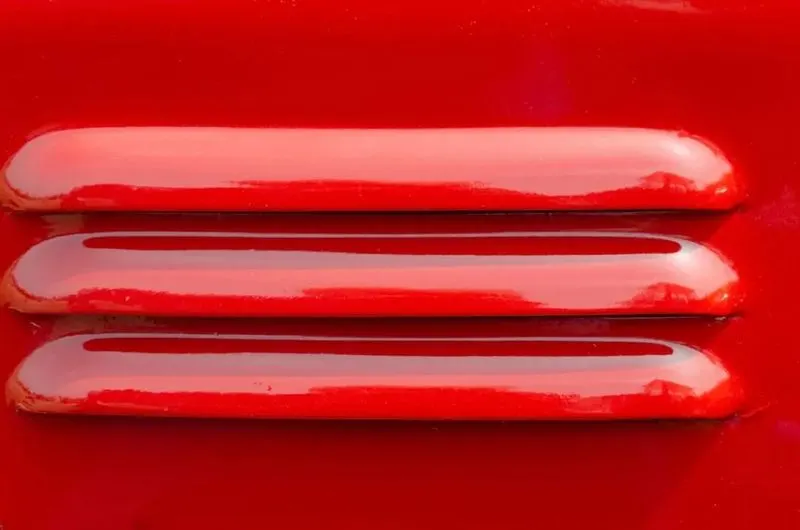
More cool air into the engine is good, but extra gunk carried in the wind can inhibit performance and cause damage. Louvre vents in a vehicle’s hood allow the hot air inside the engine to go up and out of the compartment. They also keep any debris from falling into the engine through the opening. Installing them does require permanent hood modification, similar to installing smaller scoops, but it can be done with minimal cost or experience.
4. Hood Locks/Latch
A car that looks like it’s seen a lot of care and attention will indicate to potential thieves that there might be something valuable under the hood. There is plenty of damage that can be done without getting into the hood, and an intelligent thief who was determined can eventually bypass the lock.
Still, hood locks add an extra sense of security and an indication to potential thieves that you are likely to have other security methods, stopping them from even trying.
5. Hood Ornaments
For something that represents a significant investment of time and money, a little vanity is warranted. An ornament is like a figurehead for your land cruiser, so it can convey a lot of personality but gives no performance benefits.
Stiff ornament stands can cause additional damage in the case of an impact, so opt for a collapsing stand, check your local regulations, and use common sense before sticking extra dangerous options on the front of your vehicle.

DESIGN AND DEVELOPMENT
1. Ergonomical Considerations Automotive ergonomic is the study of human comfort for automotive design. The human comfort factor for automobile design is first consideration. It is a method to safeguard and protect space for the human user and necessary components that make up the vehicle being designed. Other purposes are provided by alternative solutions and proposals. Ensure the all safety regulation requirements are meeting. The following aspect considered during primary hood assembly design.
- Head Clearance
- Hood Opening Angle and Location of Support Rod/Gas Stay
- Latch Operation Full opening angle is mainly depending on the head clearance criteria, geometry of hood assembly and hinge assembly. As per benchmarking study the angle is 60 to 65degree.
2. Consideration of Noise Vibration Harshness (NVH)
Noise, vibration, and harshness (NVH), also known as noise and vibration (N&V), is the study and modification of the noise and vibration characteristics of vehicles, particularly cars and trucks. While noise and vibration can be readily measured, harshness is a subjective quality, and is measured either via "jury" evaluations, or with analytical tools that can provide results reflecting human subjective impressions.
3. Carry over Study
In this type of study, we take previous generations car with all dimensions, benchmarking, sketching, car defects, customer reviews regarding the design of car to improve in the upcoming design and car modifications.
4. Manufacturing Aspects
The most important design consideration of any component is manufacturing aspect. In sheet metal, the component is manufactured by press tool dies. The Press tool is stamping which includes cutting operations like shearing, blanking, piercing etc. and forming operations like bending, drawing etc. The main focus of manufacturing aspect is to manufacture hood assembly with minimum operation sequence and process time. Following aspect are considered for the primary design of hood assembly.
- Tooling Considerations
- Hemming Considerations
- Mastic Glue Joining Operations
5. Check Points
In hood assembly, design has done as per the styling and given constraint surrounding data. Checking of hood assembly is necessary for conformation the design to satisfying all functional requirements. Following points are consider during checking the hood assembly.
- Swing study with nearby body parts
- Over slamming considerations
-
Main objective of this study is maintained the proper clearance during working. The swing study of hood assembly is mainly focus on rear side clearance. There is more overhang area on rear side of hood assembly, i.e. reason for chance for clash or close clearance with other part. Due to over slamming of component may be sagging and rattling in feature. It may be causes car of shutoff. This study has done for overcome of this problem. The more distance from bump-stop to outer edge is main reason for this problem.
6. Regulations
Regulations are the requirement of any industry to sell the product in market. In automobile industry regulations are flexible as per market to market. They are usually mandatory by New Car Assessment Program (NCAP) and Electronics and Communication Engineering (ECE) of a government rule. The regulation aspects such as vision zone, crash test, environment protection and theft protection are to be considered. In hood design there are two tests are mandatory on part level as shown in below.
- Forward vision regulation
- External projection regulation
7. Pedestrian Safety
Pedestrian disability and fatality as a consequence of car crashes is a large global health problem. To introduce maximally effective car-based counter measures it is important to understand which injuries are most common and from which car parts they originate. It is also important to focus on the most severe injuries resulting in disability or death. For the surviving pedestrians an estimate of long-term injury was performed using accident data derived risk matrices of permanent injury. Results showed that 31% would sustain a permanent impairment of some kind and 5% would sustain a more severe impairment, where the head was most susceptible to severe impairment. The car front frequently caused leg injuries, which is addressed in current regulations.
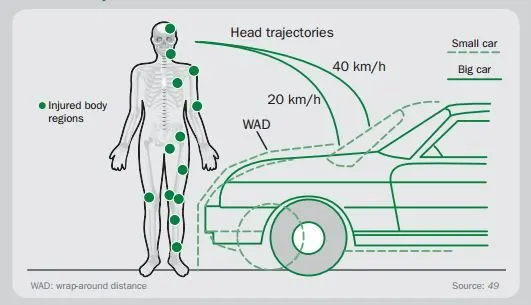
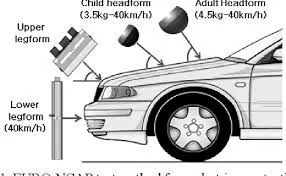
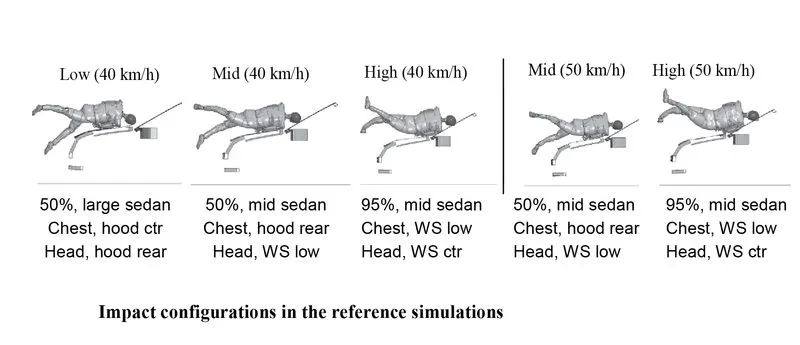
However, current legal tests do not address the most common upper-body injury source, the windshield, which was found to be the dominating cause of head injuries. Chest injuries, frequently caused by both the hood and windshield areas in the severe and fatal crashes in are also unaddressed in legal tests. Children are most commonly head-injured from the hood area, which is addressed in current regulations. Further, regulations do not fully consider brain injury with the current head test methods.
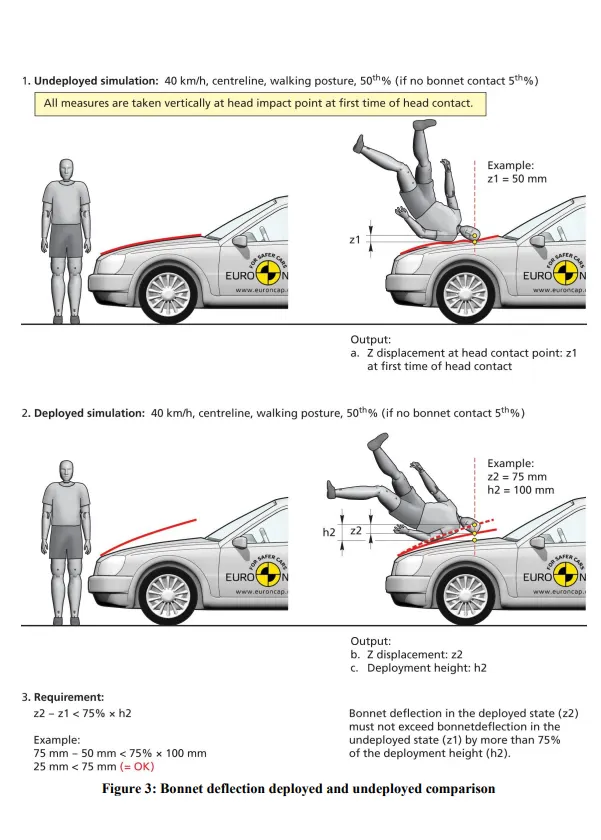
Experimental head-to-hood component tests with succeeding brain simulations were performed to evaluate the influence of the under-hood distance and head impact speed. A hood designed to minimize linear head loading to acceptable injury levels was also found effective in reducing combined linear/rotational brain loading. Further, in full-scale car-to-pedestrian finite element simulations both a braking and deployable system alone proved efficient in reducing head and chest loading, and an integrated countermeasure of combining the two systems proved to increase the protection potential.
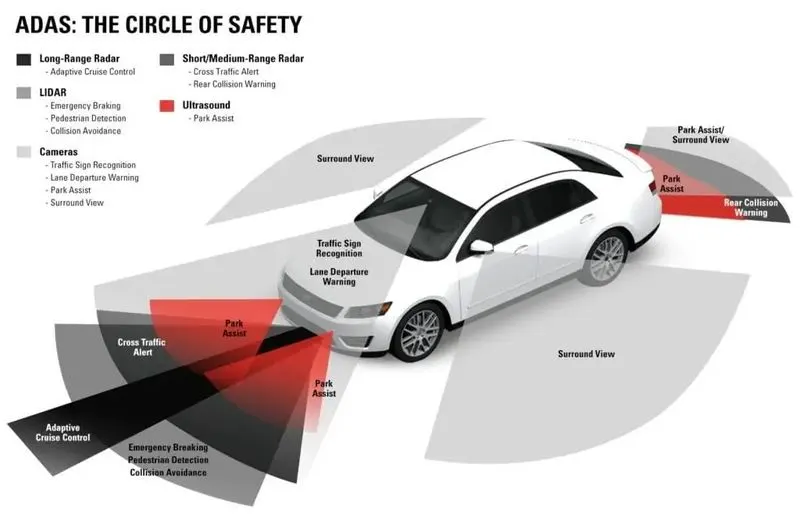
While current pedestrian countermeasures focus on the head-to-hood impact, this extending countermeasures to the lower part of the windshield and the A-pillars, and adding brain and chest injury assessment for both hood and windshield areas to effectively minimize disabling and fatal injuries. Since head impact location and head impact speed is dependent on the car design, the introduction of full-scale simulations in the test methods to determine impact conditions for experimental component tests is recommended. If the deployable countermeasures are combined with autonomous braking in an integrated system the most effective system is achieved. Auto-brake systems should, in high speed impacts, aim to reduce speeds to where the secondary counter measures can effectively mitigate injury.
COMPONENTS OF HOOD
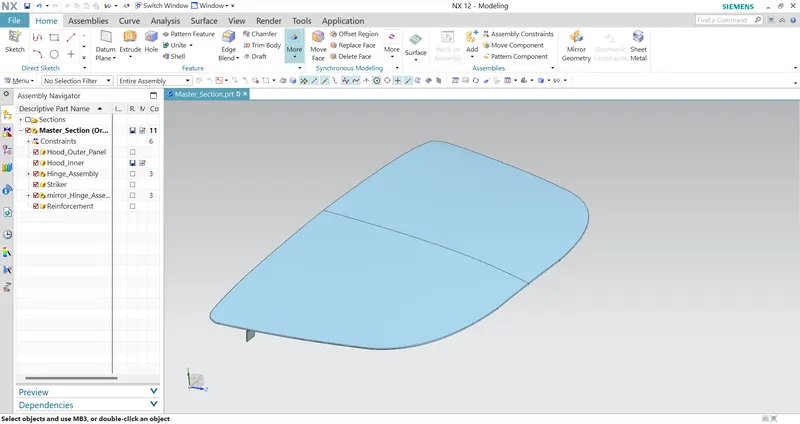
1. Hood Outer Panel
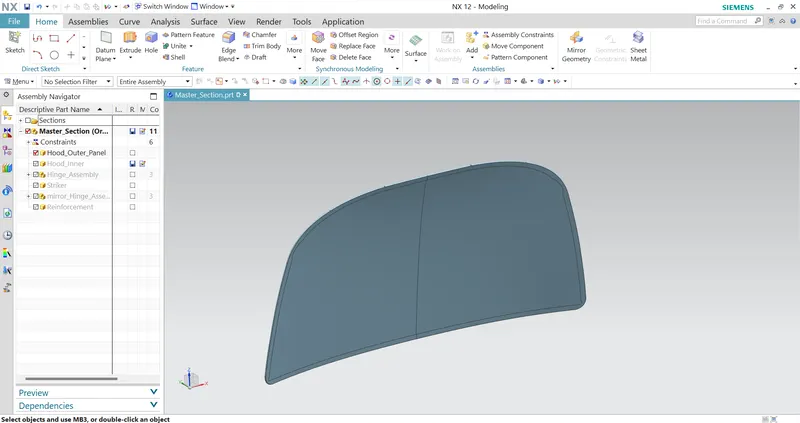
Outer panel is nothing but a outer skin of inner panel. Otherwise called as a cover of inner panel. It is the part, which gives luxurious look to the hood or bonnet. Outer panel and inner panel cannot join by any welding process like spot welding or rivet, which spoil the outer look of a car. The outer panel is generally extracted model from the prototype design. Outer panel of hood and inner panel are joined by mastic sealant.
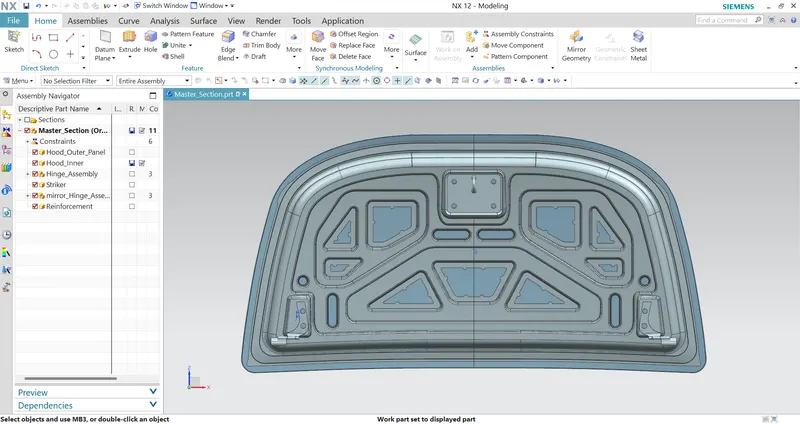
2. Hood Inner Panel
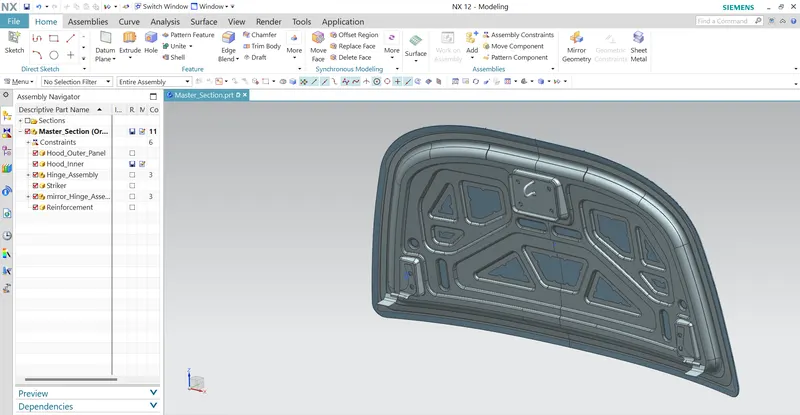
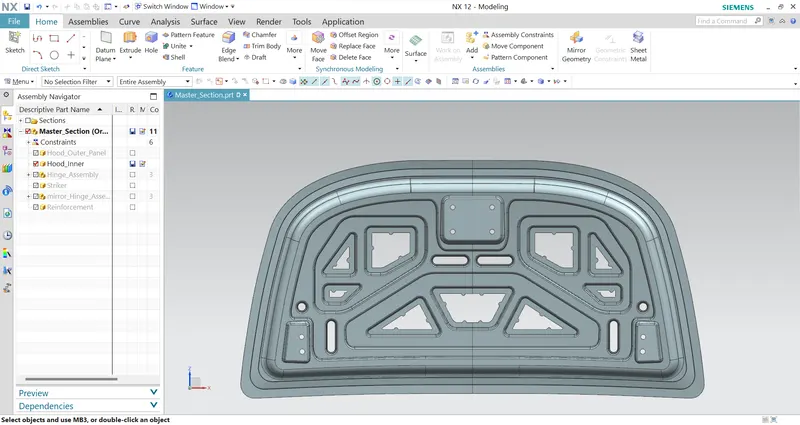
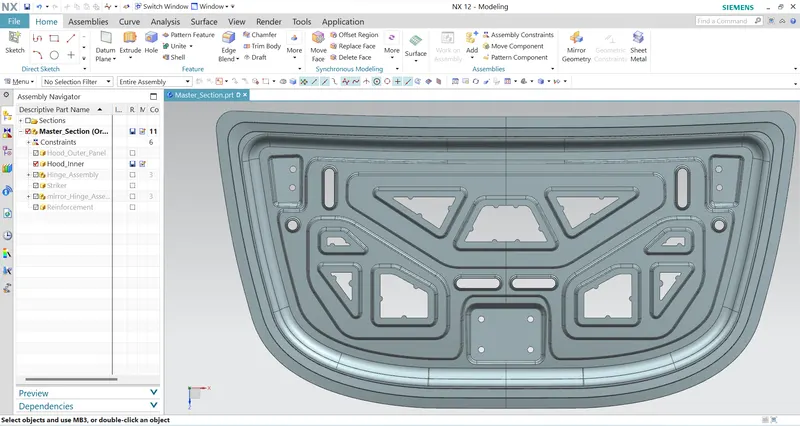
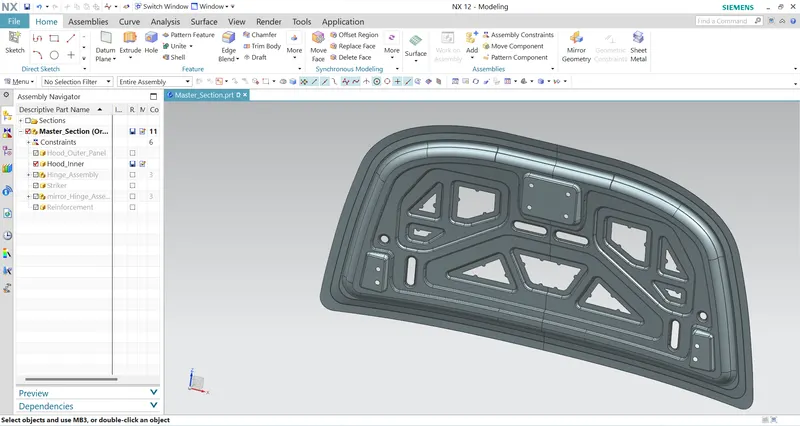
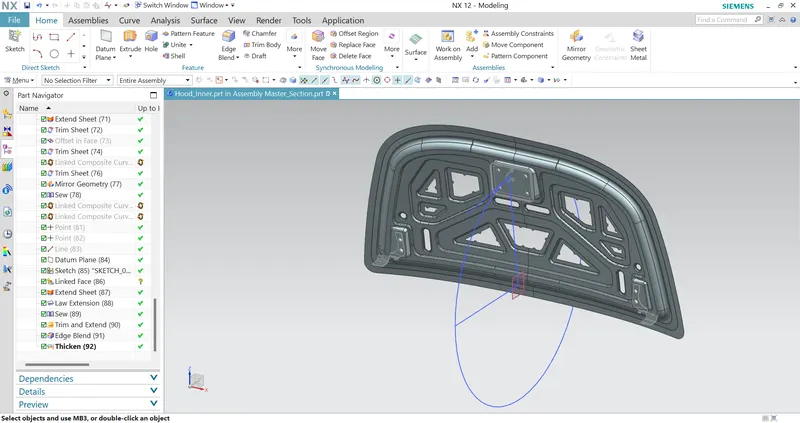
We can research & implement the safety of pedestrians & as well as the driver. In this panel attachments like reinforcement, embossed, mastic points, hinge assembly are being attached. Inner panel supports outer panel. It consists of different embosses and hole at different places. Embosses provide stiffness as well as dissipate energy towards hinges. To determine the most effective position of hole, the method of model stiffness is employed. Inner panel is offset of the parent work surface. Inner panel thickness is 0.75mm.
It is an object of the present invention to provide a hood inner panel capable of reduction of a reaction force of the hood inner panel even if a level of deformation of a hood of a vehicle increases, & ensuring a sufficient energy absorption capacity.
3. Reinforcement
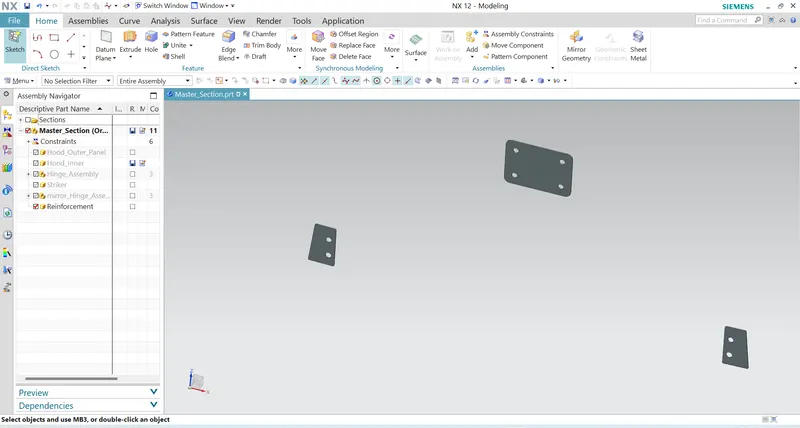
- Reinforcements are provided according to the design requirements. Mainly it is provided at the hinge and latch regions to improve the strength locally. Usually thickness of reinforcements will be higher than that of the inner panels and the value varies according to cost and requirement. According to the design requirement here it is given 1.5mm thickness to both hinge and latch reinforcements.
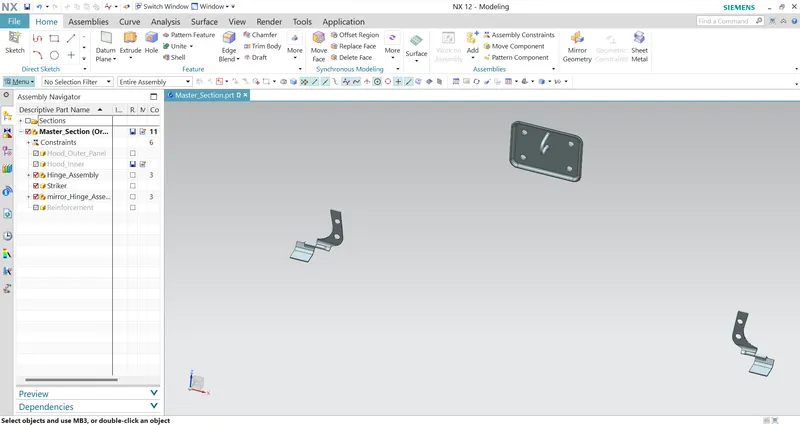
- Latch & striker is used for locking the hood with the car. It is usually placed on the space provided on the inner panel.
- Hinge is a component that fixes the hood to the fenders of the car. The latch must be fixed perpendicular to the hinge axis so that the hood opens or closes properly.
MANUFACTURING PROCESSES INVOLVED IN HOOD DESIGN
1. Deep drawing
Deep drawing is one of the most widely used processes in sheet metal forming. Apart from its use in many other sectors, it is applied in the automotive industry for the manufacturing of car body parts. The deep drawing process is a forming process which occurs under a combination of tensile and compressive conditions.
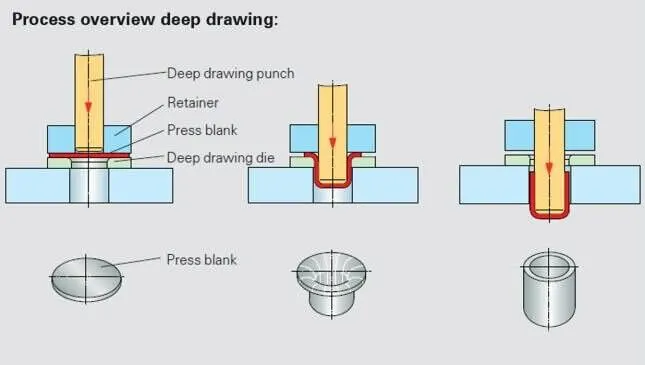
Sheet metal blank is radially drawn into a forming die by the mechanical action of a punch. It is thus a shape transformation process with material retention. The process is considered "deep" drawing when the depth of the drawn part exceeds its diameter. This is achieved by redrawing the part through a series of dies. The flange region (sheet metal in the die shoulder area) experiences a radial drawing stress and a tangential compressive stress due to the material retention property. These compressive stresses (hoop stresses) result in flange wrinkles. Wrinkles can be prevented by using a blank holder, the function of which is to facilitate controlled material flow into the die radius.
2. Embossing
We provided different embosses to the inner panel. We can increase the stiffness of the inner panel through these embosses. The shape and size of the embosses also determines the direction of the force distribution resulted from frontal collision. The force should be always distributed away from the passengers.
3. Hemming Process
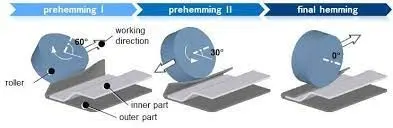
Hemming is a forming operation in which the edges of the sheet are folded or folded over another part in order to achieve a tight fit. Normally hemming operations are used to connect parts together, to improve the appearance of a part and to reinforce part edges.
In car part production, hemming is used in assembly as a secondary operation after deep drawing, trimming and flanging operations to join two sheet metal parts (outer and inner) together. Typical parts for this type of assembly are hoods, doors, trunk lids and fenders.
The accuracy of the hemming operation is very important since it affects the appearance of the surface and surface quality. Material deformations, which occur during the hemming process, can lead to dimensional variations and other defects in parts. Typical hemming defects are splits or wrinkles in the flange, material overlaps in the corner areas or material roll-in. This is why it is important to use simulation tools in order to, on the one hand, better understand the hemming process and, on the other hand, significantly reduce the number of “trial and error” loops during try out and production.
There are various types of hemming operations
- Conventional hemming
- In conventional die hemming, the flange is folded over the entire length with a hemming tool.
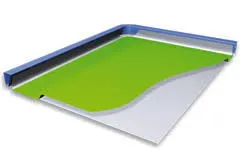
- Conventional die hemming is suitable for mass production. In die hemming, the flange is folded over the entire length with a hemming tool. Normally the actual hemming is a result of a forming operation in which the flange is formed with a hemming tool after the drawing and trimming operations have been completed. The formed flange is then hemmed in several process steps. These steps include, for example, the pre-hemming and final hemming depending on the respective opening angle of the flange. Production plants for conventional die hemming are very expensive, but the cycle times are very low.
- Roll Hemming
In roll hemming, the hemming roller is guided by an industrial robot to form the flange.
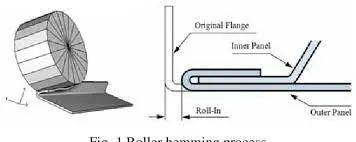
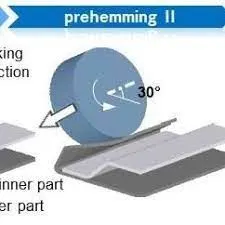
Roll hemming is carried out incrementally with a hemming roller. An industrial robot guides the hemming roller and forms the flange. Roll hemming operation can also be divided into several pre-hemming and final hemming process steps. Roll hemming is very flexible to use and tool costs are significantly lower as compared to those of conventional die hemming. However, the cycle times are much higher since the hemming is realized using a hemming roller which follows a defined path.
4. Mastic Sealant
The sealant is applied around and inside the doors, hood, trunk, and front dash, and onto the exterior and interior of metal joints and outer area of the back wheel well, application of the sealant is accomplished either manually or with robots and prevents air and water ingress and inhibits rust formation. Recently, PVC and acryl/urethane sealants have also been used in the underbody areas, a process called the Dampening Coat (DC), to impart noise-proofing and vibration-deadening.
The noise and vibration are transferred from the engine, drive train, suspension system, road noise of the tires, and flowing air, and the underbody sealants reduce noise transfer into the passenger compartment of the automobile.
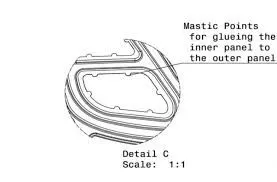
We cannot use other joining techniques like welding, riveting etc because they leave marks on the outer panel which spoil its aesthetic appearance. So, mastic sealants are used to stick the inner surfaces of outer panel and inner panel. Mastic sealants are elastic compound that behave like rubber. It is applied between the inner and outer panels at specified spots. Each spot of mastic sealants has its effect around a circular region of 80mm diameter. Thus, the mastic points are arranged in such a way that it covers the areas away from the hemming which are more vulnerable to vibrate.
Conclusion
The parts of the hood are designed based on the required conditions & given dimensions. With the completion of hood design & analysing for successful manufacturability. we can conclude that the hood can be utilized for the vehicle.
Also, considering the safety of occupants & pedestrians the hood has been designed under the Euro CAP safety regulations.