Underbody Coating
Under-body coating:
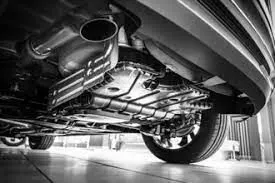
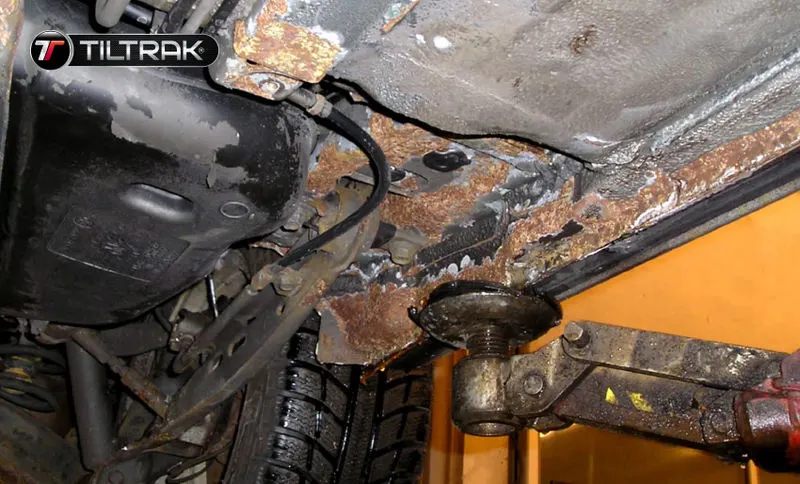
Underbody coating is the coating which is applied benath the vehicle, to protect from rust mainly and to protect itself from harshness from various weather, since its exposed to various weather the whole year, especially during monsoon, heavy preciptation causes floods, this causes heavy corossion in underbody and snows in snowy region.
In brief,its a dense cladding applied uniformly to the undercarriage of the automobile. It is normally sprayed or painted on when the car is new, it can also be applied to used one, it still protects from further damage. This extra protection of vehicle will pay off with low cost by extending the lifetime to an extent.
The main advantages of Underbody coating is
- Prevents from Rust/ corrosion.
- Reduces NVH Level-sound deadening.
- Prevents paint chipping.
- Reinforcement
Rustproofing:
Rustproofing is a process that involves the application of rubberized sealants or any number of other rust-repelling coatings on corrosion-prone surfaces. Some of the common areas that get rust-proofed include the undersides of fenders, weld points and seams, fuel tanks, suspension arms, axles, rear differentials, and chassis cradles.
Vehicles underbody are prone to corrosion mainly due to monsoon and in coastal region- humidity in such areas speeds up the process for corossion and even in snow region.
NVH Level:
This would be astonishing to many hearing this,that the underbody coating would also prevent the sounds it act as sound deadening media,that depends on the type of undercoat used, mainly rubber based. undercoating do reduce road noises to some extent.
Paint chipping:
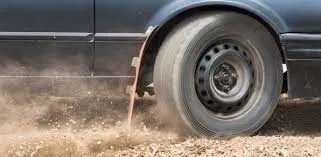
There are n number of foreign particles, small stones in road which is constantly prone to hitting the underbody and causes damages to paint and thin layer gets damaged and exposed to air and leads to corrossion, if its not properly maintained, it leads to damage the whole layer of metal.
providing the underbody coating /anti chip layer, acts as a elastic layer of paint and provides a resistance to the small stones or foreign particles and stops the chip-off.
Reinforcement :
car comes with factory underbody coating, using another coating on top of it, is an added advantage . It will offer additional reinforcement, protecting the underbody from water, road debris, gravel and small pebbles. There would also be a lesser chance for the factory coat to flake away.
Types of underbody coating:
The types are mainly classified based on the material used, the classification is as follows,
- Rubber based underbody coating
- wax based underbody coating
- asphalt based underbody coating
- polyurethane based underbody coating.
Rubber based Coating:
These type of coating is best suitable for cars, and it also protects from scratches, applying this type is easier.
wax based coating:
This ephemeral based coating , which last only for few months and acts as an affordable option and acts good against moisture.
it can be opted if we are looking for short duration.
Asphalt based coating:
These type of coating highly suitable for large trucks and contains elastomers which acts against chip off and road noise.
applying of this type is little tedious than the other two.
poly-urethane based coating:
This coating closes up splits and fractures on the underbody of the vehicle. It offers up good protection against corrosion and also bonds with the metal. Unlike in the case of asphalt-based coating, you can paint over the polyurethane coating.
Bitumen-based coating:
These underbody paint systems provide hard-wearing protection against stone chip damage and corrosion. They also have sound-deadening properties, but cannot be overrated.
Lanolin based coating:
this is another surprising and little weird type of coating is lanolin based , which is derived from sheep glands. Commercially, lanolins are used as both a rustproof coating and as a lubricant, with everything from ship hulls and rigging equipment, to heavy-duty excavation machines are relying upon this water-repelling corrosion inhibitor.
Coating applying procedure:
- Lift :The car is lifted on a lift and the underbody is inspected for any damages,
2) Clean: The under body is cleaned removing out the dirt and grease,can have a basic clean ,if its new.
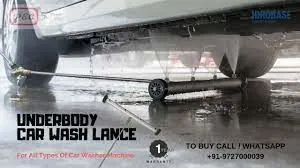
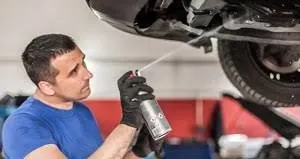
3) Blast: Spray the entire underside of the vehicle with a pressure washer, or a garden hose that has been outfitted with a heavy-duty spray nozzle hit every crevice and corner you can find, especially on old vehicles as junk will be high.
4) Degreasing: To rinse completely and allowed to dry, and e to use a degreaser to remove any grease or oil beneath the vehicle. This helps in proper coating and life
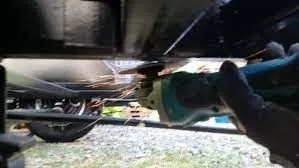
5) Grind/ sand: To grind using higher grit buffing wheel and to remove any hard chunks or blocks of rust, either to use sand paper and rub all over the metal with rust
6) Masking: Critical components and plastic parts and edges of BSO are covered in a film by masking to avoid the coating from sticking to it
7) Coating: Rest of the under body is spray painted evenly.
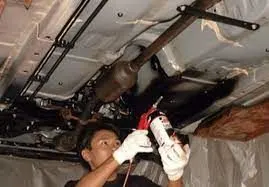
8) Unmask:The silencer film/ masking is removed.
9) Inspection: Final inspection is done to look out for the application.
Pros:
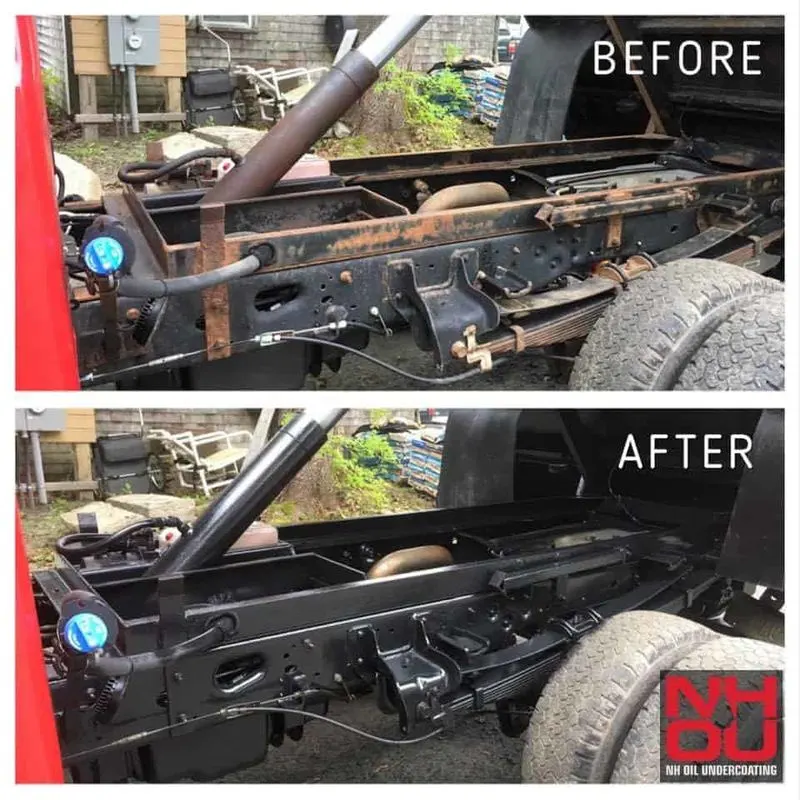
1) Prevents from corrosion, with respect to weathers, coastal areas ,monsoon and snowy region, other than weather, it also helps for trucks carrying Coals or any chemical as they are very prone to rust and to be frequently monitored than the rest.
2) Prevents from chip off of paint, as its frequently hit from small pebbles and foreign particles from road, the rubber based elastomer coating helps to resist against it.
3) Sound deadening , coating reduces the sound deadening effect as it dampens to an extent.
4) Applying of coating is an easy process ,no need of highly skilled labour, properly trained person is fine.
5) Extends life time and value, the coating helps in postponing of underbody detioration which extends the life of vehicle and thus increases the value.
6) many third party companies are providing the service at an affordable cost.
Cons:
1) It wont help any to existing rust or damage, as the damage has already happened, only it protects from further damage. it works best for new vehicle
2) coating has to be checked frequently ,as its not like applying once and left for a lifetime, it has to be frequently monitored for the damgage, it varies upon weather and road conditions.
3) applying with third party might void the company warranty.
4) it adds slight weight to vehicle, which is negligble considering fuel economy or any.