Thermal Management
1) Differentiate between the embedded C programming and model based system approaches.
2) Draw a high-level schematic of a remote controller toy car system. Explain the working principle of the toy car system. What are the differences between a remote control toy car and an actual electric vehicle? State its limitations.
Schematic diagram:
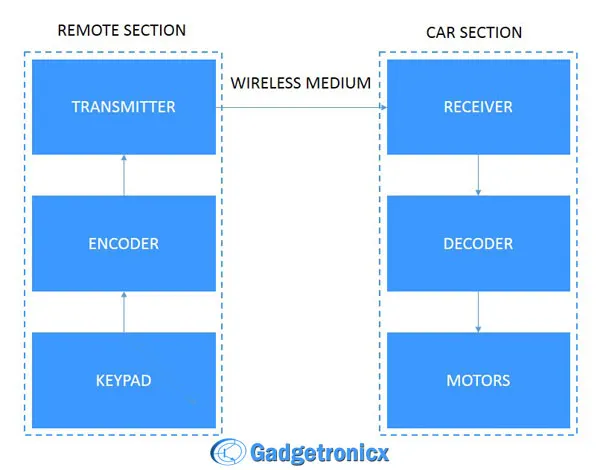
Working principle of RC toy car
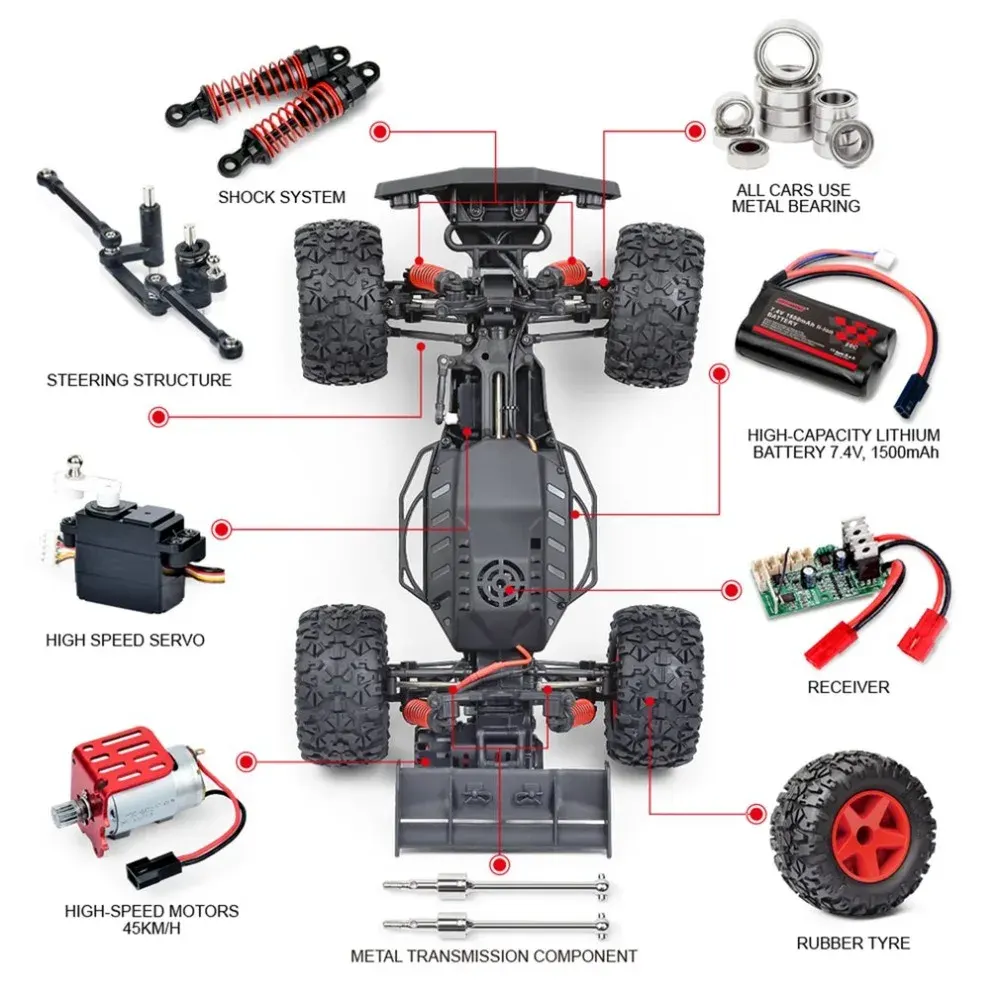
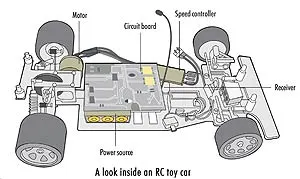
The basic principle behind any remote-controlled (RC) device is that the user holds a remote or transmitter which has several buttons and each button corresponds to a different command that is given to the RC device via radio waves. Every device relies on the basic few parts to achieve movement from point A to point B, including RC cars:
i) Power source - usually batteries in RC devices
ii) Motor - to move all the parts
iii) Transmitter - found in the remote
iv) Receiver - found in the car, it is the circuit board and antenna which receives the directions from the transmitter to control the car
1) The remote controller is pressed to transmit signals. It will only function if it has a power source.
2) This automatically is received by the receiver in the car, which then activates the motor and circuit board present in the car via radio waves. The receiver is constantly scanning for signals from the transmitter which is why it can instantly follow commands that are given.
3) The power source in the car sends power to all moving parts through the motor and the circuit board translates all the analog electrical pulses into action.
4) The motor is a two quadrant DC motor control, which allows the remote controller to move the car in forward and reverse direction. Turning left and right is done through gear mechanisms connected to the servo motor.
How is it different from an actual electric vehicle and what are its limitations?
On a basic yet fundamental level:
| Functions | RC toy car | EV |
| Movement of the car | Buttons need to be pressed on a joystick to move the car in the required direction | Throttle/Brake and Steering combination |
| Signal transmission to the motor | Antenna and Radio waves - radio wave signals are generated in the form of electrical pulses that travel through the air and activate the motor | ADC and PWM - when the throttle/brake is pressed, the analog signal from the respective actuator goes through an ADC to be fed into the PWM, which through a duty cycle ratio controls how much power the motor should produce |
| Motor type | Two quadrant + Servo - for forward and reverse motoring, and the servo for turning left and right | Four quadrant - forward and reverse motoring, forward and reverse braking |
| Gear transmission system | Single gear - speed and torque cannot be varied, thus the speed of an RC toy car can't be changed | Continuously variable transmission/multiple gears - to vary the speed and torque given to the wheels to make the vehicle go faster or slow |
| Braking system | No braking system; either on standby or at full speed and thus uncontrollable | Hydraulic and mechanical brakes |
| Chassis, frame, outer body | Mostly made of plastic, easily damaged and breakable | Steel or aluminium alloys for chassis, aluminium and carbon composites for body |
3) Explain the cooling technologies of a power converter. Take an example of a system and assume the efficiency and other parameters.
Any technology, whether a battery or a DC/DC converter, will work at its peak only in the presence of good thermal management in place. Most, if not all, of the excessive heat needs to be removed for these devices to deliver its rated power.
Within converters, more than 85% of the heat usually comes from power semiconductor devices such as MOSFETs/IGBTs, Diode, BJTs, etc. Thus, major cooling techniques are focused on removing the heat from these devices within the power converter.
Thermal transfer cone
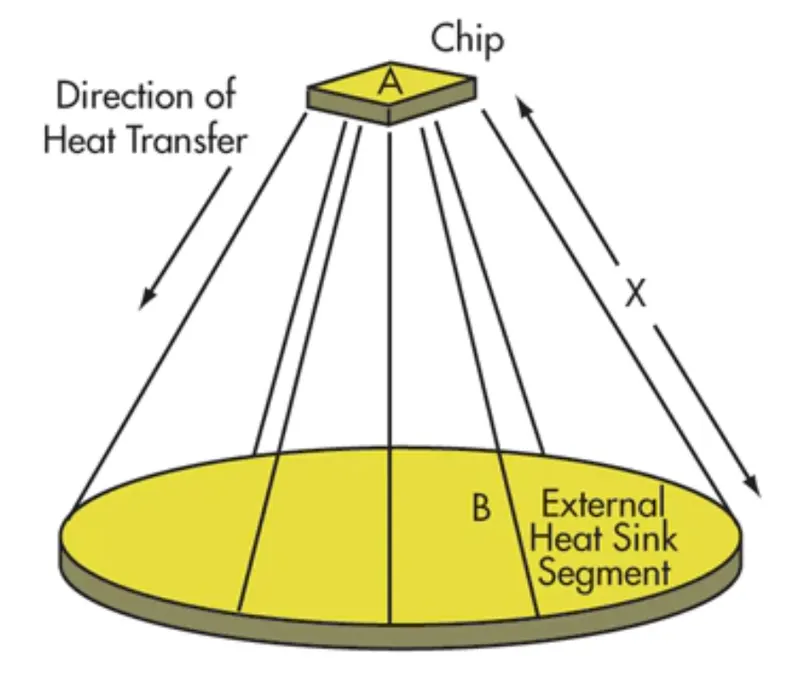
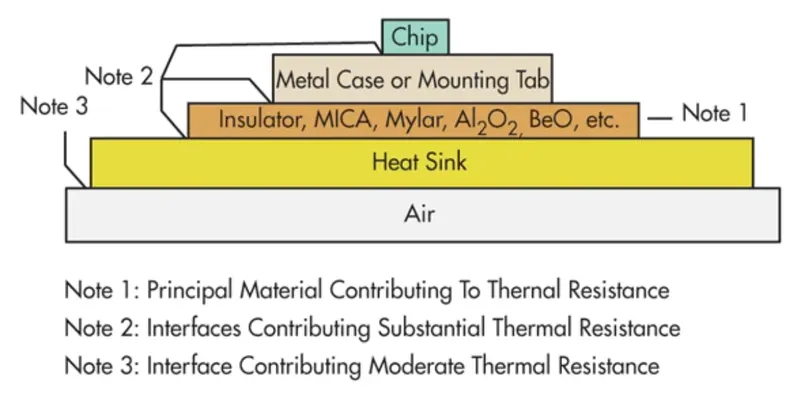
Internal heat is never actually perfectly distributed and there are always hotspots available. The first figure above shows how heat travels from a point source (such as a chip within a MOSFET) to its heat sink in an outward conical path.
How effectively the heat travels from source to the surrounding air is dependent on thickness, area, and thermal resistance of everything in between.
The actual thermal resistance of a given thickness of material becomes less important the more it is at the wide end of the heat travel cone. This means that an infinite amount of heat sinking and airflow cannot keep the chip cool if the chip-to-case and case-to-heat sink surfaces have excessive thermal resistance. In some applications, the simple change to a chip of larger area and reduced thickness of other in-betweens could have more effect than an exotic fan, heat sink system, and even the type of materials used.
Cooling methods
- Use a large metal enclosure to expose more of the heated metal surface to the air, essentially enlarging the conical heat pipe diameter at the open end of the thermal cone. This option may not be available in a high-density converter because by definition, the high-density module footprint is probably small
- Forced convection: Blow air across the baseplate or metal surfaces of the case. The additional air turbulence at the metal surface speeds up the heat removal process by enlarging the heat cone’s large-end diameter
- Enhanced natural convection: Attach the baseplate to a finned heat sink across which air is blown. Cooling with finned heat sinks is generally the most effective practical cooling scheme for converters
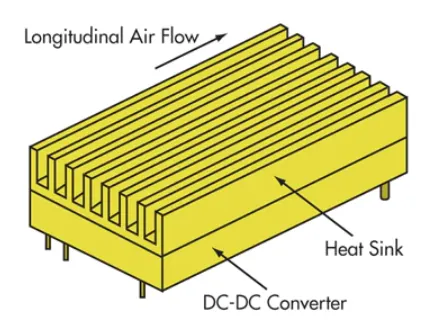
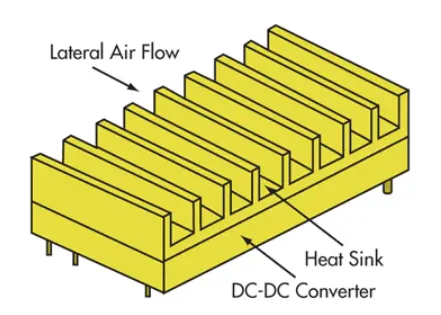
Example: MGDM-10 series DC/DC converters
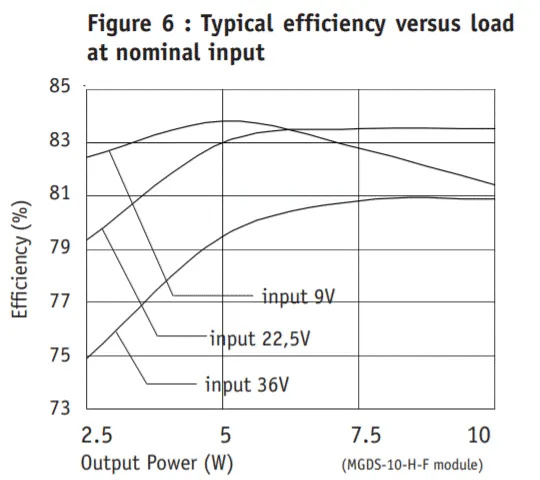
The figure above shows the efficiency vs load for one of the MGDM-10 series modules.
For an input of 22.5V:
`P_(dissipated)=P_(out)(1/(eta)-1)`
`P_(dissipated)=10(1/0.81-1)`
`P_(dissipated)=2.35W`
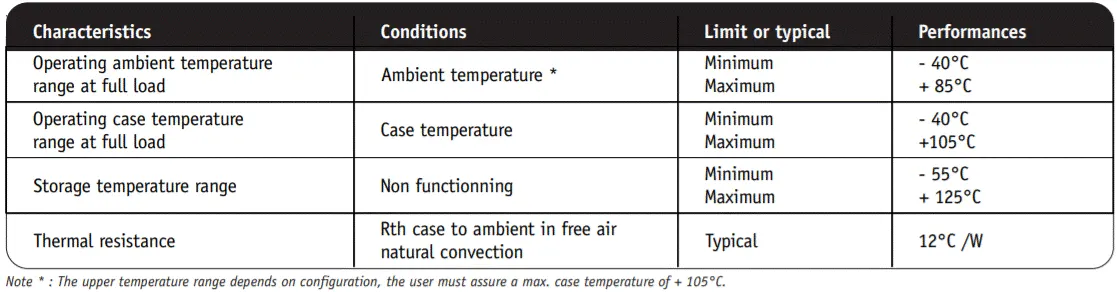
The MGDM-10 series operating case temperature must not exceed 105°C. The maximum ambient temperature admissible for the DC/DC converter corresponding to the maximum operating case temperature of 105°C depends on the ambient airflow, the mounting/orientation, the cooling features and the power dissipated.
`T_(ambient)=105C-R_(th)*P_(dissipated)`
`T_(ambient)=105C-(12*2.35)C`
`T_(ambient(max))=76.8C`
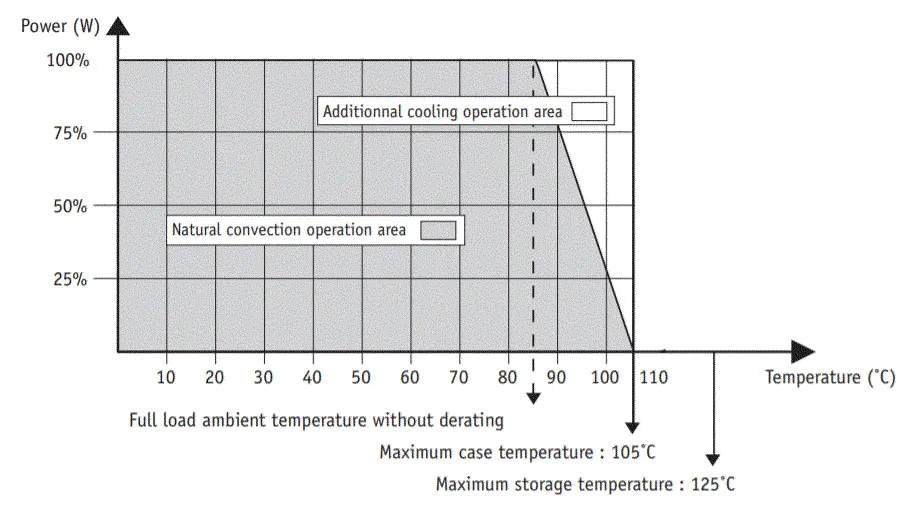
The figure shows two zones:
- The maximum ambient temperature possible in a natural convective environment when maximum case temperature allowed is 105C. Realistically, with the max ambient temperature in this case calculated as 76.8C, there is plenty of margin as the ambient temperature is rarely goes above 45-50C
- There is also an additional cooling operation area to ensure the maximum case temperature stays below 105C
4. Refer to the link and summarize the content.
Tesla Model S' thermal management system:
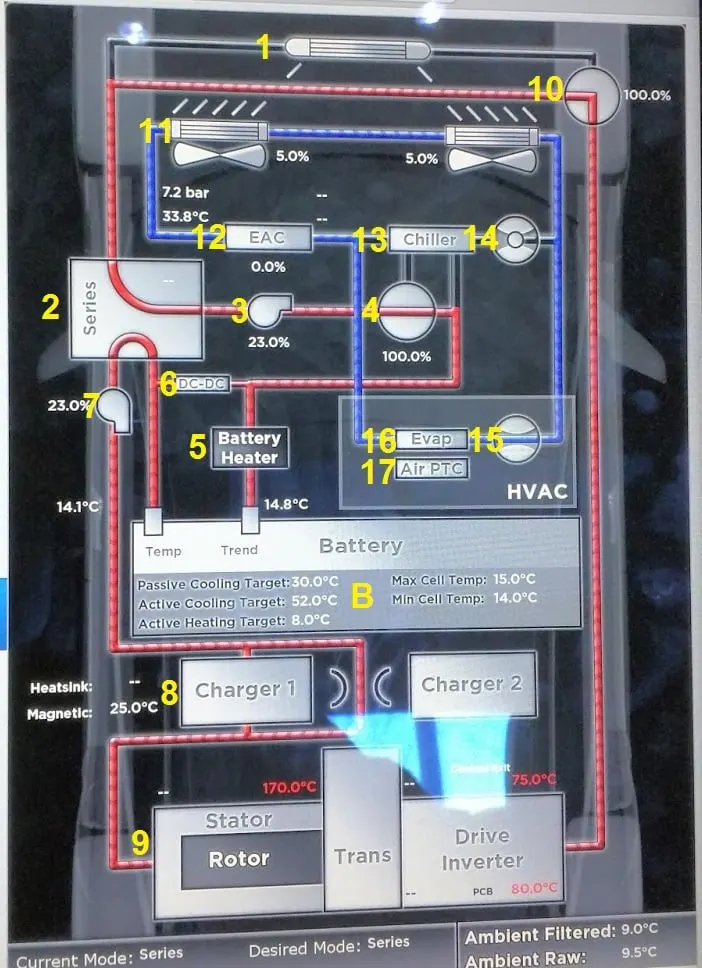
#1. Main coolant radiator. Does not have a fan. When vehicle is moving, air passes through cooling the Coolant. Coolant enters from the right. This radiator can be bypassed with device #10. This is important, as when temperatures are very cold, bypassing the radiator will keep your battery and motor from cooling further rather than warming up.
#2. Coolant circulation mode selector. A device that switches between two modes: Series and Parallel. If in series, coolant passes from #1 to #3 and then from B (Battery) to #7. If is parallel, one loop passes from #1 to #7 and other loop from B to #3.
#3. 12V coolant pump. The % indicate pumps running speed. Slower pump speed uses less energy, prolongs pump life and slows the coolant flow. Full speeds are generally used during supercharging to maintain cooling to batteries.
#4. Adjustable coolant redirection valve. Sends 100% of coolant from #3 to #5, 100% form #3 to #13 or anything in between. Thermal management will determine this based on ambient temperature, battery, cabin, and motor temp.
#5. Coolant heater. Model S and X are rated for 6kW though can also run at 3kW. The coolant heater is a resistive heater that Runs on high voltage. Once activated, coolant will be warmed, and begin to flow through the battery pack. This is used to heat the Battery fast. Heat generated by #6 #8 #9# can also be used to for pack heating, through the use of those devices waste heat. Though that heating is minimal due to efficiencies of those units. A Cold pack will also cool down those devices. The Coolant Heater can be “disabled” by activating the Model S or X Range Mode. The Coolant Heater will bring the battery up to 32*F/0*C or slightly higher to allow Regen and Charging. If Range Mode is turned ON, the coolant heater will not come on until approximately -10*F or -23*C, saving a considerable amount of power if charging or regen is not needed (In general, you will save more power than regen will gain you back by disabling pack heater). Plugging in the car and starting charging will over-ride range mode setting and heat pack to needed temperature. It will draw power from Grid to heat pack while plugged in.
#6. DC-DC converter. Takes energy from high voltage pack, and steps it down to 12v (High Voltage pack is 350-404v fully charged depending on battery & trim level). This keeps the 12V battery charged and all 12V devices powered up. A more limited amount of coolant is directed through this unit, as heat generation is low, and power output of this device is variable (So only what is needed is converted, thus reducing heat build up).
#7. 12V coolant pump. This pump is required to keep the second loop of coolant flowing if #2 is in parallel mode. Acts as a backup to #3. In series mode both pumps run at equal speed. In Parallel, pumps run at speed that's required for that specific system's cooling. Some early Model S's are said to have 3 pumps, my original MS60 I was told did when it had pump 2 replaced in 2013 by mobile service. Design changes are constant. Car will still be operational with a single pump failed, however, the car may run at reduced performance and services, and supercharging may be unavailable due to excessive heat build up.