Structural dynamics
1)
The difference between static and dynamic analysis its difference in time.
Static analysis Dynamic Analysis
The load is applied so slowly The load is applied instantly
Inertia effects won’t play a role Inertia effects plays a main role
Motion can be disregarded Motion cannot be disregarded
Structure deformation is linear Structure deformation is non linear
Eg. Dead load Eg.Wind load
2)
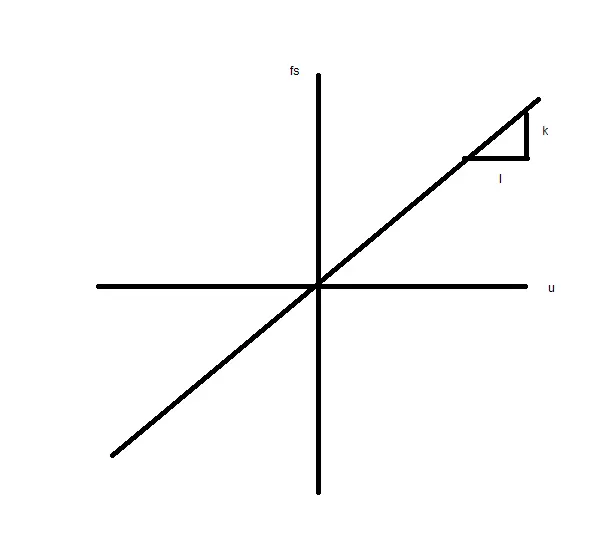
The linear system relation between static force and displacement is linear i.e fs=ku
where
- K = lateral stiffness of the structure
- u = Displacement
the loading and unloading curves are identical such the system is said to be linear elastic
2)
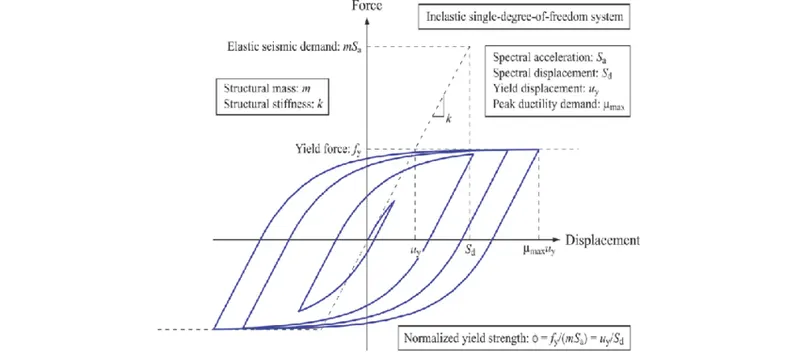
The material response is non-linear and that retains a permanent strain or returns to an unstrained state on complete unloading.
3)
The material deforms irreversibly and does not return to its original shape and size, even when the load is removed. When stress is increased beyond the elastic limit, the material undergoes plastic deformation.
4)
Force displacement is non linear and becomes inelastic ehen subjected to large deformations i.e fs=fs(u,v)
Unlike elastic deformations , inelastic deformation dpends on history of deformations earlier
3)
There are three systems when it comes to single degree of freedom
- The stifffness component- This is the frame without damping or mass , the external forces fs on the stiffness componenet is relaed to displacement by u by fs=ku
- The Damping component -: Any system experiencing vibration comes to rest after a period of time wihtout any external force.This is due to damping property of the structure and is represented by fd=cv
- The mass component = The mass component is related to acceleration by fi=mu
4)
The time required for the undamped system to complete one cycle of free vibration natural period . It is related to the natural circular frequency of vibration. It is denoted by Tn(units in seconds).
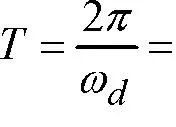
A system executes 1/Tn cycles in 1 sec.
fn=1/Tn
5)
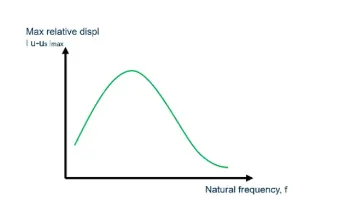
Response spectrum method is a linear dynamic statistical analysis method which measures the contribution from each natural mode of vibration . It explains behavior by measuring
- pseudo-spectral acceleration
- velocity
- displacement
as a function of structural period for a given time history and level of damping. It is a smooth curve represents the peak response for each realization of structural period.The plot gives the maximum response to the natural frequency or natural period subjectedn to linear single degree of freedom system .