Structural dynamics
1. The difference between static and dynamic analysis are:
Static analysis
- Load is applied slowly, and time and inertial effects are irrelevant.
- Material is linear elastic, boundary conditions do not change, loading does not impact stiffness
- Static analyses don’t consider inertia.
- Displacement is static
- No velocity and acceleration due to constant or fixed diplacement
- Output- Stress, displacement.
Dynamic analysis
- Load is applied over time or frequency, and time and inertial effects are relevant.
- Materialis linear elastic, boundary conditions do not change, loading does not impact stiffness
- In a dynamic analysis, the inertial loads developed by the system due to acceleration are taken into account
- Displacement is function of time/frequency
- Velocity and accleration develop due to variation of displacement
- Output-Stress, displacement, velocity, acceleration with respect to time/frequency.
Mathematically, the difference between static and dynamic analysis is that in a static analysis, only the stiffness matrix of the FEA model is solved. In a dynamic analysis, in addition to the stiffness matrix, the mass matrix (and damping matrix, if not zero) is solved as well. That is one of the reasons why dynamic analyses require more computational time than static analyses, for the same structure.
2.
a.Elastic behaviour:
The elasticity of the materials is the specific property which helps to resists the permanent change when any sort of stress is applied to this body. When the stress application is stopped the body can regain the original size and shape. The elastic behavior is different for different materials. The study of the properties that are responsible for the elastic behavior is significantly important. For all kinds of engineering designs, the knowledge of the elastic behaviors of the materials is required. For the construction of the different structures such as the columns, beams, pillars, and bridges the sound knowledge about the strength of the different materials used for the construction is essential.
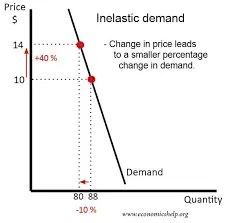
b.Inelastic behaviour:
The deformation of a material that does not disappear on the removal of the force that produces it. From the force-displacement graph, inelastic behavior corresponds to the nonlinear path.
c.Plastic behaviour:
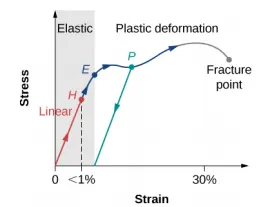
For stresses beyond the elastic limit, a material exhibits plastic behavior. This means the material deforms irreversibly and does not return to its original shape and size, even when the load is removed. When stress is gradually increased beyond the elastic limit, the material undergoes plastic deformation. Rubber-like materials show an increase in stress with the increasing strain, which means they become more difficult to stretch and, eventually, they reach a fracture point where they break. Ductile materials such as metals show a gradual decrease in stress with the increasing strain which means they become easier to deform as stress-strain values approach the breaking point.
3. Stifness:
- As an external force tries to deform an elastic body, the body resists the force. This resistance is referred to as stiffness.
- Increasing the stiffness or rigidity of a structural element reduces its deflection under load. This can be done by strengthening its section or increasing its size, but this will generally also increase its cost.
- In a structure that is made up of many different structural elements, those elements will carry load proportionate to their relative stiffness. Therefore, the load an element will attract increases the stiffer it is.
- The external force fs on the stiffness component is related to displacement u by fs = ku, if the system is linearly elastic.
Damping Component :
- The frame with its damping property with no stiffness or mass. The external force on the damping component is related to velocity by FD = ců, where fd is the damping force, c is the viscous damping coefficient and ů is the velocity.
Mass:
- The roof mass without the stiffness or damping of the frame. The external force fi on the mass component is related to the acceleration by fi = mű
mű + fd + fs = p(t) --à mű + ců+ ku = p(t)
4. Natural period(Tn):
- The time required for the undamped system to complete one cycle of free vibration(unit in seconds).
- The natural period is one of the properties or building which is controlled by mass and stiffness.
- It is related to the natural circular frequency of vibration Wn, in units radians per second:Tn=2π/Wn
T = 2π√(k/m)
- Where Tn is the natural period
- K is the stifness
- M is the mass
Natural cyclic frequency of vibration(f):
The number of cycles executed by system in one second (unit in hertz)
Where, f=1/Tn
Natural vibration properties Wn, Tn and f depends only on mass and stiffness of the structure.
5.A response spectrum is a function of frequency or period, showing the peak response of a simple harmonic oscillator that is subjected to a transient event. The response spectrum is a function of the natural frequency of the oscillator and of its damping. Thus, it is not a direct representation of the frequency content of the excitation (as in a Fourier transform), but rather of the effect that the signal has on a postulated system with a single degree of freedom (SDOF).
- A central concept in earthquake engineering, response spectrum is a practical means of characterizing ground motions and their effects on structures of different Tn
- It provides a practical approach to apply the knowledge of structural dynamics to the design structures and development of lateral force requirements in building codes.
- A plot of the peak value of a response quantity as a function of the natural vibration period Tn of the system, or a related parameter such as circular frequency Wn or cyclic frequency fn, is called the response spectrum for that quantity.
- Each such plot is for SDF systems having a fixed damping ratio and several such plots for different values of are included to cover the range of damping values encountered in actual structures.