Structural dynamics
AIM: Structural dynamics
1. Differentiate Static analysis and Dynamic analysis with proper representing pictures
Ans:
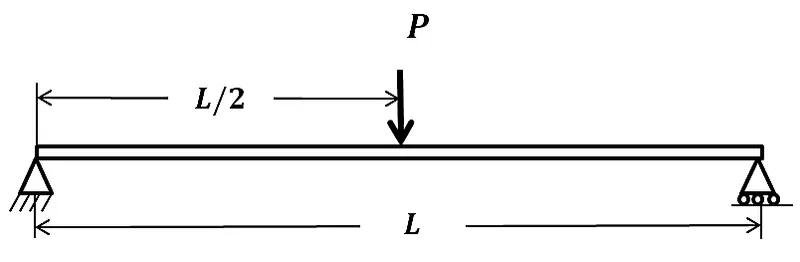
Static Analysis
- Load is constant with respect to time
- Static problem has only one respose i.e. Displacement
- Static problem has only one solution
- Generally it is simple analysis
- The response can be calculated by the principle os static equilibrium
Dynamic Analysis
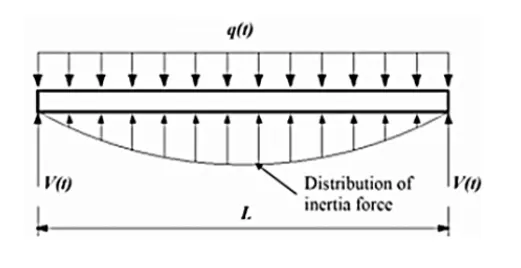
- Load varies with time
- Dynamic problem has mainly three responses - displacement, velocity and acceleration.
- Dynamic problem has infinite number of solutions that are time dependent in nature.
- Complex and time consuming analysis.
- The response can be calculated by including inertia force and static eqilibrium.
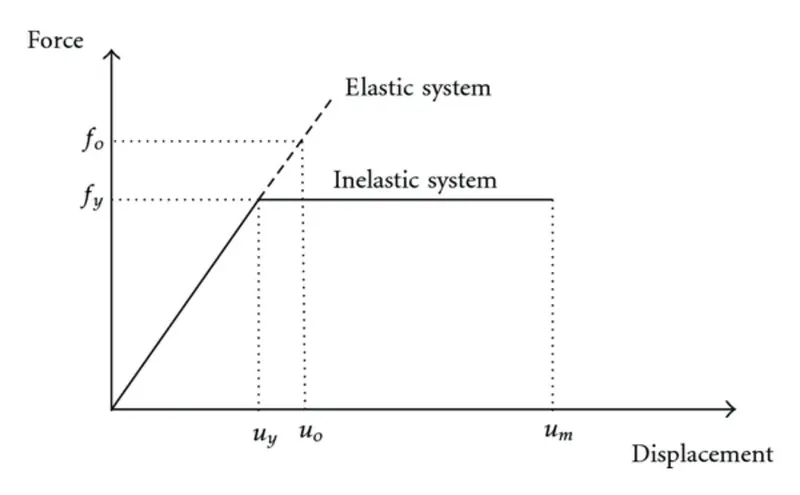
2. Explain the following with relevant force-displacement graph
- Elastic behaviour
- Inelastic behaviour
- Plastic behavior
- Non-linear Inelastic behaviour
Ans:
a) Elastic behavior
"Ability of a deformed material body to return to its original shape and size when the forces causing the deformation are removed." The structure with this ability is said to behave (or respond) elastically or elastic behaviour
b) Inelastic behaviour
"Deformation of a material that does not disappear on removal of the force that produced it." When a structure gets deformed and does not return to its original shape the sturcture is said to behave inelastically or in elastic behavior.
c) Plastic behaviour
For stresses beyond the elastic limit, a material exhibits plastic behavior. This means the material deforms irreversibly and does not return to its original shape and size, even when the load is removed. When stress is gradually increased beyond the elastic limit, the material undergoes plastic deformation.
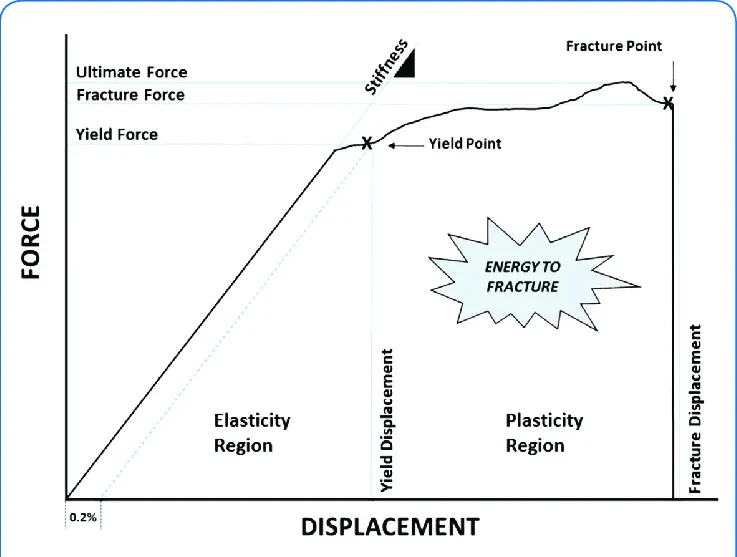
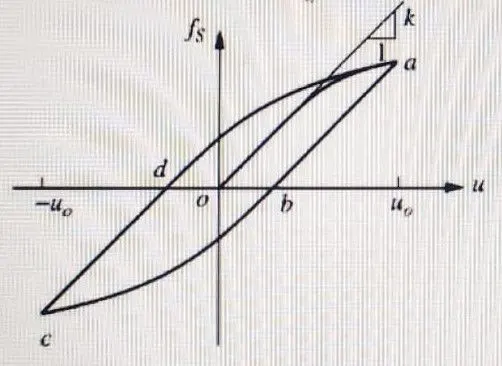
d) Non linear Elastic Behaviour
Materials have elastic behaviour usually only up to a certain load, which is called the 'yield point'. After that, the deformations are plastic. Rubber, for instance, has an elastic stress–strain curve, but the relation is not linear − in such cases nonlinear elastic models are required.
In the below figure, Force fs corresponding to deformation is not single valued and depends on history of deformations and whether deformations is increasing or decreasing.
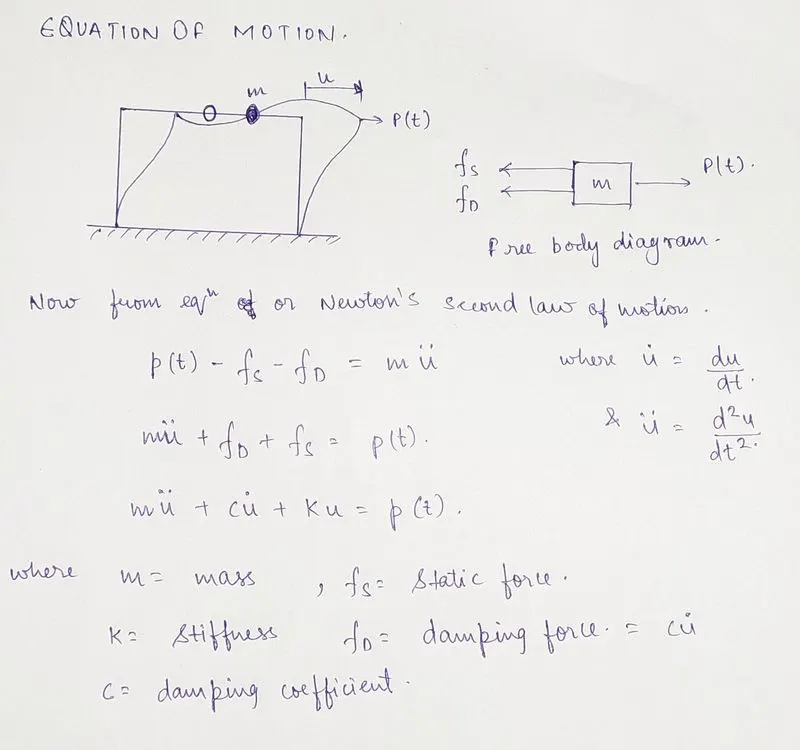
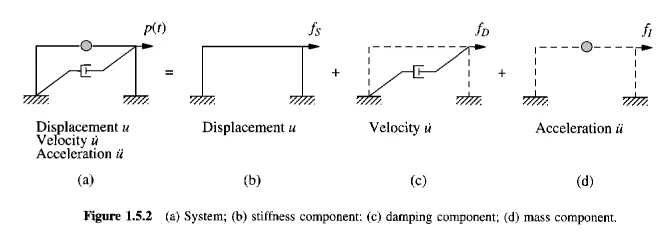
3. Explain Mass, Stiffness & Damping components in the equation of motion
Ans:
4. Provide relationship between Natural period (Tn) & Natural frequency (f) and provide their definitions
Ans:
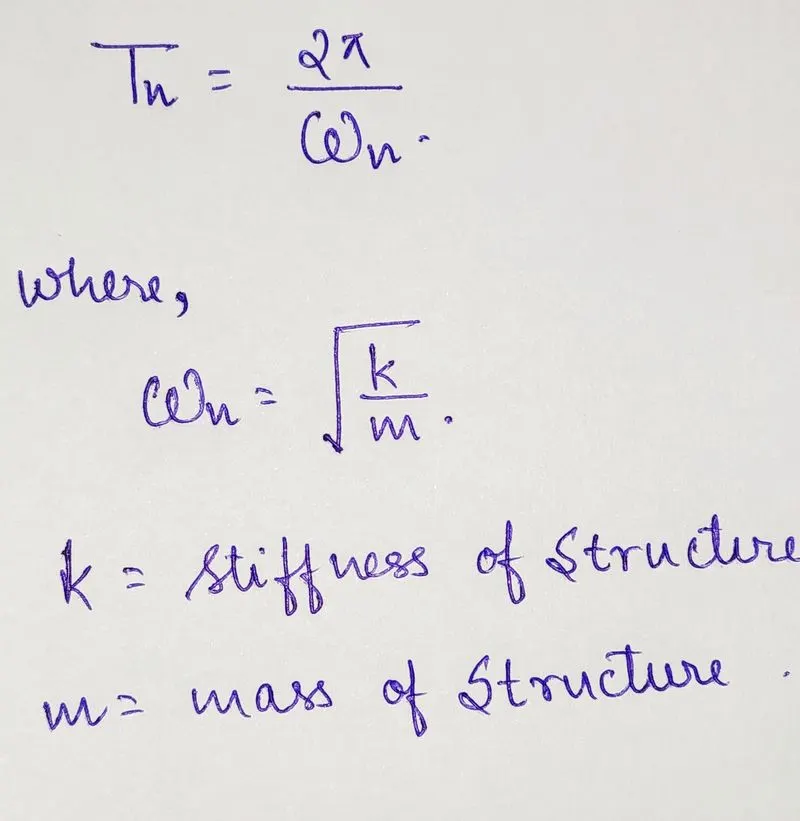
Natural period (Tn)
- The natural period of a building is simply a time taken by it to undergo one complete cycle of oscillation.
- The natural period is one of the properties or building which is controlled by mass and stiffness.
Natural frequency (f)
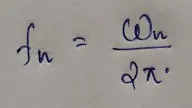
- Natural frequency is the frequency at which a system tends to oscillate in the absence of any driving force or A natural frequency is defined as that frequency at which a body will vibrate if excited by an external force.
- The motion pattern of a system oscillating at its natural frequency is called the normal mode.
Relationship between Natural period (Tn) & Natural frequency (f)
- Fn = 1/Tn
5. Explain in detail about Response spectrum & its Graph
Ans:
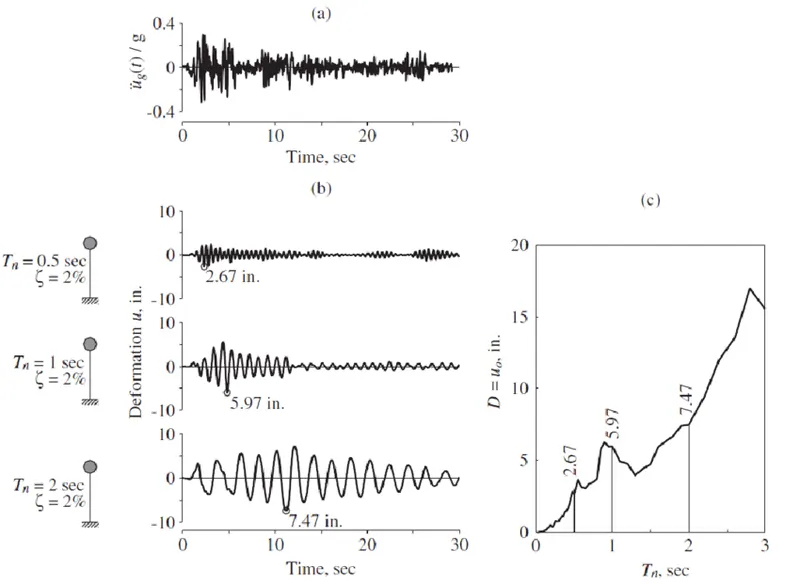
- A response spectrum is a function of frequency or period, showing the peak response of a simple harmonic oscillator that is subjected to a transient event. The response spectrum is a function of the natural frequency of the oscillator and of its damping.
- Response spectrum is a practical means of characterizing ground motions and their effects on structures of different Tn
- It provides a convinient means to summarize the peak response of all possible linear SDF systems to a particluar component of ground motion.
- A plot of the peak value of a response quantity (u,v and a) as a function of the natural vibration period Tn of the system, is called the response spectrum for that quantity.
- The response spectrum can be of 3 types:
- Deformation Response Spectrum - It is a plot of peak u, against time Tn
- Relative Velocity Response spectrum
- Acceleration Response spectrum
- Example: Ground deformation Response spectrum of El centro Earthquake
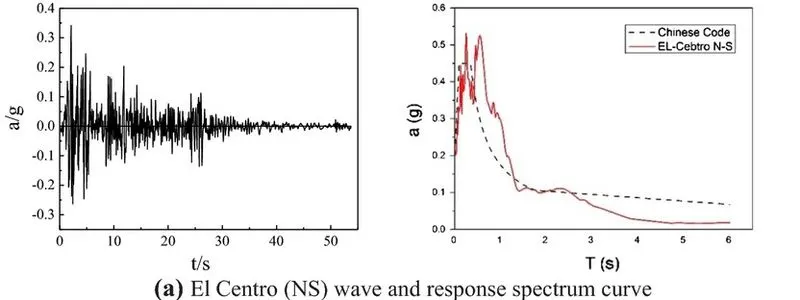
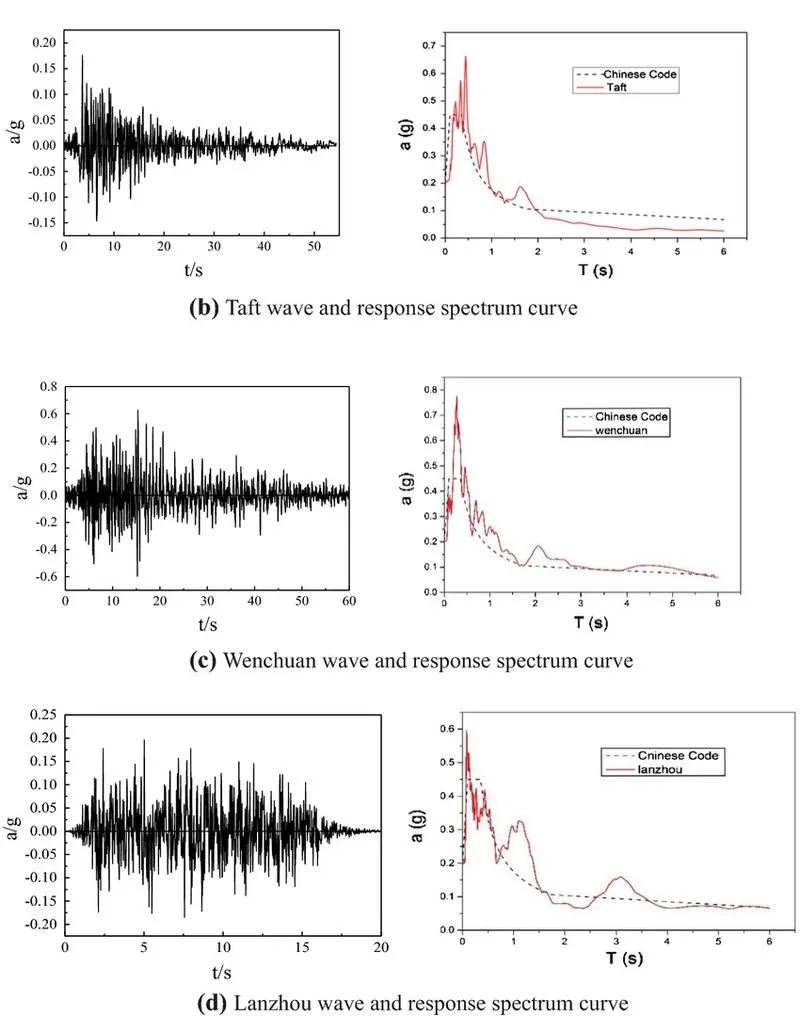
- Also some more examples of response spectrum