Structural dynamics
1)
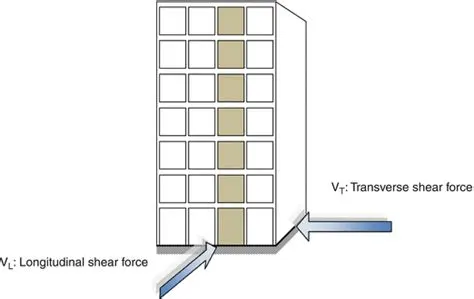
<> Static analysis
- variation of load with time is negelected in this analysis.
- Motion of structure can be disregarded.
- only equivalent lateral force is considered in equilibrium equation.
- we don't need to consider the effect of inertia and damping in the equation of motion.
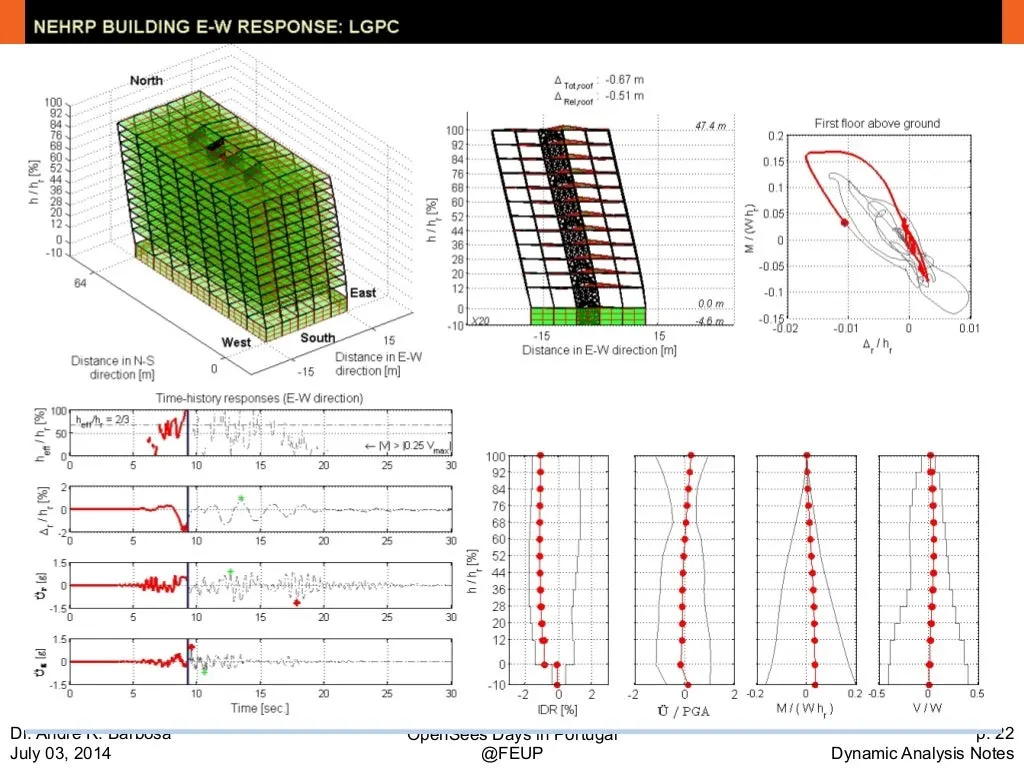
<> Dynamic analysis
- variation of load with time is considered.
- displacement of structure is regarded.
- due to displacement of structure, two addational force inertial and damping force are considered in the equation of motion.
2)
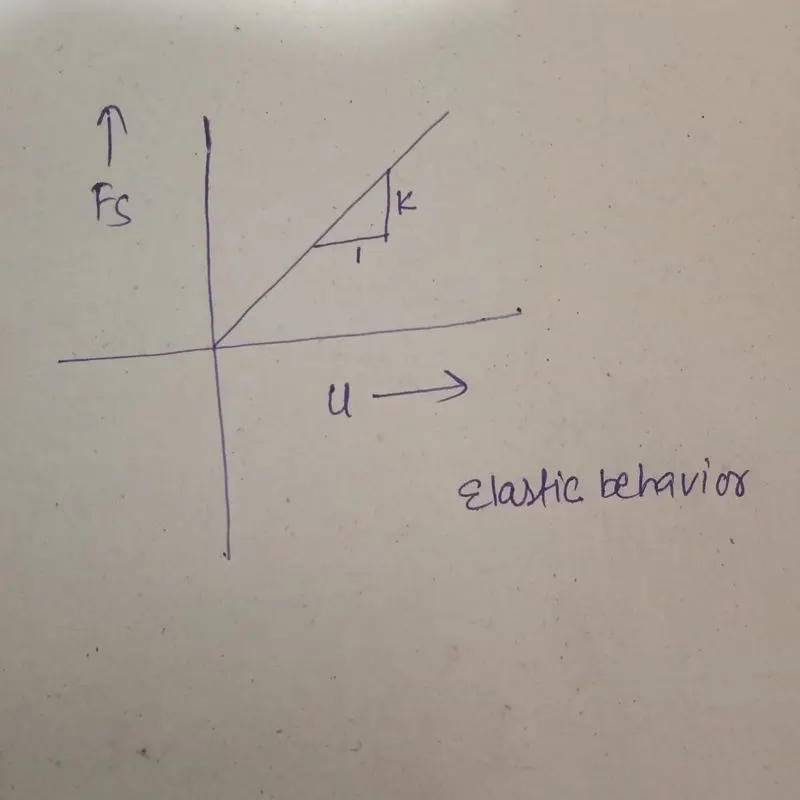
<> Elastic behavior
- when SDOF system is subjected to external static force,there is deformation in the system u, if the system is linear elastic, the deformation is not large.
- so external force is directly proptional to deformation,
Fs=Ku , where K= lateral stiffness.
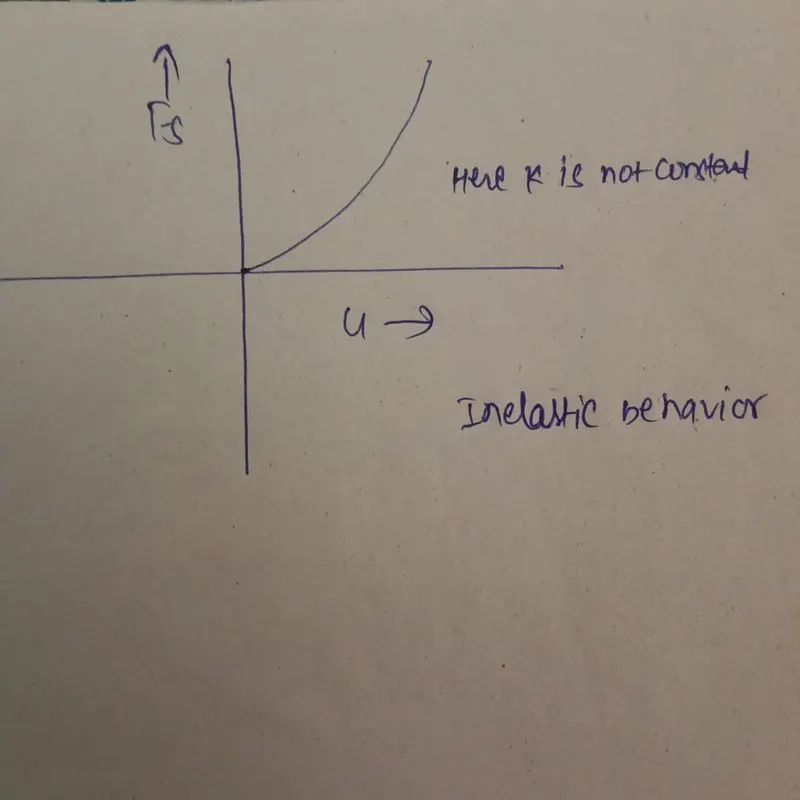
<> Inelastic behavior
- stiffness value is not linear.
- It makes the equation is very complex.
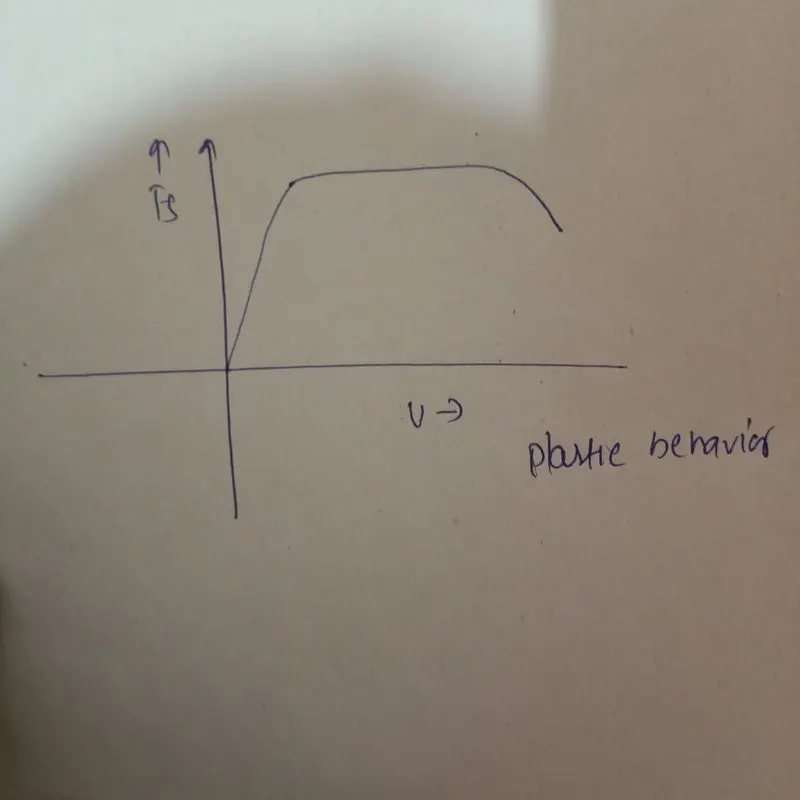
<> Plastic behavior
- when external static force is reached beyound the yield stree of material, deformation is not linear. Then the structure may undergo heavy damage but not totally collapse.
<> Non- linear inelastic behavior
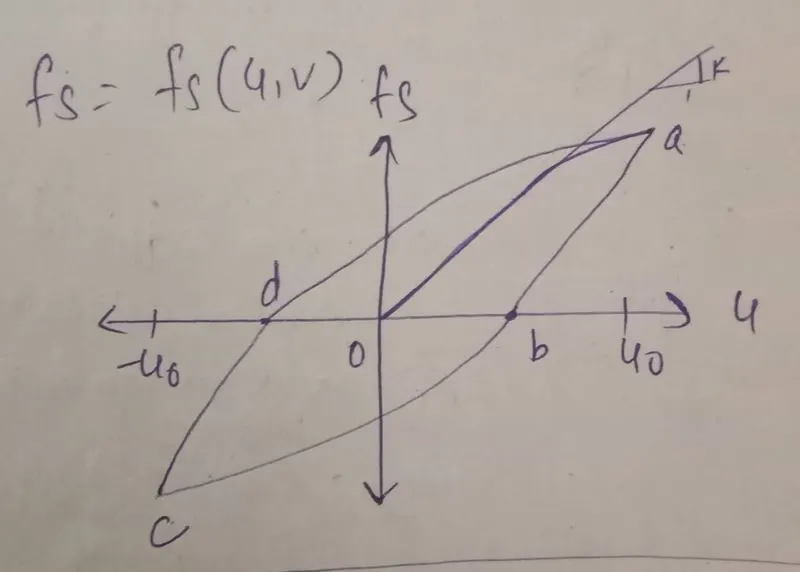
- force-displacement relatiionship becomes non-linear and inelastic at large deformation.
- force to deformation is not single valued and depends on history of deformations and whether deformation is incresing or decreasing.
Fs = fs(u,v)
3) The differential equation governing the displacement of an idealized SDOF of one storey frame subjected to an externally applied force p(t) can be derived using Newton's second law of motion.
m u ¨ + c u + f s (u)= p(t)
It is combination of three pure independent systems:-
- Stiffness component: The frame without damping or mass. The external force on the stiffness component related to displacement 'u'.
Fs=Ku
- Damping component: The frame without stiffness or mass. The external force on the damping component related to velocity 'v'.
Fd=cv
- Mass component: The frame without damping or stiffness. The external force on the mass component related to acceleration 'a'.
Fi=m u ¨
4) Relationship between Tn and f is:
f=1/Tn
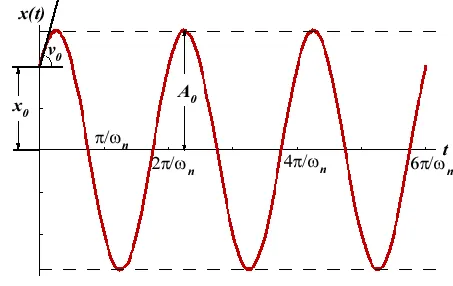
- Natural period (Tn): The time required to complete its one cycle oscillatory motion is called natural period.
- Natural frequency(f): The number of cycles completed by system in 1 second is called natural frequency.
5) Response spectrum is a plot of the peak value of a response quantity(u,v and a) to the natural vibration period Tn of the system.
- since we intrested in only peak value of all possible SDF syytem to a particular component of ground motion, so this response spectrum method provides us. It makes calculation easy.
- In the response spectrum, each plot for SDOF systems having fixed damping ratio and we plot several plots for different values of damping ratio.
<> It can be three types:
- Deformation response spectrum
- Relative response spectrum
- Acceleration response spectrum
Graph:
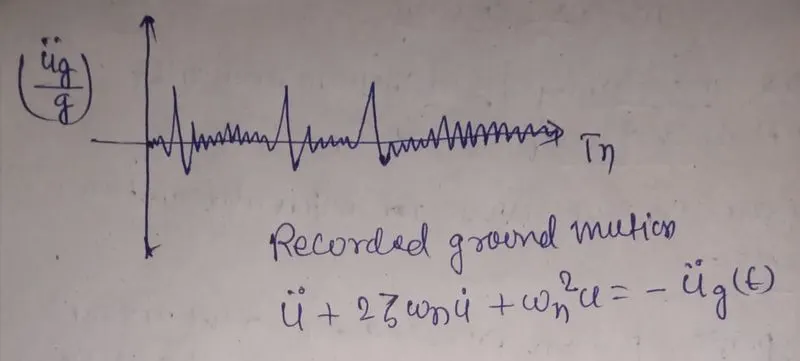
- This is the recorded ground motion
- After that we analyze the deformation with different natural period with fixed damping ratio.
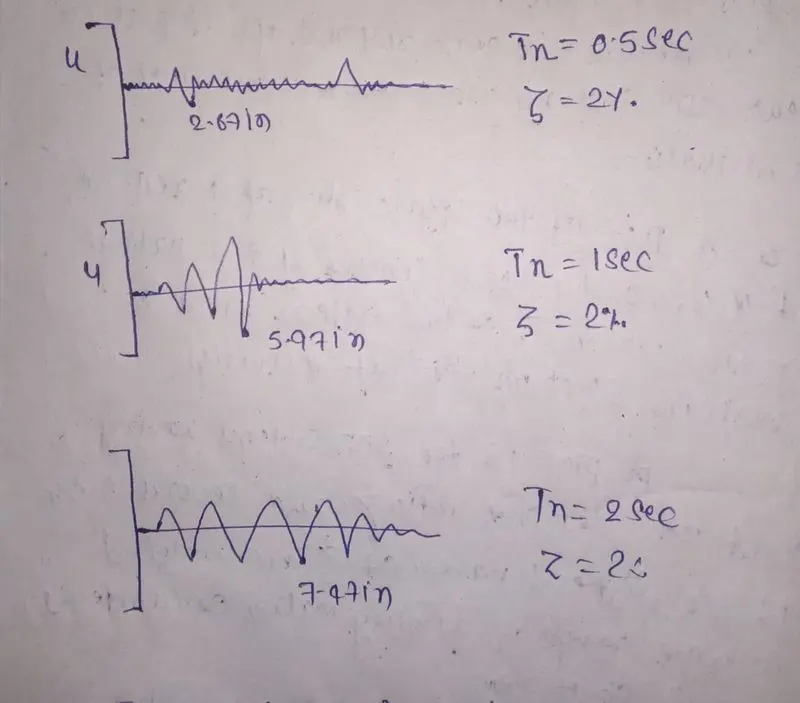
- we get different peak value of deformation in different time period and we put the value and plot the graph and similary get another graph of different damping ratio.
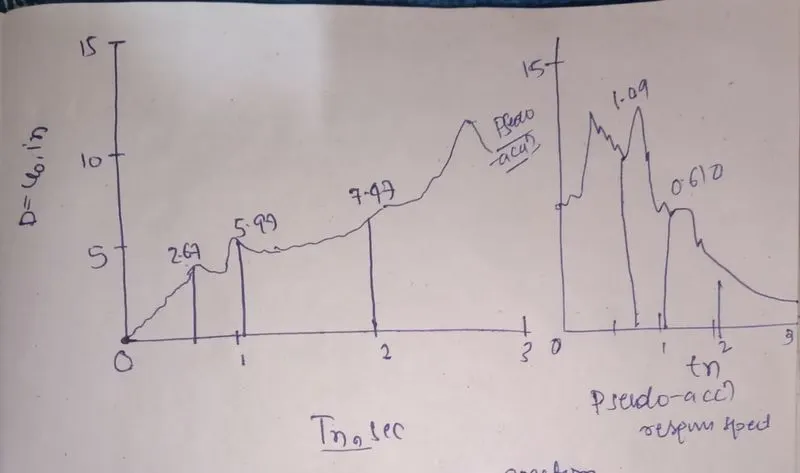
- and if you plot graph between accleration and time period, we get opposite of the graph of deformation vs time period. That means the stiffer the material , less deformation and get higher psuedo acceleration.