Steady Vs Unsteady flow over a cylinder
Aim: To simulate the flow over a cylinder and study the phenomenon of karman vortex street.
Objectives:
- Simulate the flow over a cylinder and explain the phenomenon of Karman vortex street.
- Simulate the flow with the steady and unsteady case and calculate the Strouhal Number for Re= 100.
- Calculate the coefficient of drag and lift over a cylinder by setting the Reynolds number to 10,100,1000,10000 & 100000 with a steady state solver
- Discuss the effect of Reynolds number on the coefficient of drag and validate the results wrt standard values.
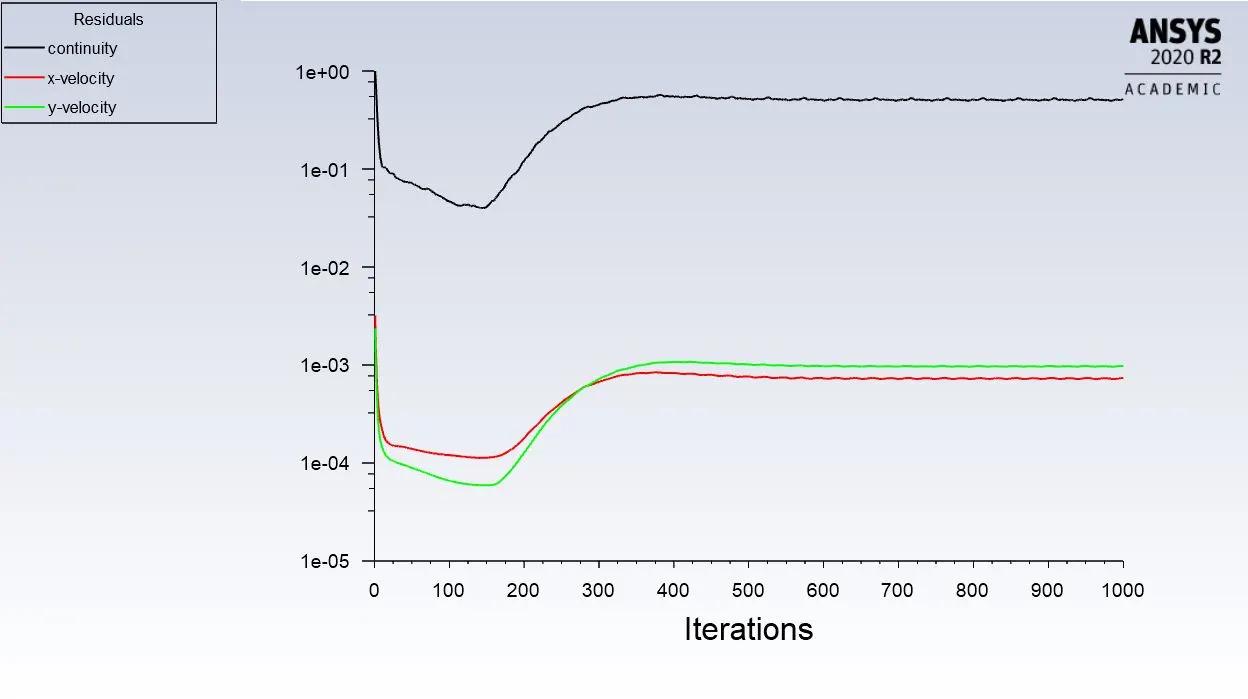
- To show the flow has converged in steady and unsteady flow.
- To plot the velocity contour for vortex shredding,pressure contour, vertex average of velocity magnitude ,drag coeffecient and lift coefficient.
Theory:
Von karmen vortex street:
In the domain of fluid dynamics karman vortex street is a phenomenon of repeating pattern of swirling vortices(vortices mean swirling mass of fluid) caused by a process known as vortex shredding, which is responsible for the unsteady separation of flow of fluid around blunt bodies.
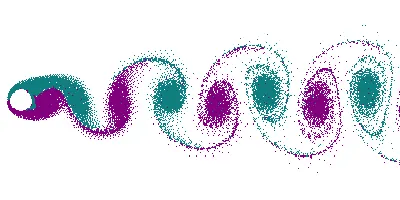
A vortex street is formed only at a certain range of flow velocities specified by range of Reynolds numbers typically at range above 90 but practically some researches have shown that vortex street can be seen at an early reynolds number of 44 .
Concept of vortex formation:
For certain flow which have adeqaute reynolds number ranging more than 90 the phenomenon of vortex shredding is seen but the main part of physical analysis lies in understanding how vortices are generated in the laminar flow. lets take an example of Re<10 where the flow is smooth and all the streamlines paas through the cylinder and has laminar flow without causing adverse low pressure areas behind the cylinder.As we increase the reynolds number the flow area behind the cylinder widens up and the streamlines are not perfectly aligned to the surface of the cylinder but little disintegrated. After the fomation of votices the upper part of the flow rotates clockwise and lower part of flow rotates anticlockwise, basically creating drag and lift. As the reynolds number increases further the flow fluctuates up and down. At a critical reynolds number above 90 vortex shredding is clearly visible.
In this phenomenon, the boundary layer separates from the surface to form a shear layer which is not stable . The shear layer eventually gets detached from the surface in to discrete vortices which wiggle up and down to generate a vortex pattern and interatacts with other vortices and shredds its mass. vortex shredding is directly linked to reynolds number which inturn accounts for the velocity and viscosity of the fluid.The dimensionless number of vortex shredding is strouhal number.
Strouhal number is a dimensionless quantity describing oscillating flow mechanism.
`St=(fD)/U`
f= vortex shredding frequency
D= diameter of cylinder
U= free stream velocity
GEOMETRY:
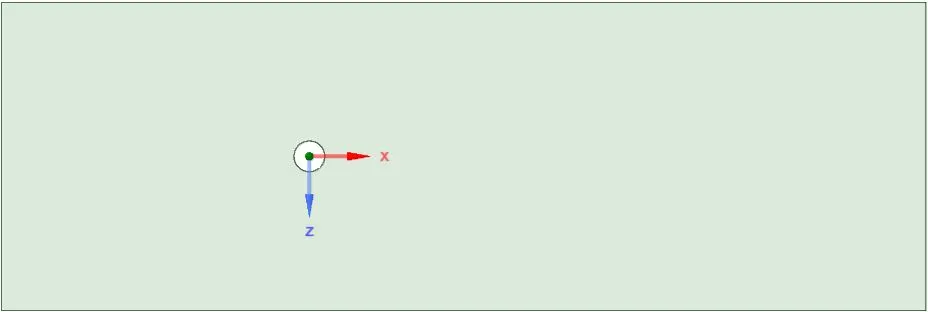
LENGTH = 60m
Height = 20m
Diameter of cylinder = 2m
Mesh:
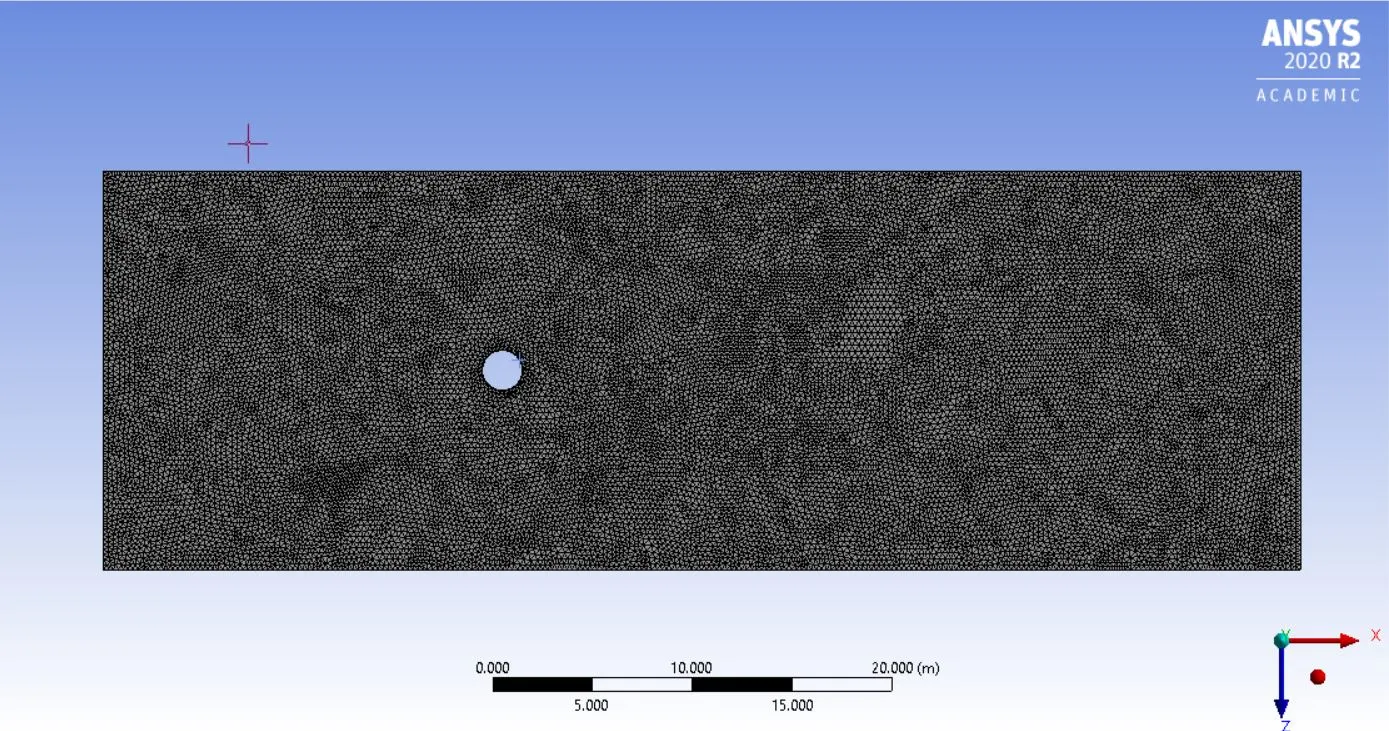
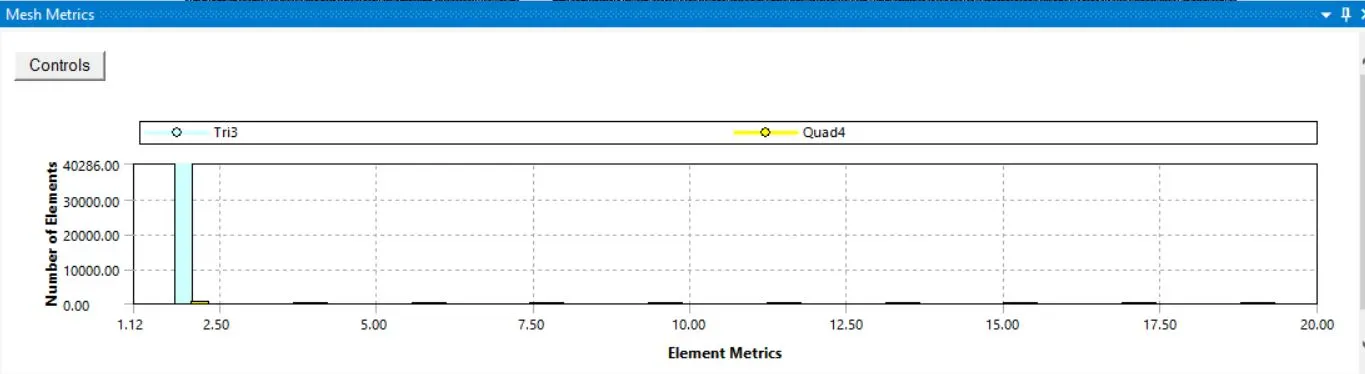
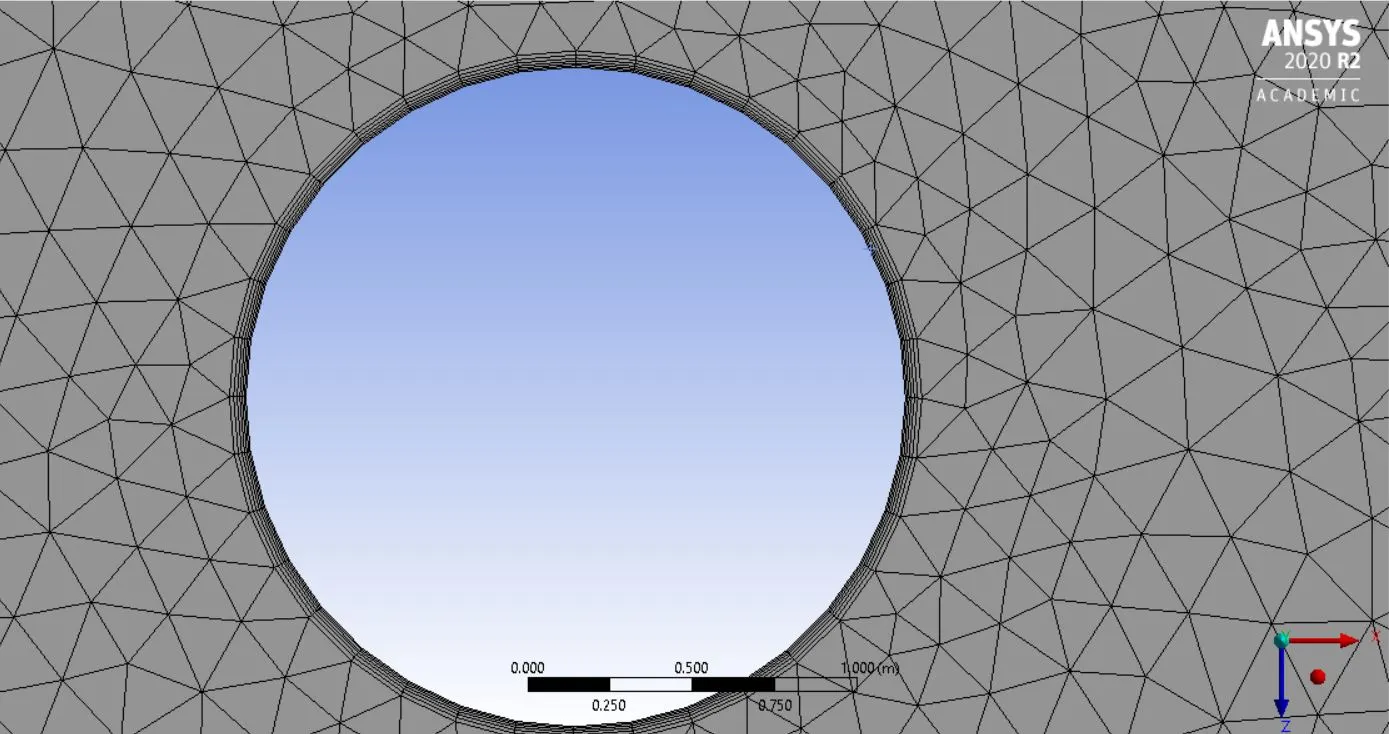
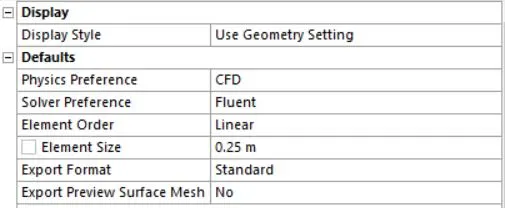
Mesh metrics:

Inflation:
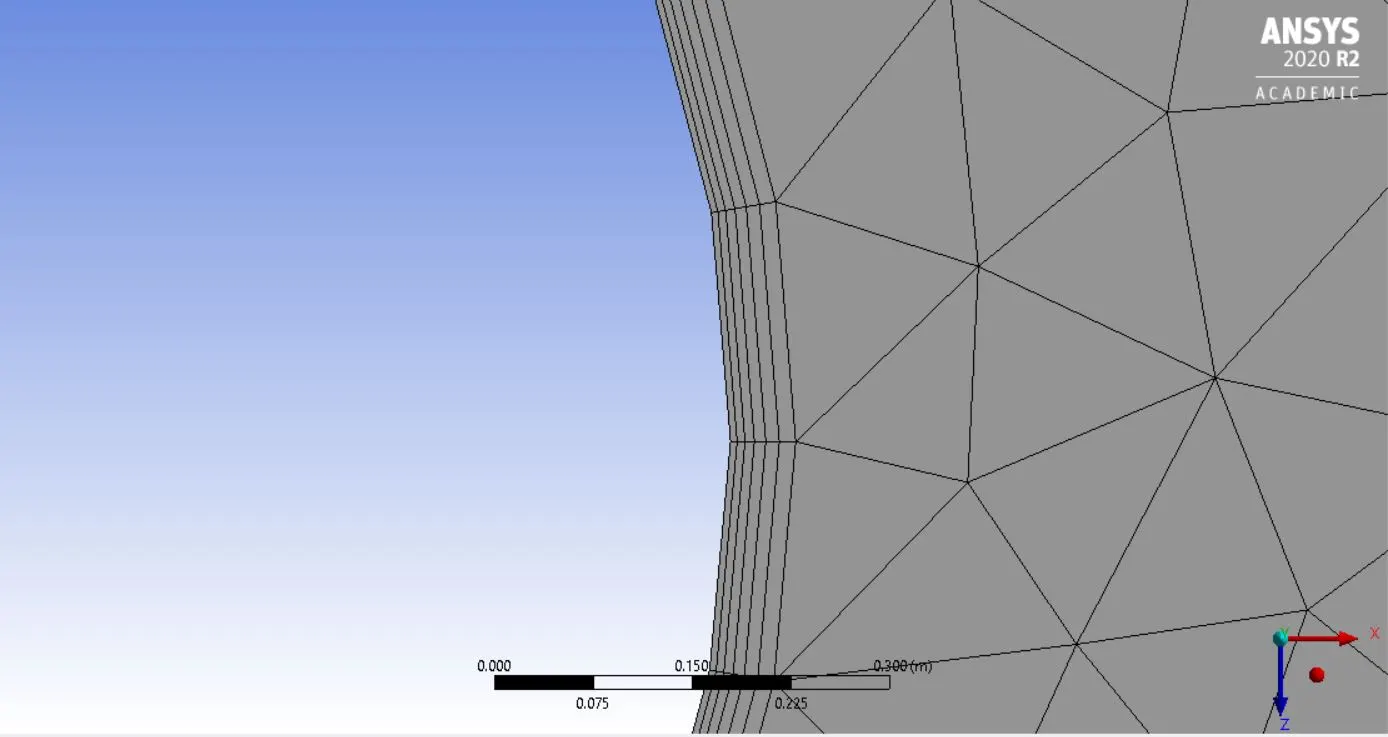
No of layers = 6
Details:
- Its a triangular mesh.
- To number of division is edge sizing are 36 to make a better circle.
- For inflation layer, the first layer thickness is 5e-3, no of layers 6 with growth rate of 1.2
Solvers and material properties:
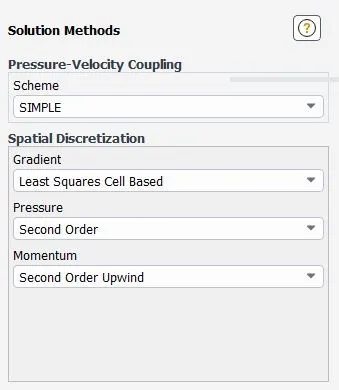
Pressure based solver with laminar model .
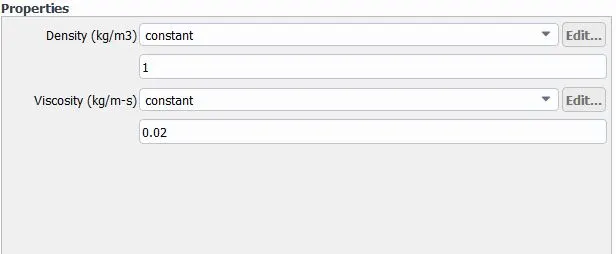
material properties are user defined
PART 1
OBJECTIVE OF PART 1: Simulate the flow with the steady and unsteady case and calculate the Strouhal Number for Re= 100.
Steady state case for reynolds number of 100:
initial and boundary conditions:
- density=1kg/m^3, viscosity 0.02 kg/ms, `Re=(rhoVD)/mu=(1*1*2)/0.02=100`
- velocity at inlet is 1 m/s
- pressure at outlet is 0 gauge pressure
- Non slip boundary condition at wall.
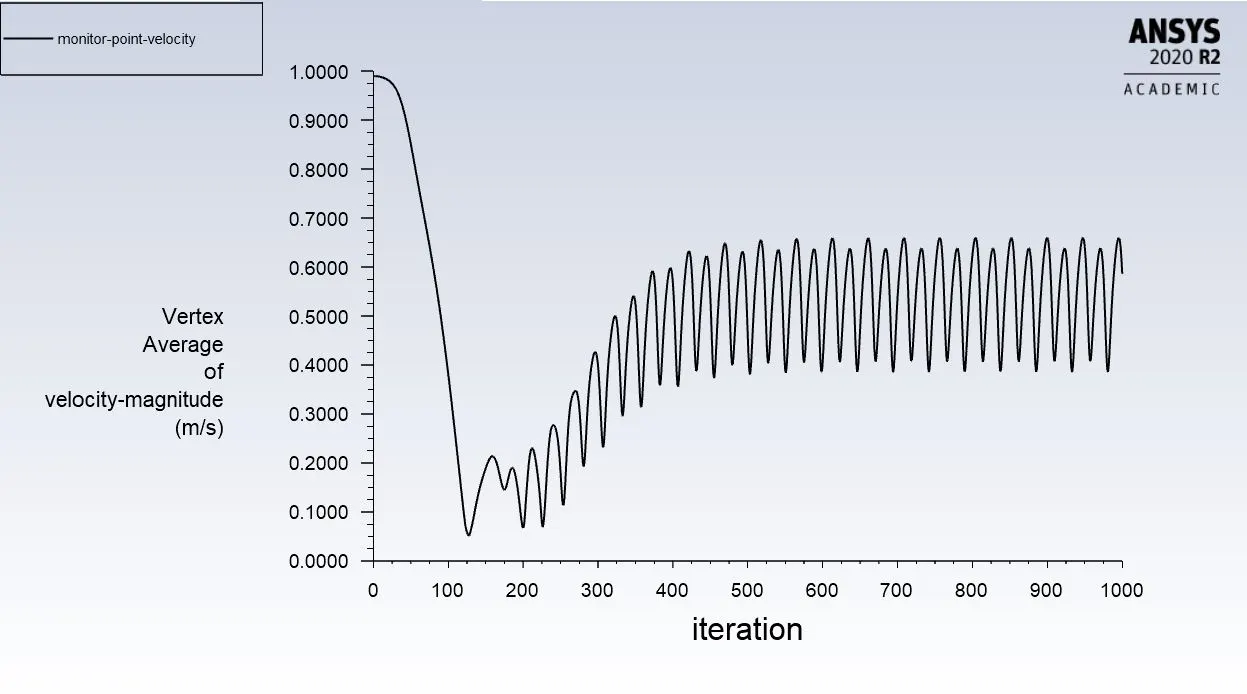
- To monitor the velocity behind the cylinder by 8m distance we create a monitor point named vertex average velocity magnitude.
- hybrid initizailization and 1000 iteration.
Results for steady state Re=100:
Residues:
Vertex average of velocity magnitude at monitor point:
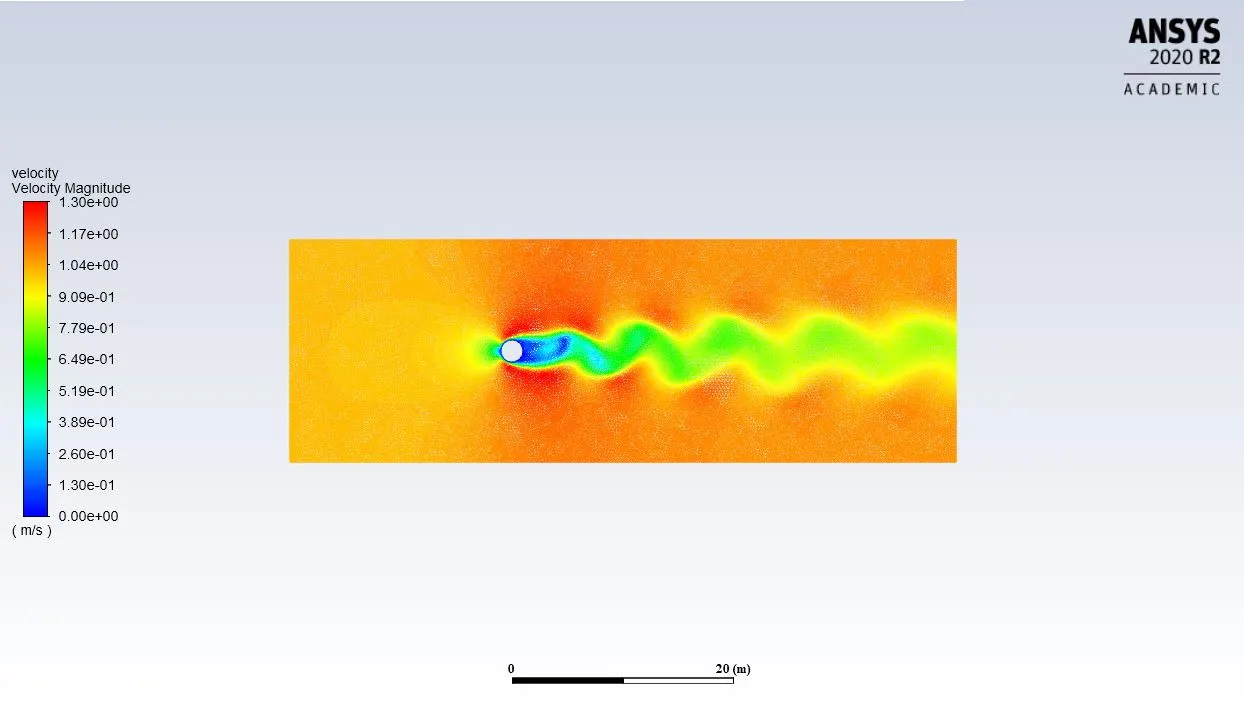
Velocity Contour:
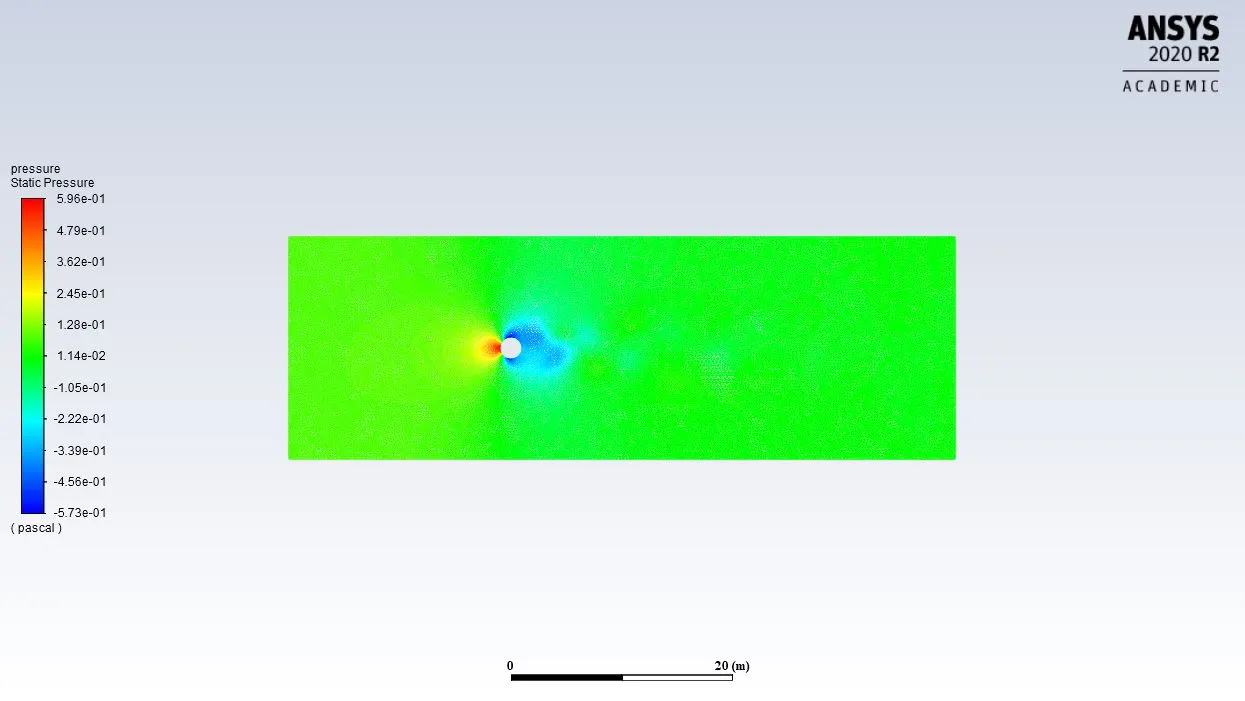
Pressure contour:
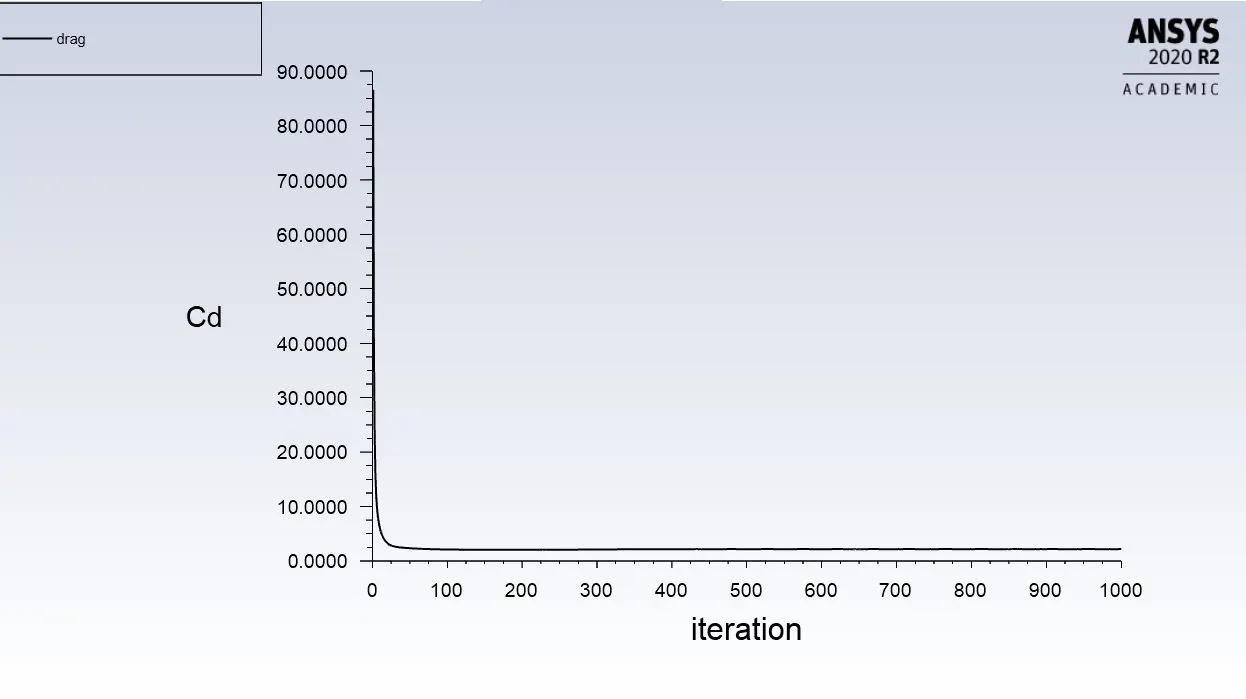
Coeffiecient of Drag plot:
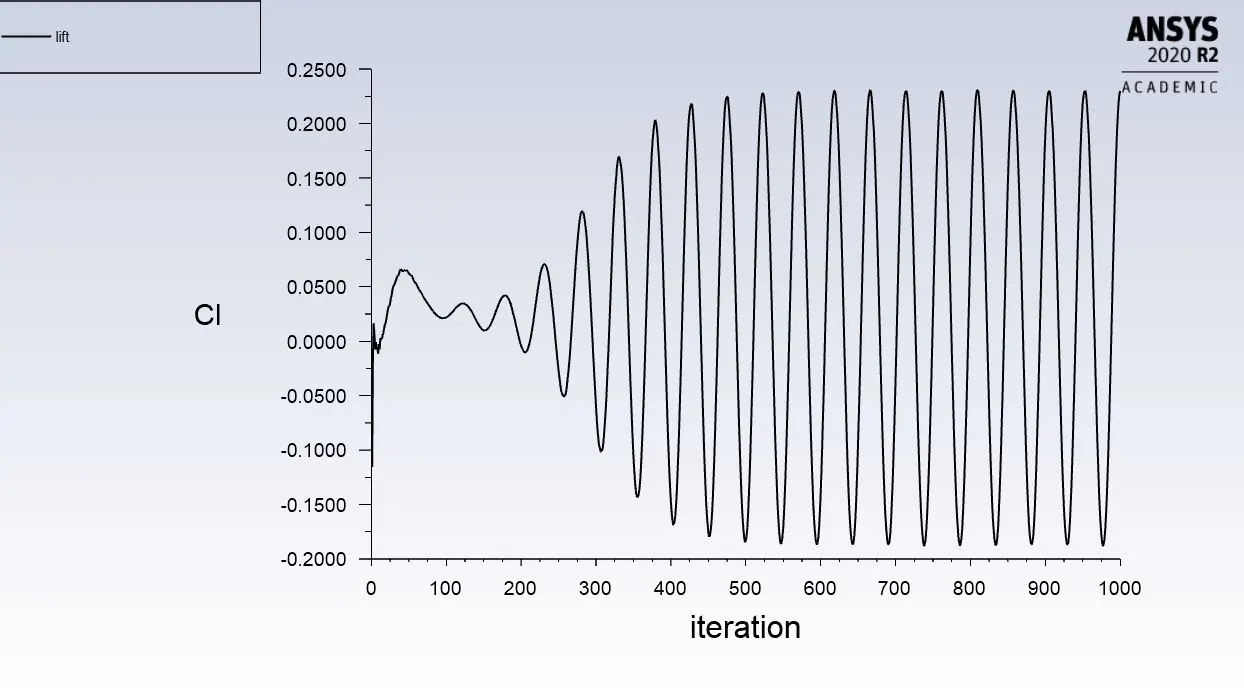
Coefficient of lift plot:
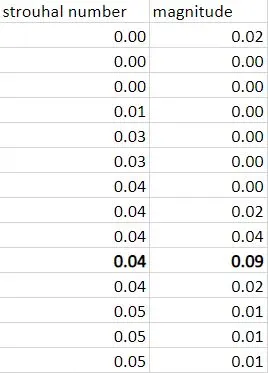
Strouhal Number:
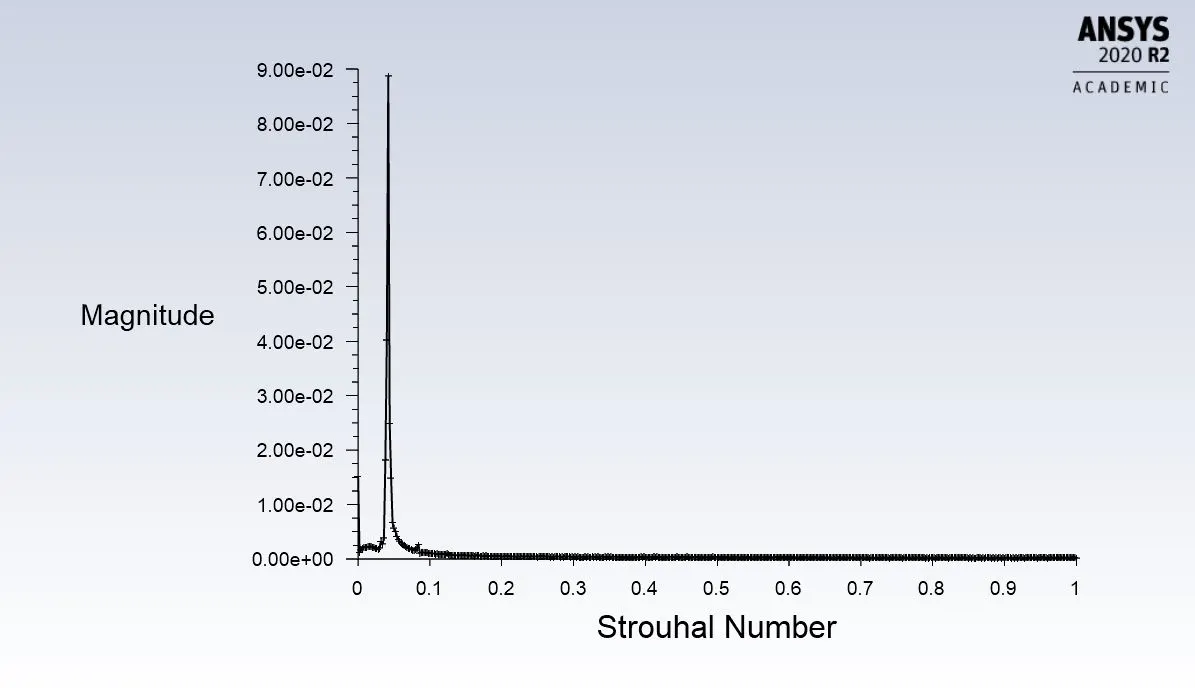
Strouhal number steady state:
The value is 0.04 which is obtained by exporting the values to excel file.
Numerical Values:
Amimation:
Transient state case for reynolds number of 100:
The initial and boundary conditions are same as that of steady state.
time step size 0.1
No of time steps 2000
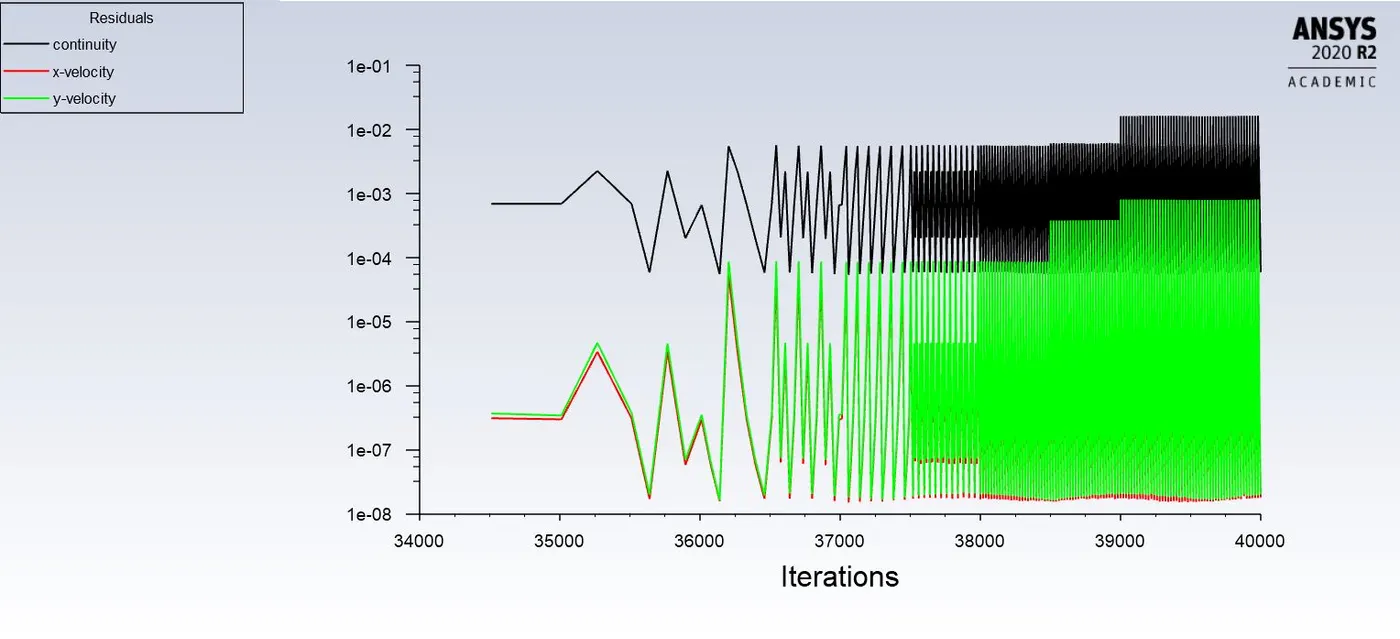
Residues:
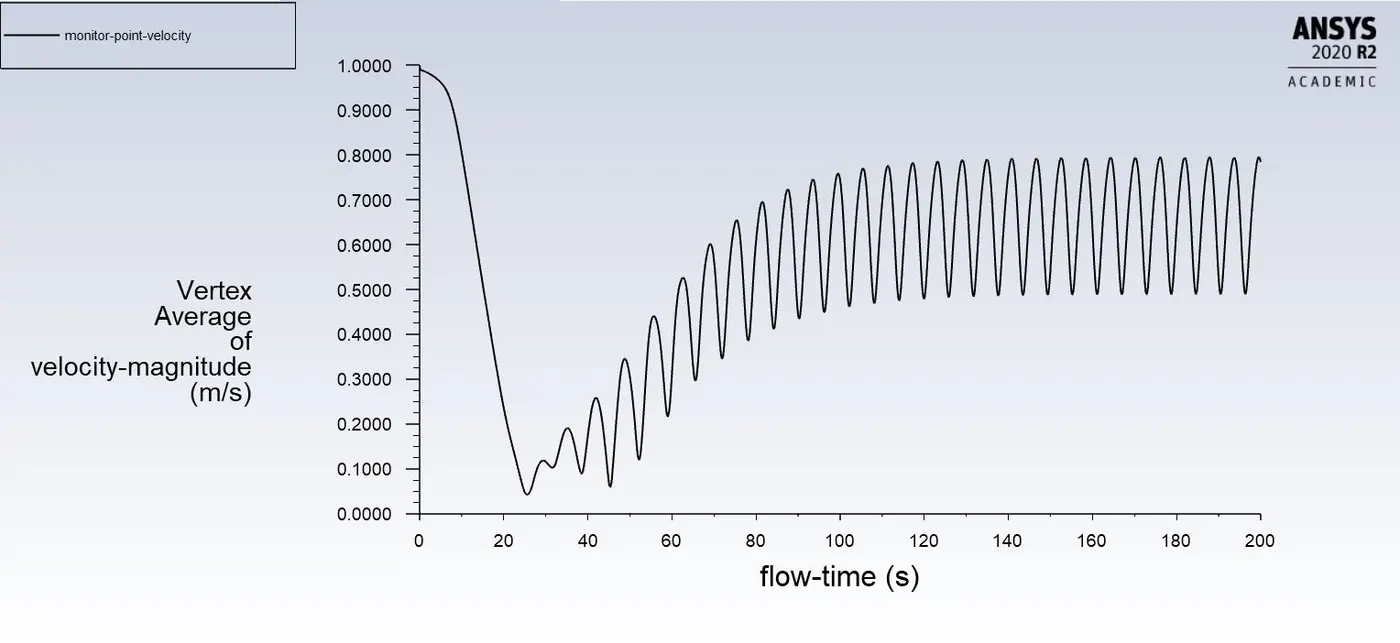
Vertex average of velocity magnitude at monitor point:
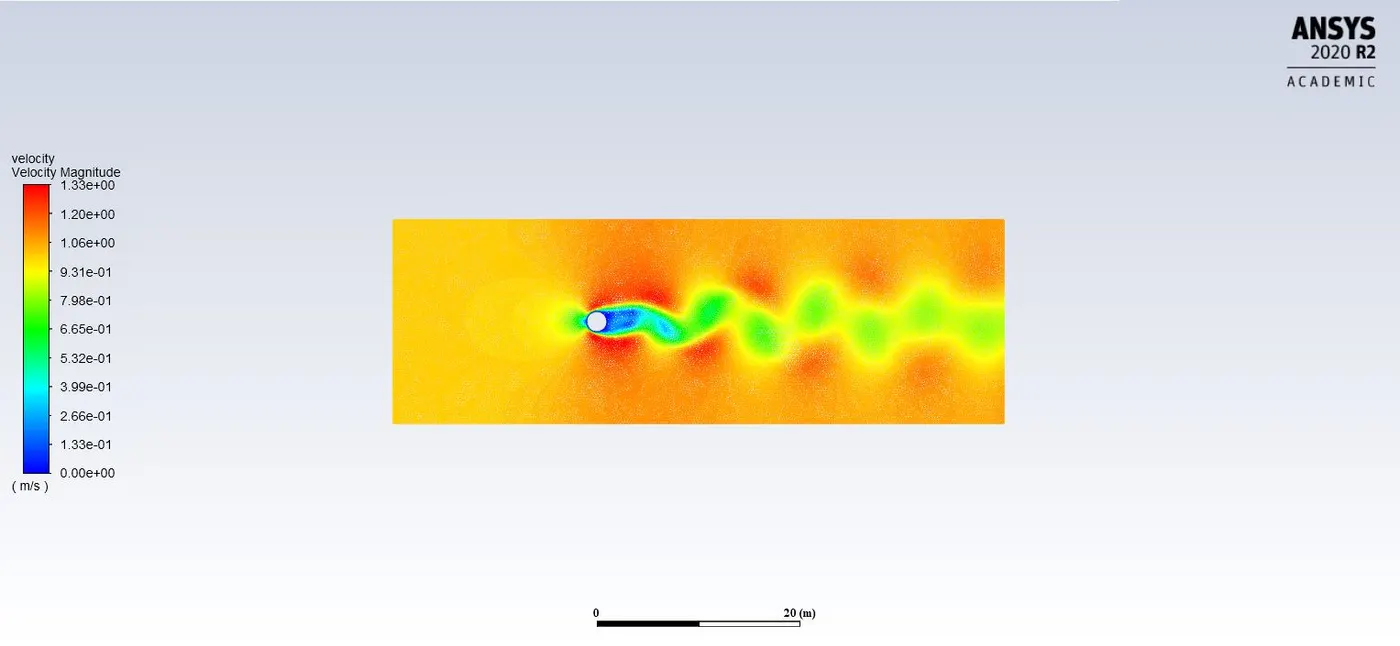
Velocity contour:
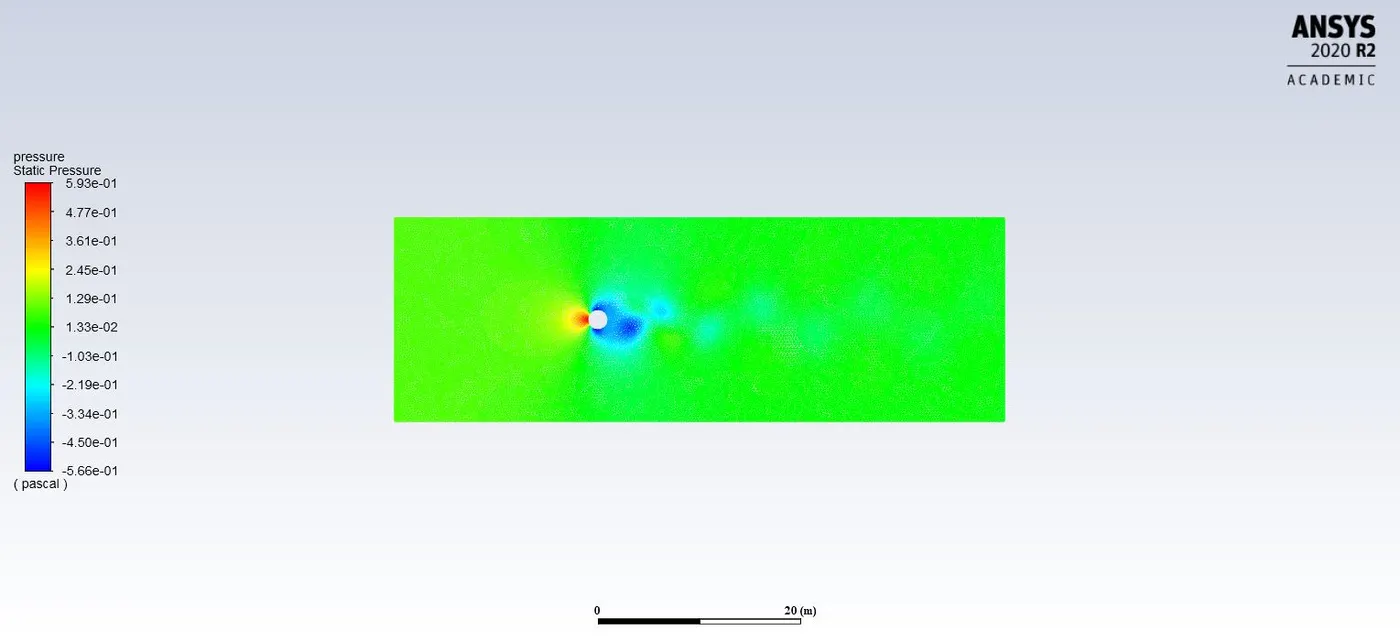
Pressure contour:
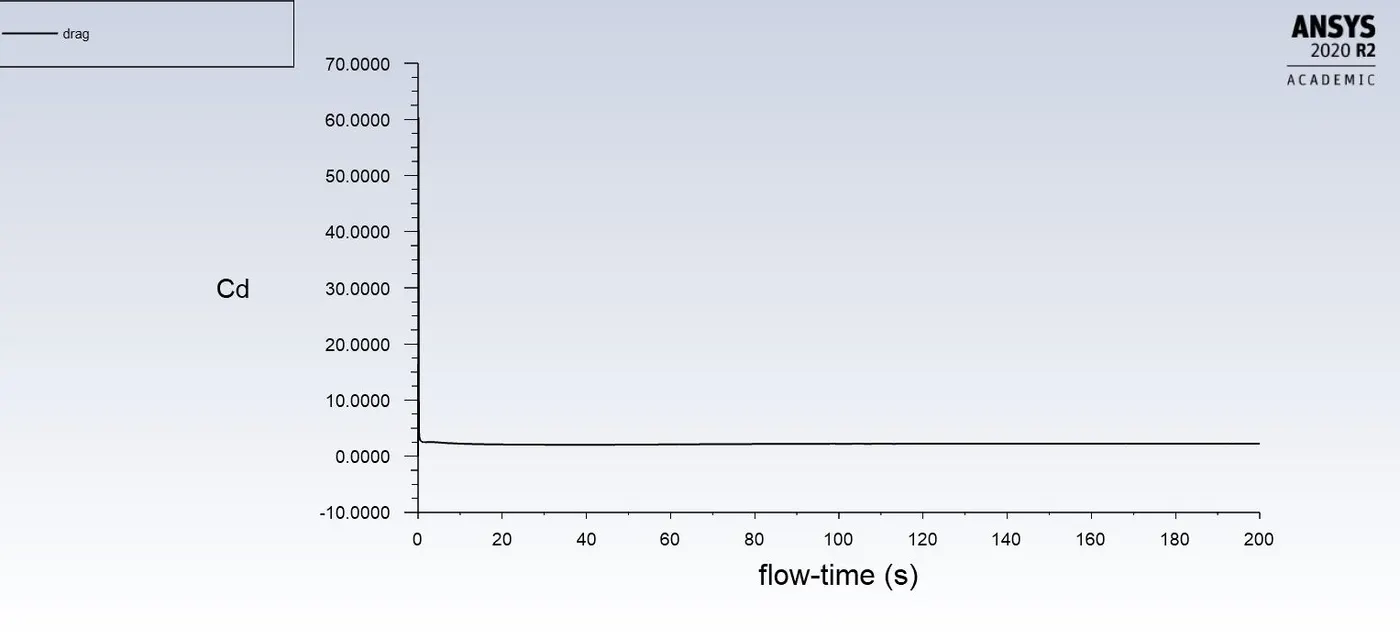
Coeffiecient of Drag plot:
Coeffiecient of lift plot:
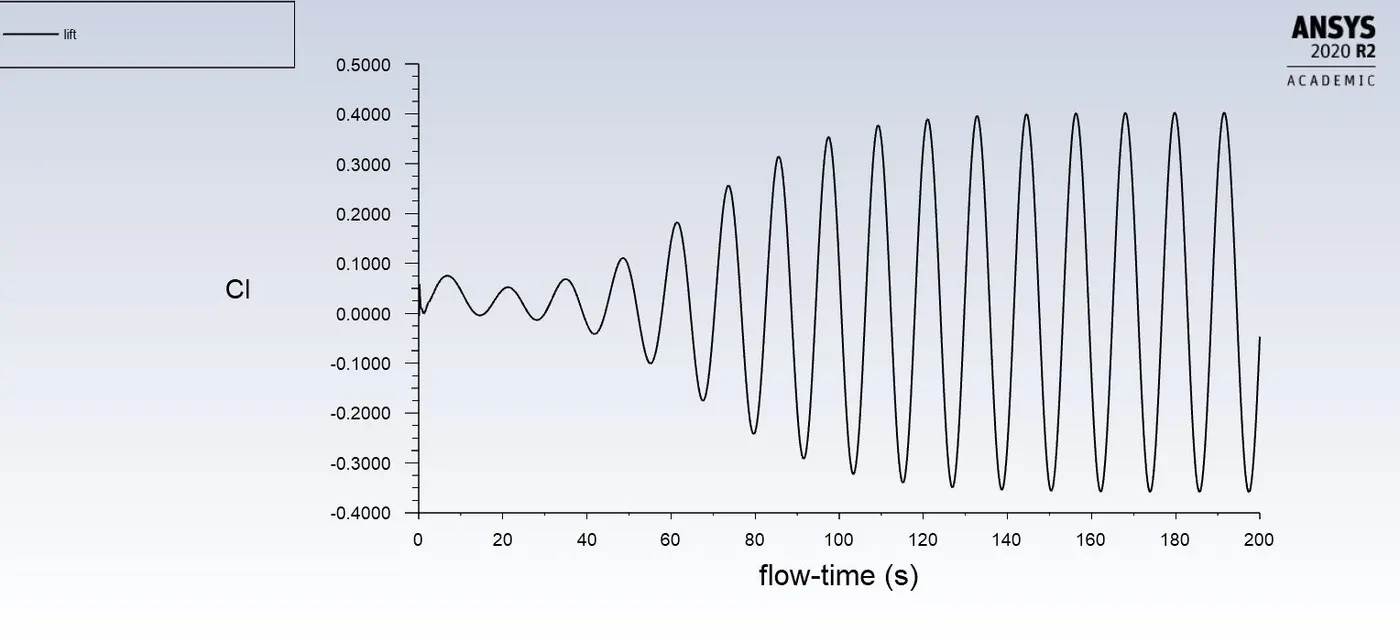
Strouhal Number:
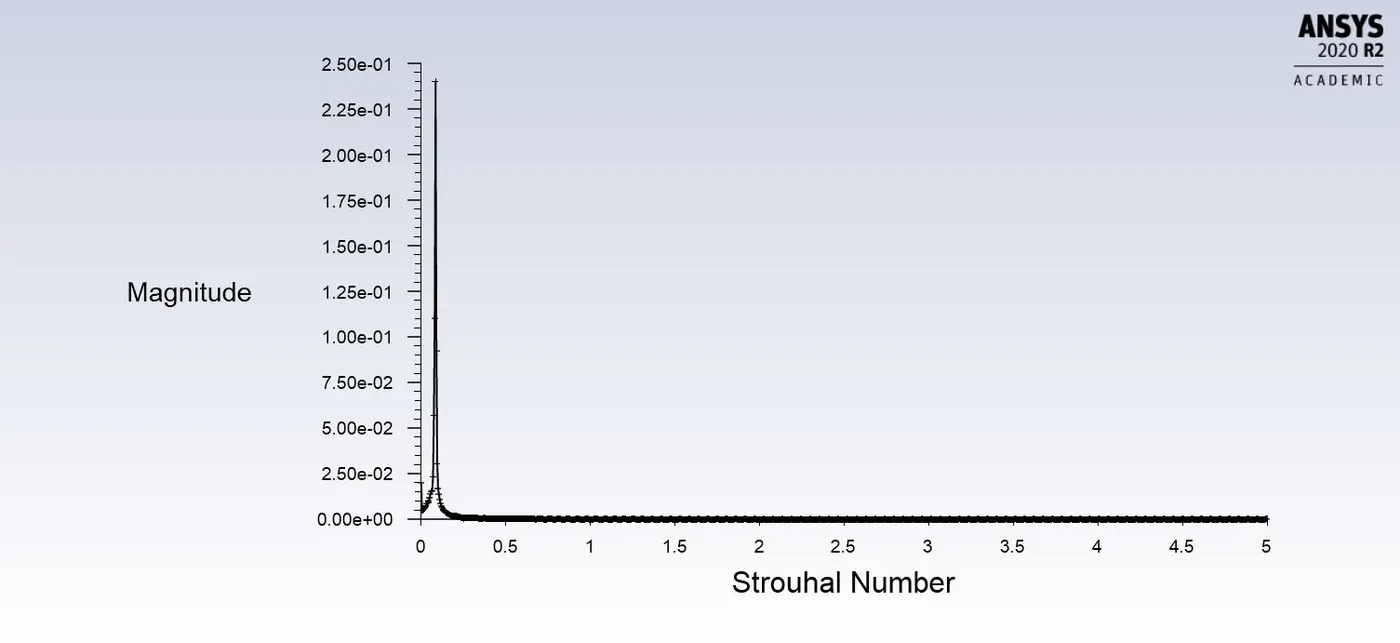
Strouhal number for transient state:
The value is 0.08 which is obtained by exporting the values to excel file.
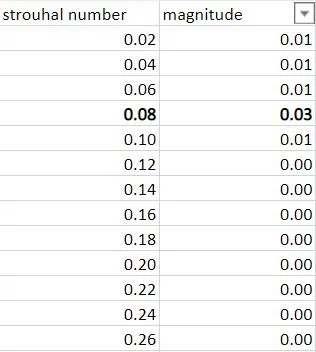
Numerical Values:
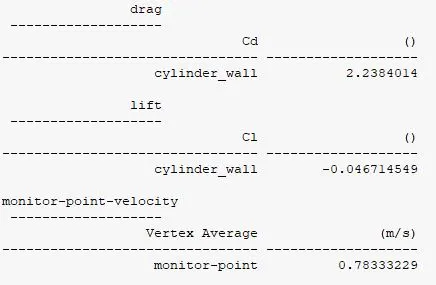
Comparative results of both steady and transient state for Reynolds number 100:

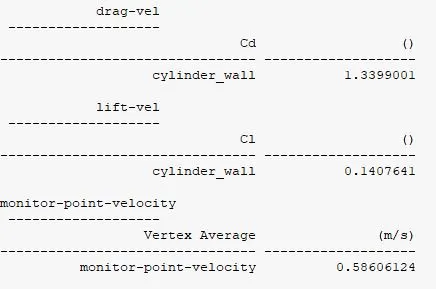
From the above table we can see that the monitoring point velocity has dropped behind the cylinder from 8m of distance which tells about the vortex shredding phenomenon. The steady state approach was handy because the solution converged with less iteration and the computational time is low. As we speak about the transient approach the no of iteration and time taken was enormous to get a stable result and to see the effect of vortex shredding the low viscosity approach is considered. The approach can be justified as the vortex shredding can be quantified as a function of time for further time based analysis while we dont have the option in case of steady state.
---------------------------------------------------------------------------------------------------------------------------------------------------------------------------------------------------------------------------
PART 2
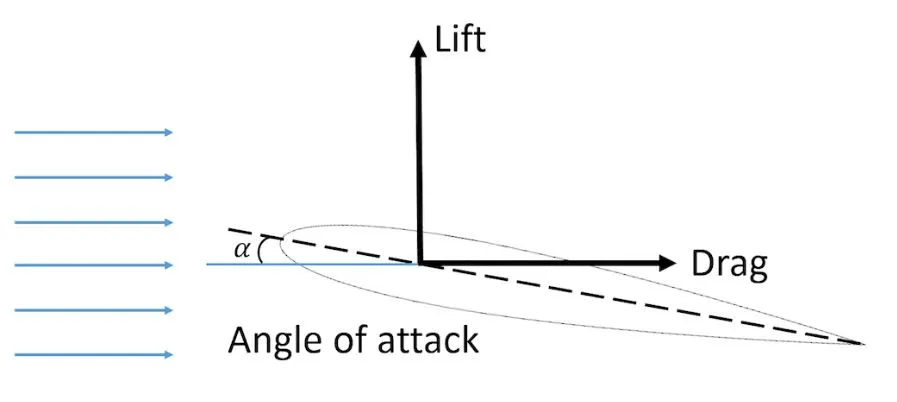
Theory of drag coeffiecient and lift coefficient:
Drag coefficient:
Drag coefficient is a dimensionless quantity that is used to quantify the drag and resistance of an object in a fluid environment. Drag coeffiicent is used in drag force equation, in which a lower drag coefficient indicates the object will have less aerodynamic drag.
`Cd=(2*Fd)/(rho*u^2*A)`
`Fd=` drag force
`rho=density`
`A= reference -area`
`u= flow speed`
Lift coeffiecient:
The lift coefficient is a dimensionless coefficient that relates the lift generated by a lifting body to the fluid density around the body and acts perpendicular to the flow direction.
`Cl=(2*L)/(rho*u^2*A)`
L= lift force.
For Reynolds number 10 steady state:
`mu=0.02`,`rho=1(kg)/(m^3)`,V=0.1m/s, D=2m
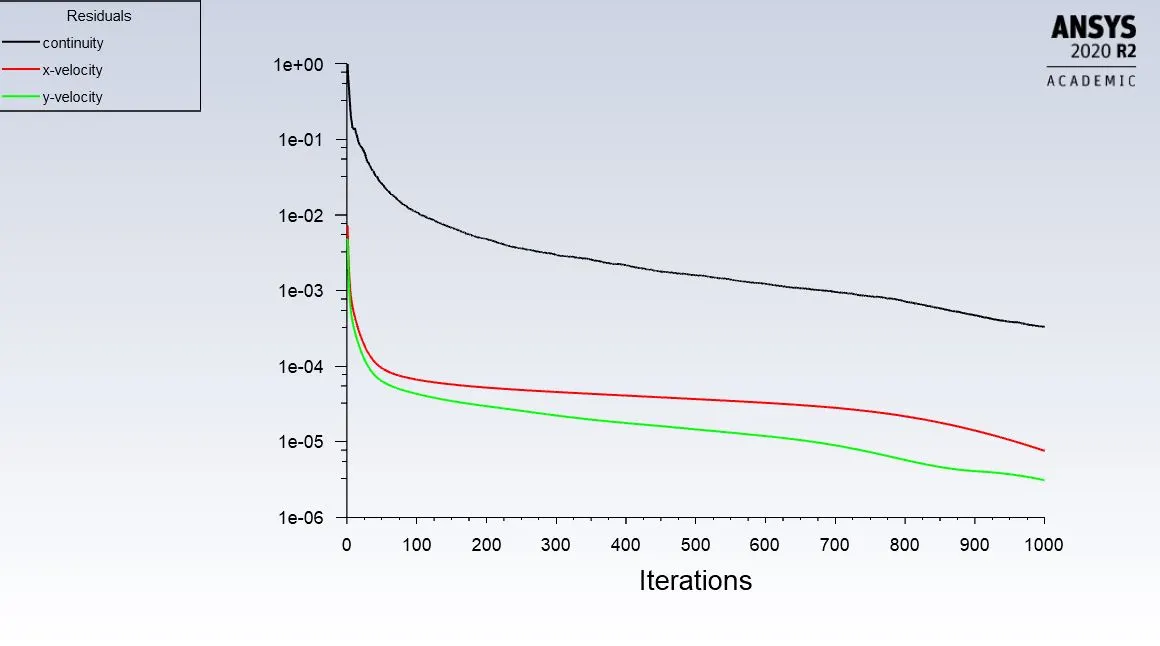
Residuals Re 10:
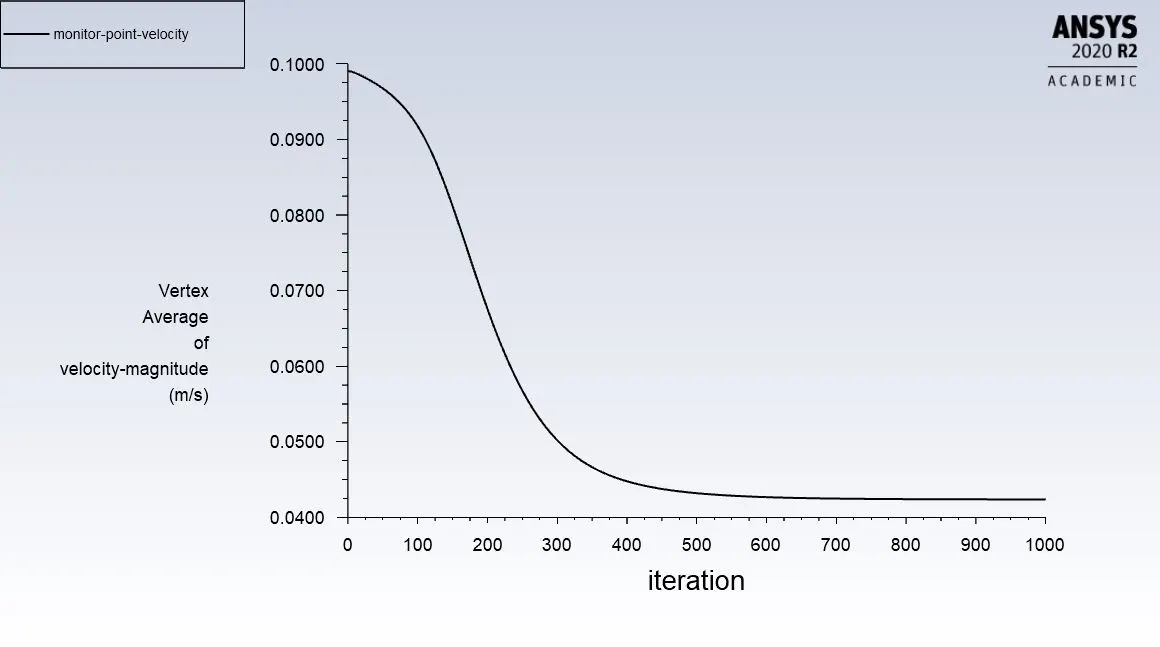
vertex average of velocity magnitude Re 10:(vortex shedding behind the cylinder)
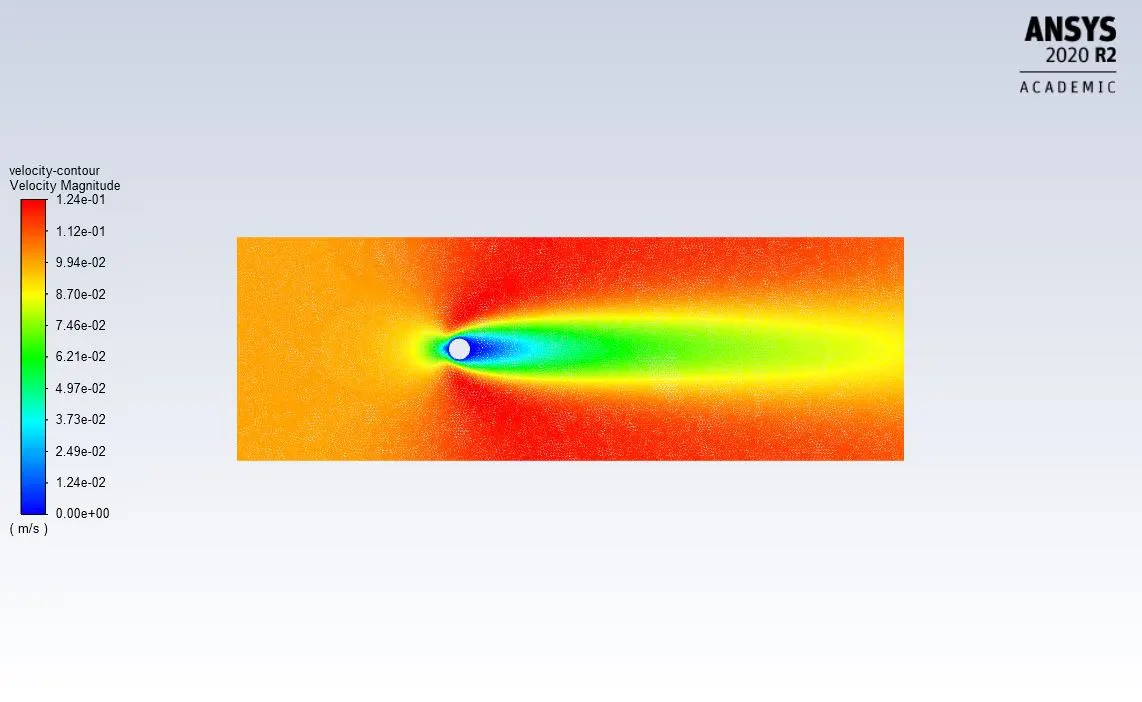
Velocity contour Re 10:
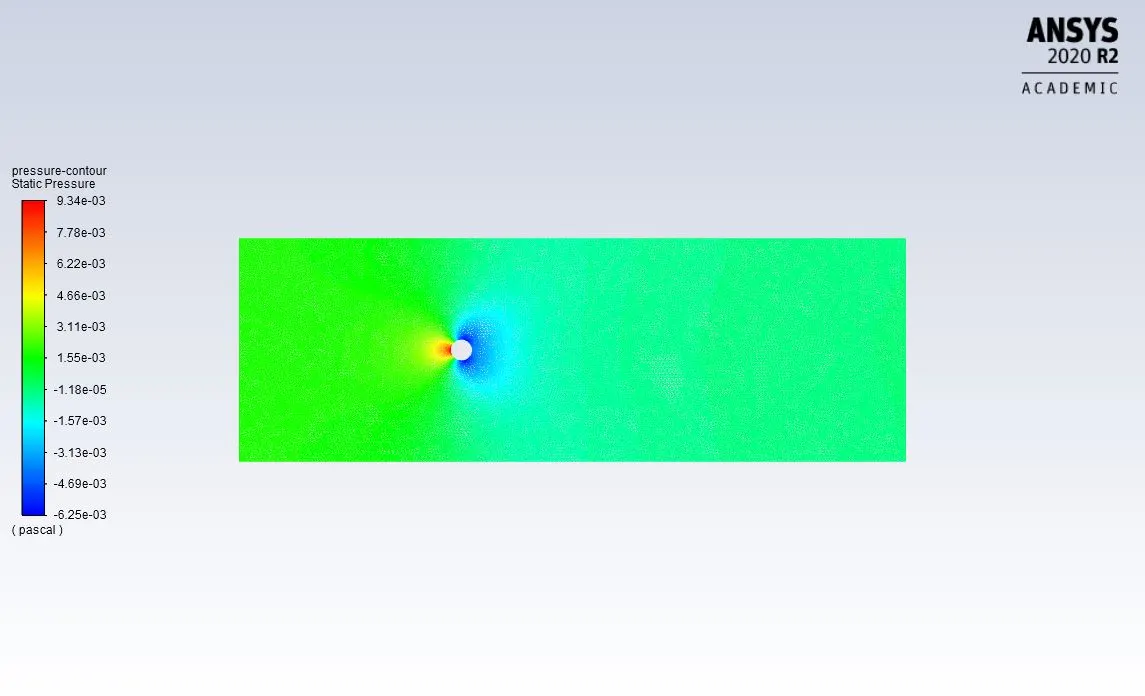
Pressure contour Re 10:
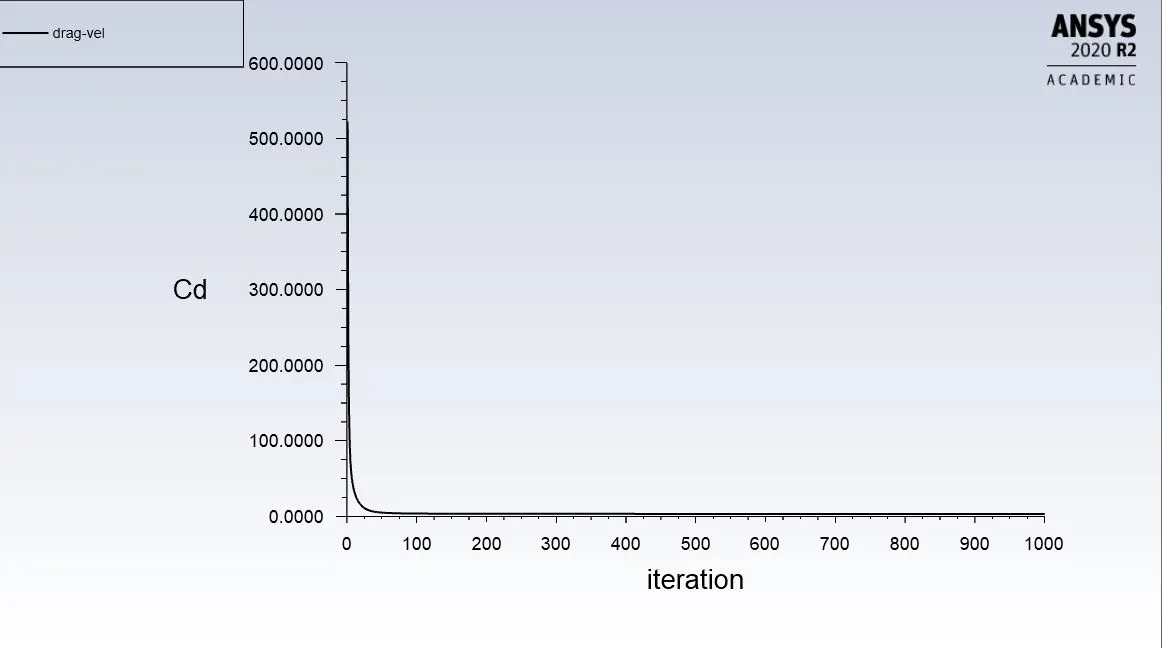
Drag coefficient Re 10:
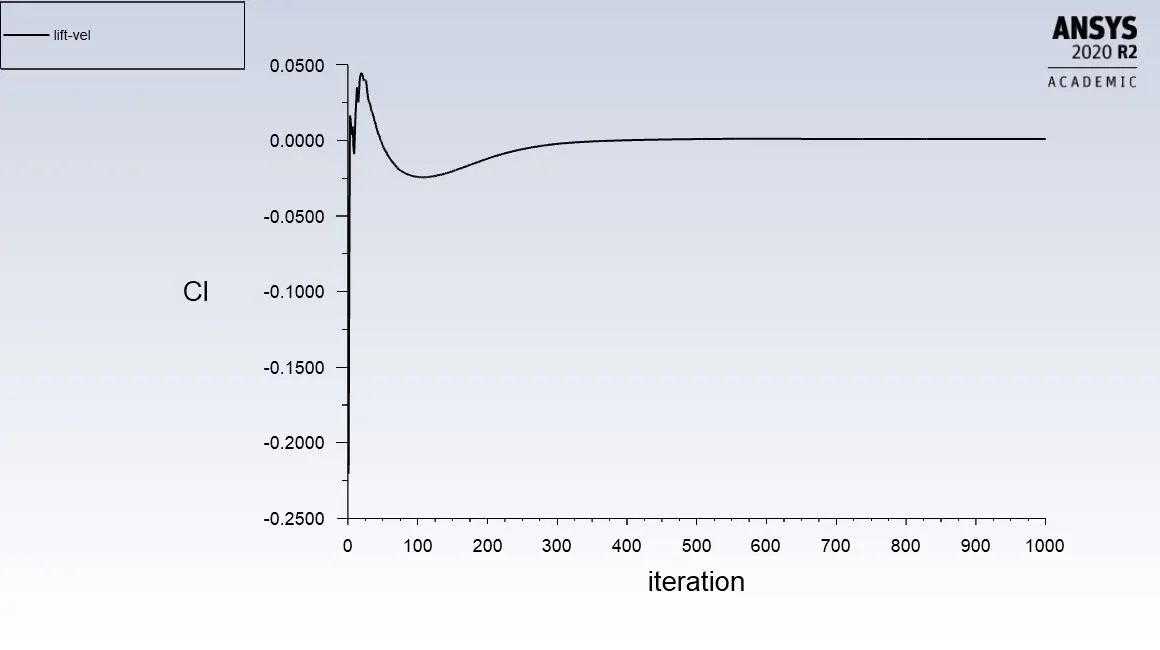
Lift coeffiecient Re 10:
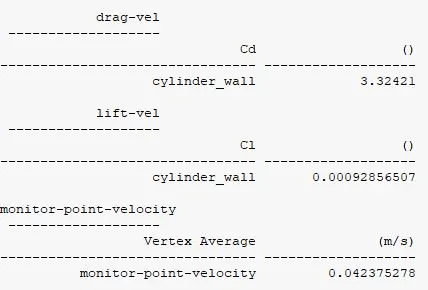
Numerical values Re 10:
Results for steady state Re=100:-------------------------------------------------------------------------------------------------------------------------------------------------------------------------
Residues Re 100:
Vertex average of velocity magnitude at monitor point Re 100(vortex shedding behind the cylinder):
Velocity Contour Re 100:
Pressure contour Re 100:
Coeffiecient of Drag plot Re 100:
Coefficient of lift plot Re 100:
Numerical Values Re 100:
Results for steady state Re=1000:-------------------------------------------------------------------------------------------------------------------------------
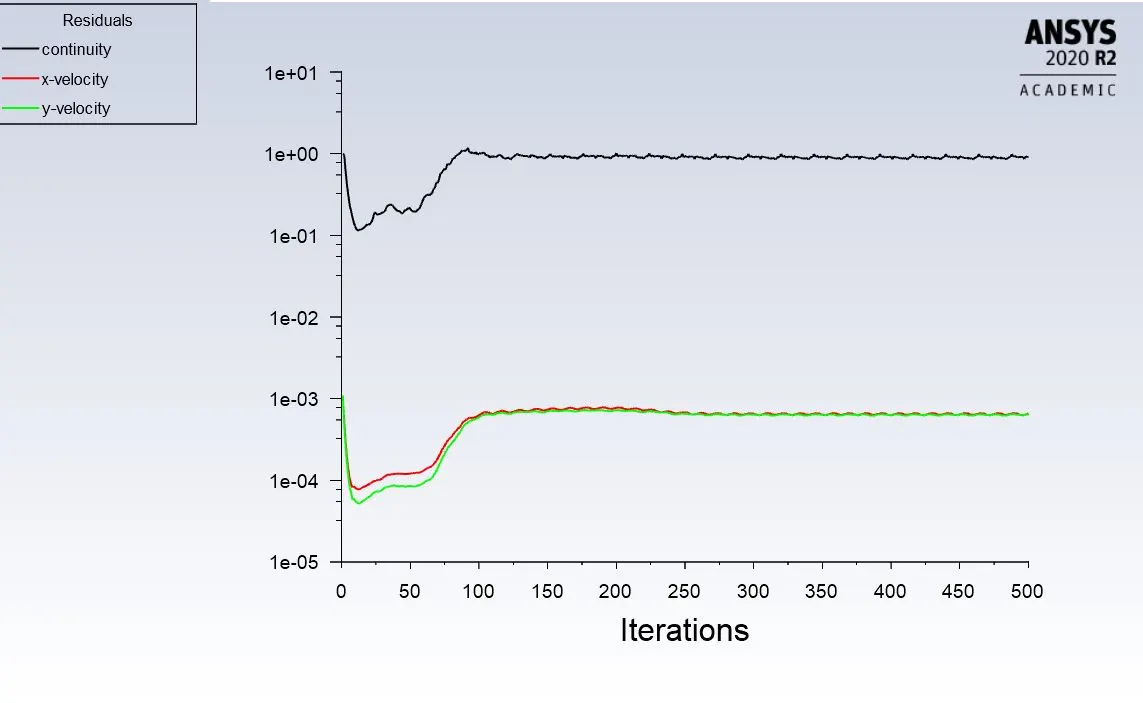
Residues Re 1000:
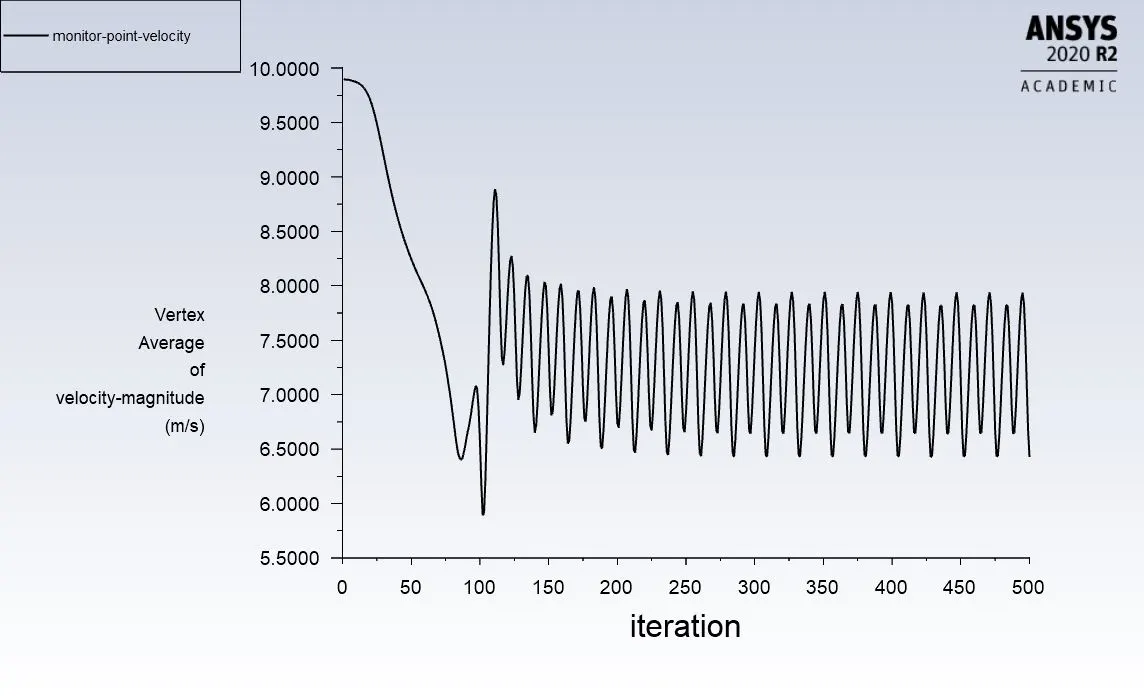
vertex average of velocity magnitude Re 1000(vortex shedding behind the cylinder):
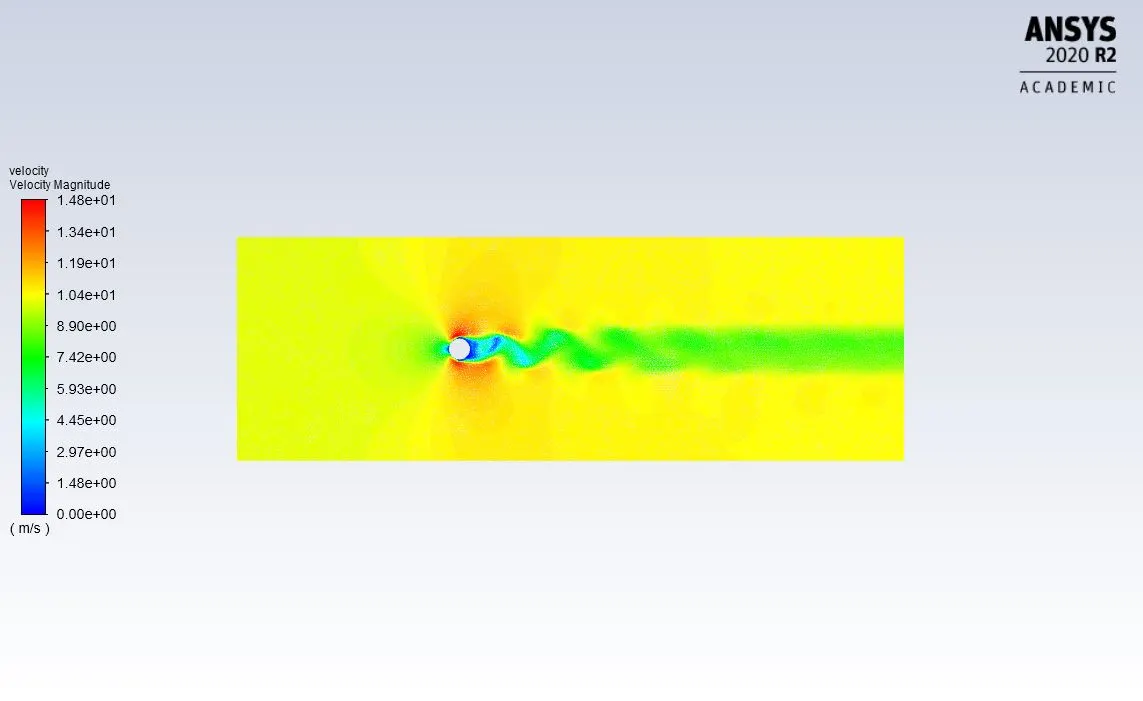
Velocity contour Re 1000:
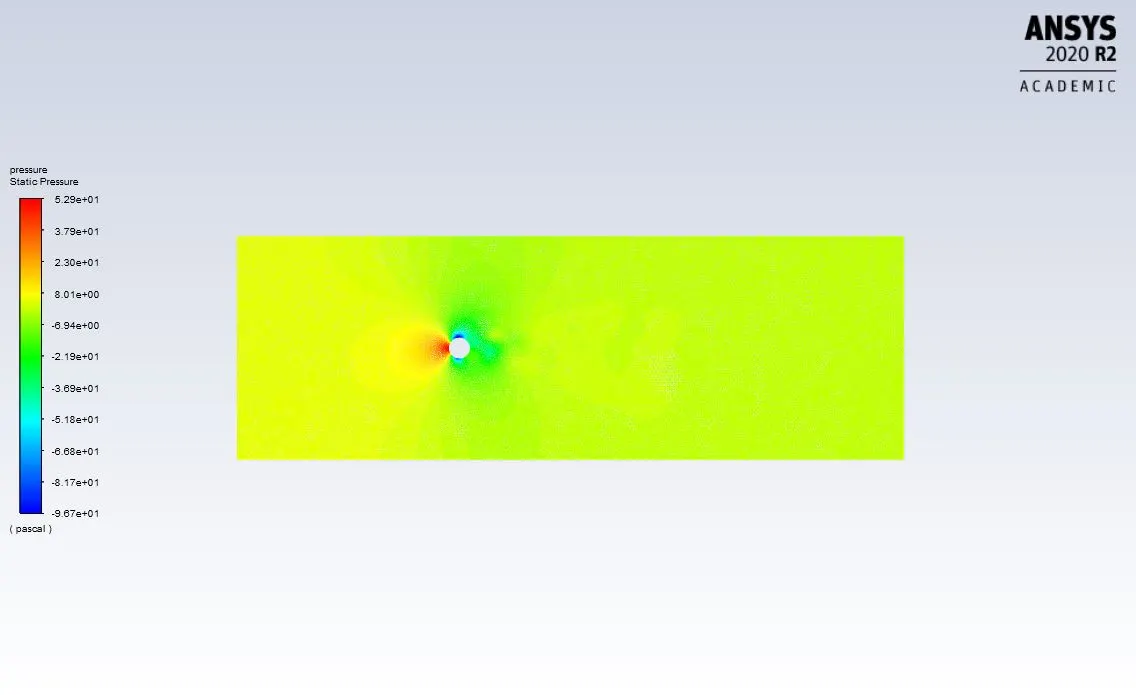
Pressure contour Re 1000:
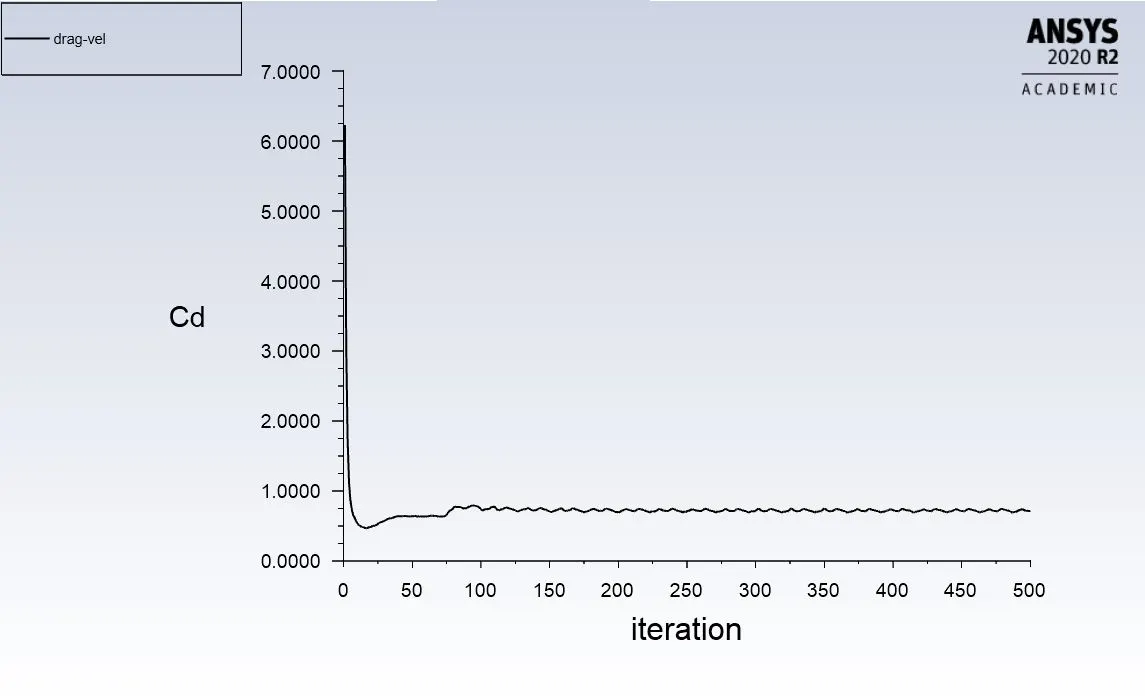
Drag coefficient Re 1000:
Lift coeffiecient Re 1000:
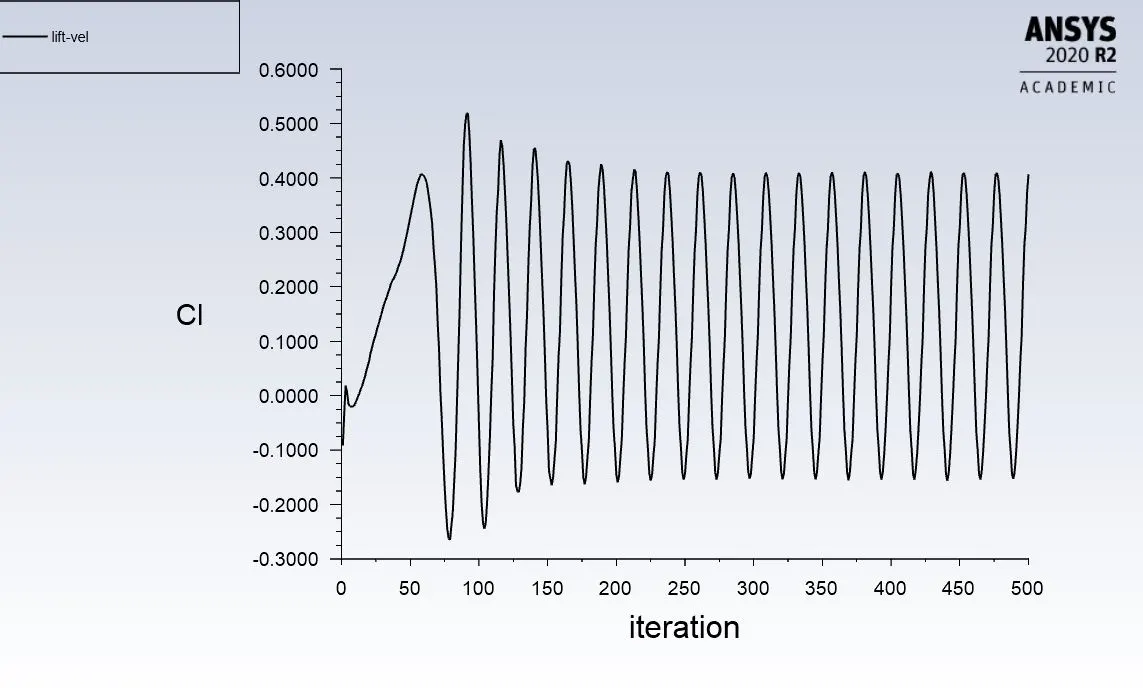
Numerical results Re 1000:
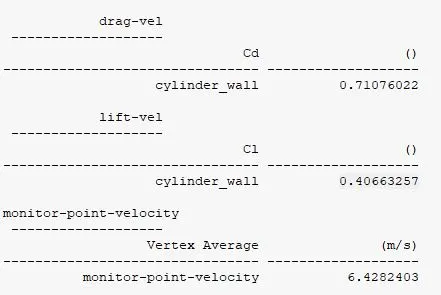
Results for steady state Re=10000:-------------------------------------------------------------------------------------------------------------------
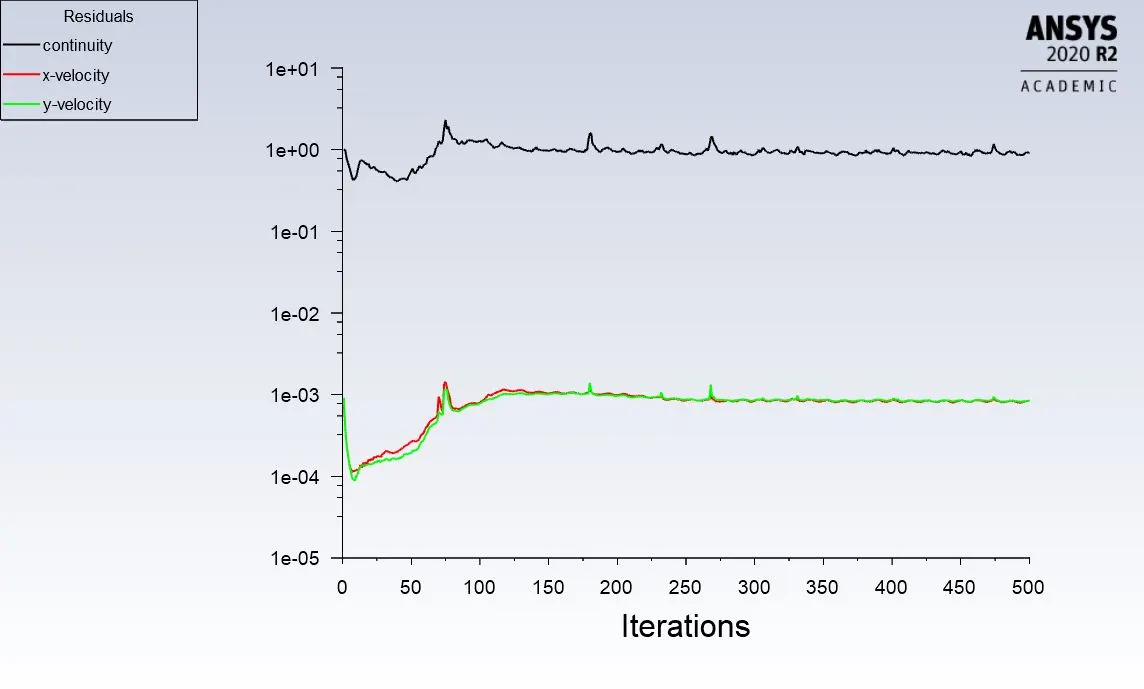
Residuals Re 10000:
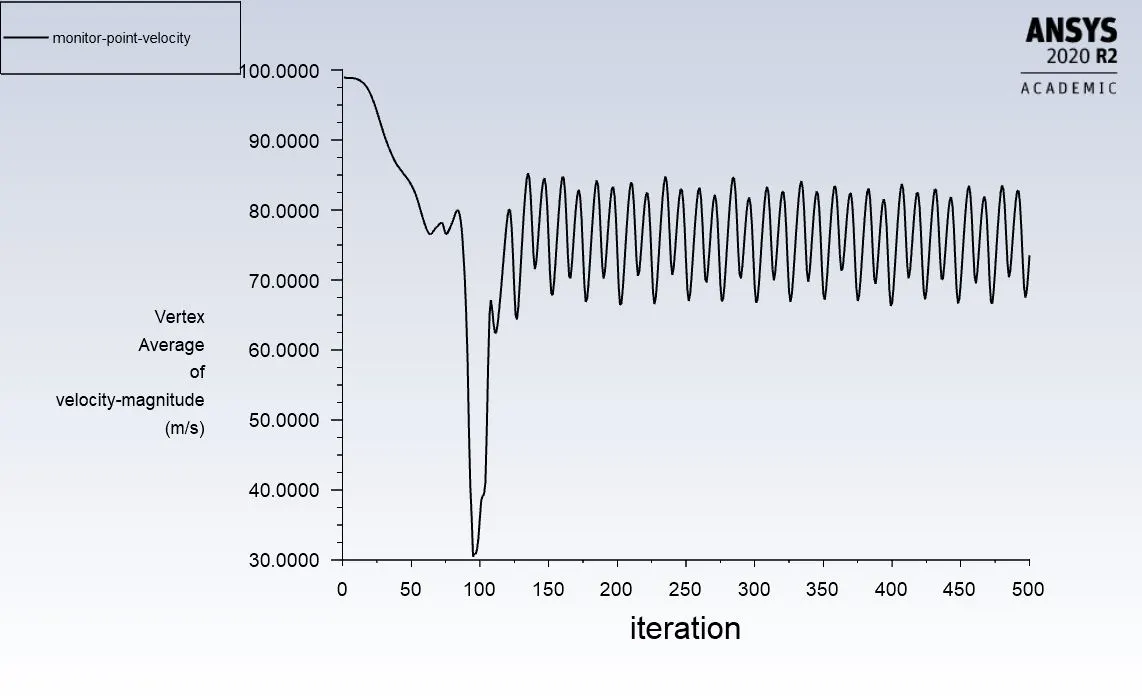
vertex average of velocity magnitude Re 10000(vortex shedding behind the cylinder):
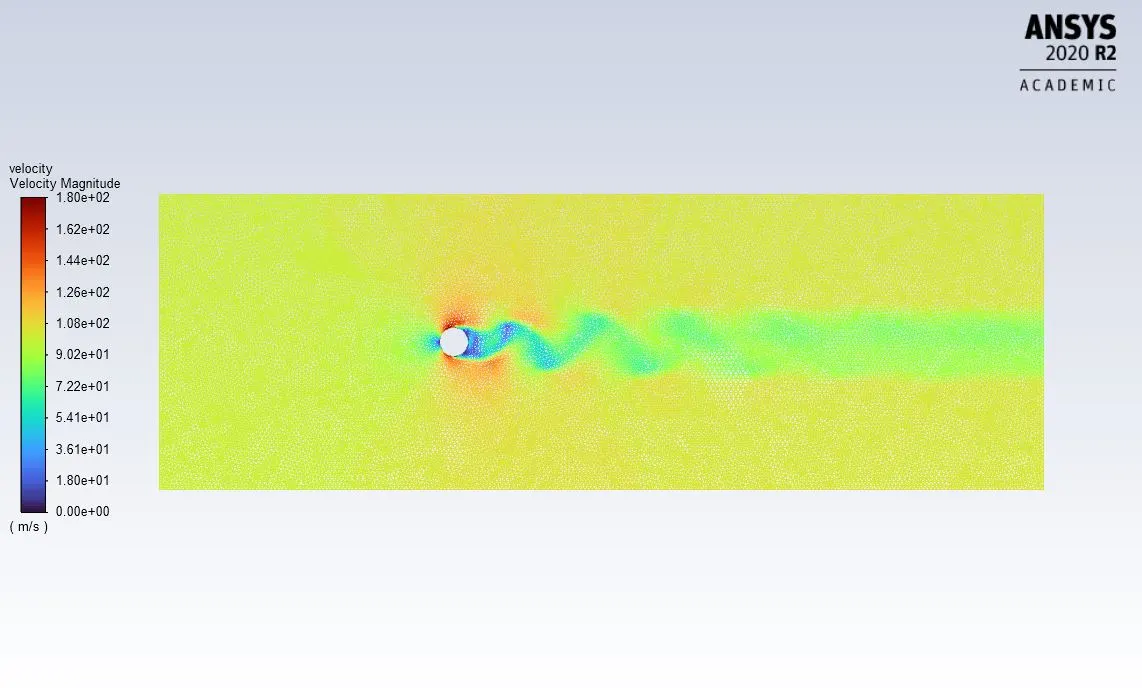
Velocity contour Re 10000:
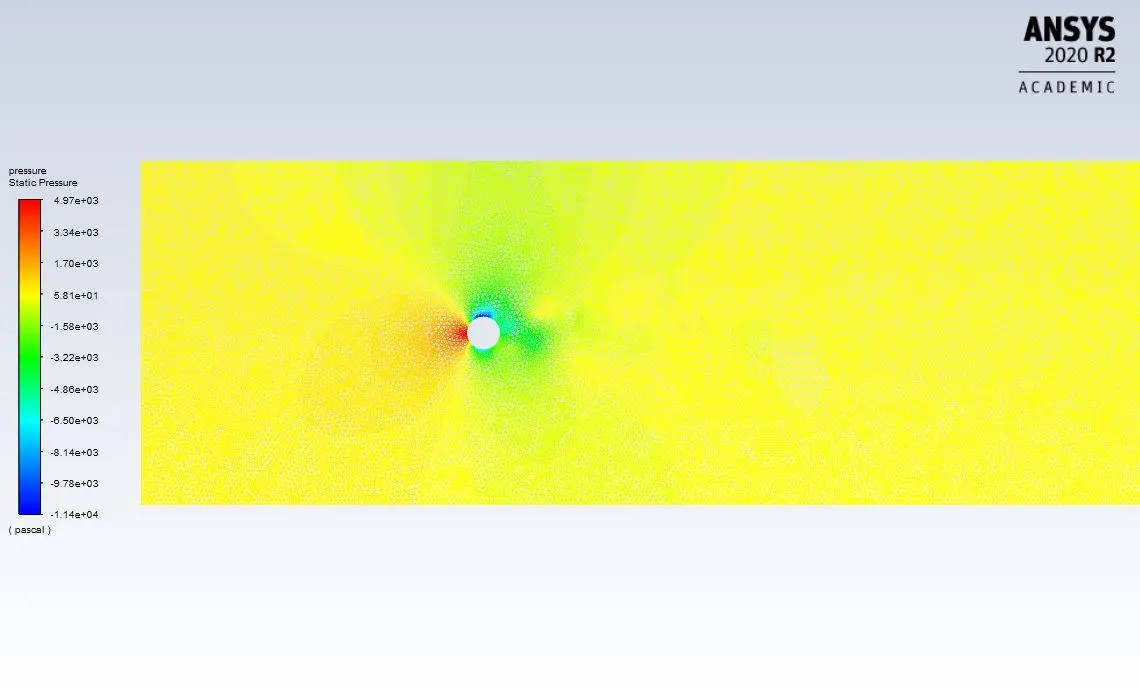
Pressure contour Re 10000:
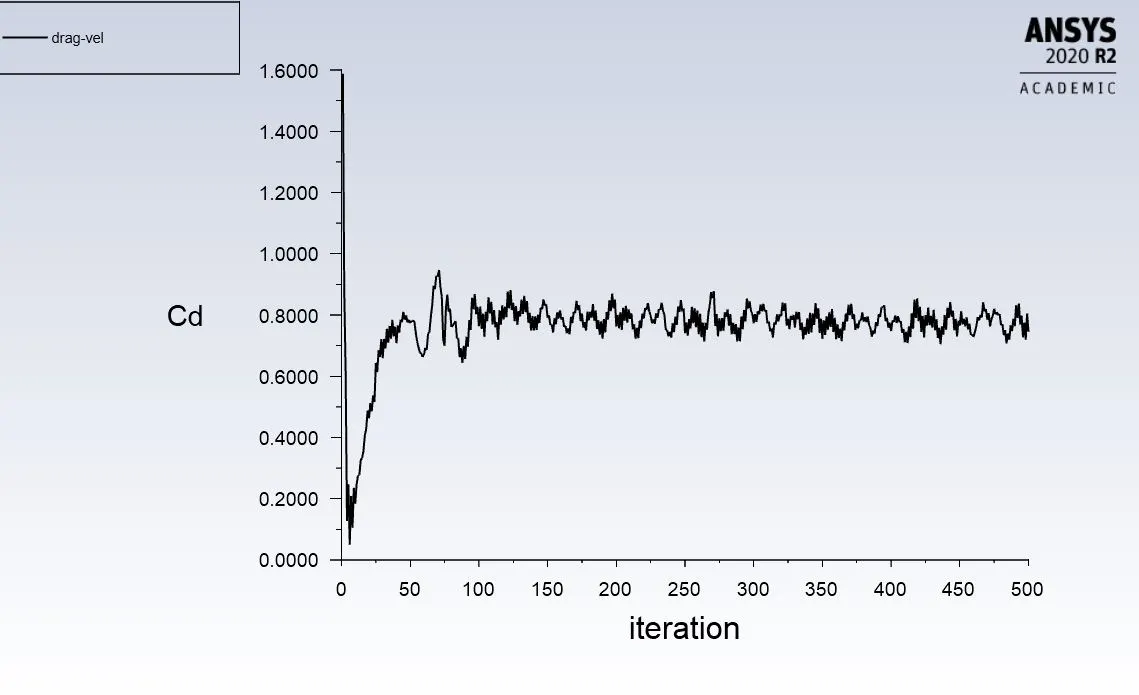
Drag coefficient Re 10000:
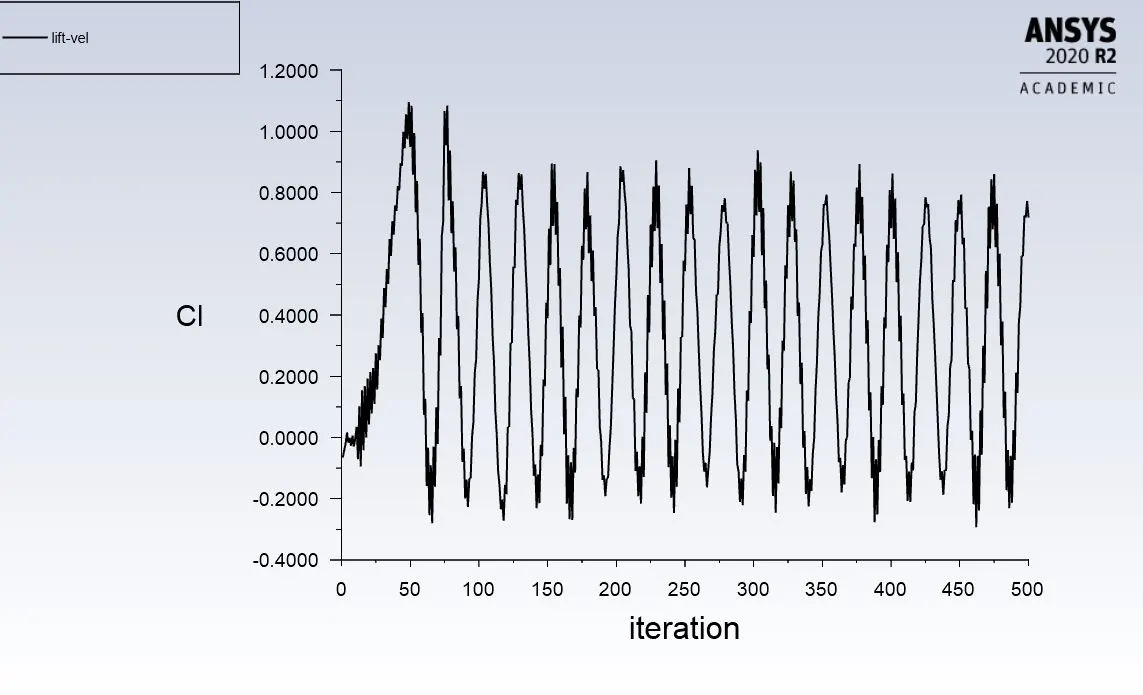
Lift coeffiecient Re 10000:
Numerical results Re 10000:
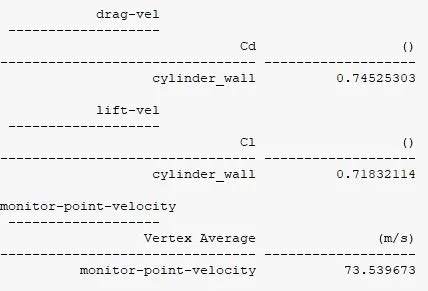
Results for steady state Re=100000:-------------------------------------------------------------------------------------------------------------------
Residuals Re 100000:
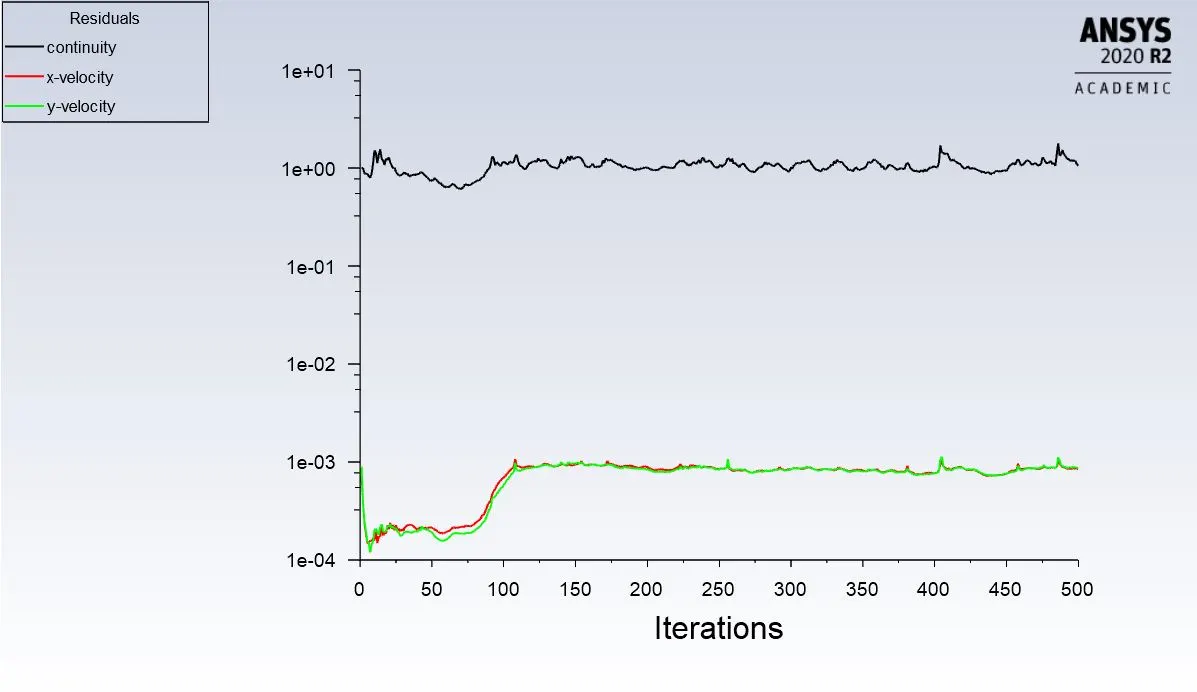
vertex average of velocity magnitude Re 100000(vortex shedding behind the cylinder):
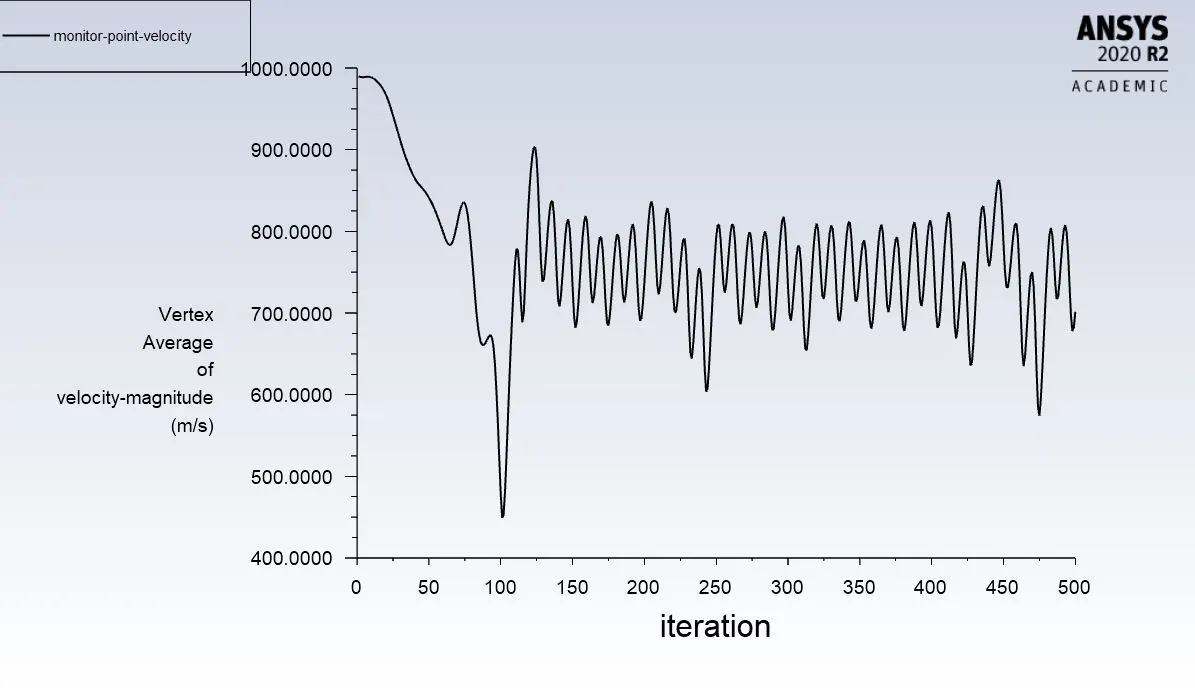
Velocity contour Re 100000:
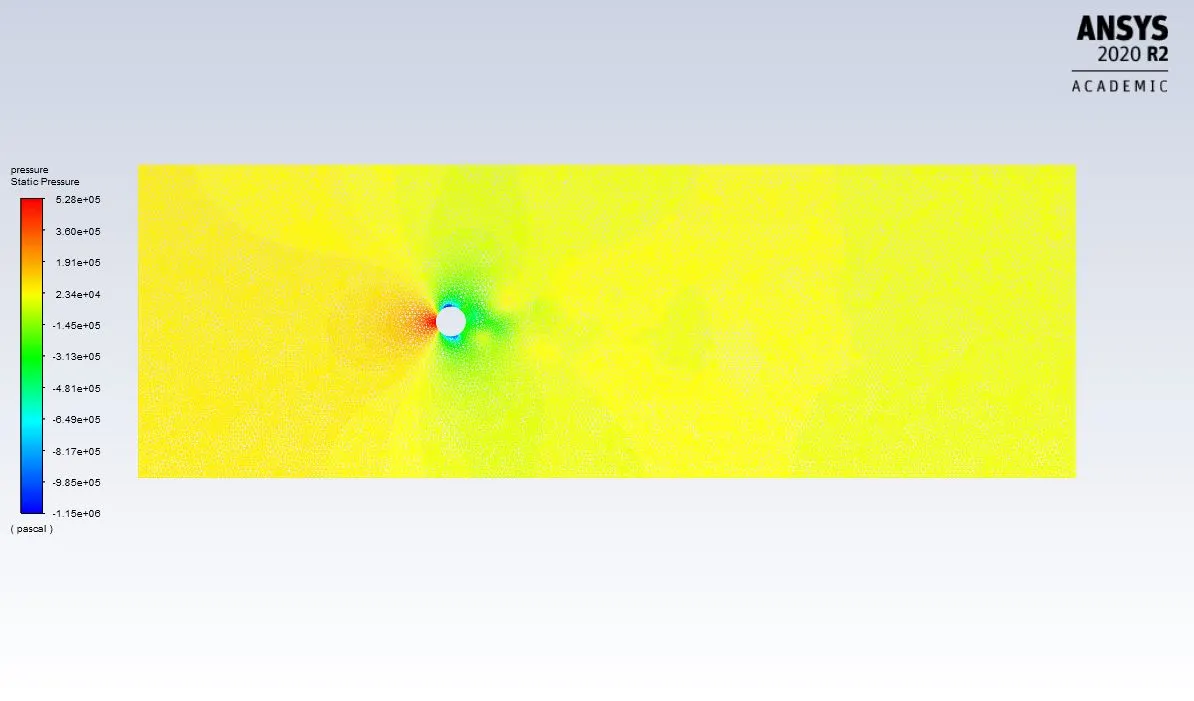
Pressure contour Re 100000:
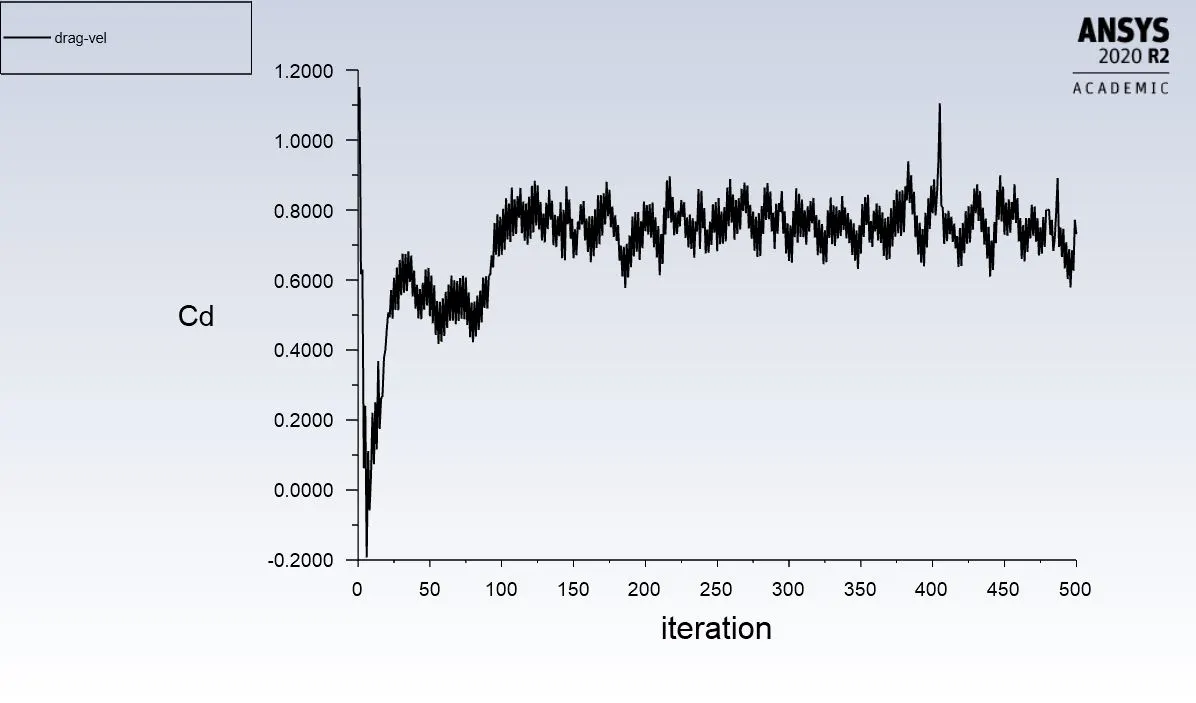
Drag coefficient Re 100000:
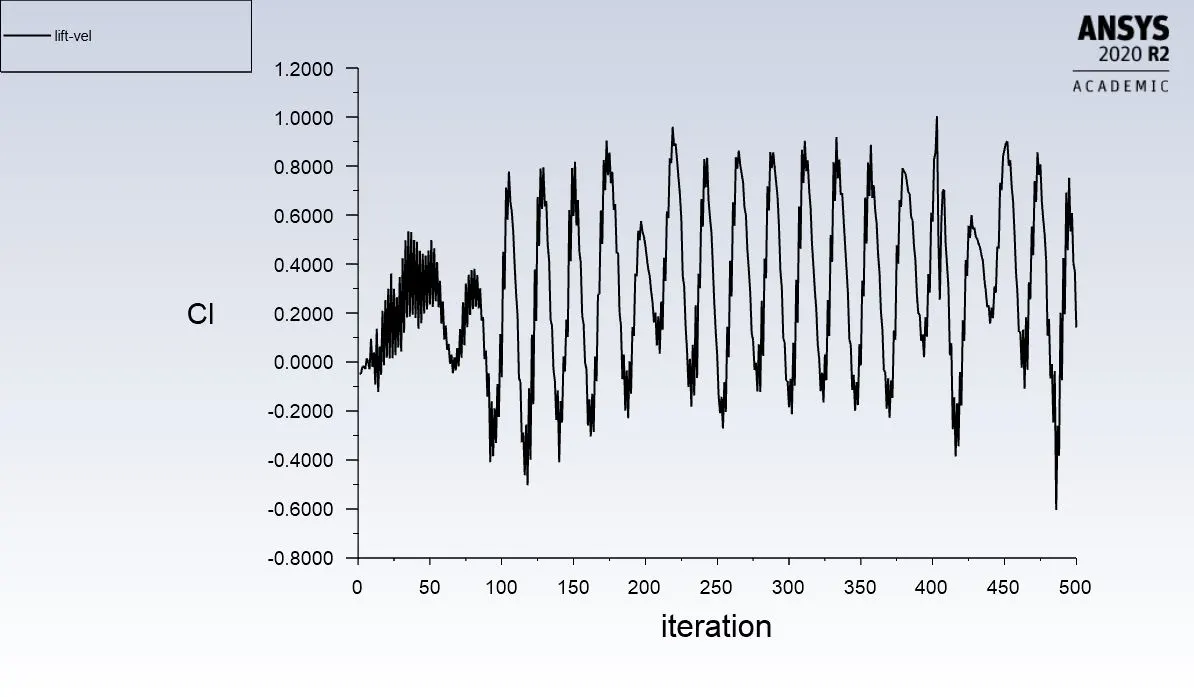
Lift coeffiecient Re 100000:
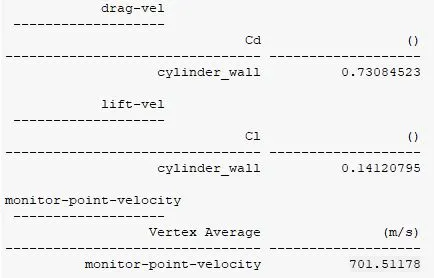
Numerical results Re 100000:
-------------------------------------------------------------Tabular results for the Reynolds number 10 to 1,00,000:-------------------------------------------------------------------------------------------

Conclusions for Reynolds number 10,100,1000,10000,100000:
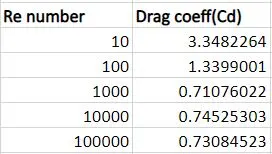
- In the above table we can clearly see there is a drop in coefficient of drag ad the reynolds number increases.
- The monitor point velocity shows a clear picture that the simulations are correct.
- vortex shredding is not seen in the reynolds number 10.
- For remaining all reynolds number in the above table we can see the vortex shredding.
- The coefficient of drag from a reference for Re=100 is 1.3353 and the value obtained by Ansys fluent is 1.3399 which has very very less error of 0.3% which can be neglected.
Here is the direct comparison table for refernce:(steady state)
Final Conclusions:
- The flow over cylinder simulation is simaulated to see the effect of vortex shredding which was successfully seen in Re 100 with steady and transient case.
- The velocity plot is seen which show oscillations in the plot which tells about the clockwise and anticlockwise movement of the vortex(whirling mass of fluid) which essentially translates the seapration of flow from the boundary layer.
- The pressure contour is analysed and found a staggering drop of pressure behind the cylinder in the direction of flow.
- The velocity contour showed a clear vortex shredding phenomenon and values have varied according to the reynolds number.
- The strouhal number plotted and converted to data on excel revealed a value of 0.04 for steady state reynolds number 100 which is a decent value.
- The methodology of variation of velocity to obtain different reynolds number worked good as the changes were seen and analysed which found out to be intuitive.
- No vortex shredding is observed only in Re 10.
- finally we can conclude that as reynolds number increases the drag coefficient decreases
References:
- https://en.wikipedia.org/wiki/Drag_coefficient
- https://www.grc.nasa.gov/WWW/K-12/airplane/liftco.html#:~:text=The%20Lift%20Coefficient&text=The%20lift%20coefficient%20is%20a,some%20flow%20conditions%20on%20lift.&text=The%20lift%20coefficient%20Cl%20is,times%20the%20wing%20area%20A.
- https://www.sciencedirect.com/science/article/pii/S0307904X08000243