Steady Vs Unsteady flow over a cylinder
Flow over a cylinder and study of the Karman Vortex Street effect
Aim: To simulate the flow over a cylinder and to study the effect of the Reynolds number in leading to the occurrence of vortex shedding.
Objectives:
- To compare the Reynold’s number influence on vortex shedding
- To understand the phenomenon of drag and lift with respect to Reynold’s number
- To calculate the Strouhal Number for the transient case
Assumptions:
- Flow is laminar
- Dynamic Viscosity = 0.02 kg/m-s for all cases (Velocity is varied accordingly to obtain the desired Reynold’s number)
Theory:
Vortex shedding is a phenomenon that takes place when fluid flows over a blunt object such as a cylinder, leading to oscillating flow taking place behind the body.
This phenomenon creates a series of swirling patterns behind the object called the Karman Vortex Street. Generally, it has been observed that this effect takes place at Reynold’s number of 100.
In order to describe this oscillating flow pattern, a dimensionless number known as the Strouhal Number is calculated.
Procedure:
Geometry
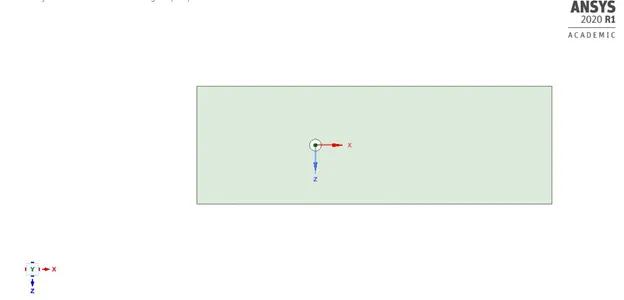
Diameter of cylinder used = 2 m
Mesh Details
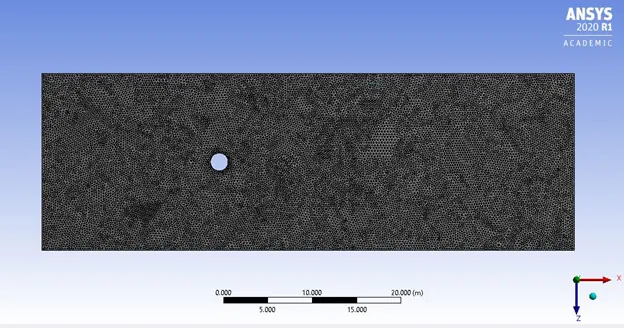
Mesh size = 0.25 m
Shape = triangle
Post processing
Reference values- L=2m
Area= 2 sq. meter
Case 1
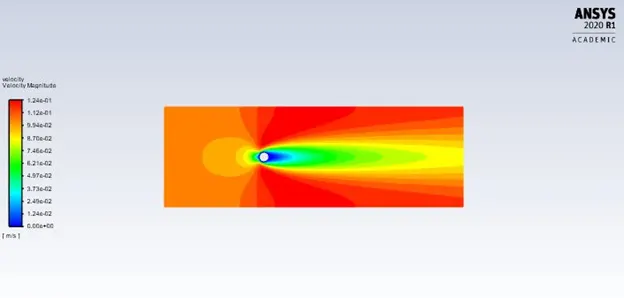
Re = 10
Velocity = 0.1 m/s
Velocity contour
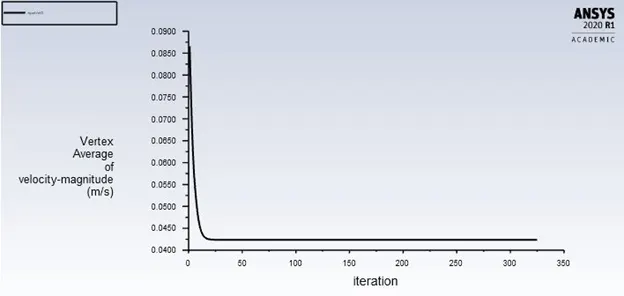
Velocity average
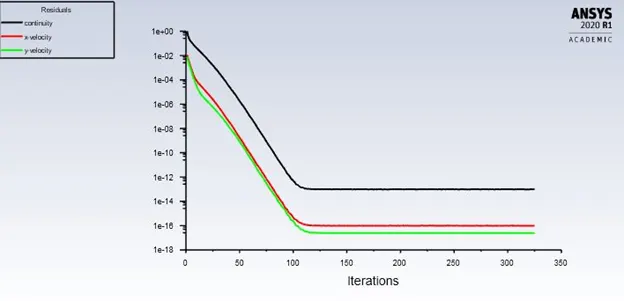
Scaled residuals
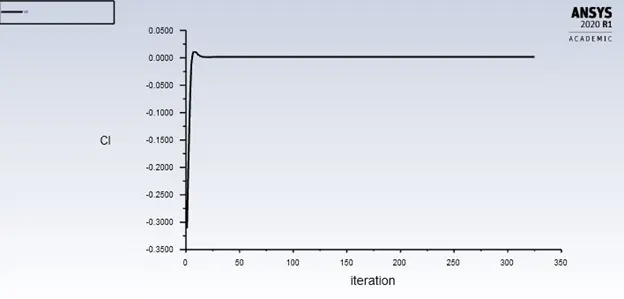
Lift coefficient
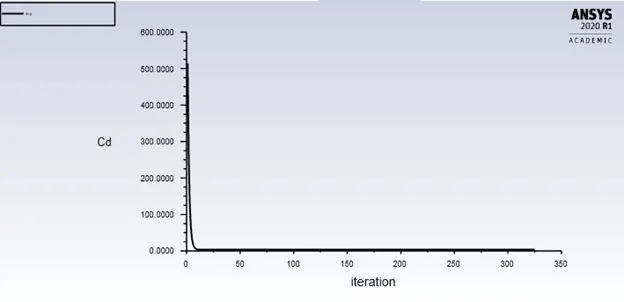
Drag coefficient
Case 2
Re = 100
Velocity = 1 m/s
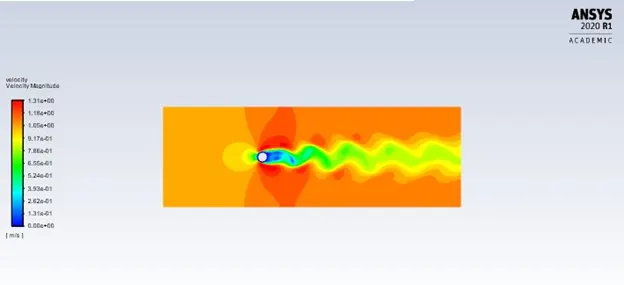
Velocity contour
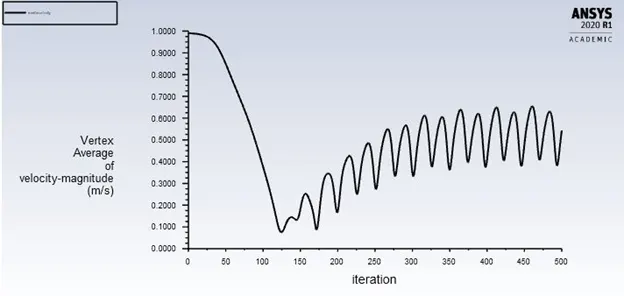
Velocity average
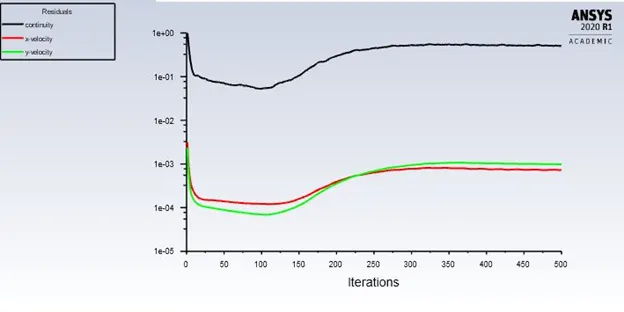
Scaled residuals
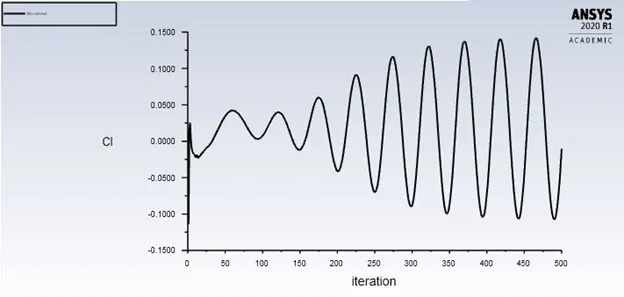
Coefficient of lift
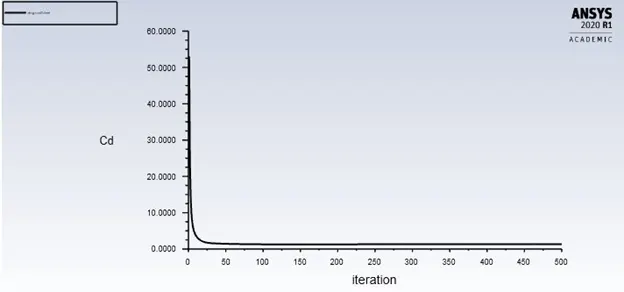
Coefficient of drag
Case 3
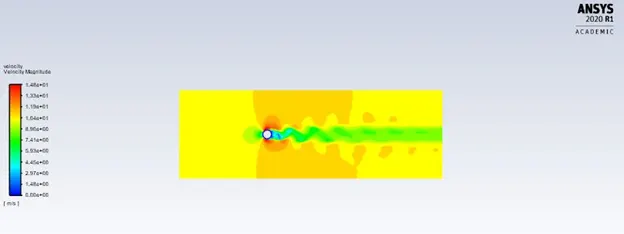
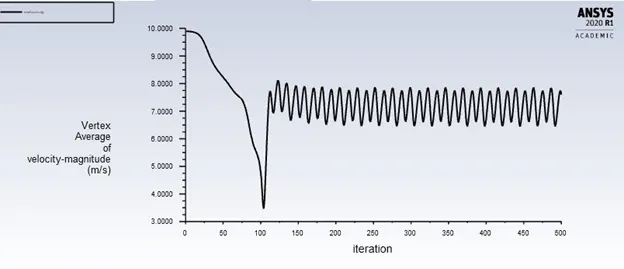
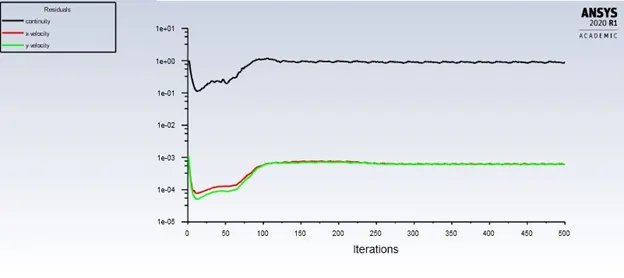
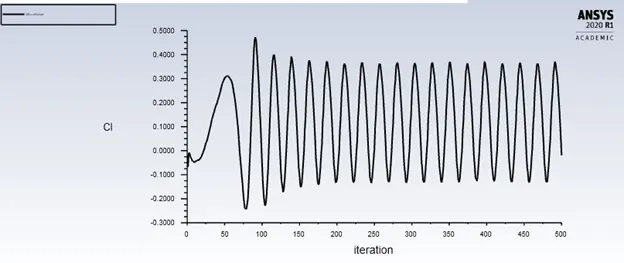
Reynolds number = 1000
Velocity = 10 m/s
Velocity contour
Velocity average
Scaled residuals
Coefficient of lift
Coefficient of drag
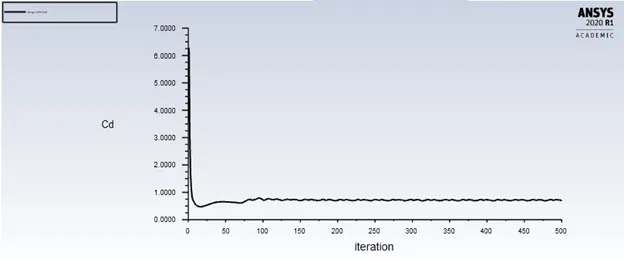
Case 4
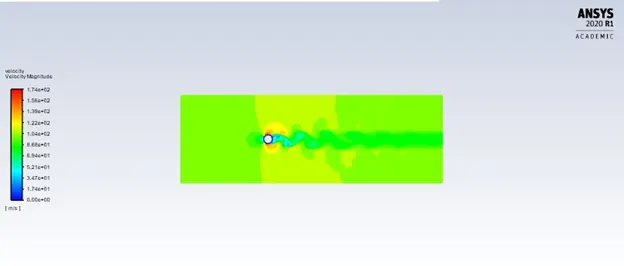
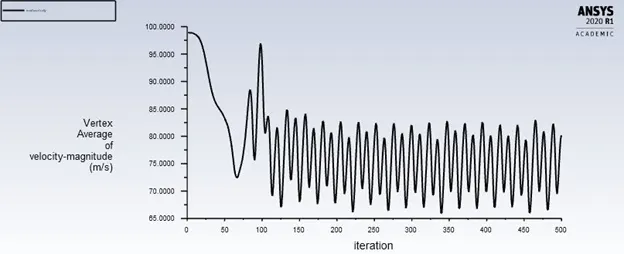
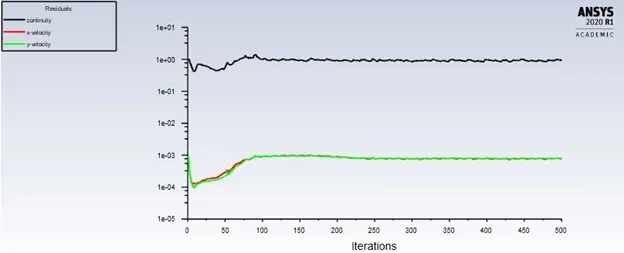
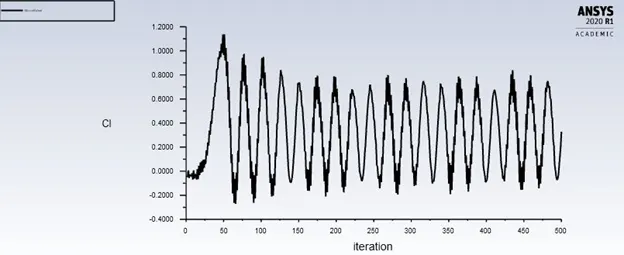
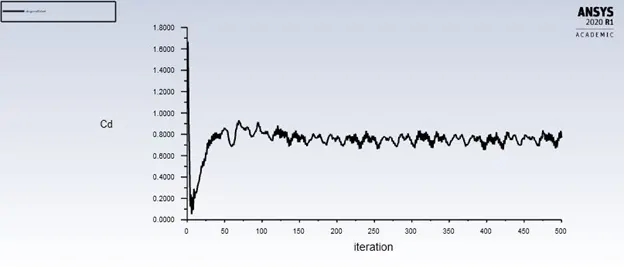
Re = 10,000
Velocity = 100 m/s
Velocity contour
Velocity average
Scaled residuals
Coefficient of lift
Coefficient of drag
Case 5
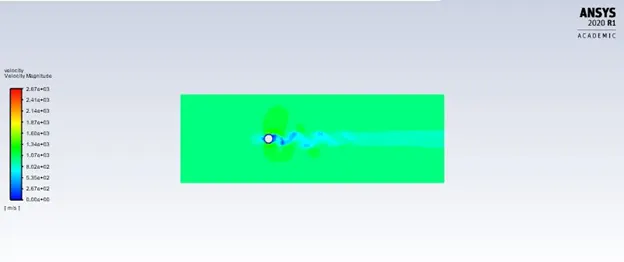
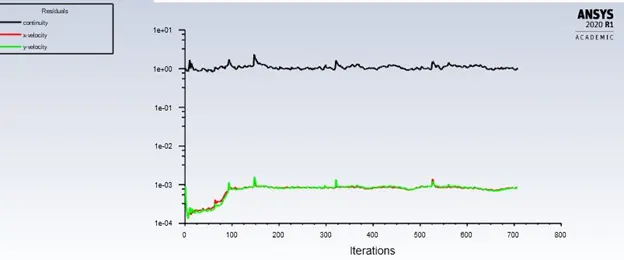
Re = 100,000
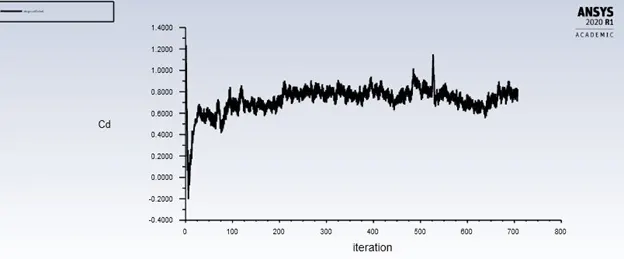
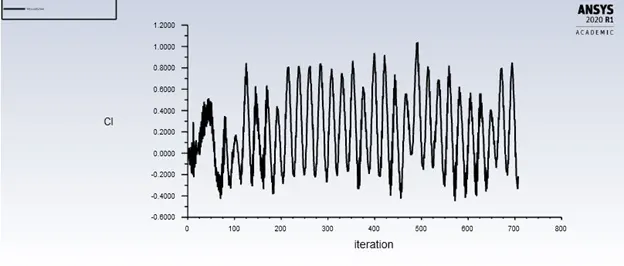
Velocity= 1000 m/s
Velocity contour
Scaled residuals
Velocity average
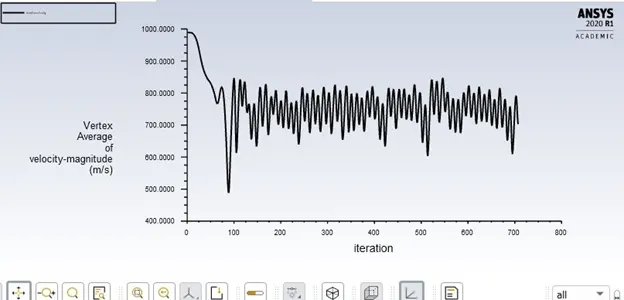
Drag coefficient
Lift coefficient
Case 2.1
Transient
Re = 100
Velocity = 1 m/s
Time step = 0.1
Velocity contour
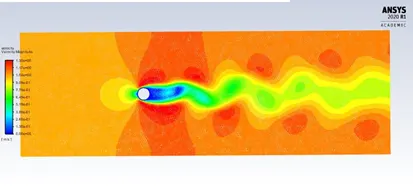
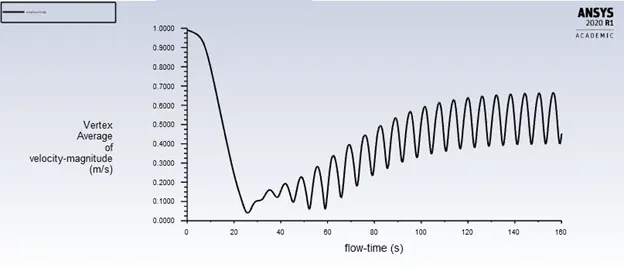
Velocity average
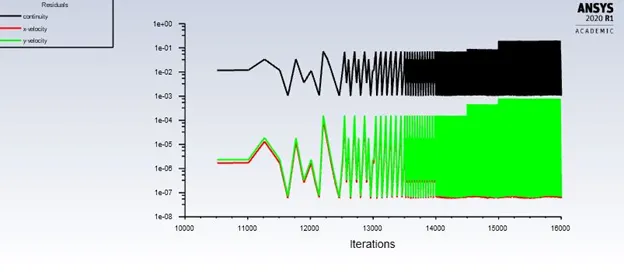
Scaled residuals
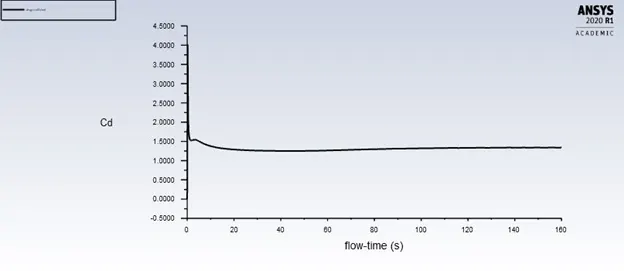
Drag coefficient
Lift coefficient
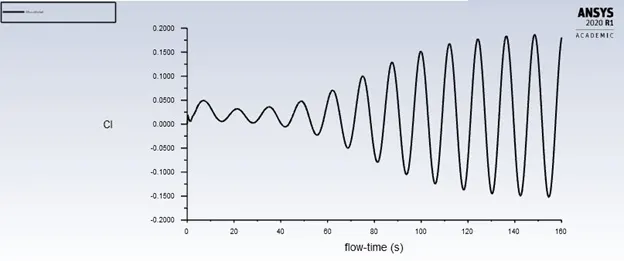
Strouhal number = (F*L)/ U
U = Free stream velocity = 1 m/s
L = Characteristic length = 2 m
F = Frequency = 3/(120-140) = 0.15 Hz
Strouhal number = 0.15 * 2 = 0.3
Observations
|
Re |
Drag coefficient |
Lift coefficient |
|
10 |
3.3235926 |
0.0015660688 |
|
100 |
1.33366 |
-0.010401064 |
|
1000 |
0.69334785 |
-0.018852149 |
|
10,000 |
0.76838505 |
0.32767581 |
|
100,000 |
0.8234312 |
-0.21534412 |
|
100 (transient) |
1.3215844 |
0.18062283 |
Inferences
- As Reynold’s number increases, the lift coefficient increases, while the drag coefficient decreases. (up to Re = 100,000, at Re = 100,000, lift reduces)
- At Re = 100, Vortex shedding and Karman vortex street is observed.
- Strouhal number at the transient state of flow = 0.3