Mixing efficiency
Mixing efficiency
Aim: To compare the effectiveness of mixing when the hot inlet temperature is 36⁰C and cold inlet is at 19⁰C
Introduction: A mixing tee involves the flow of air from two different inlets at different temperatures. This allows for diffusion or mixing of the air. This experiment involves estimating how effectively the mixing takes place and whether the desired mixing efficiency is obtained.
Mixing Tee’s are generally used in HVAC applications, where a desired temperature of air is obtained from the outlet by adjusting the velocity and temperature of air at the inlet ports.
This experiment will compare two cases, where a short and long mixing tee will be used at different momentum ratios.
Solving and Modelling approach:
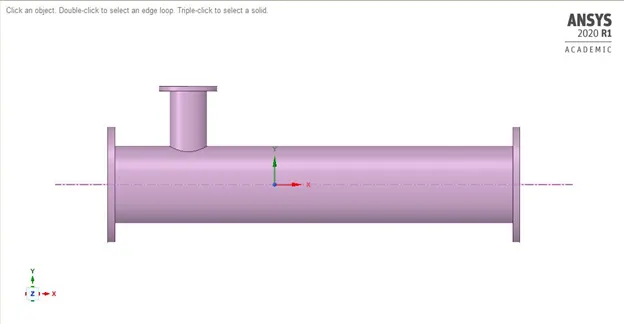
Only the fluid region in contact will be used as the remaining regions are not in contact with the air flowing in and out. Hence, the region in contact will be extracted and the remaining region will be suppressed.
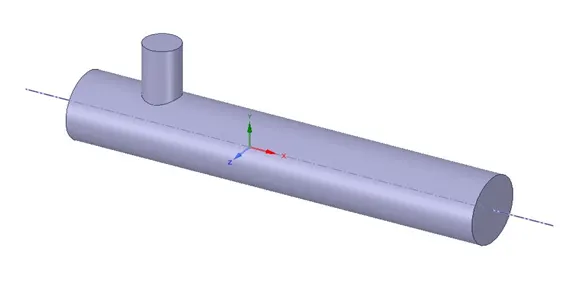
Extracted volume:
Formula and Tables:
Momentum ratio = cold inlet velocity/hot inlet velocity
Case 1- short mixing tee
Case 2- long mixing tee
|
Case |
Hot Inlet Velocity |
Cold inlet Velocity |
Momentum ratio |
|
Case 1 |
3 |
6 |
2 |
|
Case 1 |
3 |
12 |
4 |
|
Case 2 |
3 |
6 |
2 |
|
Case 2 |
3 |
12 |
4 |
All velocity units are in m/s
Case 1
Momentum ratio = 2
Boundary conditions:
Hot Inlet velocity = 3 m/s
Cold inlet velocity = 6 m/s
Model – K epsilon
Mesh details:
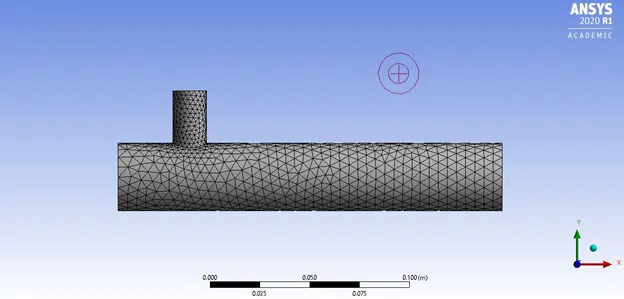
Mesh size = 0.010219 m (Default)
Cell count = 12602
Post processing
Standard deviation
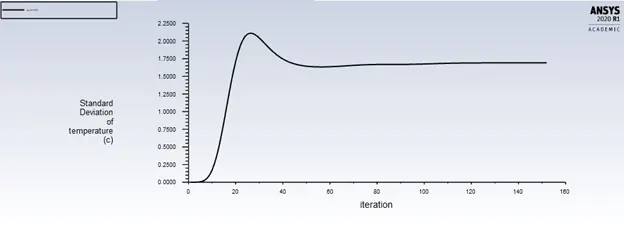
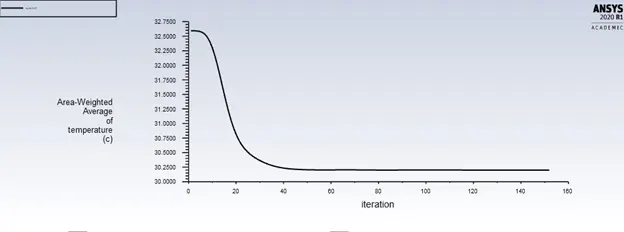
Standard deviation of temperature = 1.75⁰C approx.
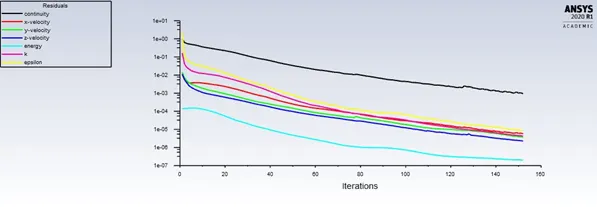
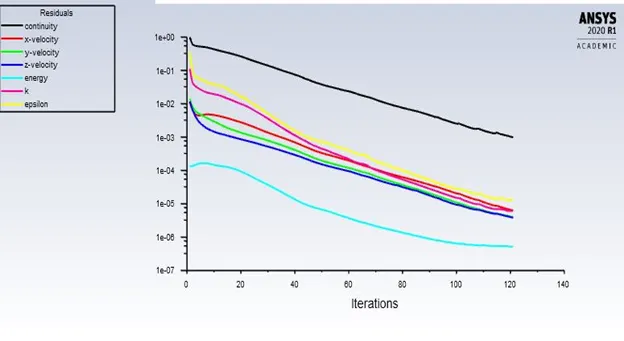
Number of iterations for convergence = 110 approx.
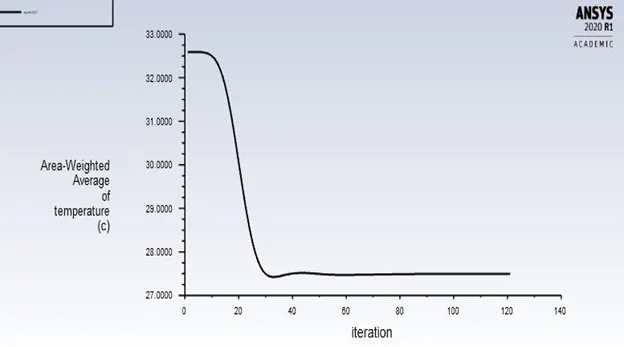
Average temperature
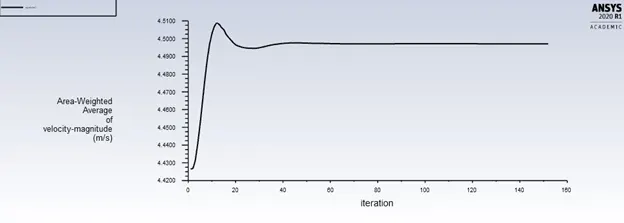
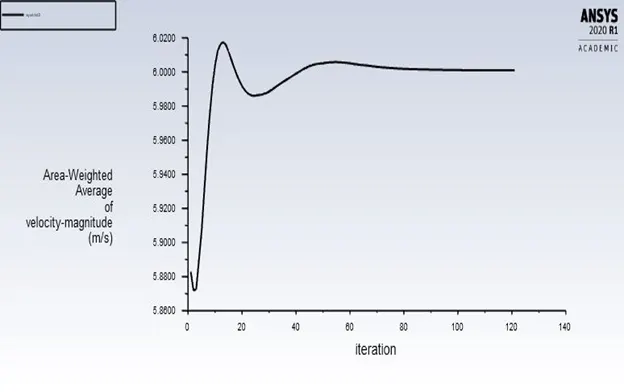
Average velocity
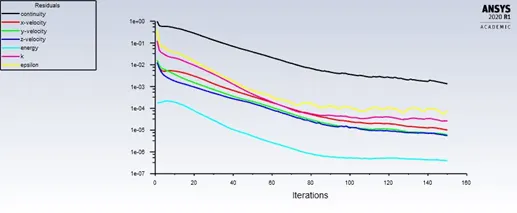
Scaled residuals
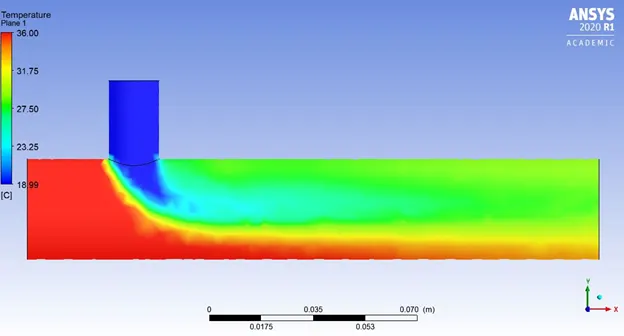
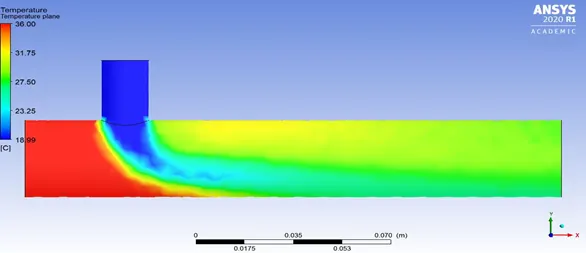
Temperature contour
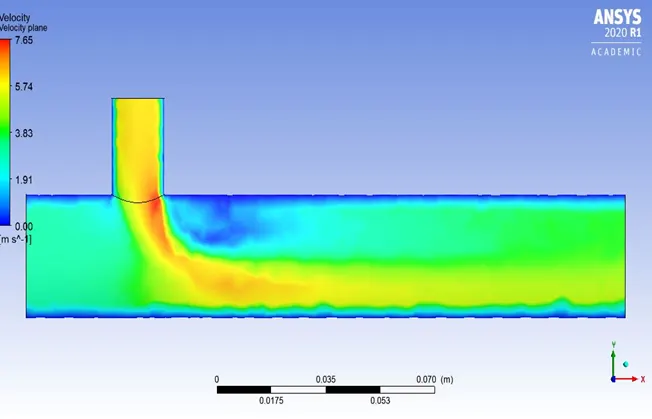
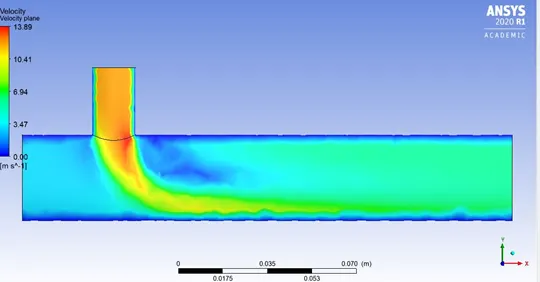
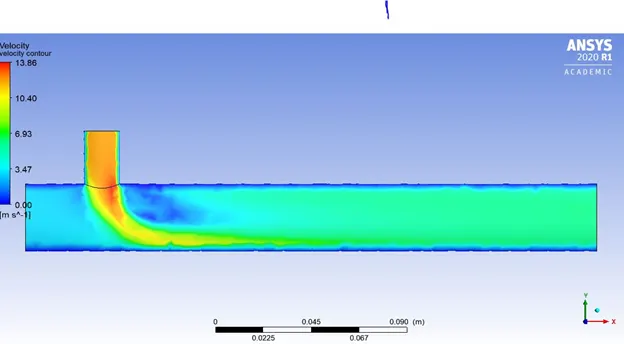
Velocity Contour
Case 1 using K omega
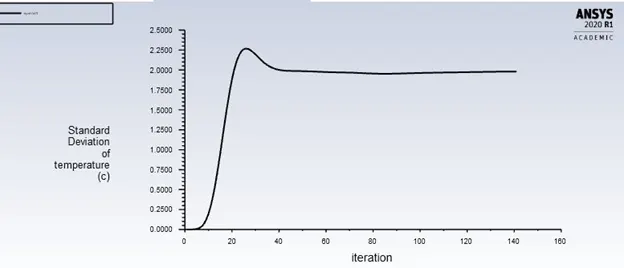
In this case, on using K omega model for simulation and plotting, a higher standard deviation is visible from the plot when compared to the k epsilon model. As this is undesirable because this is due to improper mixing efficiency, the K epsilon model is used for further calculations.
Case 1
Momentum ratio = 4
Hot inlet velocity = 3 m/s
Cold inlet velocity = 12 m/s
Mesh size = 0.010219 m
Cell count = 12602
Post processing
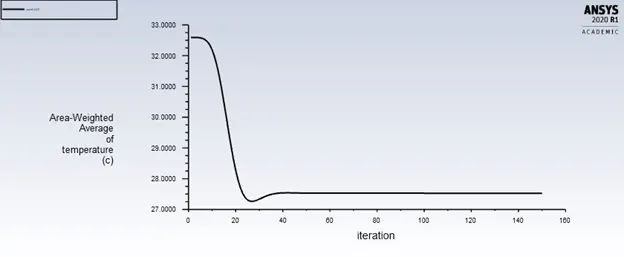
Standard deviation of temperature
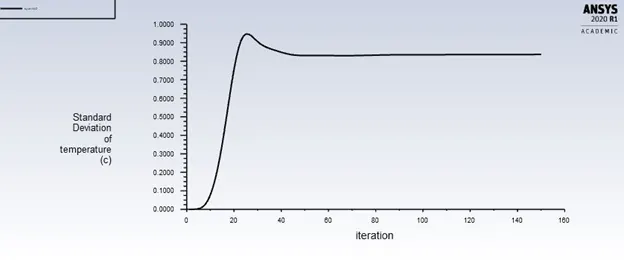
Standard deviation of temperature = 0.88⁰C approx.
Number of iterations for convergence = Between 80 to 90
Average velocity
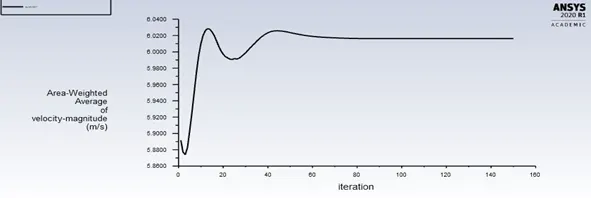
Average temperature
Scaled residuals
Temperature contour
Velocity contour
Case 2
Momentum ratio = 2
Boundary conditions:
Hot Inlet velocity = 3 m/s
Cold inlet velocity = 6 m/s
Mesh details
Number of elements = 15868
Element size = 0.013853 m
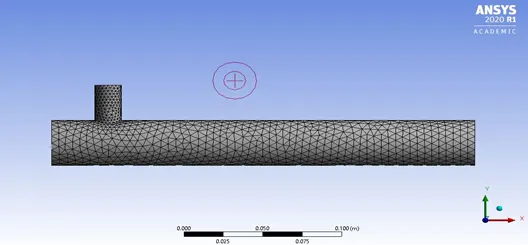
Post processing
Standard deviation
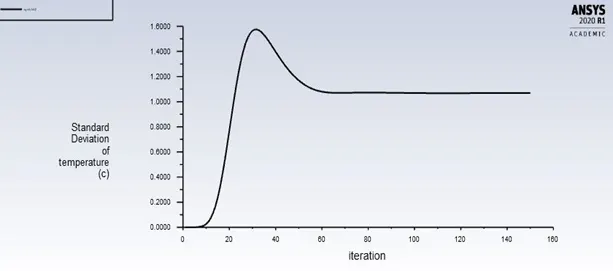
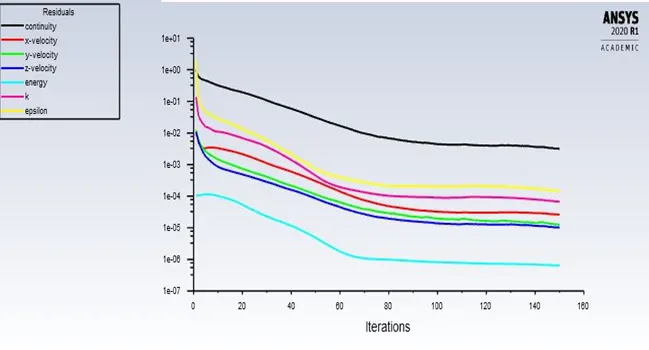
Number of iterations for convergence = 110
Standard deviation = 1.1⁰C
Scaled residuals
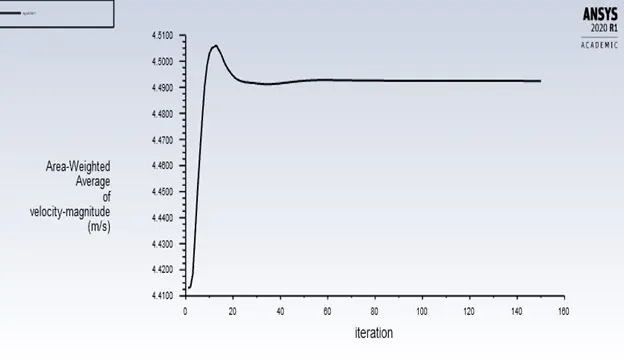
Velocity average
Temperature average
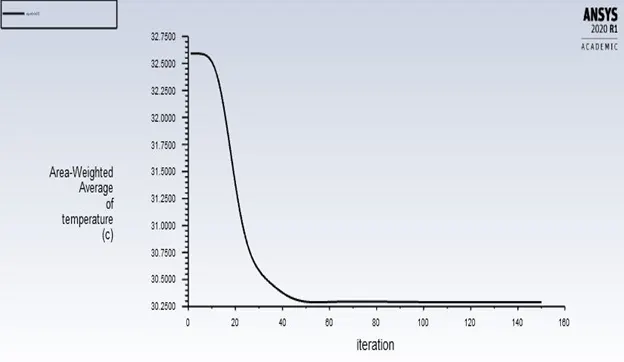
Velocity contour
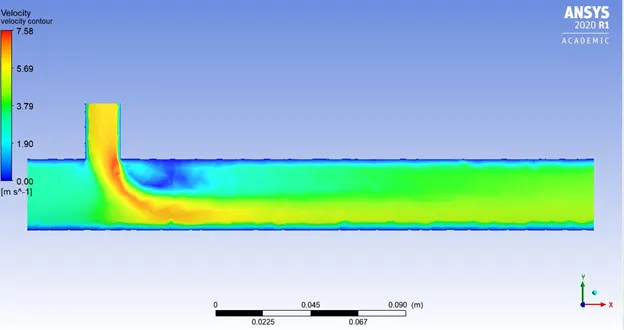
Temperature contour
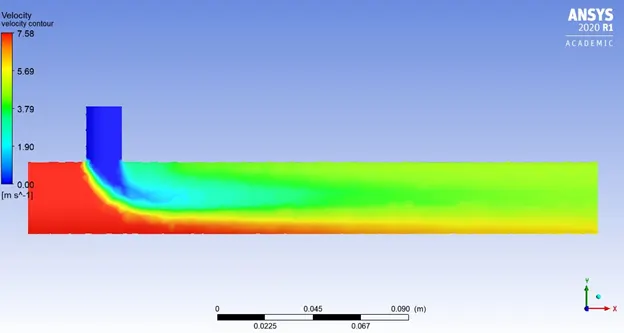
Case 2
Momentum ratio = 4
Boundary conditions:
Hot Inlet velocity = 3 m/s
Cold inlet velocity = 12 m/s
Mesh details
Number of elements = 15868
Element size = 0.013853 m
Post processing
Standard deviation
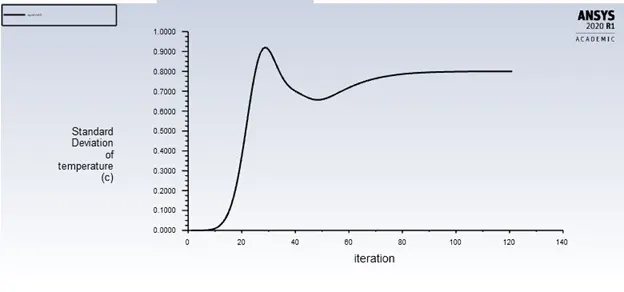
Standard deviation = 0.8⁰C approx.
Number of iterations for convergence = 90-100
Scaled residuals
Temperature average
Velocity average
Velocity contour
Temperature contour
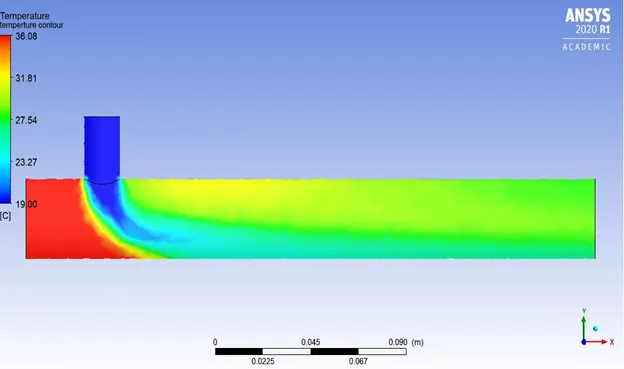
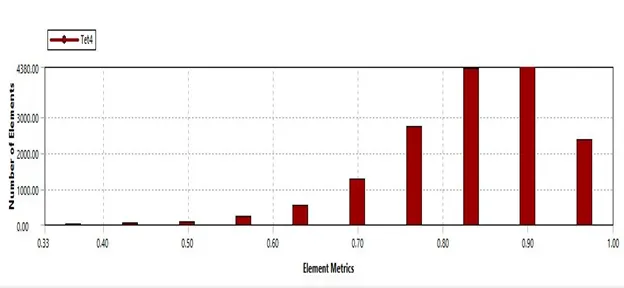
Mesh independent study
Mesh size- 0.012 m (finer mesh)
Number of elements: 15868
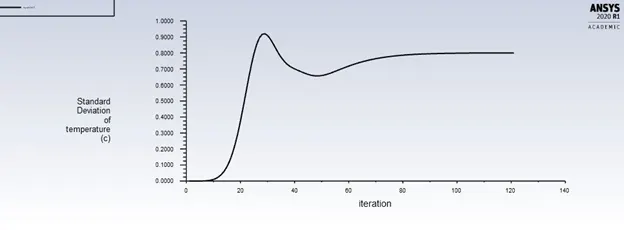
Standard deviation
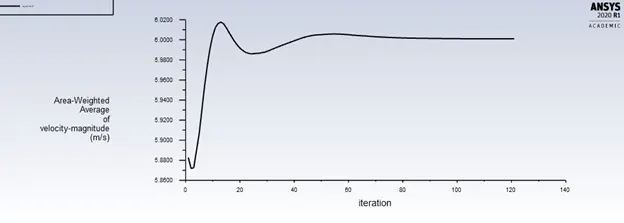
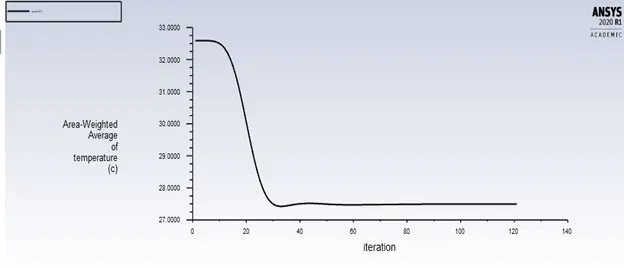
Average velocity
Average temperature
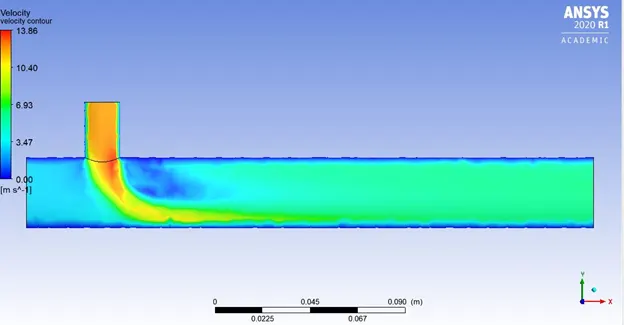
Velocity contour
Temperature contour
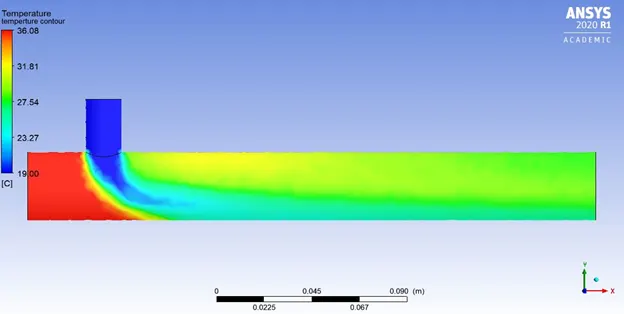
By reducing the mesh size, a sharper velocity and temperature contour is obtained.
Observations
|
Case |
Momentum ratio |
Average outlet temperature ⁰c |
Number of iterations |
Number of elements |
|
Case 1 |
2 |
30.25 |
110 |
12602 |
|
Case 1 |
4 |
27.25 |
80-90 |
12602 |
|
Case 2 |
2 |
30.20 |
110 |
15868 |
|
Case 2 |
4 |
27.15 |
90-100 |
15868 |
Conclusion
- The optimum mixing takes place with the longer Tee model, due to the low standard deviation at exhaust temperature and low average outlet temperature.
- The K epsilon model is preferred in this case as it provides a lower standard deviation of temperature at the outlet.
- The higher the momentum ratio, in both cases, higher will be the mixing efficiency.