Steady Vs Unsteady flow over a cylinder
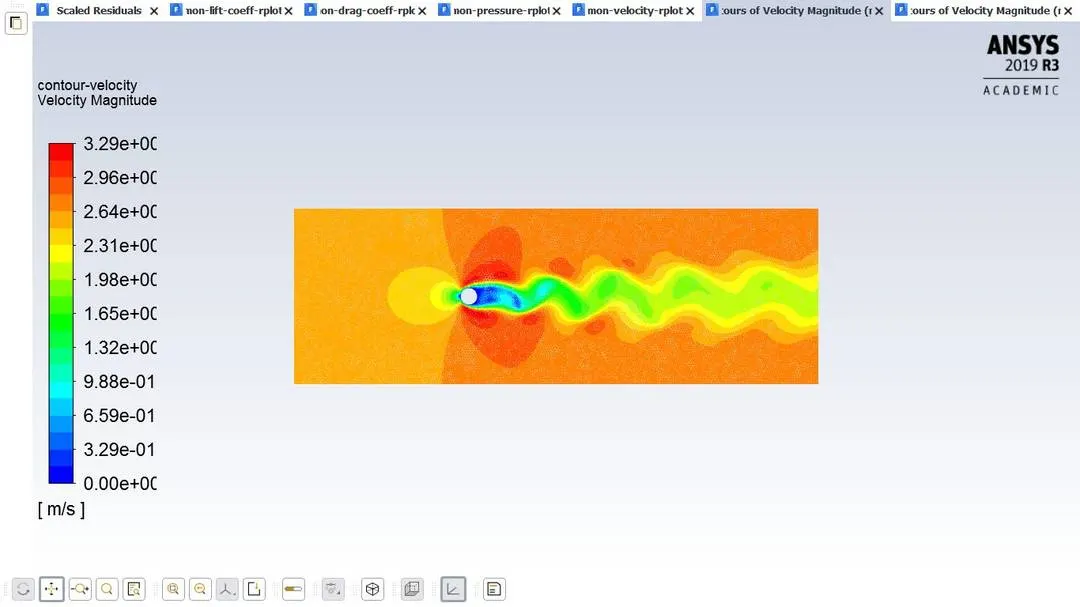
When fluid flows around bluff body results in two separating shear layers with opposite nature of vorticity which onset of interaction results in cutting of vortices i.e shedding of vortices in alternate manner from mainstream. This vortex shedding is in periodic manner with a particular frequency, and that generates drag and lift on body. This Phenomenon is simulated in this current work in steady state and unsteady state.
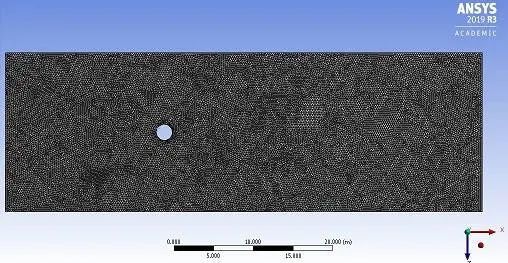
- Mesh :
Mesh element type : Triangular
Element size : 0.25m
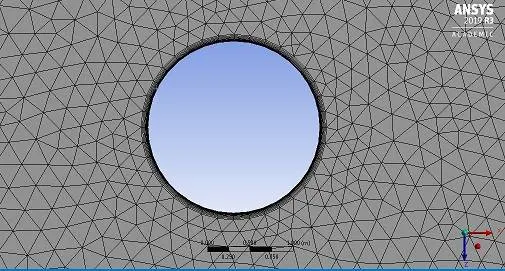
Inflation : First layer of thickness
First layer Height: 2e-3
Number of inflation layer : 12
Growth Rate : 1.2
- Material used:
User defined material With
density (ρ) = 1 (kg/m^3)
Dynamic Viscosity (μ) = 0.05 kg/m-s
1. Mesh image:
2. Inflation layer image:
Part I:
Unsteady and Steady flow:
Reynolds Number (Re) =100
Inlet velocity = 2.5 m/s
1. Steady Flow
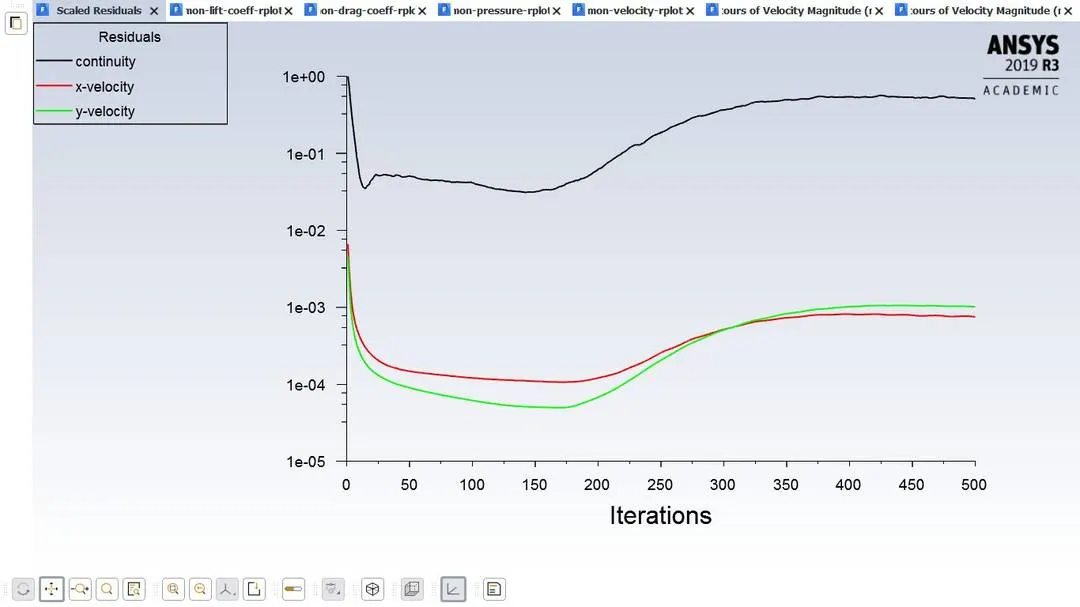
a) Residual plot:
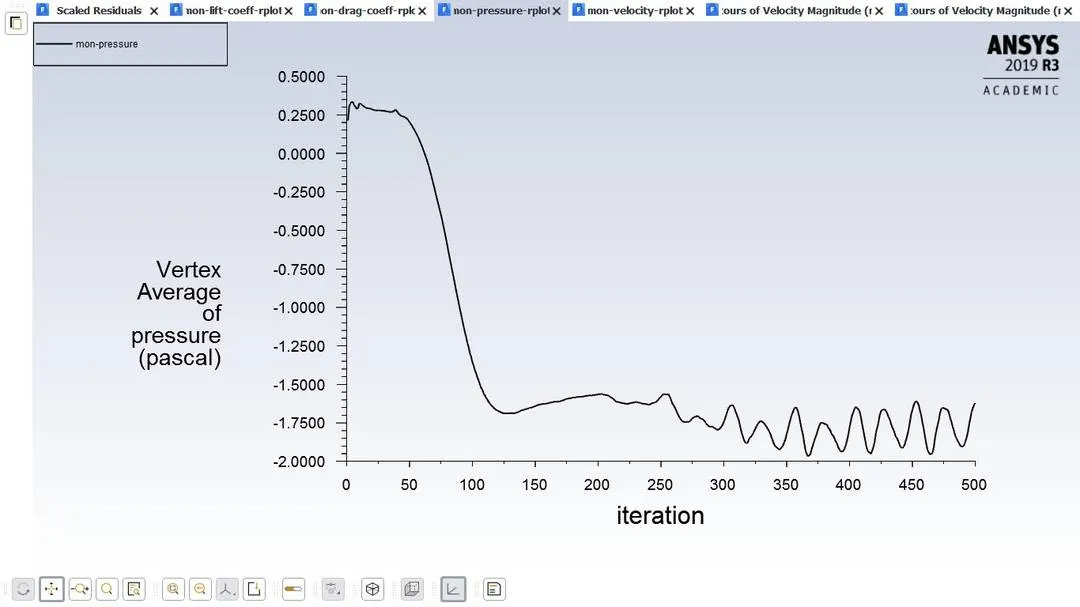
b) Vertex-average Velocity
c) Lift Coefficient:
d) Drag Coefficient:
e) Vortex shedding Contour:
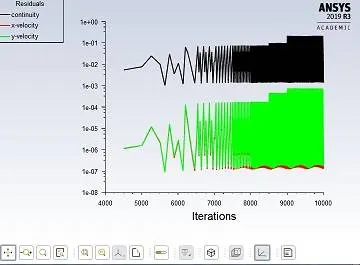
From the above plot showing Residuals,
we can conclude that the solution has converged as the residuals show consistant behavior and has reached steady values.
2. Unsteady Case:
Time Steps = 1000
Time step size = 0.1
a) Residuals:
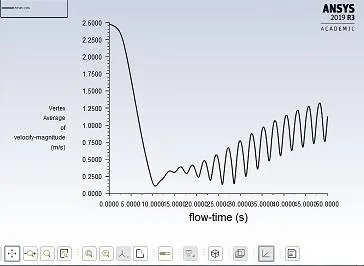
b) Vertex Average Velocity :
c) Cofficient of Drag:
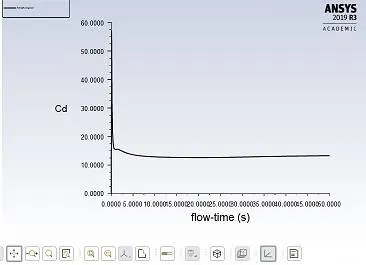
The coefficient of drag attains a constant value aftrer initial variation.
d) Cofficient of Lift :
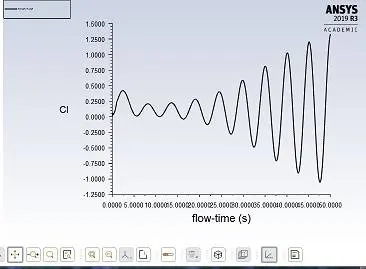
The coefficient of lift also fluctuates periodically as vortical structures develope with time. This generated lift will tend to move cylinder up and down ( as flow is 2D )
as incoming flow is left to right.
e) Vortex Shedding Contour:
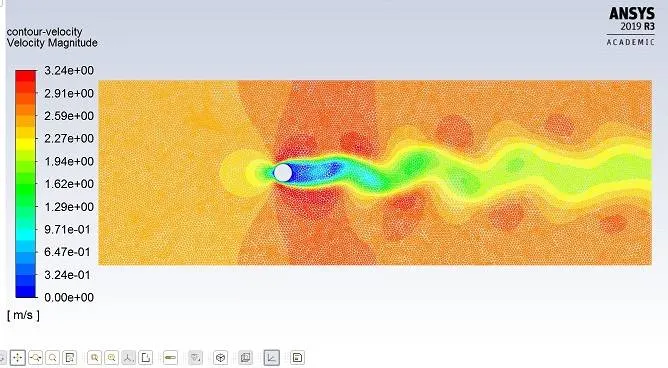
Frequency of Vortex Sheddinng:
f = Number of cycles/time of cycles
f = 0.2/10 = 0.2
Strouhal Number = (f * D)/ U
= (0.2 * 2)/2.5
= 0.16
Part II:
1. Re = 100
U = 2.5 m/s.
a) Cofficient of Lift :
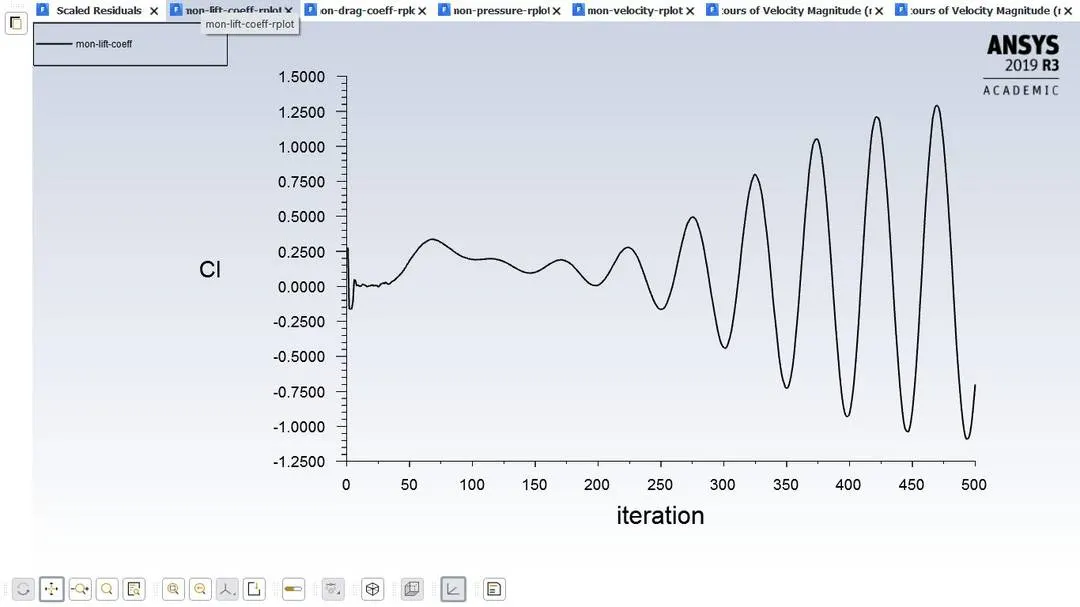
The Cl here is growing slowly , indicating the wake is at verge of losing stable and steady structure.
b) Cofficient of Drag:
2. Re = 1000
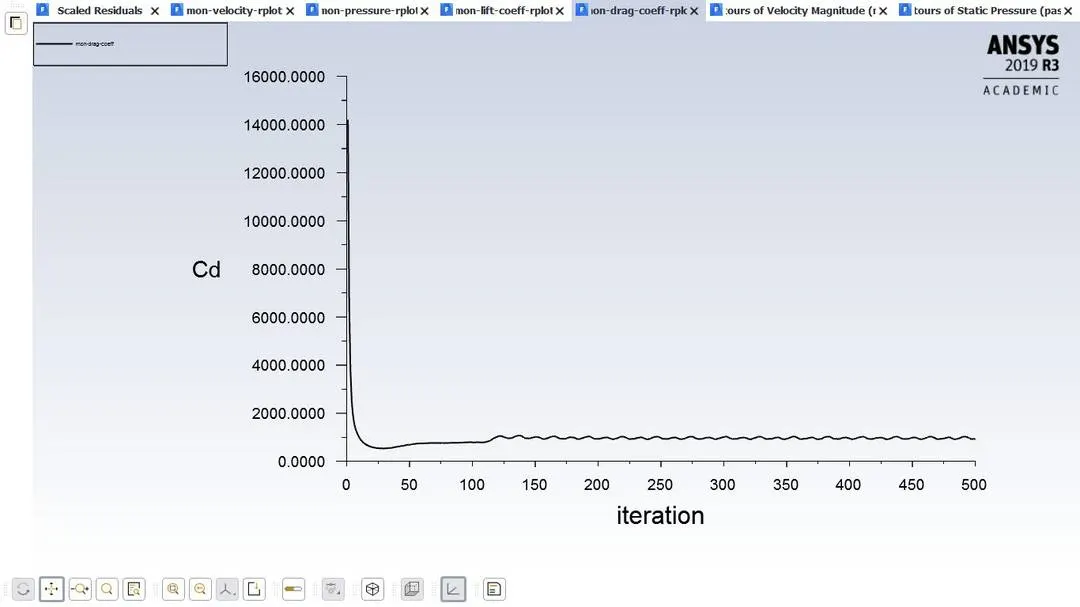
a) Cofficient of Drag :
b) Cofficient of lift :
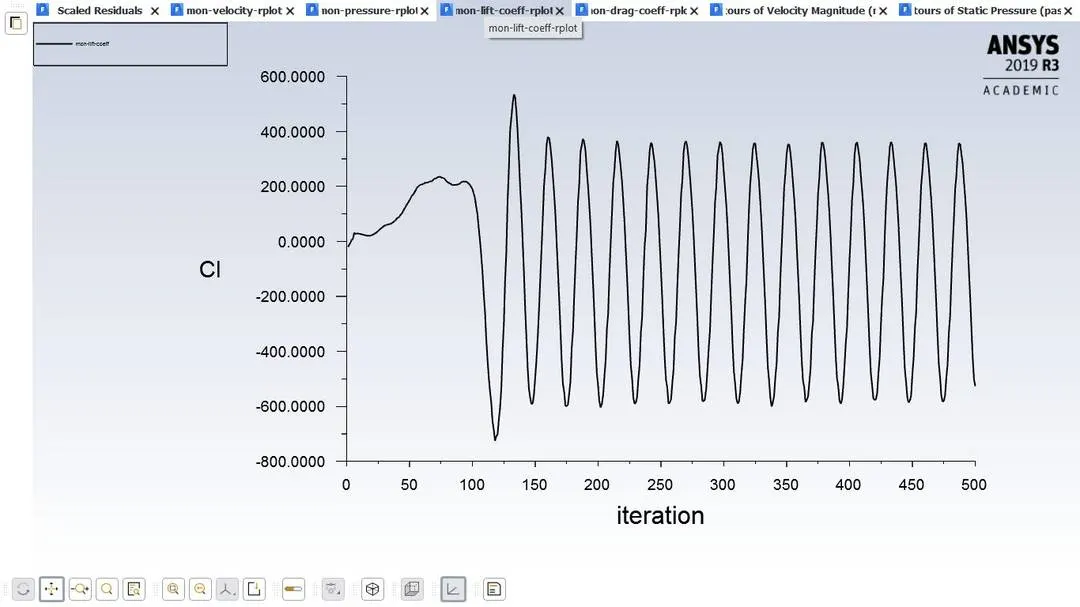
The variation in is attaning stable value having its mean value close to zero for given number of iteration.
3. Re = 10000
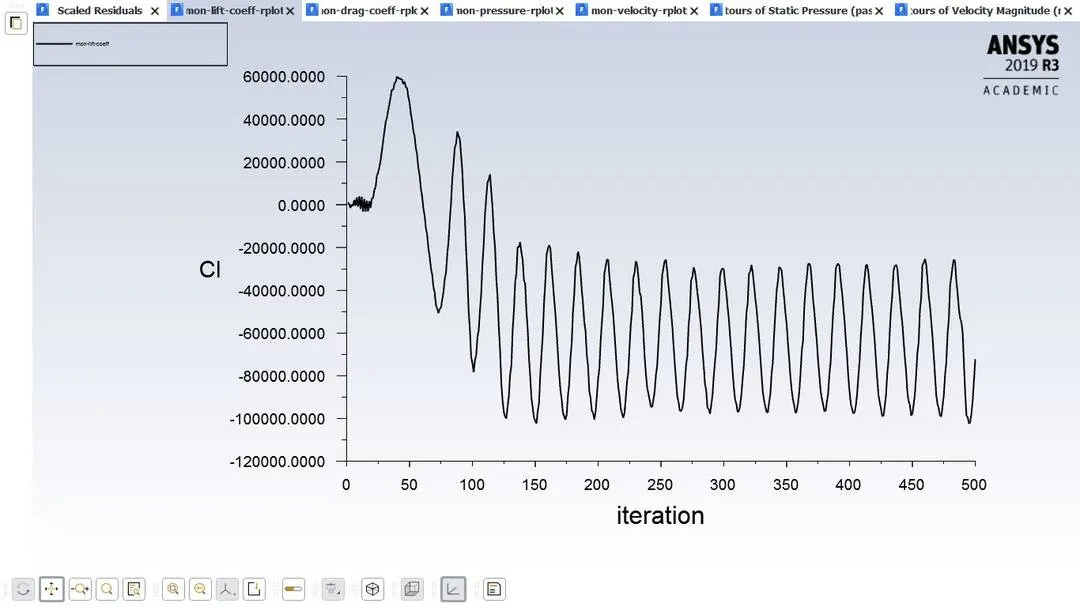
a) Cofficient of Lift :
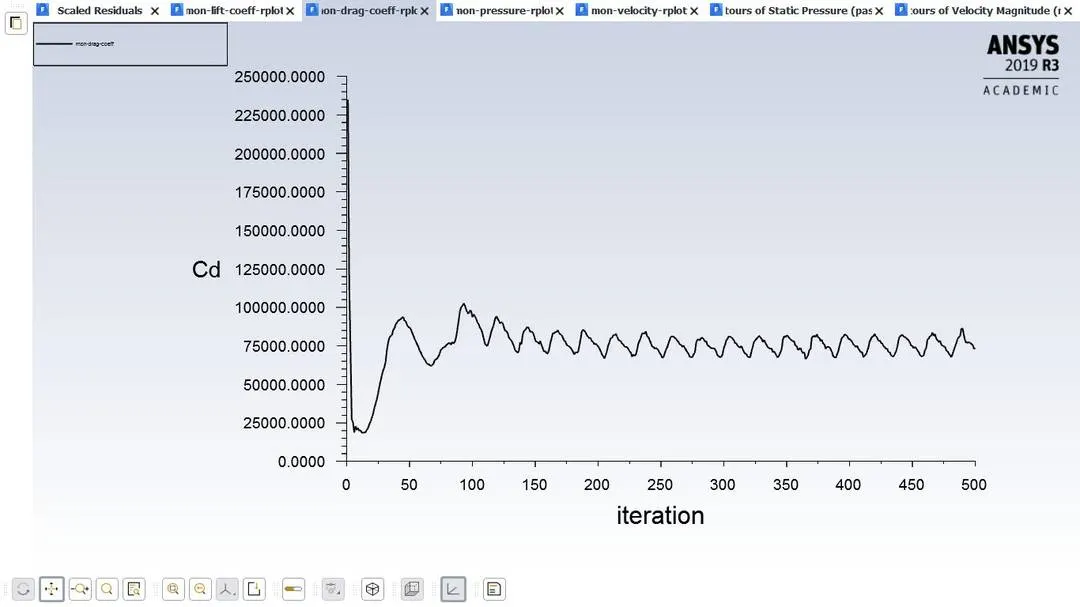
b) Cofficient of Drag:
4. Re = 100000
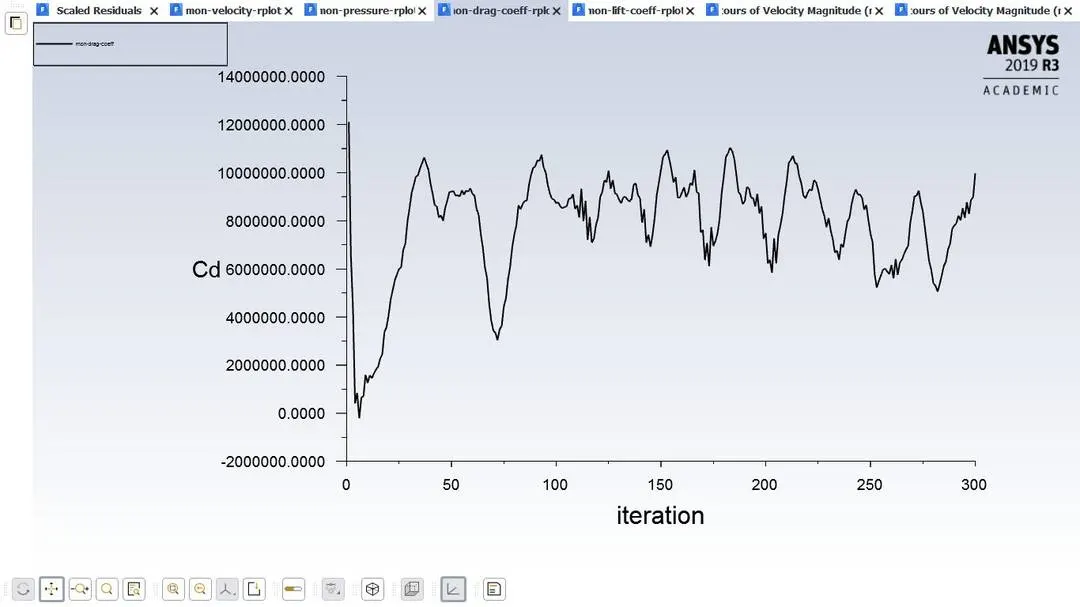
a) Cofficient of Drag :
b) Cofficient of Lift:
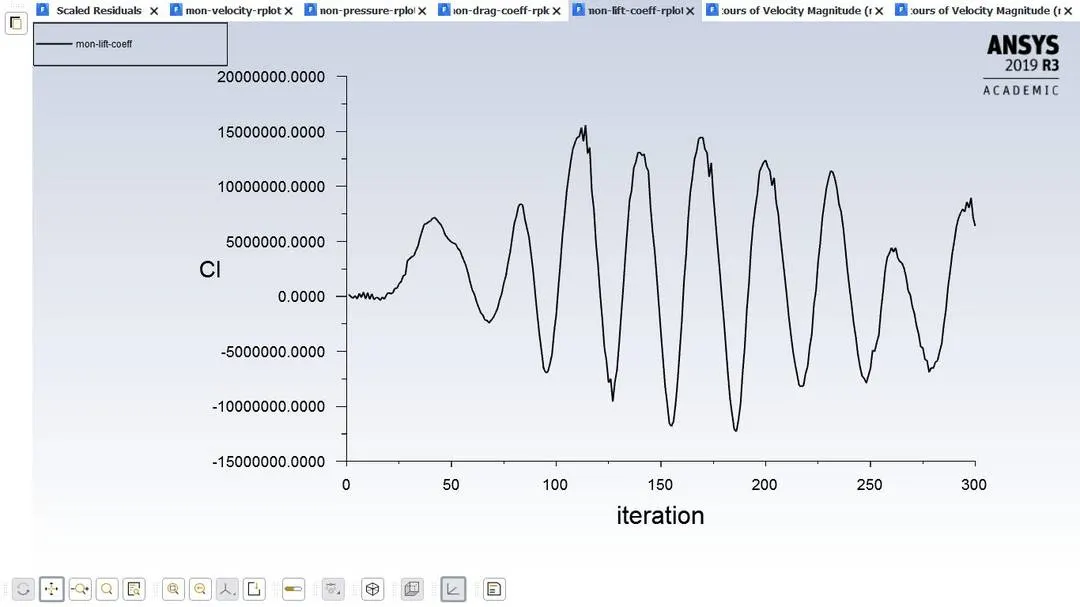
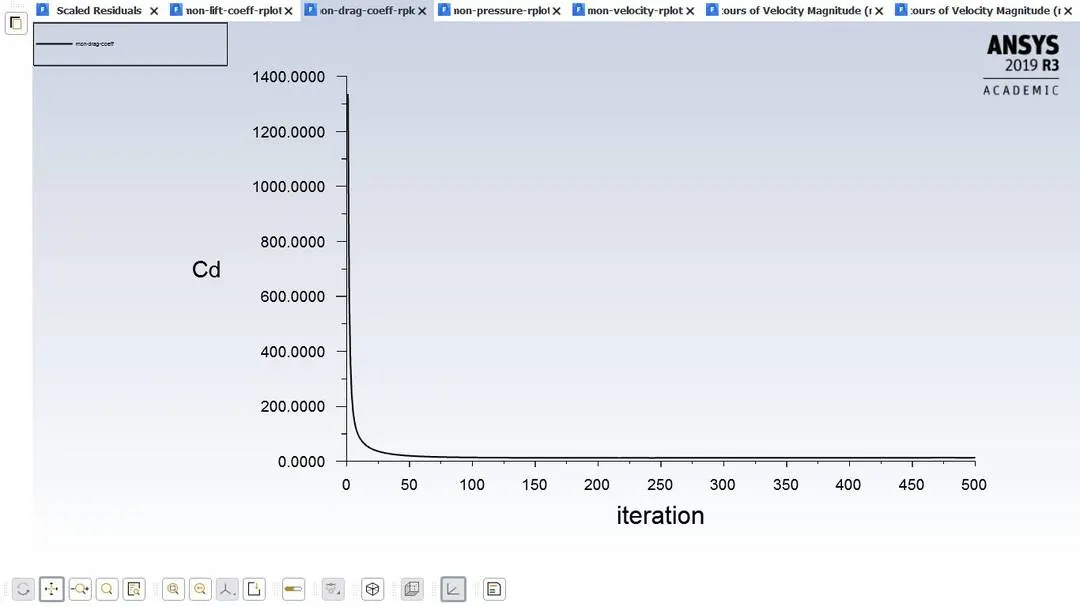
The coefficient of drag shows similar behavior for Re of 100 and 1000, attains a constant value indicating vortices possibly moving at constant velocities. But at higher reynolds number of 10000, 100000 the Cd value fluctuates. Overall increase in reynolds number increases the coefficient of drag.