Simulation using ADVISOR Tool
1) For EV_defaults_in file, if cargo mass is 500 kg with all other default conditions, can the vehicle travel for 45 km with FTP drive cycle? Conclude your observations.
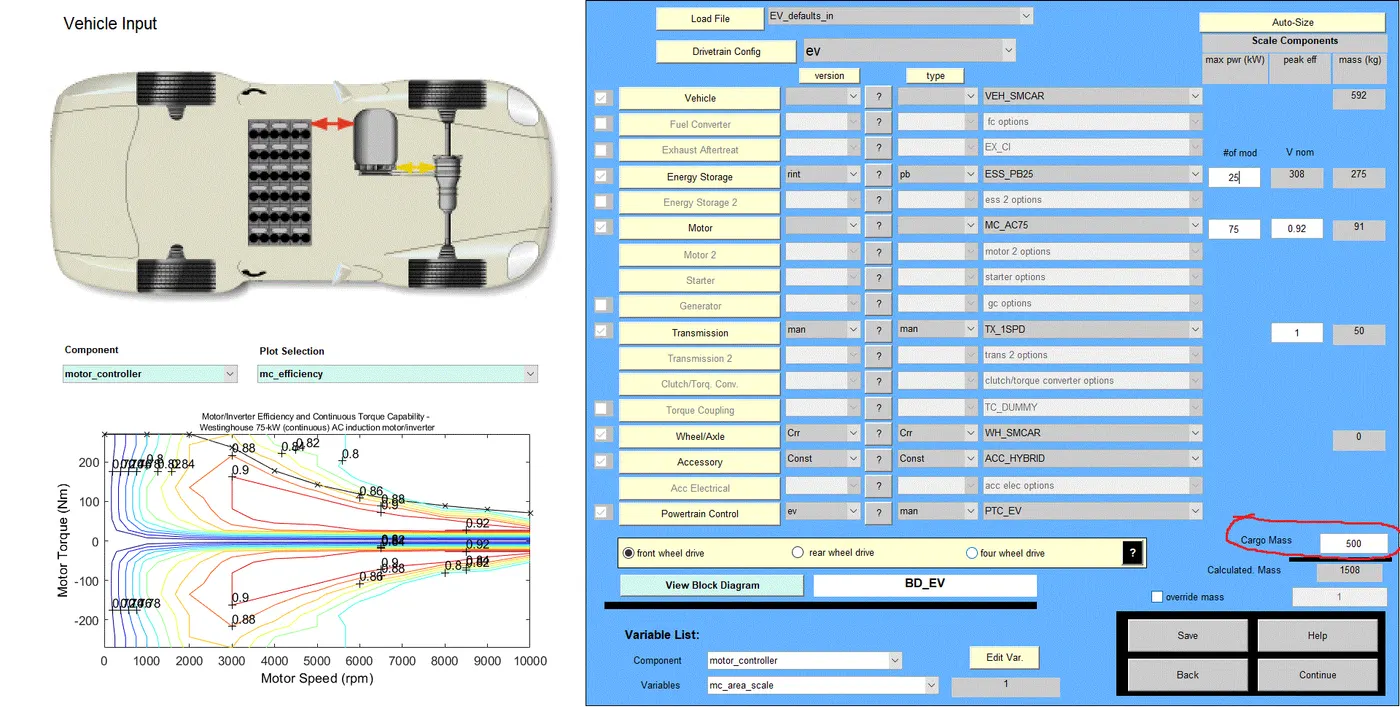
- EV_defaults_in file was loaded
- Cargo mass set as 500kg
- All other parameters/conditions unchanged
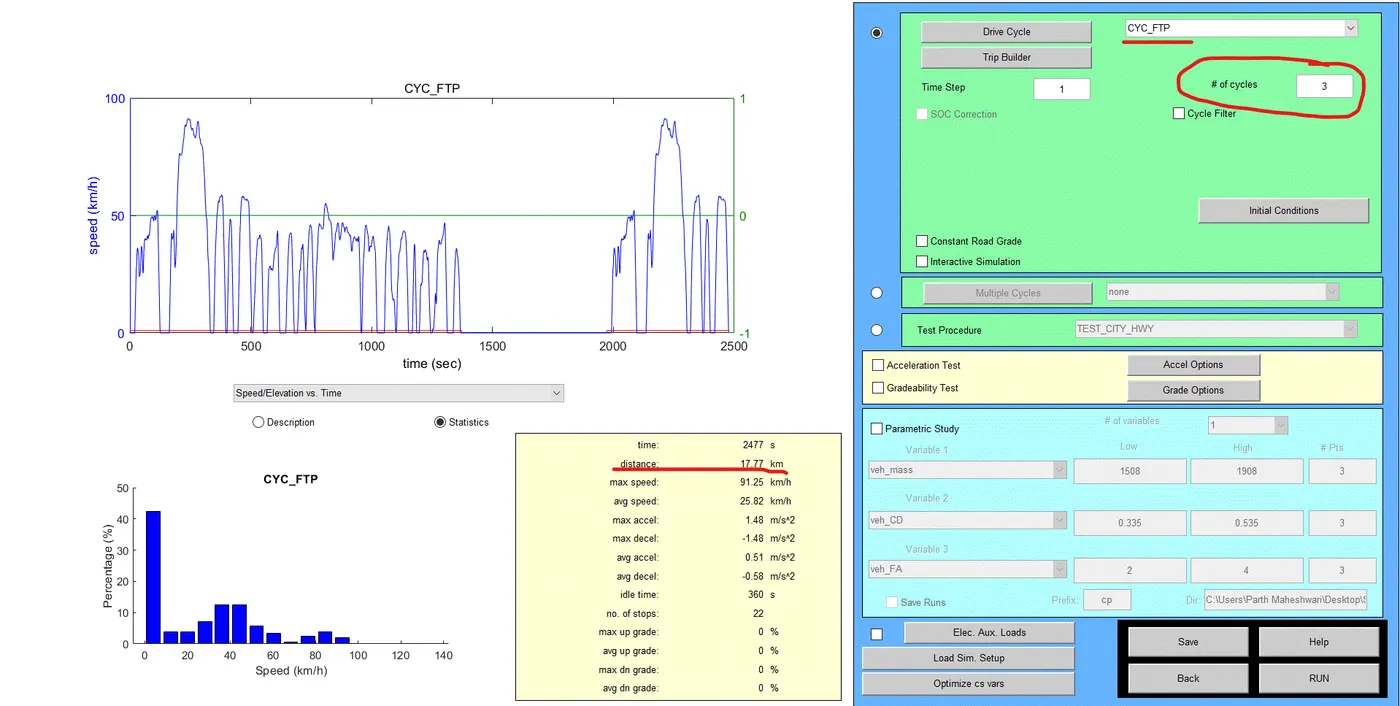
- FTP Drive Cycle
- Original distance that this EV can travel with this drive cycle is 17.77km. For a requirement of 45km, number of drive cycles is set to 3
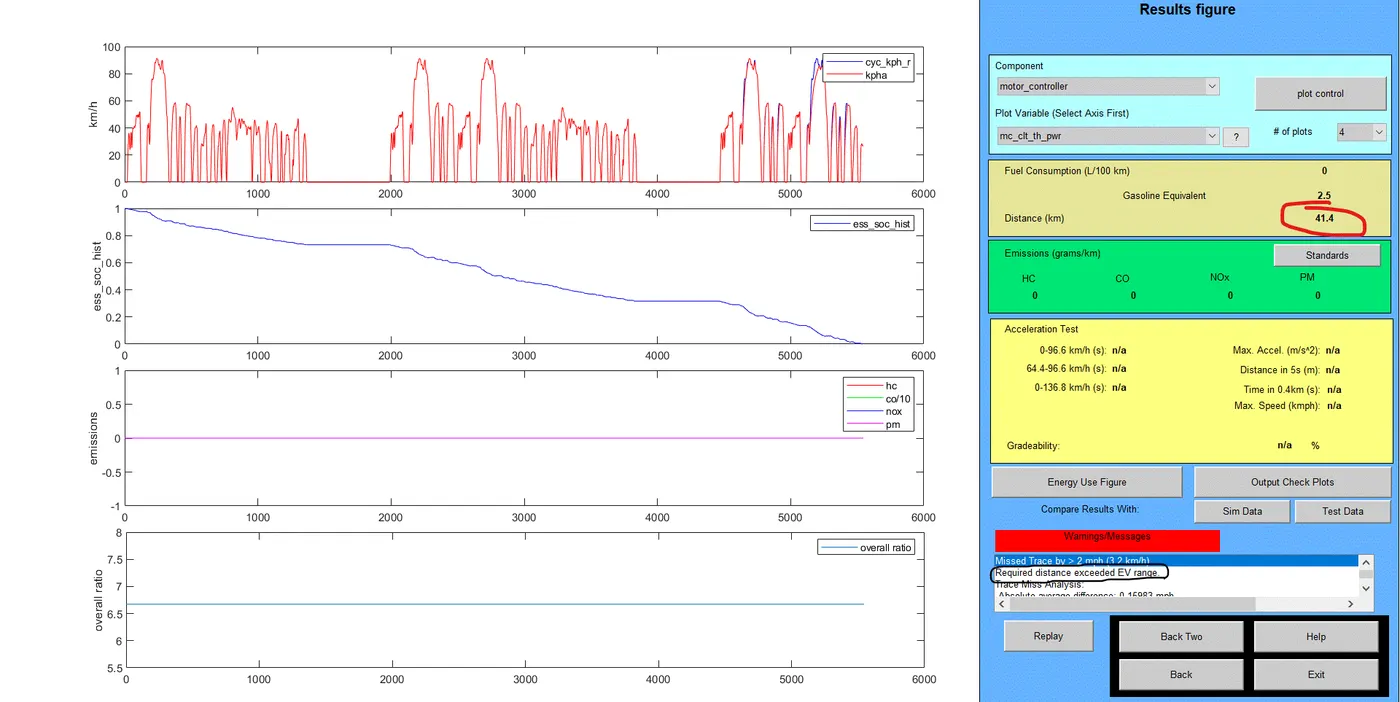
- With the current configurations, the car should've been able to exceed 45km. However, the maximum distance that this setup allows the EV to travel is 41.4km, with a warning message saying that the "required distance exceeded EV range".
- State of Charge (SoC) has also depleted fully from 100% to 0%, confirming that the vehicle cannot travel any farther than 41.4km
There are several factors that can impact an EV's range, including but not limited to:
- Mass of the vehicle
- Air drag
- Use of heating and air conditioning
- Outside weather
- Road terrain
- Battery capacity and condition
The vehicle weight and size of the battery pack seem to have the main impact on the range according to a research paper (Analysis of Parameters Influencing Electric Vehicle Range - Martin Mruzek).
2) In the above case, try changing the battery capacity and repeat the simulation.
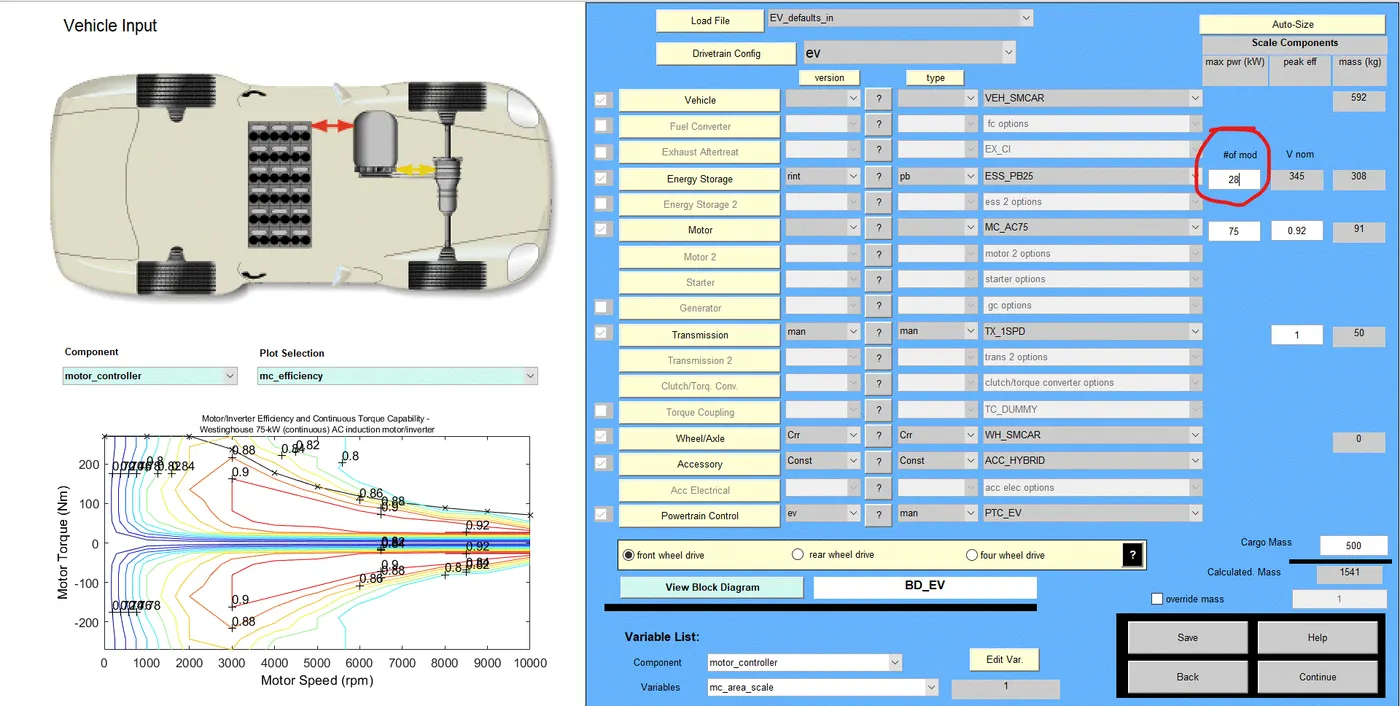
- Number of battery modules increased from 25 to 28
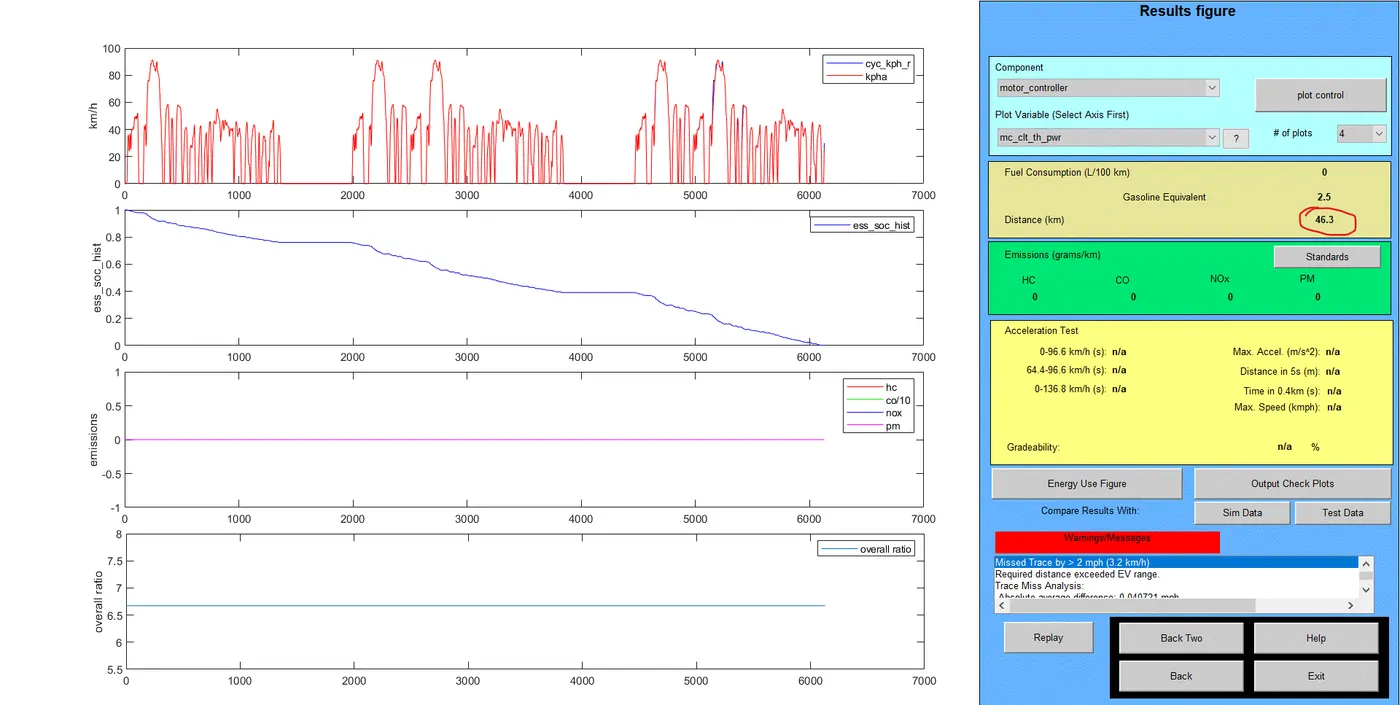
- Distance travelled is >45km once battery capacity was increased.
- With 27 battery modules, the EV was able to travel 44.8km
- Another alternative to easily allow the EV to travel 45km or more is to reduce the mass of the vehicle
3) Perform gradeability test with PRIUS_Jpn_defaults_in file. Compare your results in table and conclude.
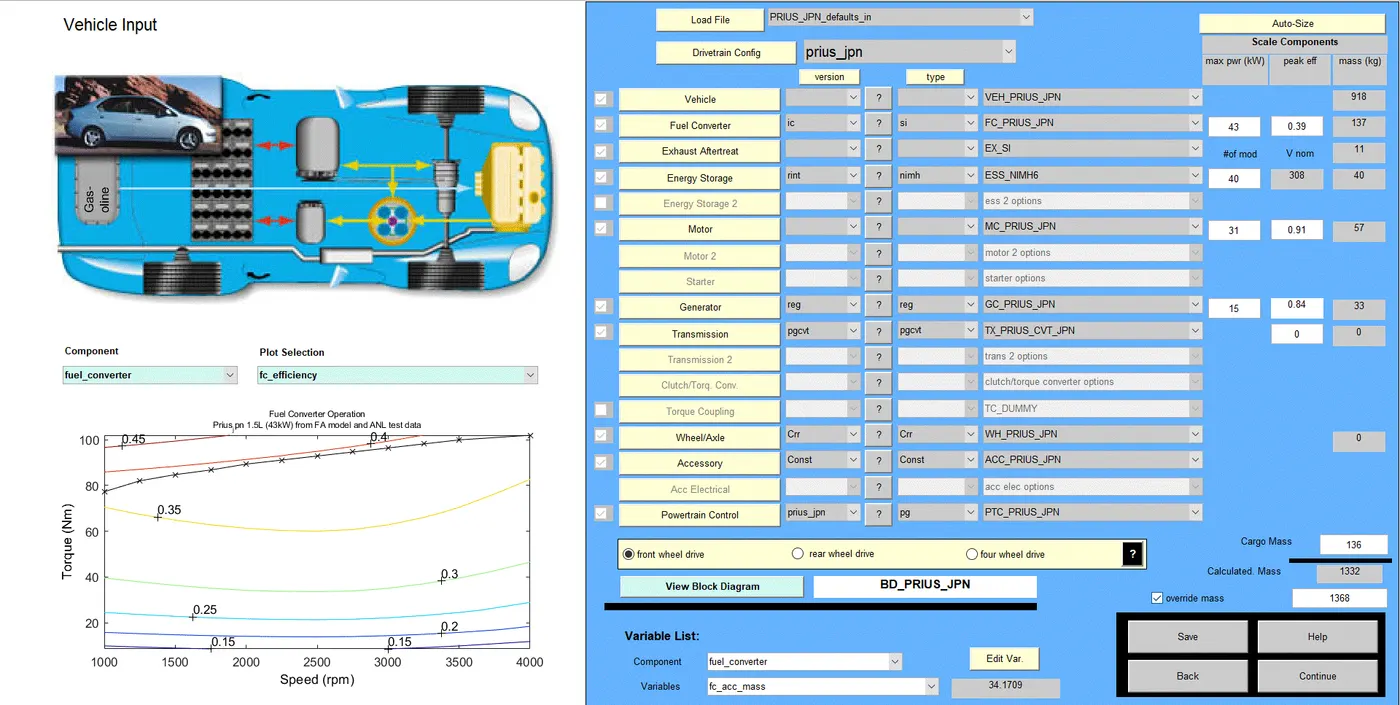
- All default settings unchanged
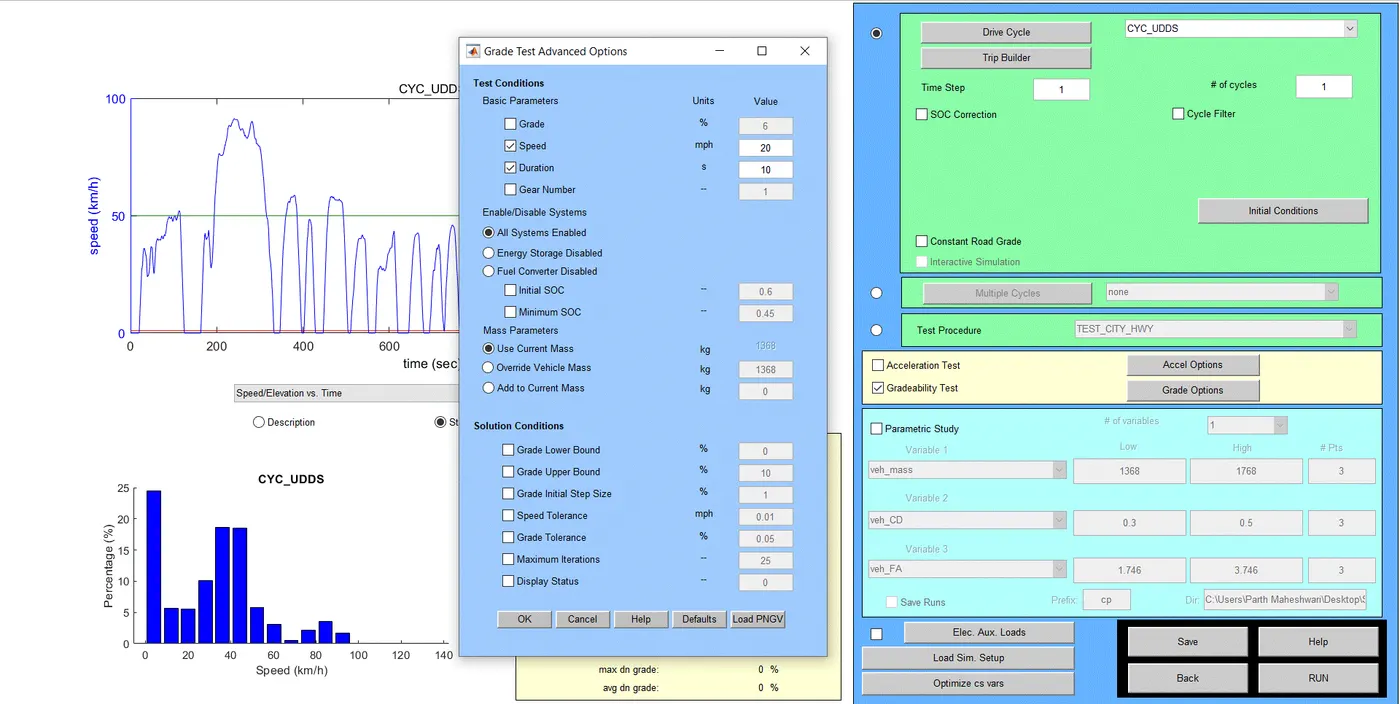
- UDDS Drive Cycle
- Test conditions: Speed and Duration
- Speed: starting from 20mph to 40mph
- Duration: 10 and 20 seconds
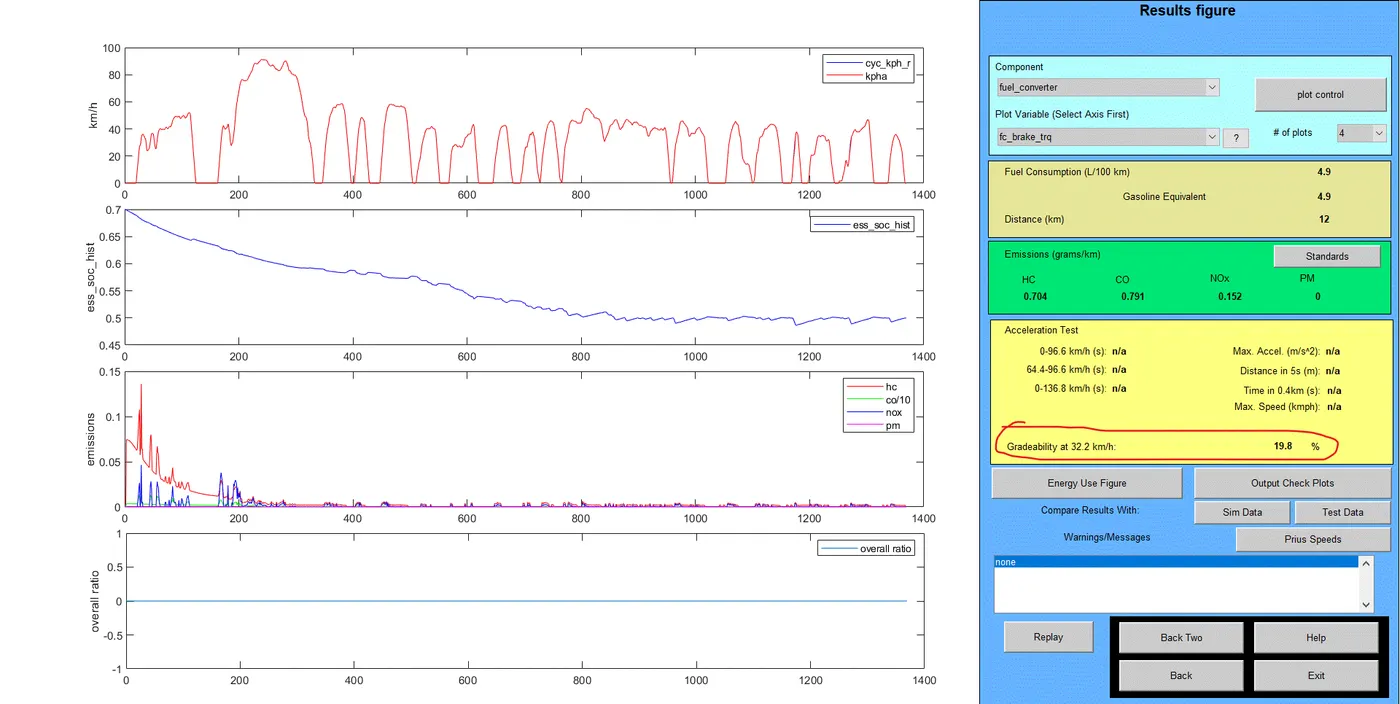
- Gradeability at 20mph (32.2kmph) is 19.8%
After repeating the simulation for various speeds and duration:
| Speed (mph) | Speed (kmph) | Duration (sec) | Gradeability (%) | Gradeability (degrees) |
| 20 | 32.2 | 10 | 19.8 | 11.2 |
| 25 | 40.2 | 10 | 16.5 | 9.4 |
| 30 | 48.3 | 10 | 14.7 | 8.4 |
| 35 | 56.3 | 10 | 13 | 7.4 |
| 40 | 64.4 | 10 | 11.6 | 6.6 |
| 20 | 32.2 | 20 | 22.9 | 12.9 |
| 25 | 40.2 | 20 | 19.7 | 11.1 |
| 30 | 48.3 | 20 | 17.7 | 10.0 |
| 35 | 56.3 | 20 | 16 | 9.1 |
| 40 | 64.4 | 20 | 14.6 | 8.3 |
- Gradeability is the highest grade a vehicle can ascend while maintaining a particular speed
- Results conclude that as the speed of the vehicle increases, the gradeability decreases