Section Modulus calculation and optimization
SECTION MODULUS OPTIMIZATION AND CALCULATION
1.AIM
To calculate the section modulus for Hood design in two cases and analyze which would be the best is considered.
2.SECTION MODULUS
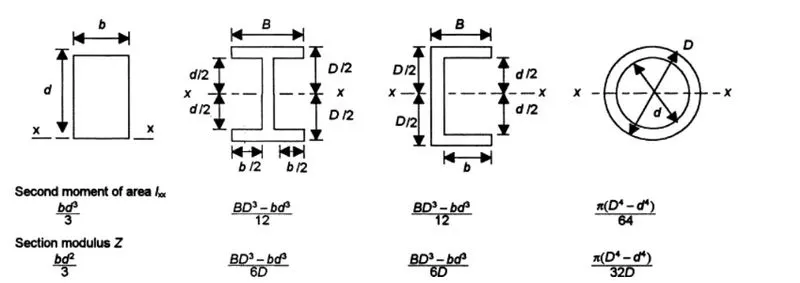
Section Modulus is also referred to as the Polar Modulus or the Torsional Sectional Modulus. It is denoted by Zp.
Section Modulus is the geometric property of the given cross-section of any shaft or beam structures. It is the direct measure of the strength of the shaft section or the beam section. The higher the section modulus of a structure, the more resistive it becomes to bending.
It is termed as the ratio of the second moment of area and distance from N.A (Neutral axis) to the extreme fiber. Also, it is the measure of strength of a given member. The stress in the outermost section of beam is computed with the help of section modulus. It is indicated by S.
Section modulus is indicated as follows:

Here, I is “moment of inertia” and y is distance from “neutral axis” to end of the material.
Unit of a “section modulus” is in cubic(mm3).
3.PROCEDURE
Here we are going to calculate the section modulus for the Hood Assembly in two cases and analyze the better one.
Taking the section Hood Assembly
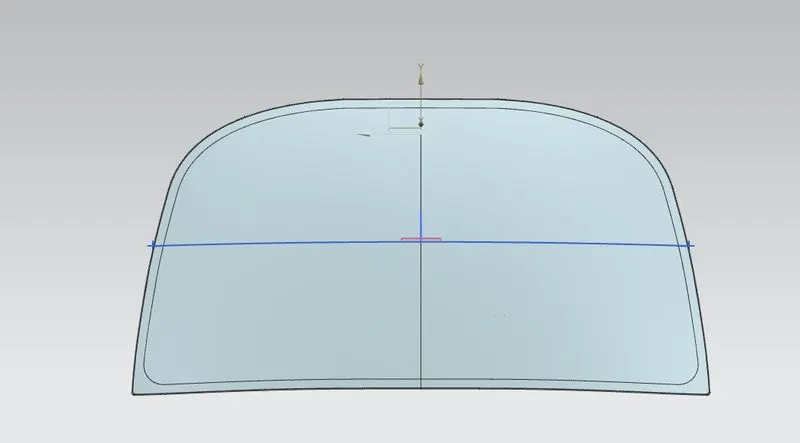
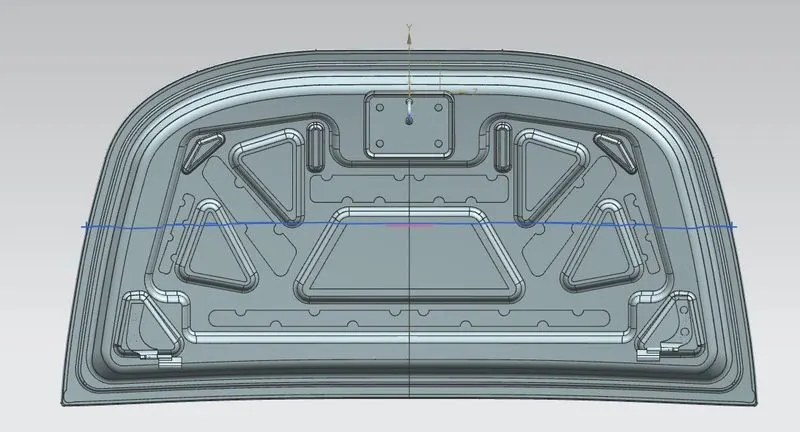
Initially creating the plane in the center of the hood and intersect the curve with existing sketch
Intersection curve on outer panel of the Hood.
Intersection curve on the inner panel of the Hood.
And make it as a closed curve.
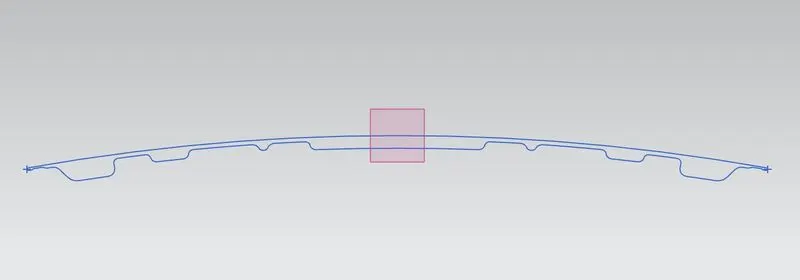
After that go to the section area analysis
CASE 1
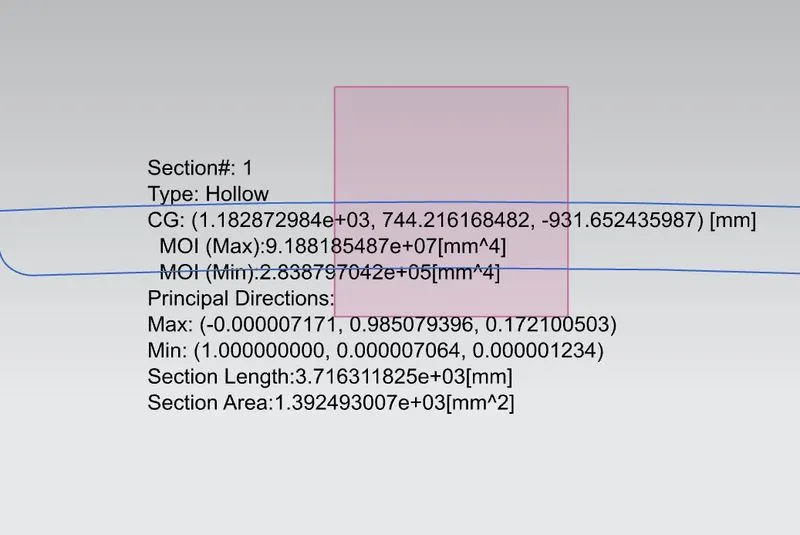
From the above case we get,
MOMENT OF INERTIA (min) = 2.838797042x10^5 mm^4
MOMENT OF INERTIA (max) = 9.188185487x10^7 mm^4
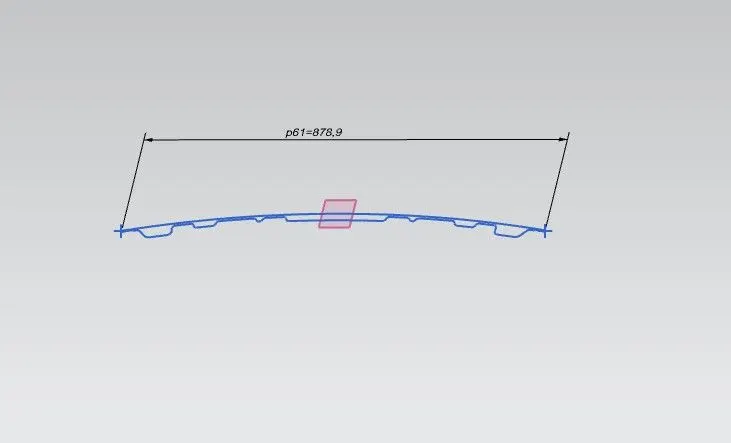
y = 878.9/2 = 439.45mm
We know that
S = I/Y,
S = Section modulus
I = Moment of Inertia
Y = distance from neutral axis to edge of the outermost Hood
Here we need to take Imin (moment of inertia min) because resistance will okay with min value automatically it also okay with max value
So,
2.838797042x10^5 mm^4
S = = 645.988 mm^3
439.45mm
CASE 2
In this Hood section I have created Embosses and increased the offset value from outer to inner panel by 0.9mm
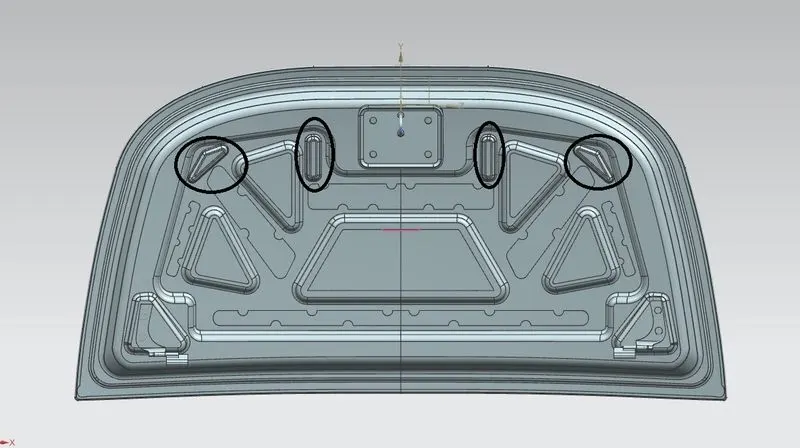
Our aim is to increase the Imin in case 2 Imin =2.854796590x10^5 mm^4
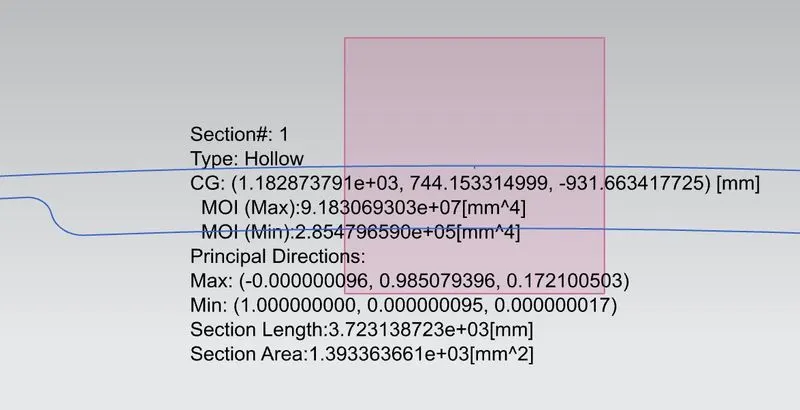
So,
2.854796590x10^5 mm^4
S = = 649.629 mm^3
439.45mm
4.FINAL RESULT
Thus, the Resistance of the car hood has been increased by increasing its area moment of inertia.
5.CONCLUSION
Section modulus is directly proportional to the area moment of inertia.so, we increased the embosses and min gap b/n inner & outer panel. (If we increased the distance from outer to inner panel more chance to melt due to heat rejection from the engine).