Section Modulus calculation and optimization
TITLE: SECTION MODULUS CALCULATION AND OPTIMIZATION
OBJECTIVE:
- To calculate the section modulus of a pre-designed hood.
- To learn how to optimize the section modulus to make improvements in this hood.
Explanation:
Section modulus is a geometric property for a given cross-section used in the design of beams or flexural members. Other geometric properties used in design include area for tension and shear, radius of gyration for compression, and moment of inertia and polar moment of inertia for stiffness. Another property used in beam design is section modulus (Z).
The section modulus of the cross-sectional shape is of significant importance in designing beams. It is a direct measure of the strength of the beam. A beam that has a larger section modulus than another will be stronger and capable of supporting greater loads.
It includes the idea that most of the work in bending is being done by the extreme fibres of the beam, i.e. the top and bottom fibres of the section. The distance of the fibres from top to bottom is therefore built into the calculation.
It is termed as the ratio of moment of inertia area and distance from N.A (Neutral axis) to the extreme fiber. Also, it is the measure of strength of given member. The stress in the outermost section of beam is computed with the help of section modulus. Higher the section modulus of structure, the more resistive it becomes to bending.
Section modulus (S) = I/y
Where,
S = section modulus
I = moment of inertia
Y = distance between the neutral axis to the farthest fibre.
CALCULATION OF SECTION MODULUS:
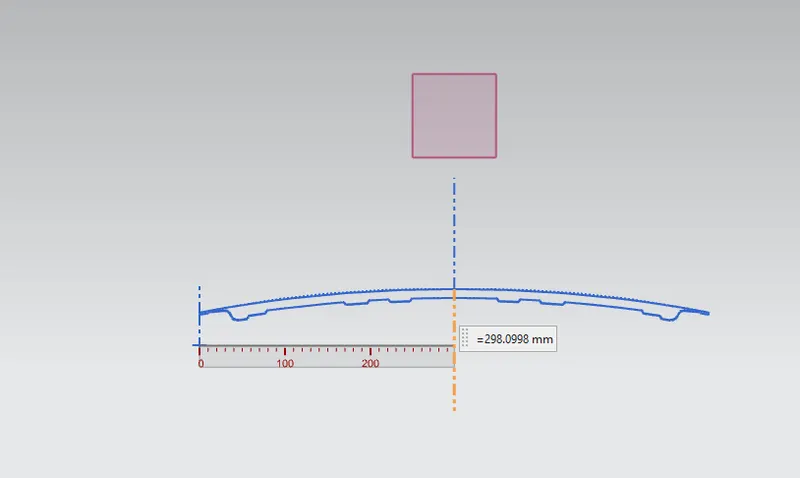
For the existing section:
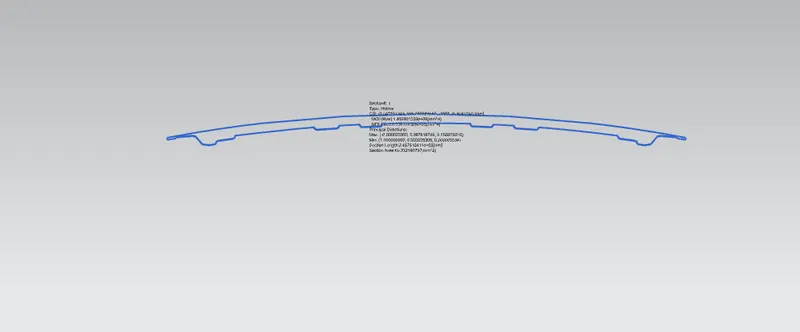
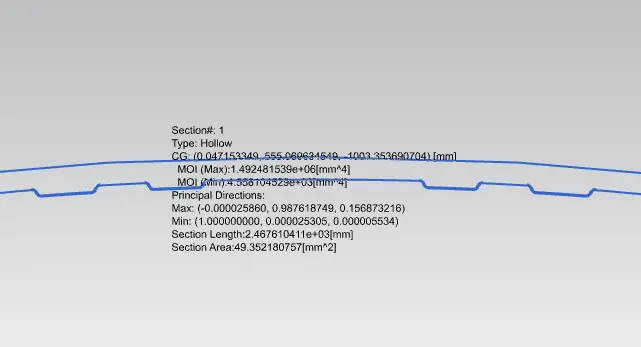
I = 4.556*104 mm4
Y= 298.09 mm
S= I/Y= 152.83 mm3
for improved design:
for the improved design I offset the lower edge of the inner panel by 0.5 mm downward.
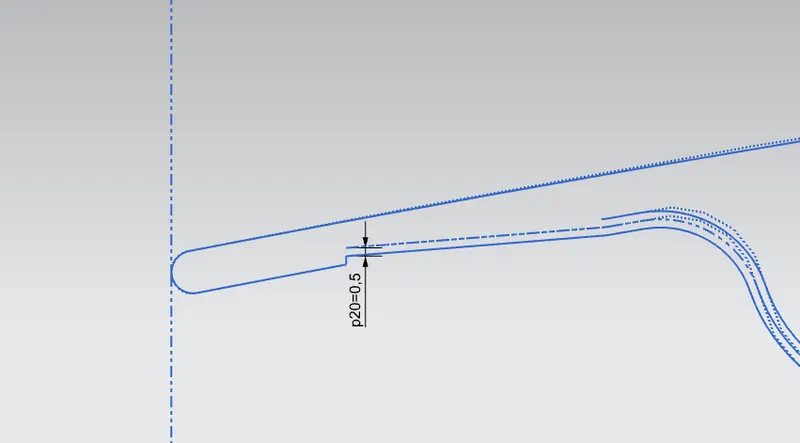
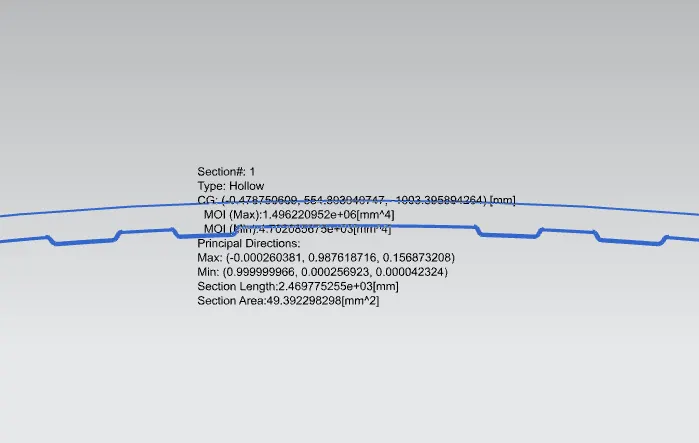
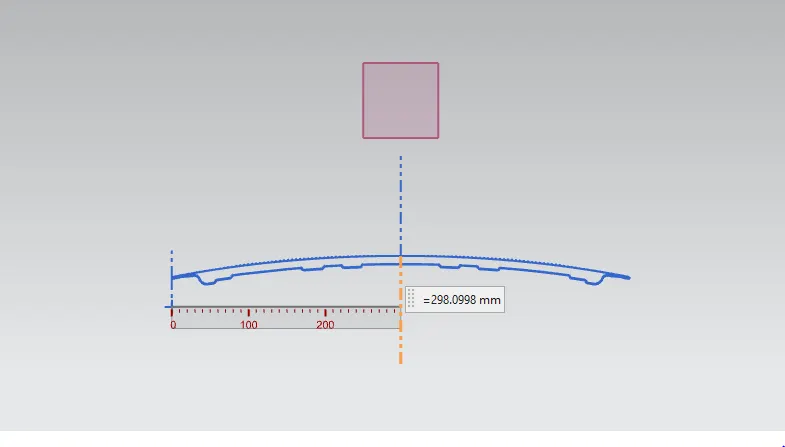
I = 4.762*104 mm4
Y= 298.09 mm
S= I/Y= 159.75 mm3
positive outcomes of improved design:
% increase in the section modulus = (159.75-152.83)/152.83*100
= 4.52%
Due to this modification, a 4.52% increase in the section modulus of the hood. As the section modulus is directly proportional to the moment of inertia, the value of the flexural strength of the section is increased. And it becomes more resistant to bending.
Conclusion:
- Section modulus for different case is calculated and it found that increase 0.5mm gap between panel increase the section modulus by 4.5%.
- Learnt how to optimize the section modulus of a component effectively.