Section Modulus calculation and optimization
Section Modulus
Section Modulus is the geometric property of the given cross-section of any shaft or beam structure. It is the direct measure of the strength of the shaft section or the beam section. Higher the section modulus of a structure, the more resistive it becomes to bending.
Section modulus is defined as the ratio of polar moment of inertia to the radius of the shaft or the distance from the neutral axis to the outer fibres.
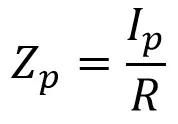
The standard way of calculating Section_Modulus for a shaft requires is its diameters, even if it is a solid or hollow shaft. If it is a beam (Square/rectangle in shape), it will require the moment of inertia and the distance of the outer fibres from its neutral axes.
Following is the formula to calculate the section_modulus for the solid shaft
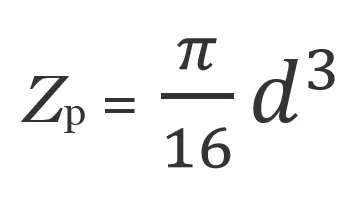
Where d is the diameter of the shaft.
If it is the hollow shaft, then.
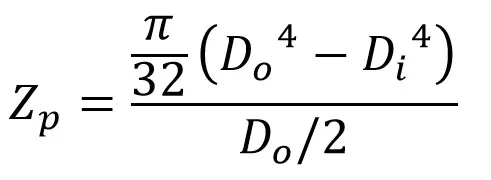
On the other hand, there are two types of section moduli, The Elastic Section_Modulus, and the Plastic Section_Modulus.
The Elastic Section Modulus has the exact definition as the formula mentioned above, where it should be used for the materials which behave elastically under loading.
Whereas the Plastic Section Modulus is used for the materials which have plastic behaviour as a dominant character.
The formula for the plastic section_modulus is defined as the sum of the product of the cross-section area on each side of the plastic neutral axis and the distance from the local centroids of the areas to the plastic neutral axis.
Section modulus represented by the symbol of 'S'
Where the symbol of 'I' represent a moment of inertia.
Distance from the reference line (neutral line) to one of the end of an object is represented by 'Y'.
S=I/Y
Moment of inertia in physics, quantitative measure of the rotational inertia of a body—i.e., the opposition that the body exhibits to having its speed of rotation about an axis altered by the application of torque (turning force). The axis may be internal or external and may or may not be fixed. However, the moment of inertia (I) is always specified concerning that axis. It is defined as the sum of the products obtained by multiplying the mass of each particle of matter in a given body by the square of its distance from the axis. In calculating angular momentum for a rigid body, the moment of inertia is analogous to mass in linear momentum. For linear momentum, the momentum p is equal to the mass m times the velocity v. In contrast, for angular momentum, the angular momentum L is similar to the moment of inertia I times the angular velocity ω.
The figure shows two steel balls that are welded to a rod AB that is attached to a bar OQ at C. Neglecting the mass of AB and assuming that all particles of the mass m of each ball are concentrated at a distance r from OQ, the moment of inertia is given by I = 2mr2.
The unit of moment of inertia is a composite unit of measure. In the International System (SI), m is expressed in kilograms and r in metres, with I (moment of inertia) having the dimension kilogram-metre square. In the U.S. customary system, m is in slugs (1 slug = 32.2 pounds) and r in feet, with I, expressed in terms of a slug-foot square.
The moment of inertia of anybody having a shape described by a mathematical formula is commonly calculated by integral calculus. The moment of inertia of the disk in the figure about OQ could be approximated by cutting it into several thin concentric rings, finding their masses, multiplying the groups by the squares of their distances from OQ, and adding up these products. Using the integral calculus, the summation process is carried out automatically; the answer is I = (mR2)/2.
Using the above formula, we can calculate the strength of a hood panel with NX CAD values.
EXISTING HOOD SECTION
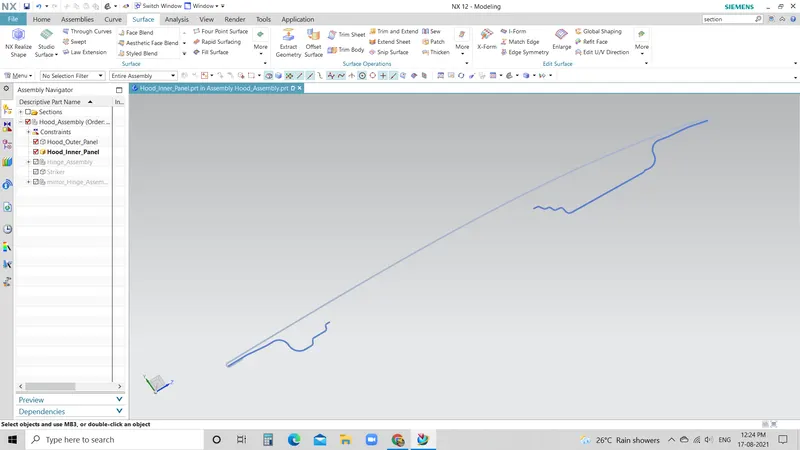
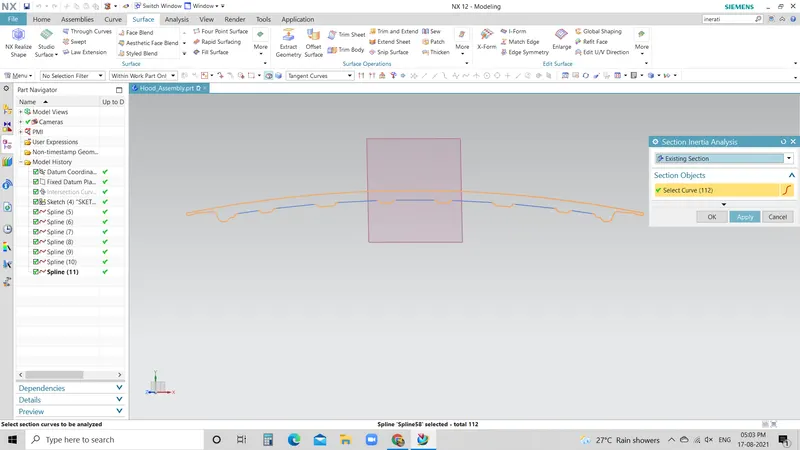
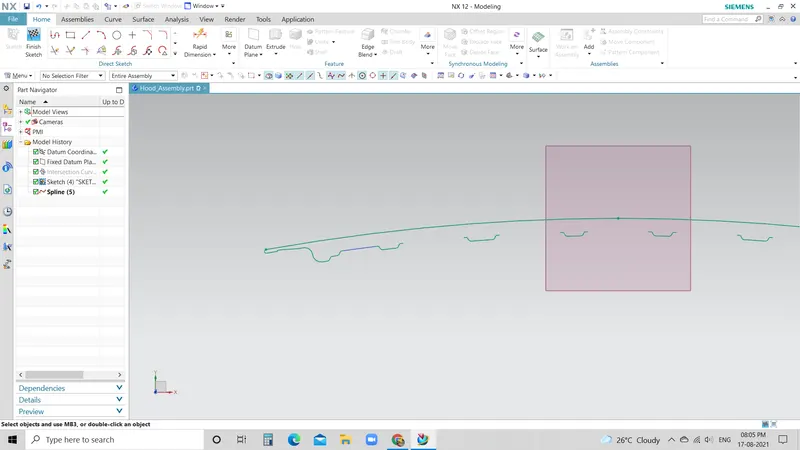
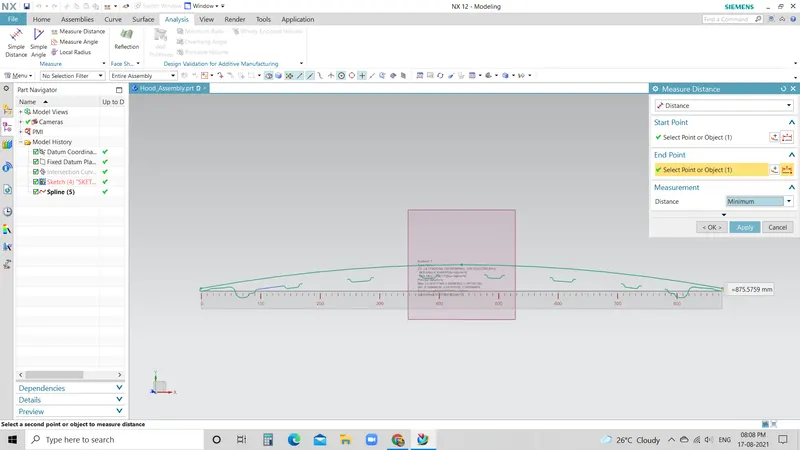
S= I/Y
I(min)= 1.354217358e+06mm^4
Y= 437.75mm
S= 3.09mm^3
S= I/Y
I(max)= 4.304883792e+06mm^4
Y= 437.75mm
S= 9.83mm^3
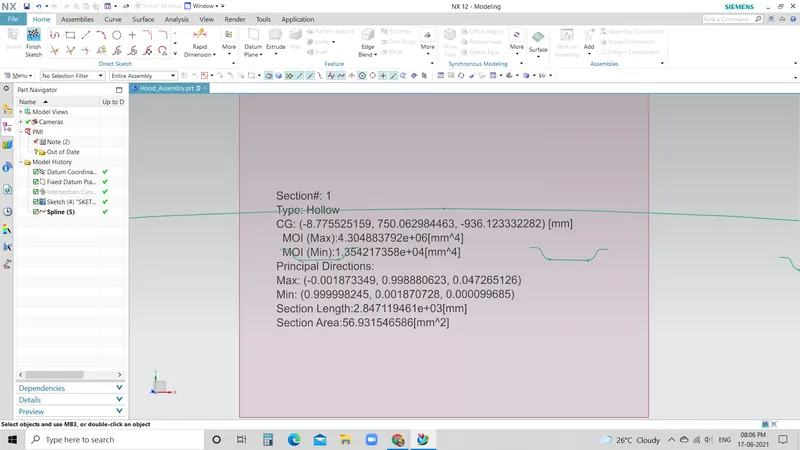
Then the difference of max and min on the moment of inertia is S= 9.83mm^3 - 3.09mm^3 = 6.74mm^3.
RESULT: Thus stiffness of the car hood has been increased by increasing its moment of inertia.