Section Modulus calculation and optimization
Section Modulus calculation and optimization for Hood design
Aim
The aim of this project is to calculate the section modulus of a pre-existing hood design to assess its strength and explore opportunities for optimization. By determining the section modulus, which indicates the structure's resistance to bending stresses, we aim to analyze the hood's bending strength.
Section modulus
The section modulus measures a shape's resistance to bending. It's calculated as the ratio of the moment of inertia to the maximum distance from the centroid to the extreme fiber. A higher section modulus means better resistance to bending and thus stronger structural integrity.
S=I/Y
Here,
S = Section modulus
I= Moment of Inertia (Unit mm 4)
Y= Distance from Neutral axis to the extreme end (unit mm)
Y = Total length / 2
Section modulus calculation
the moment of inertia measures an object's resistance to bending or twisting. A higher moment of inertia means greater resistance to deformation.
To calculate the sectional modulus (Z) of the hood design before optimization, I'll need the moment of inertia (I) calculated by the NX-CAD software.
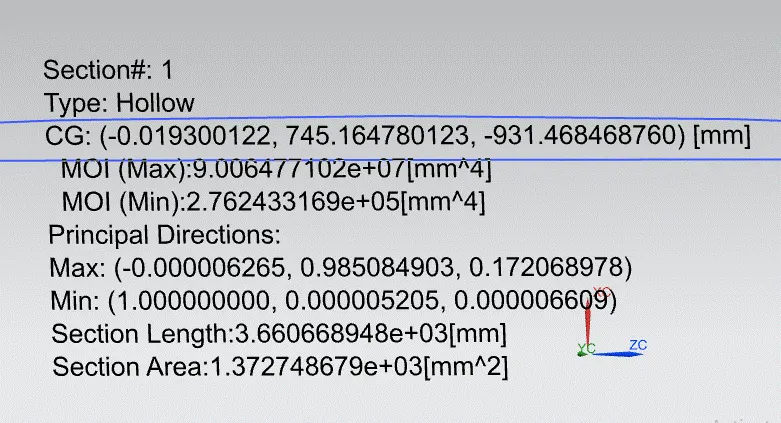
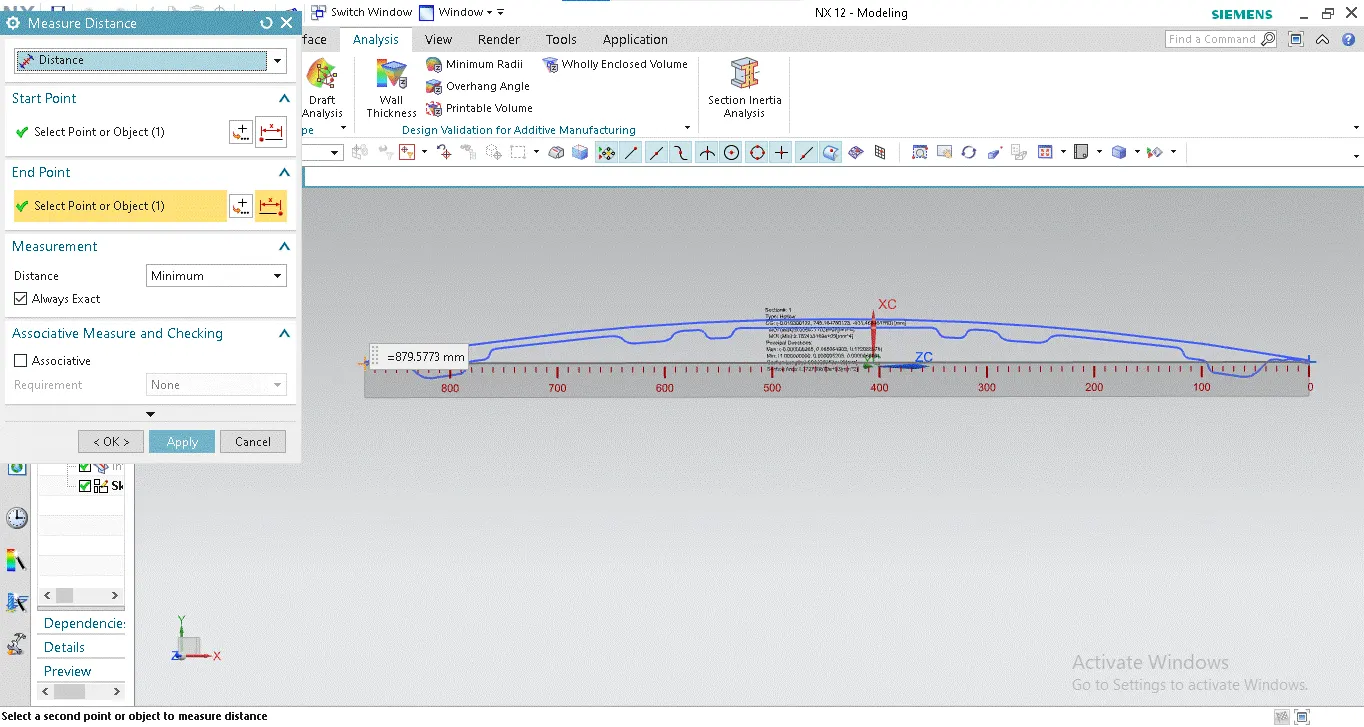
Imax – 9.006477×10^7×mm^4
Imin – 2.762433169×10^5×mm^4
Y = 879.5773 / 2 = 439.78865mm
S1 .= 2.762433169×10^5 / 439.788 = 627.883 mm^3
Optimized design
By increasing the depth of the inner panel by 0.5 mm
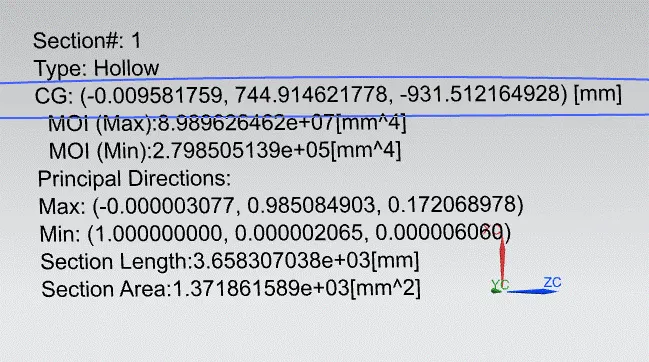
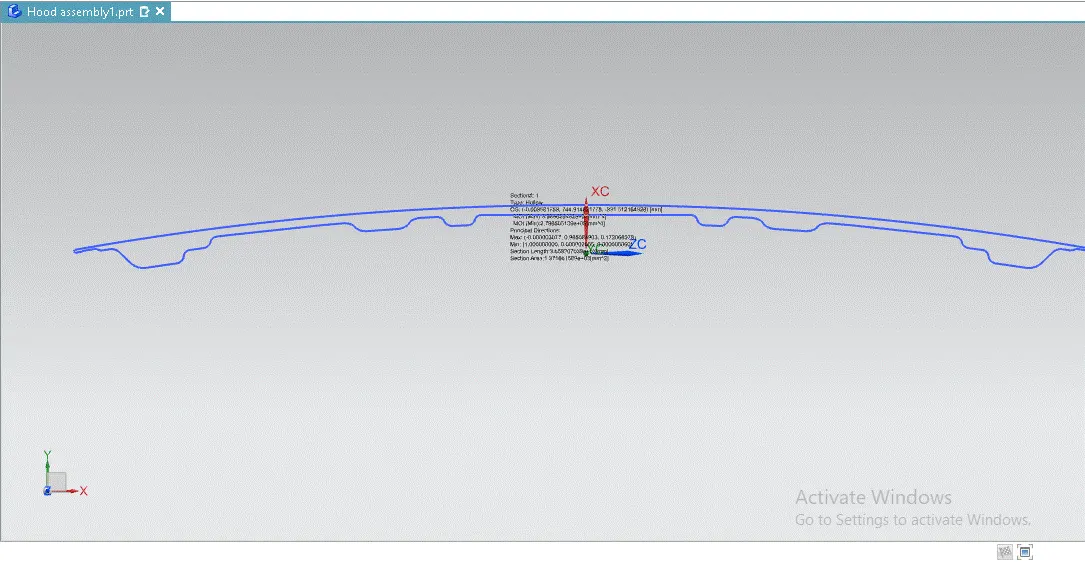
Imax – 8.989626462×10^7×mm^4
Imin – 2.798505139×10^5×mm^4
Y = 879.5773 / 2 = 439.78865mm
S2 .= 2.798505139×10^5 / 439.788 =635.656 x 10 mm^3
Conclusion
The section modulus calculation and optimization process has significantly improved the structural integrity and performance of the hood design. This foundation enables further refinements and advancements, ensuring enhanced durability and functionality in future iterations