Section Modulus calculation and optimization
AIM :-
To calculate the section modulus of the previously designed hood by analyzing its strength and also optimizing the design to see the difference in the bending strength of the hood.
SOFTWARE :-
CATIA V5
THEORY :-
Section Modulus is a geometric property used to calculate the bending stresses in a structural member.
Mathematically,
It is defined as the ratio of the moment of inertia of a section about its centroidal axis and to the distance of the extreme layer from the neutral axis.
It is denoted by Z.
Z = I/ymax
Mathematically By bending stress equation,
M/I = σmax/ymax
M = σmax × (I/ymax)
M = σmax × Z
Where,
I = Moment of Inertia(m⁴)
y = distance from NA to extreme layer(m)
The unit of section modulus is m³.
Types of Section Modulus:
There are two types of section modulus:
1] Elastic section modulus:- The elastic section modulus is applicable up to the yield point of material. It is used in most engineering applications.
2] Plastic section modulus:- The plastic section modulus is generally used for material in which plastic behavior is observed.
Beam of Uniform strength:
- A beam is said to be a beam of uniform strength when bending stress developed at each and every cross-section of the beam remains same.
- The beam of constant cross-section throughout the length has constant section modulus and has constant or uniform moment of resistance. But in actual practice, the moment generally varies along the length and in that case such a section is not economical. Under heavy loads, a beam of variable section is designed to have uniform strength.
- In presence of Transverse Shear Load every prismatic beam is a beam of non-uniform strength due to variable bending moment.
- In presence of Transverse Shear Load to obtain a beam of uniform strength non-prismatic beams are used.
- Non-prismatic beams can be obtained by the following two methods:
-
- By varying width and keeping depth as constant.
- By varying depth and keeping width as constant.
-
CALCULATION & OBSERVATION :-
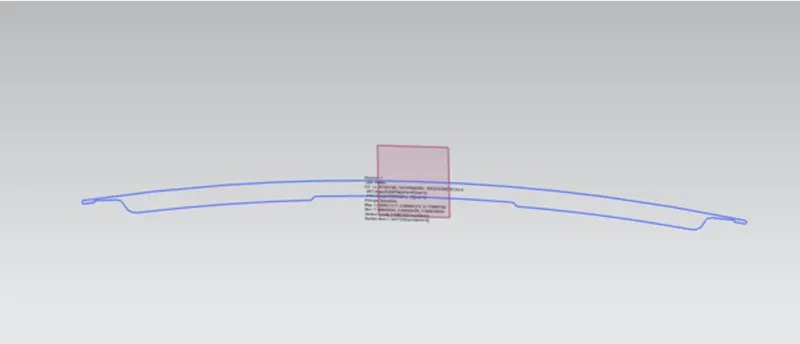
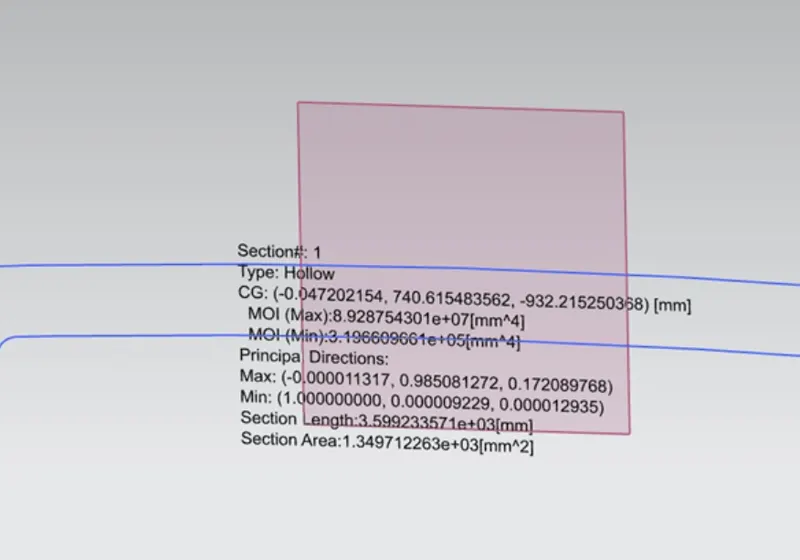
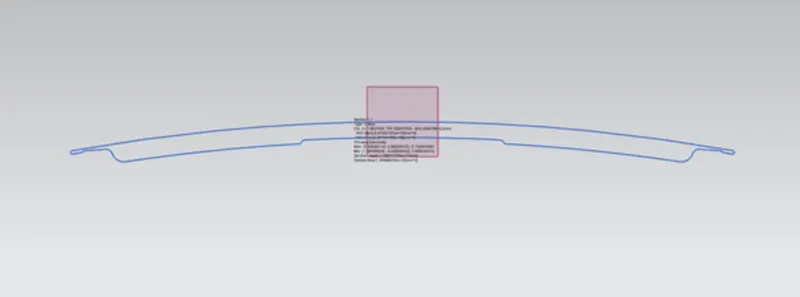
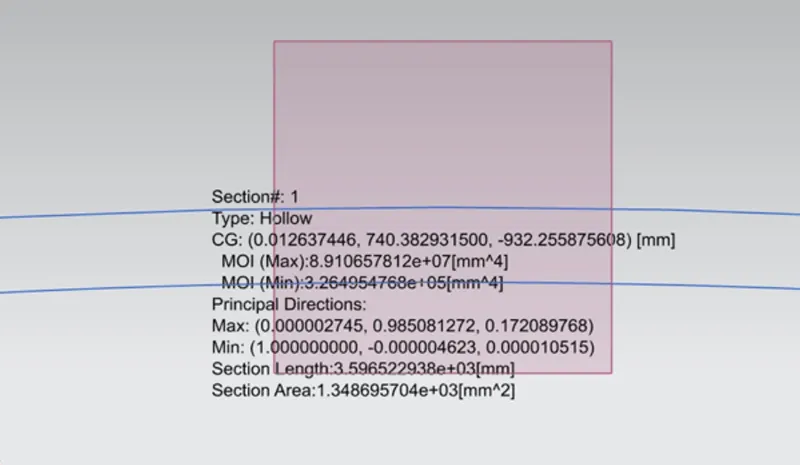
CONCLUSION :-
Hence when comparing case 1 & case 2,
1. The section modulus value of case 2 is higher than the case 1
2. As we increase the section area, the moment of inertia & section modulus increases which means strength and load material also increases.