Section Modulus calculation and optimization
Section Modulus calculation and optimization
Objective:
To Calculate the section modulus of the hood design by using catia v5 and improve the strenght of the hood design.
Section Modulus:
Section Modulus is a geometric property used to calculate the bending stresses in a structural member.
- Elastic Section Modulus
- Plastic Section Modulus

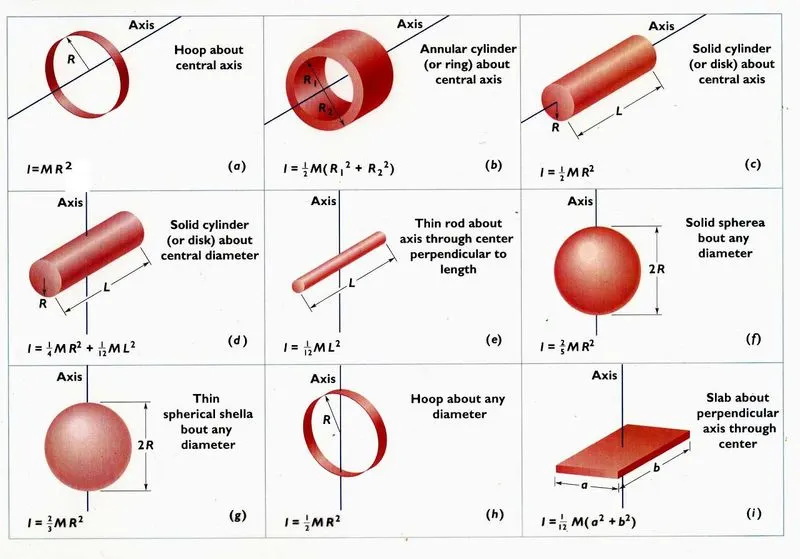
Moment of Inertia:
The moment of inertia of an object is a determined measurement for a rigid body rotating around a fixed axis. The axis might be internal or external, and it can be fixed or not. However, the moment of inertia (I) is always described in relation to that axis.
Inertia in a body is due to its mass. More the mass of a body more is the inertia. For instance, it is easier to throw a small stone farther than a heavier one. Because the heavier one has more mass, it resists change more, that is, it has more inertia.
In other words the Moment of Inertia is the mass times the square of the perpendicular distance to the rotation reference axis and can be expressed as. I=MR2. Unit for mass is Kg. unit for distance is metre
SI unit: kg⋅m2
Formula:
I = L/ω
I - Inertia
L - Angular momentum
ω - Angular velocity
What is Inertia?
It is the property of a body by virtue of which it resists change in its state of rest or motion.
What is Angular momentum?
The property of any rotating object given by moment of inertia times angular velocity. It is the property of a rotating body given by the product of the moment of inertia and the angular velocity of the rotating object.
What is Angular Velocity?
angular velocity is the time rate at which an object rotates or revolves about an axis. Angular velocity is represented by the Greek letter omega (ω, sometimes Ω)
Section Modulus Calculation: -
Steps Involved:
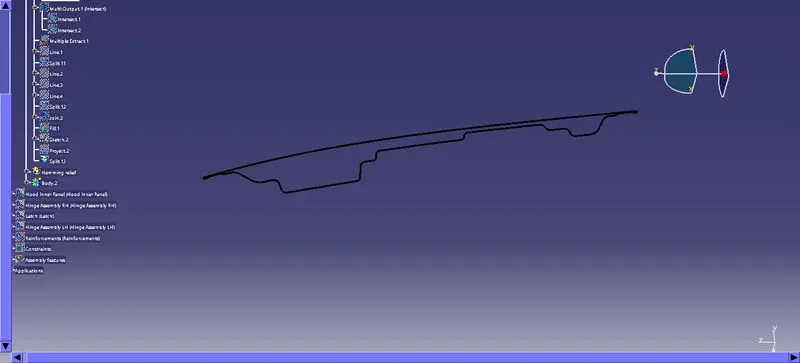
1.Intersection Part of Hood
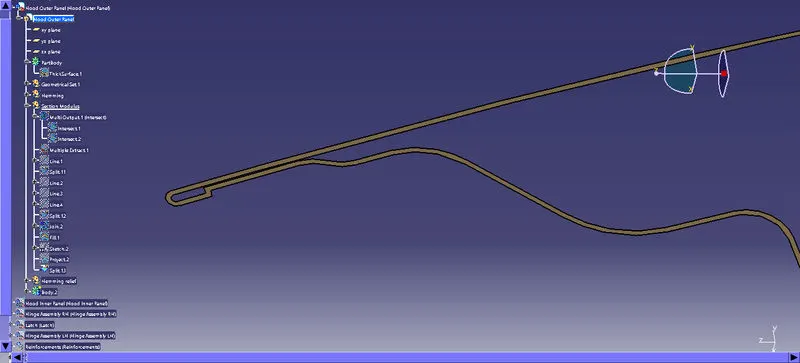
2. Sketch Thickness of the hood 0.75mm and make closed contour
3. Inertia Measurement
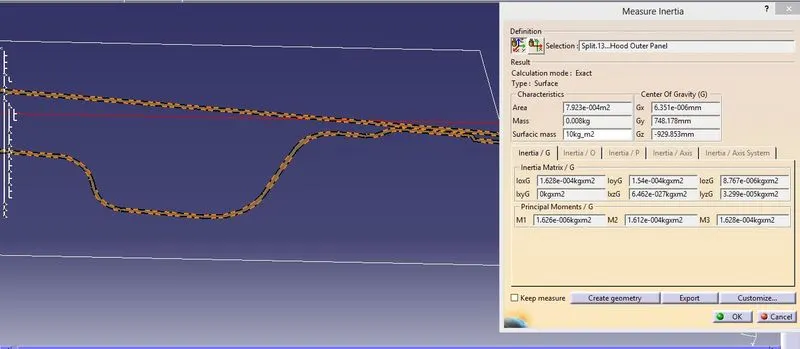
Here, From the above data
M1( Minimum) = 1.626e-006 kgxm2
M2 ( Maximum) = 1.628e-004kgxm2
For Calculation, considering minimum value because it can be act on body in starting. 1.626e-006 kgxm2
Distance between the neutral axis and extreme end of the object
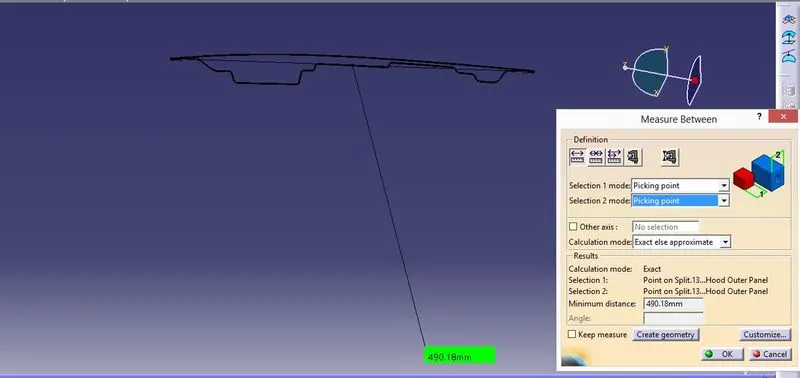
Y = 490.18/2 = 245.09 mm
So Y = 0.24509 m
Then Section Modulus is
S= I/Y
|
S = 6.634x10^-6 Kg.m |
Optimization Data: -
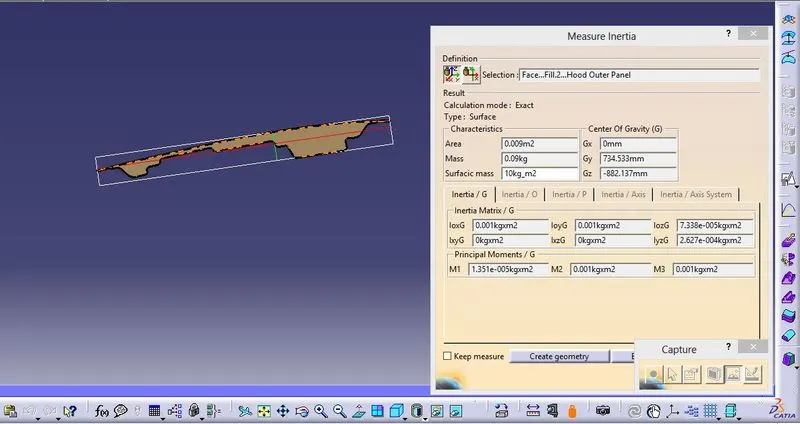
-
Here, From the above data
M1( Minimum) = 1.351e-005 kgxm2
M2 ( Maximum) = 0.0001 kgxm2
For Calculation, considering minimum value because it can be act on body in starting. 1.351e-005 kgxm2
Here, Minimum value is I =1.351e-005 kgxm2
Y = 490.18/2 = 245.09 mm
So Y = 0.24509 m
Then Section Modulus is
S= I/Y
|
S = 5.512x10^-5 Kg.m |
Conclusion
In order to increase the strength of the hood section modulus value should be heigher so the modify done to increase the area of Hood I got more section modulus value i.e. S = 5.512x10^-5 Kg.m so, in this condition hood has more strength.