Benchmarking
What is Benchmarking?
Literally we can say that the Benchmarking is a tool for assessing and comparing performance in order to achieve continuous improvement. Technically The intent of benchmarking is to compare your own operations to that of competitors and to generate ideas for improving processes, approaches, and technologies to reduce costs, increase profits and strengthen customer loyalty and satisfaction.
Purpose of Benchmarking:
- Benchmarking helps companies learn about improving their business practices by observing what other companies do.
- Benchmarking can help businesses reduce costs, increase profits, strengthen customer loyalty and satisfaction.
- Benchmarking solutions help enterprises overcome these challenges, stay a step ahead of competitors, adopt innovative and new strategies, and champion their industry
Types of Benchmarking:
There are four major types
- Performance benchmarking involves gathering and comparing quantitative data (i.e., measures or key performance indicators). Performance benchmarking is usually the first step organizations take to identify performance gaps.
What you need? Standard measures and a means of extracting, collecting, and analysing that data.
What you get? Data that informs decision making. This form of benchmarking is usually the first step organizations take to identify performance gaps.
- Practice benchmarking involves gathering and comparing qualitative information about how an activity is conducted through people, processes, and technology.
What you need? A standard approach to gather and compare qualitative information such as process mapping.
What you get? Insight into where and how performance gaps occur and best practices that the organization can apply to other areas.
- Internal benchmarking compares metrics (performance benchmarking) and/or practices (practice benchmarking) from different units, product lines, departments, programs, geographies, etc., within the organization.
What you need? At least two areas within the organization that have shared metrics and/or practices.
What you get? Internal benchmarking is a good starting point to understand the current standard of business performance. Sustained internal benchmarking applies mainly to large organizations where certain areas of the business are more efficient than others.
- External benchmarking compares metrics and/or practices of one organization to one or many others.
What you need? For custom benchmarking, you need one or more organizations to agree to participate. You may also need a third party to facilitate data collection. This approach can be highly valuable but often requires significant time and effort. That’s why organizations engage with groups like APQC, which offers more than 3,300 measures you can use to compare performance to organizations worldwide and in nearly every industry.
Case Study:
Mr. D.S. Pughazhyendhii is a married man who lives in Bangalore which is a highly crowded city. His Family comprises five members including his wife, a five-year-old boy, his father, and his mother. He visits his native place Madurai which is 500kms away from Bangalore once a month. Also, he will be using his car to commute to his office. His budget falls between 8 to 10 lakhs on road. Please suggest to him options so that he will buy a good car for his family.
Note: Pughazhyendhii is fond of big cars
Requirement and suggestions:
In the above case study Mr.D.S. Pughazhyendhii is finding a suitable car for all his needs. They are following below with suggestions.
- To considering his family there are 5 persons including his parents so a car with enough space and adequate leg room is much needed.
- The total distance to be covered in a month approximately 3000 km and above including his office use and to his month trip to native place which gives 1000 km for the round trip.
- Based on these requirements suggestion would be a SUV model type of a car in the budget of maximum 10 Lacs on road will satisfy all his needs.
- Petrol with Automatic Transmission variant car is suggested for his requirements which gives better mileage, torque, re-selling value, Less maintenance cost and Less wear of engine.
- City like Bengaluru which is highly crowded and traffic so that Automatic Gear transmission would be best suited for this scenario.
Based on these requirements a detailed benchmarking is done to compare all the parameters and to suggest a suitable car.
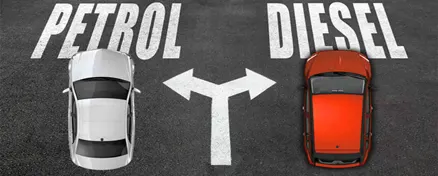
Which Car is best Petrol or Diesel?
It’s a very tricky question as there is no straightforward answer. One has to account for several factors to end the confusion between diesel vs petrol cars. However, knowing the key differences between petrol and diesel cars will make your job easier in selecting the right vehicle for your requirements
Difference between Petrol Cars and diesel cars:
|
Parameters |
Petrol car |
Diesel car |
|
Price |
Petrol cars are more affordable than diesel cars. |
Diesel variants are more expensive than their petrol counterparts. |
|
Service and maintenance |
The cost of service/maintenance is lower than diesel cars. |
The cost of service/maintenance is on the higher side. |
|
Fuel efficiency/mileage |
Lower fuel efficiency than diesel variant. |
Returns high fuel efficiency. |
|
Refinement |
NVH (Noise, Vibration and Harshness) levels are low. |
NVH (Noise, Vibration and Harshness) levels are high. |
|
Power |
Good initial acceleration with linear power delivery. |
Better pulling power than petrol cars due to the increased torque. |
|
Eco-friendliness |
Petrol engines produce less pollutant particulate matter. Hence, they are less harmful to the environment. |
Diesel engines produce more pollutant particulate matter. Hence, they are more harmful to the environment. |
|
Engine life |
Petrol engines have a shorter lifespan due to fuel property, which wears out the engine components quicker. |
Diesel engines last longer than petrol engines as the wear and tear is less pronounced due to fuel property. |
|
Fuel price |
Petrol is more expensive than diesel. |
Diesel is comparatively cheaper than petrol. |
|
Resale value |
Resale value is low. |
Resale value is higher than petrol cars. |
Reason we avoid diesel cars:
- Diesel engines are bad for the environment
- Petrol cars are cheaper
- Almost no price difference between petrol and diesel
- Petrol can be easily converted into CNG if you desire
- Petrol engines are cheaper to repair
- Diesel engines are being forsaken by major automobile companies
- Diesel engines are noisy
- Diesel engines can only be used for 10 years.
- Petrol engines are more powerful
- Petrol engines are more responsive
- For the above major reasons, I would suggest better go for petrol engine cars.
Gear Transmission: Automatic
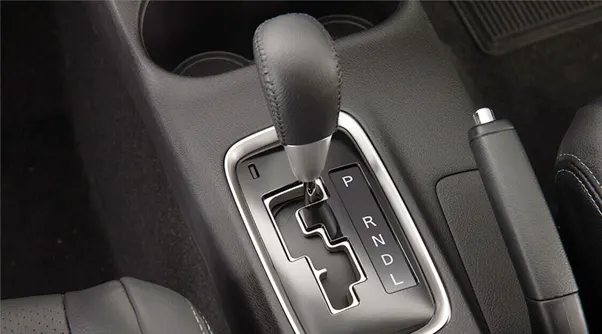
An automatic transmission car actually makes a lot of sense for all those who have long commutes and often have to drive through a lot of congestion. Not having to use the clutch and the gear lever frequently reduces the driver fatigue to a lot of extent.
Here some advantages of Automatic Transmission drive:
- Automatic cars are easier to drive in high traffic conditions.
- Automatic transmissions make cars a lot easier to drive for new drivers
- A dual-clutch transmission can shift very quickly, which makes the car perform better.
- In most cases, automatic transmission offers a smoother drive
- We can still shift gears manually if the automatic transmission offers the manual shifting option.
RENAULT KIGER
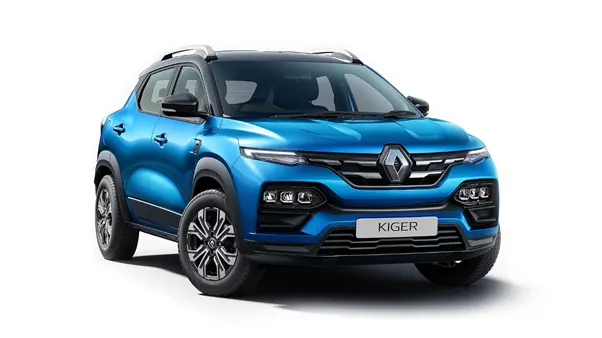
|
ARAI Mileage |
20.0 Kmpl |
|
Fuel Type |
Petrol |
|
Max Power (BHP @ rpm) |
72 PS @ 6250 rpm |
|
Seating Capacity |
5 |
|
Transmission Type |
Automatic |
|
Fuel Tank Capacity |
40 Litres |
|
Engine Displacement |
999 cc |
|
Max Torque (Nm@rpm) |
96 Nm @ 3500 rpm |
|
Boot Space (Litres) |
405 Litres |
NISSAN MAGNITE
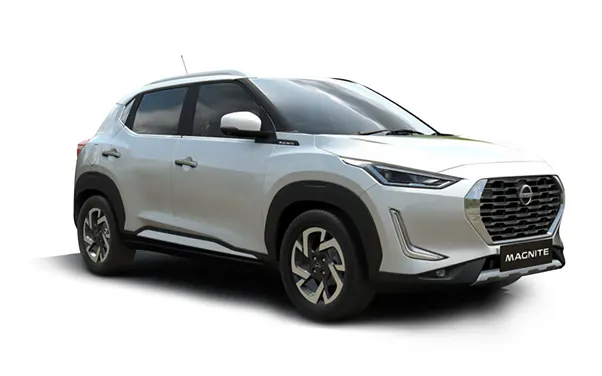
|
ARAI Mileage |
17.7 Kmpl |
|
Fuel Type |
Petrol |
|
Max Power (BHP @ rpm) |
100 PS @ 5000 rpm |
|
Seating Capacity |
5 |
|
Transmission Type |
Automatic |
|
Fuel Tank Capacity |
40 Litres |
|
Engine Displacement |
999 cc |
|
Max Torque (Nm@rpm) |
152 Nm @ 2200-4400 rpm |
|
Boot Space (Litres) |
336 Litres |
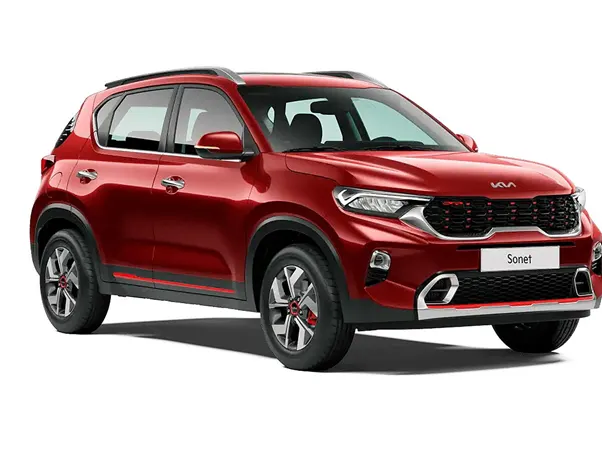
KIA SONET
|
ARAI Mileage |
18.3 Kmpl |
|
Fuel Type |
Petrol |
|
Max Power (bhp @ rpm) |
120 PS @ 6000 rpm |
|
Seating Capacity |
5 |
|
Transmission Type |
Automatic |
|
Fuel Tank Capacity |
45 Litres |
|
Engine Displacement |
998 cc |
|
Max Torque (nm@rpm) |
172 Nm @ 1500-4000 rpm |
|
Boot Space (Litres) |
392 Litres |
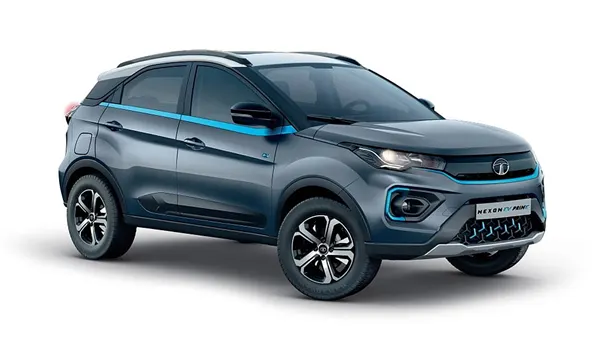
TATA NEXON
|
ARAI Mileage |
16.3 Kmpl |
|
Fuel Type |
Petrol |
|
Max Power (bhp @ rpm) |
120 PS @ 5500 rpm |
|
Seating Capacity |
5 |
|
Transmission Type |
Automatic |
|
Fuel Tank Capacity |
44 Litres |
|
Engine Displacement |
1199 cc |
|
Max Torque (nm@rpm) |
170 Nm @ 1750-4000 rpm |
|
Boot Space (Litres) |
350 Litres |
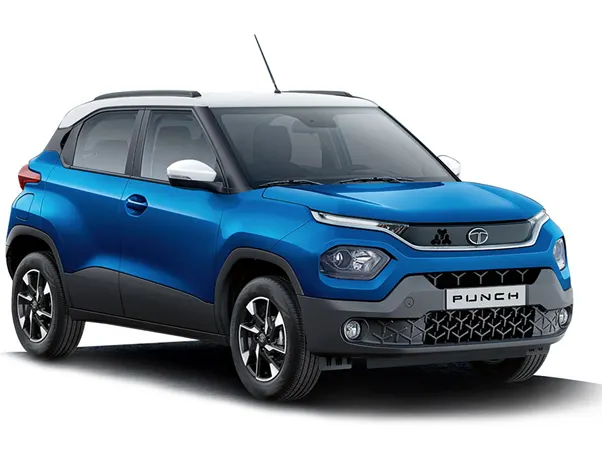
TATA PUNCH
|
ARAI Mileage |
18.82 Kmpl |
|
Fuel Type |
Petrol |
|
Max Power (bhp @ rpm) |
86 PS @ 6000 rpm |
|
Seating Capacity |
5 |
|
Transmission Type |
Automatic |
|
Fuel Tank Capacity |
37 Litres |
|
Engine Displacement |
1199 cc |
|
Max Torque (nm@rpm) |
113 Nm @ 3300 rpm |
|
Boot Space (Litres) |
366 Litres |
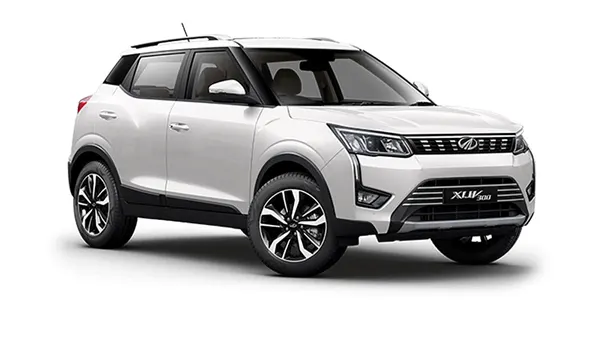
MAHINDRA XUV 300
|
ARAI Mileage |
17 Kmpl |
|
Fuel Type |
Petrol |
|
Max Power (bhp @ rpm) |
108.6 bhp @ 5000 rpm |
|
Seating Capacity |
5 |
|
Transmission Type |
Automatic |
|
Fuel Tank Capacity |
42 Litres |
|
Engine Displacement |
1197 cc |
|
Max Torque (nm@rpm) |
200 Nm @ 2000-3500 rpm |
|
Boot Space (Litres) |
259 Litres |
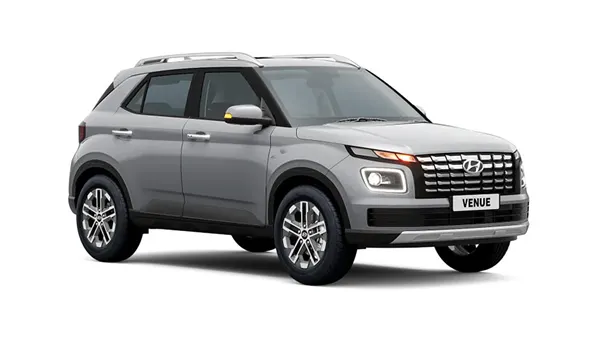
Hyundai Venue:
|
ARAI Mileage |
18.1 Kmpl |
|
Fuel Type |
Petrol |
|
Max Power (bhp @ rpm) |
120 PS @ 6000 rpm |
|
Seating Capacity |
5 |
|
Transmission Type |
Automatic |
|
Fuel Tank Capacity |
45 Litres |
|
Engine Displacement |
998 cc |
|
Max Torque (nm@rpm) |
172 Nm @ 1500-4000 rpm |
|
Boot Space (Litres) |
350 Litres |
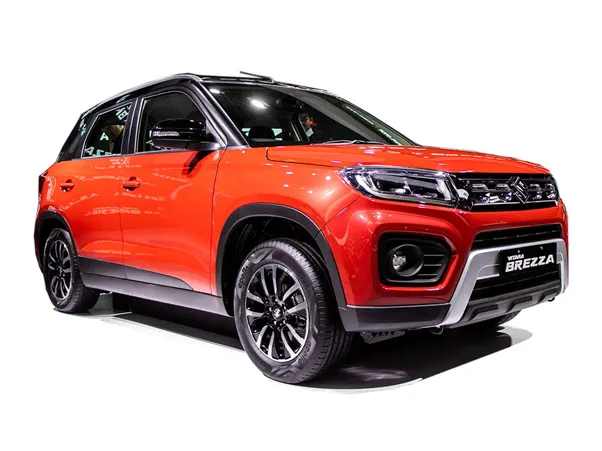
MARUTI SUZUKI BREZZA
|
ARAI Mileage |
18.76 Kmpl |
|
Fuel Type |
Petrol |
|
Max Power (bhp @ rpm) |
103.26 bhp@ 6000 rpm |
|
Seating Capacity |
5 |
|
Transmission Type |
Automatic |
|
Fuel Tank Capacity |
48 Litres |
|
Engine Displacement |
1462 cc |
|
Max Torque (nm@rpm) |
138 Nm @4400 rpm |
|
Boot Space (Litres) |
328 Litres |
CONCLUSION
I would suggest Renault Kiger for Mr. D.S. Pughazhyendhii family and for his city drive.
Reason why?
The Kiger is just not an exciting SUV, it is also a safe one. The proof of the pudding SUV’s crash test rating by Global NCAP. The Kiger’s score? An impressive four stars for adult occupant protection. For the record, the Kiger’s list of passive and active safety features includes four airbags, ABS with EBD, ISOFIX child-seat mounts, a rear-view camera and parking sensors. Not only in safety features but also providing Boot space 405 litres to keep enough luggage’s and baggage’s and decent mileage 20 kmpl in this segment.
So, The Renault Kiger is the most affordable compact SUV around all other cars.