Fender Design - Wheel Arch Challenge
Wheel Arch Measurement
Objective:
Calculate the Wheel Arch gap at required points and check whether the car passes the European standard.
Table of Contents:
- Fender Introduction
- Wheel Arch
- European Standards
- Wheel Arch Challenge
- Conclusion
Fender Introduction:
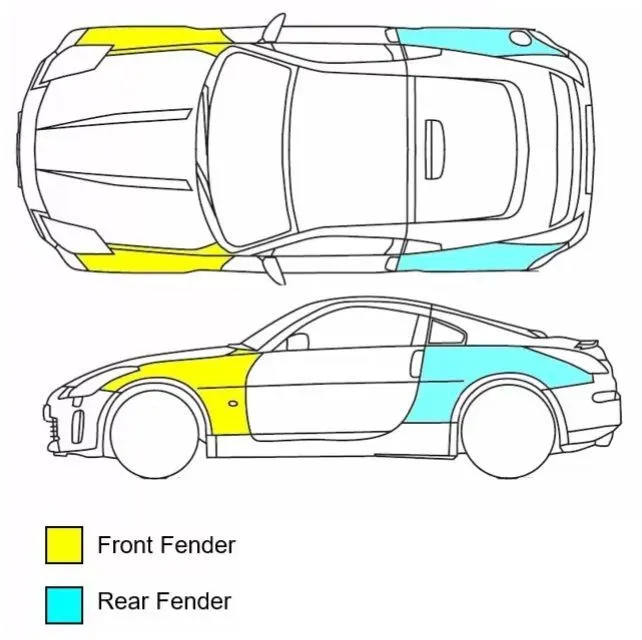
Fender is a plastic, metal, or rubber curved panel over the wheels on the side of a car, extending from the front bumper of the car to the door. The main purpose of fenders is to keep dirt, mud, and other debris off of the tires and braking system, making them safer and more efficient. Fenders also help prevent mud, dirt, dust particles, and other liquids from getting thrown in the air while the tires rotate. Fenders are attached to the frame of the car, and they come in different styles and sizes.
Types of fender:
1. Full Bumper type
2. Half Bumper type
1. Full Bumper Type:
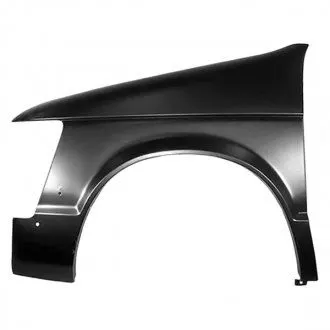

The full bumper type is the traditional type of fender where more material consumption is observed. This type is used in the old designs of automobiles where it increases the overall weight and thus reduces performance. The maintenance also relatively more due to more surface.
2. Half Bumper type:
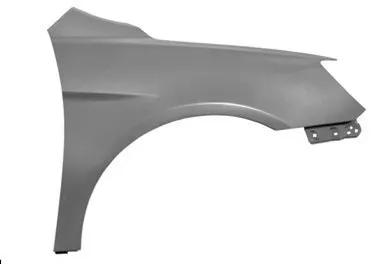

Half bumper type is the modern design where less material consumption is observed, so productivity increases by reducing the size of the blank and thus providing more performance. The maintenance also relatively low compared to the full bumper type.
Wheel Arch:
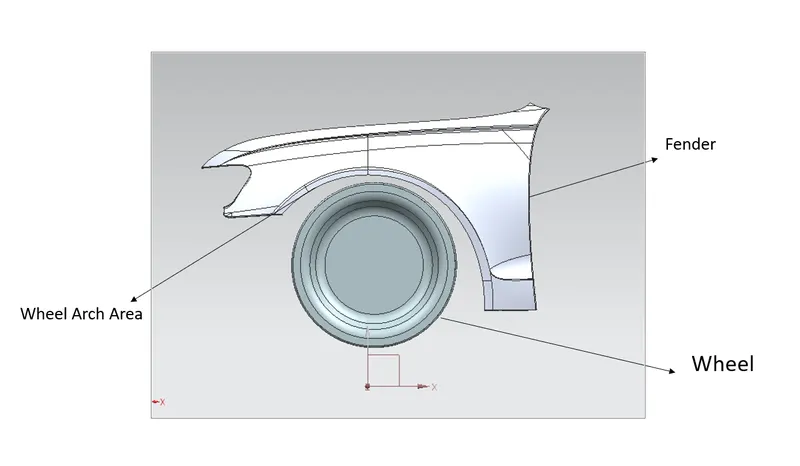
Wheel Arch is the semi-circular part of the fender positioned above the wheel of the vehicle. The design of the wheel arch of the fender should be such that it must shield wheels and protect both passengers compartment and pedestarians from the projection of watr, mud and stones.
European Standards:
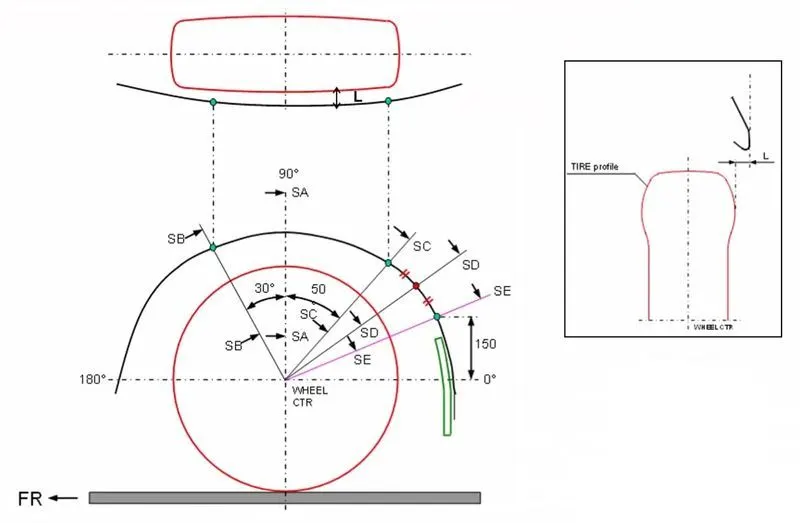
Criteria to Pass European Standard
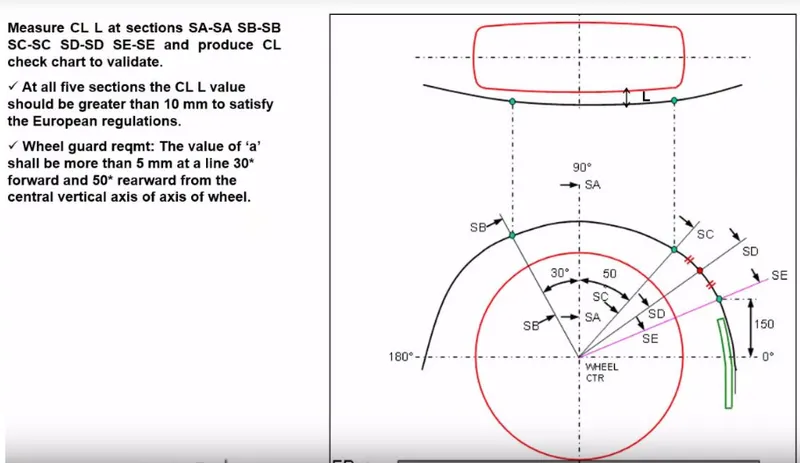
- To satisfy the European Regulations all the sections should have a clearance of 5 mm from the tire when viewed from the top.
- Wheel Guard Requirement- The value of L should be more than 5 mm at a line 30 degree forward and 50 degrees rearward from the central vertical axis of the wheel.
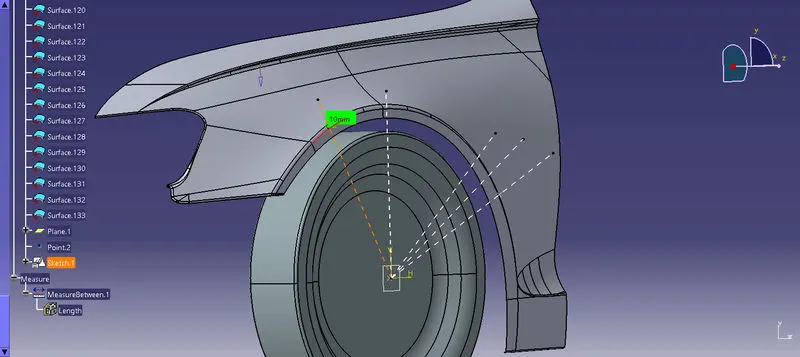
- The sketch was created on the plane of the tire as per the European Regulations provided. Then these lines were projected on the fender to measure the clearance between the tire and fender.
Wheel Arch Challenge:
- Value of L at SB Section
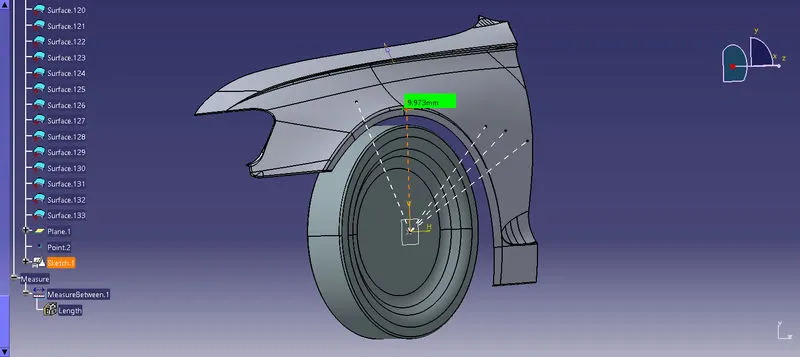
- Value of L at SA Section
- Value of L at SC Section
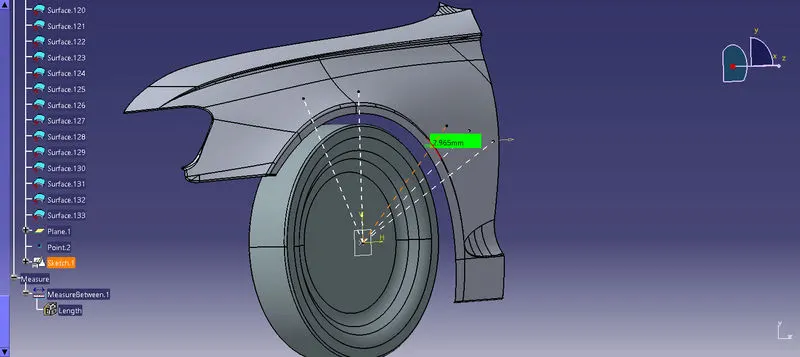
- Value of L at SD Section
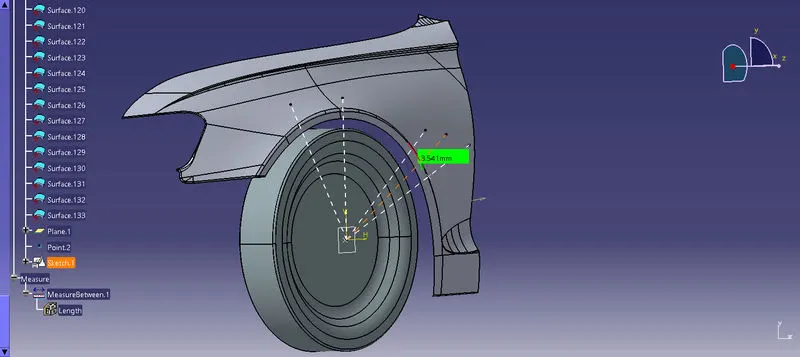
- Value of L at SE Section
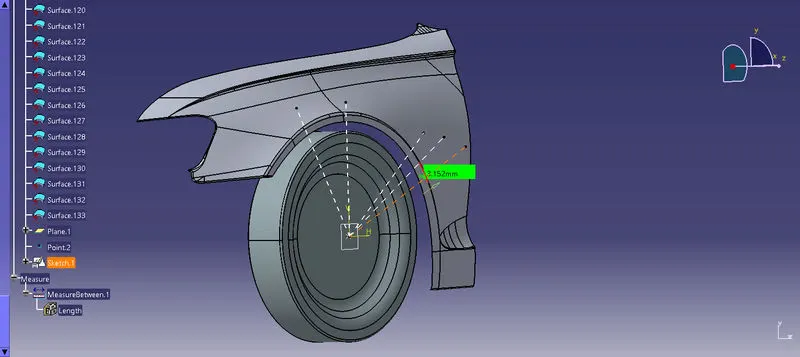
Table for L value at Different Sections:
| S NO | Sections Name |
L Value in mm |
European Standard Value in mm | Pass/ Fail |
| 1 | SB Section | 10 | 10 | Pass |
| 2 | SA Section | 9.973 | 10 | Fail |
| 3 | SC Section | 2.965 | 10 | Fail |
| 4 | SD Section | 3.541 | 10 | Fail |
| 5 | SE Section | 3.152 | 10 | Fail |
Conclusion:
The given model is analyzed according to the European standards. Since it does not meet the requirements at all sections except SB, So the deign failed and needs to be modified to have a minimum positive clearance of 10 mm at remaining all the sections.