Section Modulus calculation and optimization
SECTION MODULUS:
A geometric characteristic for a specific cross-section that is employed in the design of beams or flexural members is called section modulus. It establishes the beams' strength, which is determined by the cross-sectional area of the beam.
Although the extreme tensile or compressive fibres in a bending beam's section modulus are typically estimated, compression is frequently the most crucial situation because to the beginning of flexural torsional (F/T) buckling. Tensile extreme fibres typically have a higher permissible stress or capacity than compressive fibres (apart from brittle materials like concrete).
FORMULA:
S = I/y
S = Section Modulus
I = Moment of Inertia
y = distance between the neutral axis and the extreme end of the object
SIGNIFICANCE:
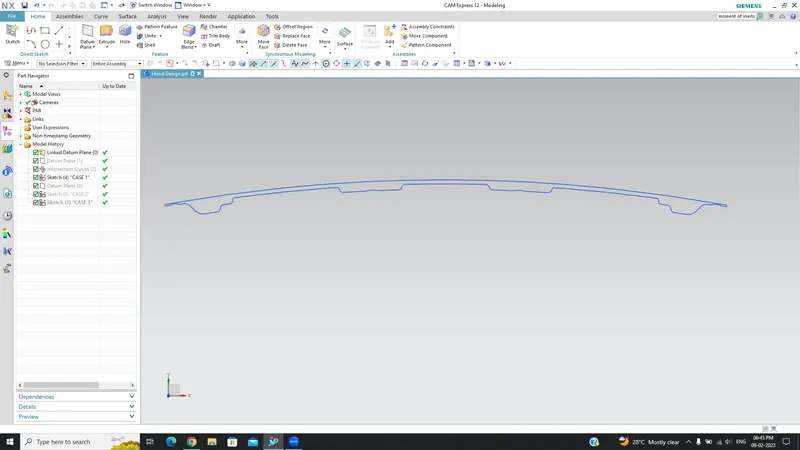
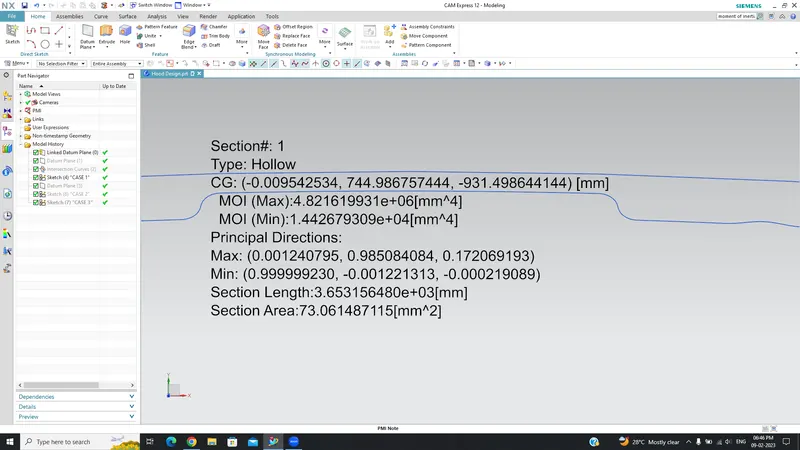
Imin= 1.442679309 X 10^4 mm^4
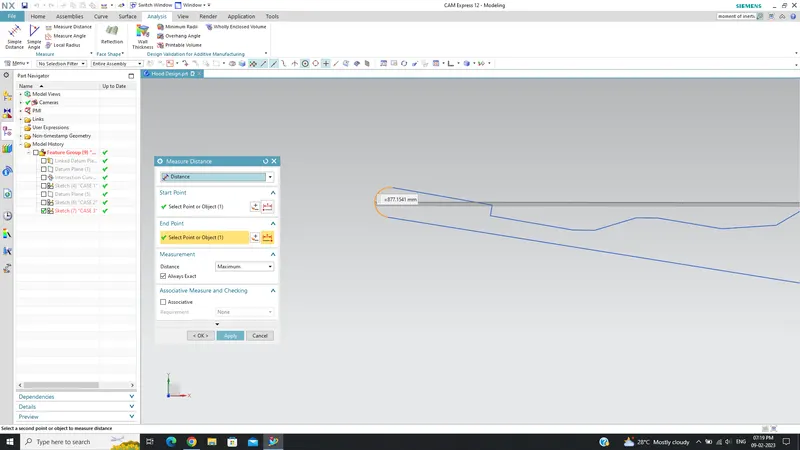
y= 438 mm
Zmin= Imin/y
= 1.442679309 X 10^4/ 438
= 32.94 mm^3
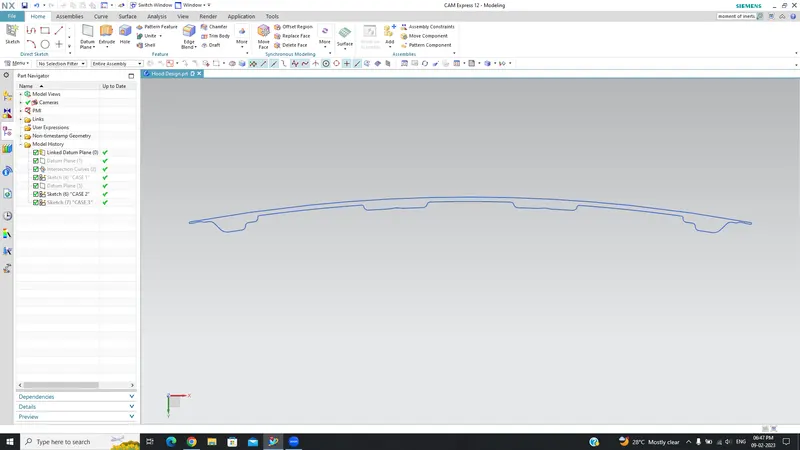
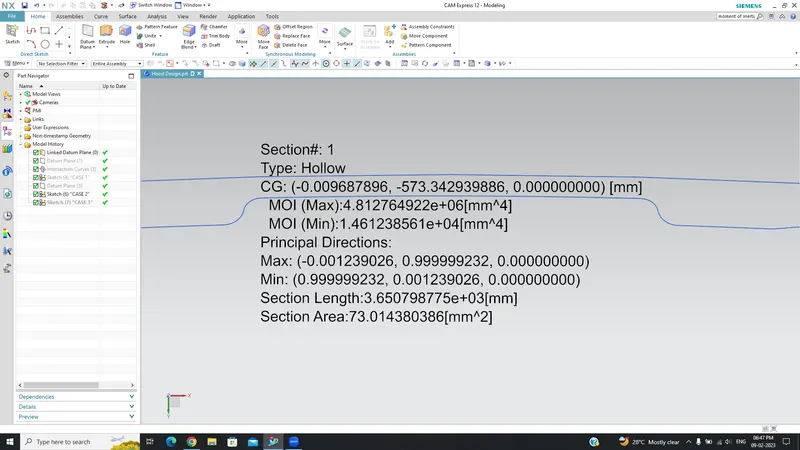
Imin= 1.461228561 X 10^4 mm^4
y= 438 mm
Zmin= Imin/y
= 1.461228561 X 10^4/ 438
= 33.37 mm^3
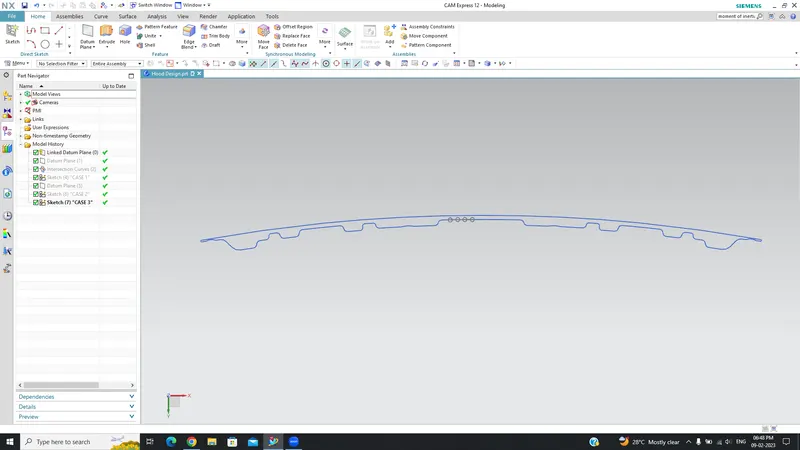
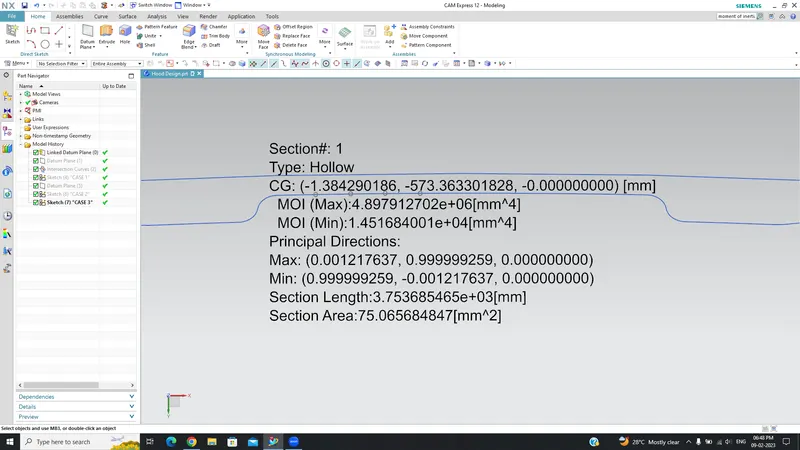
Imin= 1.451684001 X 10^4 mm^4
y= 438 mm
Zmin= Imin/y
= 1.451684001 X 10^4/ 438
= 33.14 mm^3
CONCLUSION:
CASE 1: Zmin = 32.94 mm^3
CASE 2: Zmin = 33.37 mm^3
CASE 3: Zmin = 33.14 mm^3
There are small variations in the section modulus around a 1.3% increase between Cases 1 and 2 and hence the new section Case2 has an improved section modulus compared to Case1.