Section Modulus calculation and optimization
SECTION MODULUS CALCULATION AND OPTIMIZATION
OBJECTIVE : To calculate the section modulus for hood design in both direction , for front crash and side crash . After calculating the section modulus optimize it's value.
Section Modulus : Section modulus is a geometric (shape) property for any given cross-section used in the designing of any component. If the section modulus of any component is more then it's strength will also be more. Section modulus can also be used for comparision of strength between two or more similar parts. If two parts are made of same material and same thickness but different in cross-section geometry then the strength of the part of larger section modulus will be more .
Section modulus is depends on the cross section area , shape and dimensions of the cross-section of any parts.
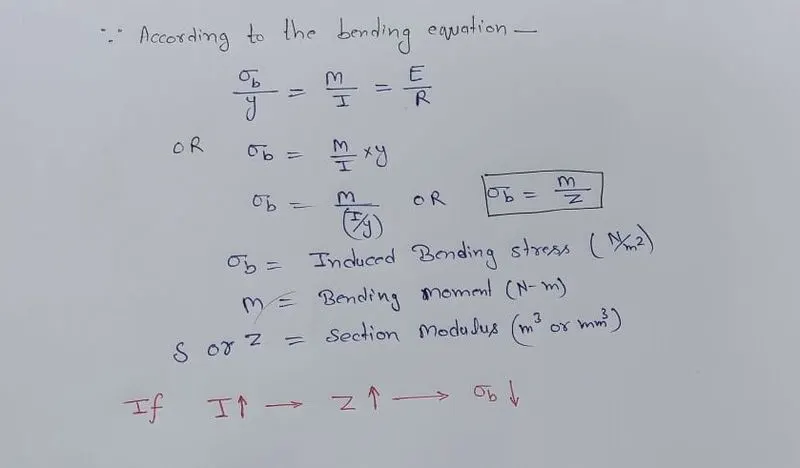
Hence section modulus (s) = I/Y
where , I = Moment of Inertia (mm)^4
Y = Distance between the neutral axis and the extreme end of the object. (mm)
1) Section Modulus for Front Crash :
During the front crash of a car the force will applied in the direction as shown in the below emage :
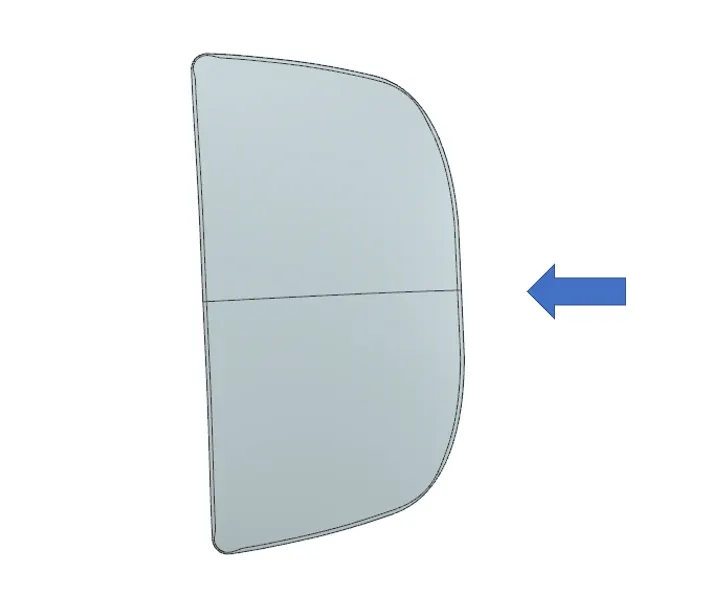
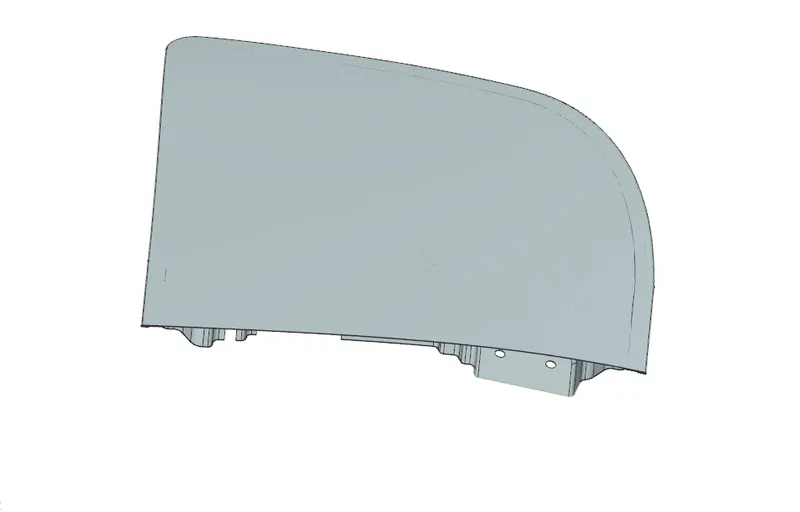
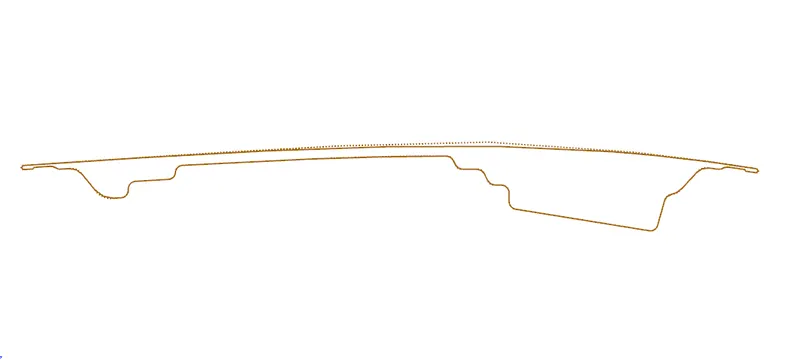
Effected cross-section in front crash
1.1) Section Modulus Of Actual Section :
For the front crash ,in the original form of cross-section the following data is found : 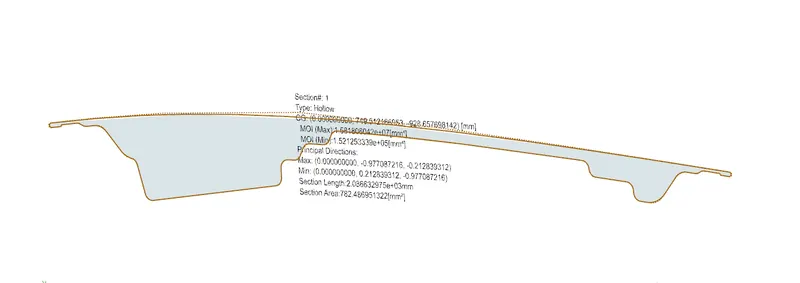
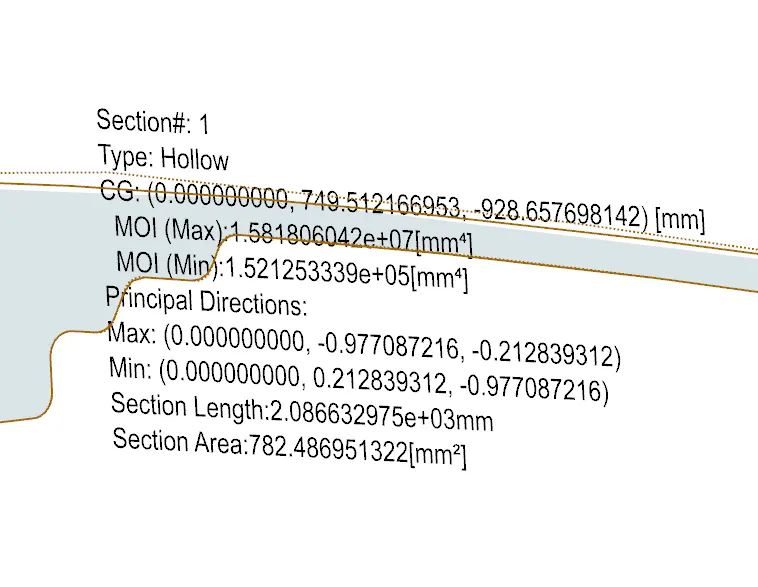
From the above analysis : Imax = 1.5818 e ^ +07 mm^4
Imin = 1.5212 e^ +05 mm^4
Y = 243.38 mm
So,
Smax = Imax/y = 6.4993 e^ +04 mm^3
Smin = Imin/y = 6.2503 e^ +02 mm^3
Optimization of Section Modulus : We prefer the cross-section with higher section modudlus always, because if the section modulus is higher then the strength of the part will also be higher .There are various method to improve the section modulus of the cross-section .Some of them are as follow :
1.2) Section Modulus By Increasing the gap between Inner Panel and Outer Panel :
If we increase the gap between the hood inner panel and outer panel then due to change (increase) in dimension and cross-section the Moment of Inertia (I) will increase and the section modulus (S) also get increased.
By increasing the gap with 0.5 mm ( outermost surface of inner panel is offseted downword by 0.5mm) the following result is found :
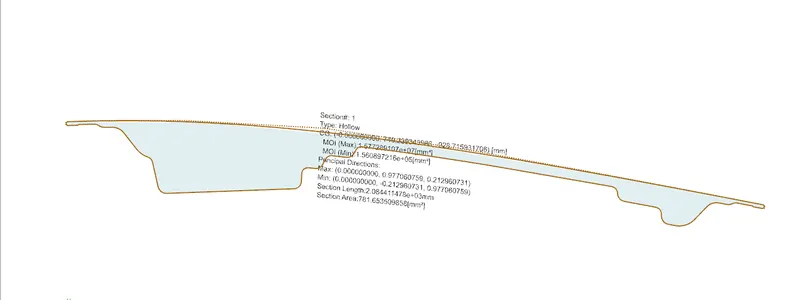
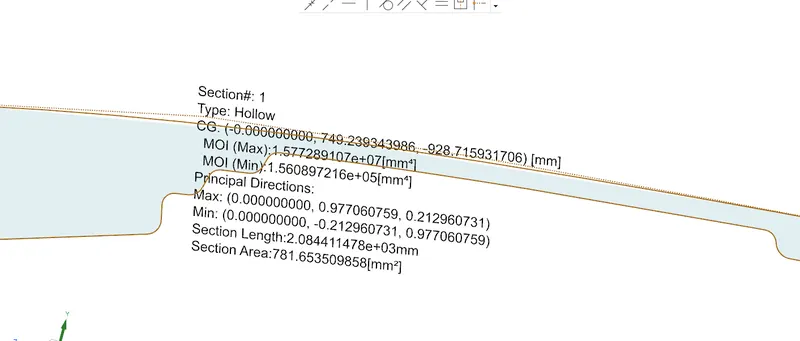
Imax = 1.5773 e^ +07 mm^4
Imin = 1.5609 e^ +05 mm^4
Y = 243.38 mm
So,
Smax = 6.4808 e^ +04 mm^3
Smin = 6.4134 e^+02 mm^3
Increment in Minimum Section Modulus :
We know that in which portion the moment of inertia is minimum there the section modulus also be minimum .So, in that portion the part failure will occurs first . That's why we have improve the strength (section modulus) in that portion. So, we will concentrate in the portion of minimum section modulus.
Hence, increment in minimum section modulus :
= (6.4134 e^ +02) - (6.2503 e^ +02)
= 0.1631 e^ +02 mm^3
1.3) Section Modulus By Additional embosses :
Embosses increase the strength of any part locally. If we increase the number of embosses in any part it's moment of inertia will increase due to which the section modulus will also increase means the strength of the part is increases. If we create an extra emboss as follow then we find the following results : 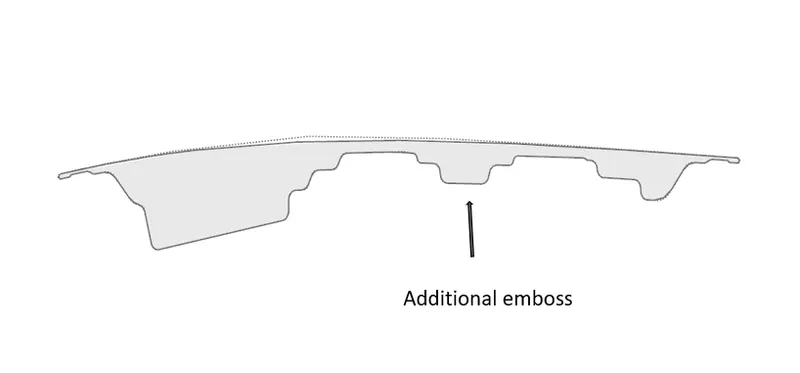
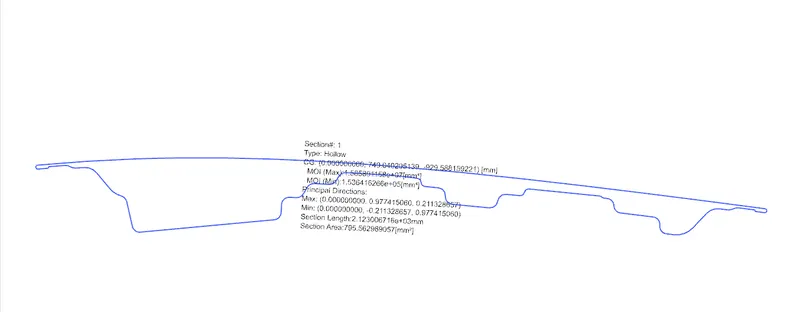
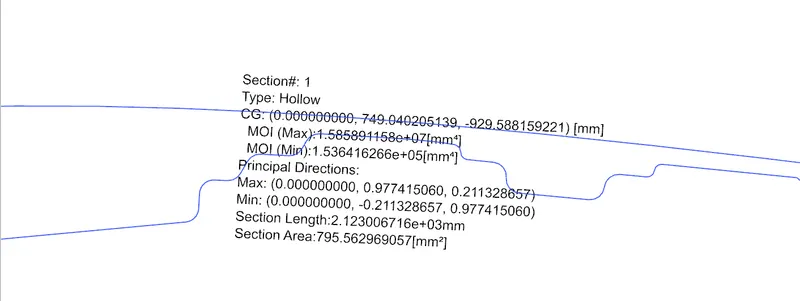
Imax = 1.5858 e ^ +07 mm^4
Imin = 1.5364 e ^ +05 mm^4
Y = 243.38 mm
So ,
Smax = 6.5157 e^ +04 mm^3
Smin = 6.3128 e^ +02 mm^3
Increment In Minimum Section Modulus :
= (6.3128 e^ +02) - (6.2503 e^ +02)
= 0.0625 e^ +02 mm^3
2) Section Modulus For Side crash :
During the side crash of a car the force will applied in the direction as shown in the below emage :
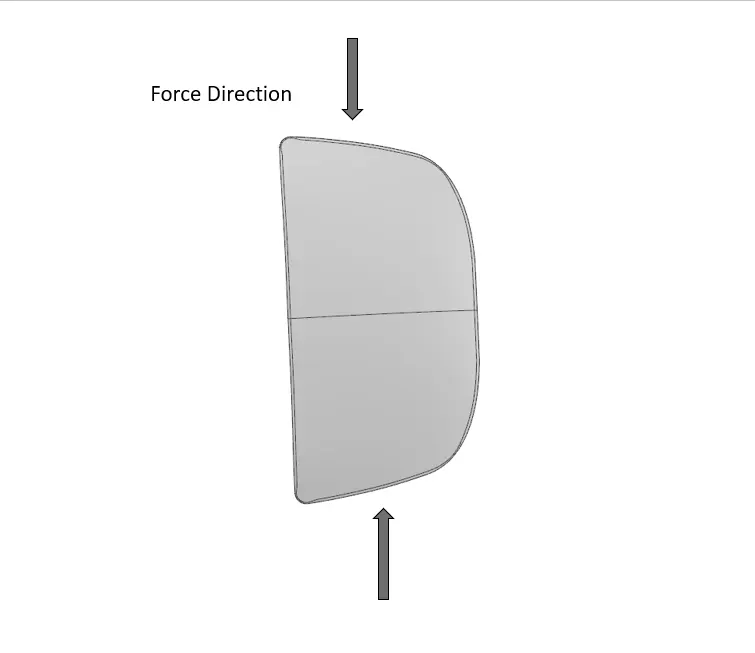
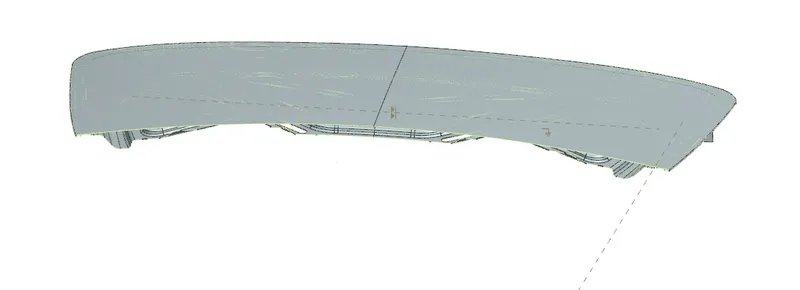

Effected section during side crash
2.1) Section Modulus For Actual section :
For the side crash ,in the original form of cross section the following data is found :
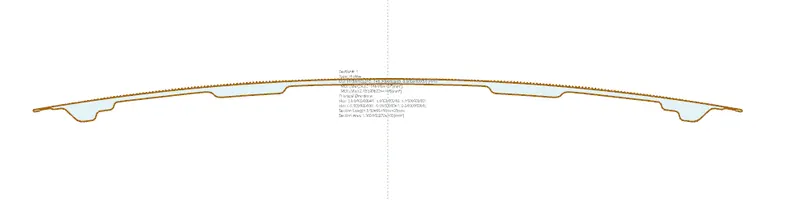
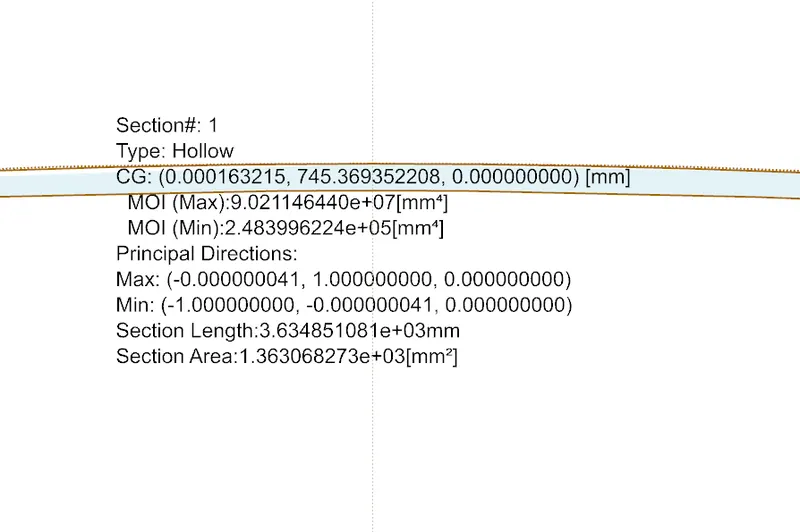
Imax = 9.0212 e^ +07 mm^4
Imin = 2.4839 e^ +05 mm^4
Y = 439.9946 mm
So,
Smax = 2.0503 e^ +05 mm^3
Smin = 5.6453 e^ +02 mm^3
2.2) Section Modulus By Increasing the gap between Inner Panel and Outer Panel :
By increasing the gap with 0.5 mm ( outermost surface of inner panel is offseted downword by 0.5mm) the following result is found :

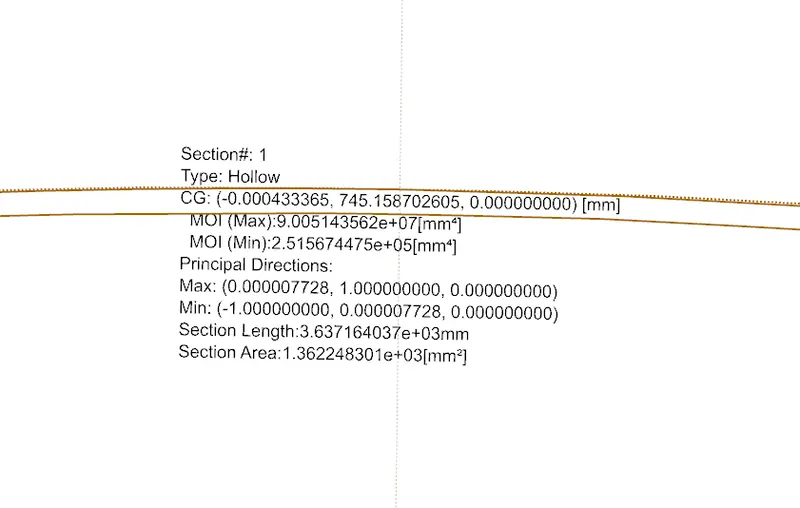
From the above analysis :
Imax = 9.0051 e^ +07 mm^4
Imin = 2.5157 e^ +05 mm^4
Y = 439.9946 mm
So,
Smax = 2.0466 e^ +05 mm^3
Smin = 5.7175 e^ + 02 mm^3
Increment In Minimum Section Modulus :
= (5.7175 e^ + 02) - (5.6453 e^ +02)
= 0.0722 e^ +02 mm^3
2.3) Section Modulus By Additional embosses :
If we create two additional embosses as like the below emage , then we found the following results : 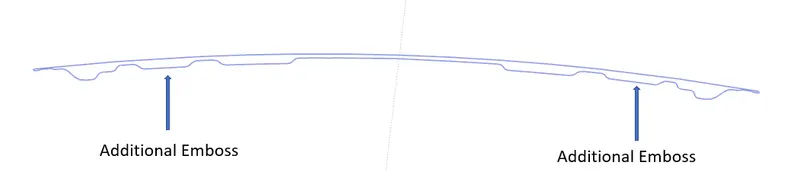
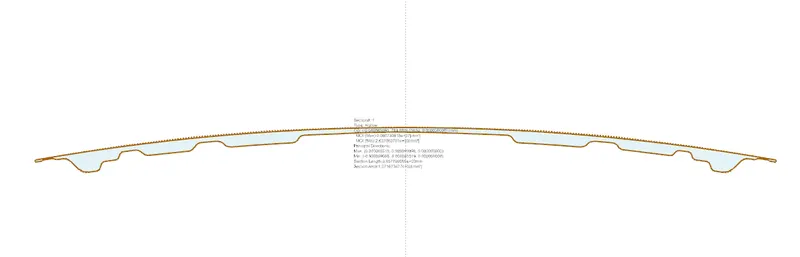
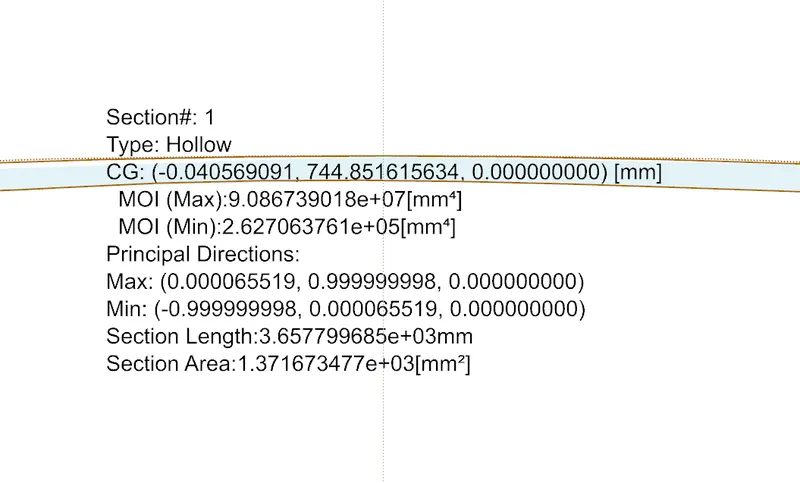
Imax = 9.0867 e^ +07 mm^4
Imin = 2.6271 e^ +05 mm^4
Y = 439.9946 mm
So,
Smax = 2.0652 e^ +05 mm^3
Smin = 5.9707 e^ +02 mm^3
Increment In Minimum Section Modulus :
= ( 5.9707 e^ +02) - (5.6453 e^ +02)
= 0.3254 e^ +02 mm^3
Conclusion : From the above analysis we found that in both cases either by increasing the gap between hood inner panel and outer panel or by increasing the number of embosses , the section modulus has increased hence the strength of the part will also increase. The percentage increament in section modulus is as below :
For Front Crash :
| Smin | Increment in Smin | % Increment | |
| For Actual Cross-Section | 6.2503 e^ +02 mm^3 | ||
| After Increasing the Gap between Hood Inner Panel and Outer Panel | 6.4134 e^+02 mm^3 | 0.1631 e^ +02 mm^3 | 2.54 % |
| After Creating the Additional Embosses | 6.3128 e^ +02 mm^3 | 0.0625 e^ +02 mm^3 | 1 % |
For side crash :
| Smin | Increment in Smin | % Increment | |
| For Actual Cross-Section | 5.6453 e^ +02 mm^3 | ||
| After Increasing the Gap between Hood Inner Panel and Outer Panel | 5.7175 e^ + 02 mm^3 | 0.0722 e^ +02 mm^3 | 1.26 % |
| After Creating the Additional Embosses | 5.9707 e^ +02 mm^3 | 0.3254 e^ +02 mm^3 | 5.45 % |